
The complete guide
Choosing a Kids Study Desk and Chair Set That Keeps Fitting
The problem with doing homework at the dining table
Ask most parents where their child does schoolwork and the answer is some version of "wherever there is room". The dining table until dinner. The coffee table, which is far too low. The bed, which guarantees a lost eraser and a crumpled worksheet.
None of those are terrible for ten minutes. They fall apart over a term. The work gets packed up and unpacked every day, the pencil case migrates, and the child learns that schoolwork is something that borrows space rather than something that has space. A small dedicated desk changes that quietly. The books stay out. The pencils stay in the drawer. Sitting down to work becomes a shorter decision.
The catch has always been that children grow and furniture does not. A desk bought when a child is small is often wrong within a year or two, and nobody wants to buy the same thing twice. That is the gap a height adjustable kids desk fills.
How the height adjustment actually works
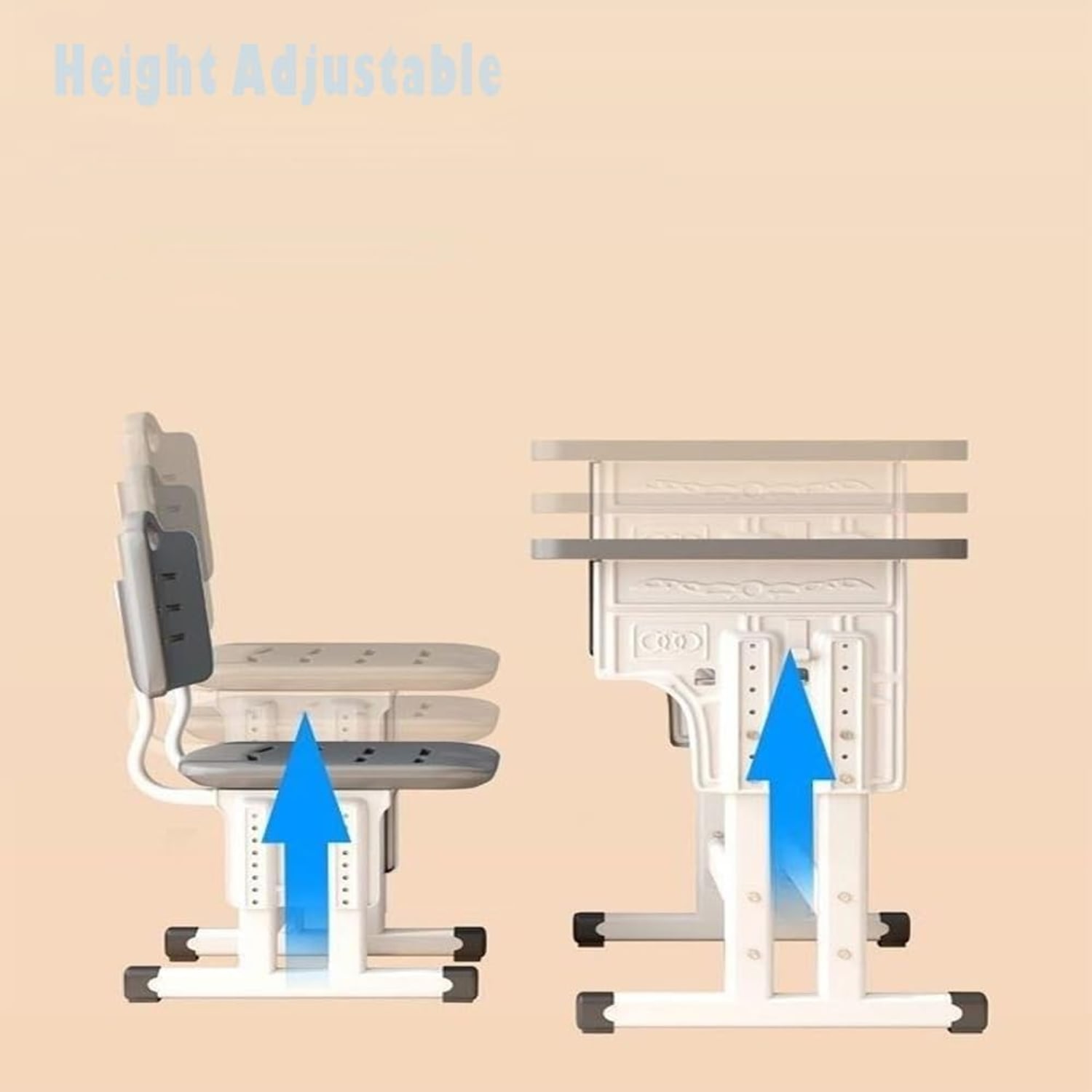
The idea is simple. The legs of the desk and the frame of the chair can be lifted to different positions and fixed there. You set them to suit the child in front of you, and when that child shoots up over a summer, you reset them rather than replacing the set.
In practice this means the set has two adjustment jobs, not one. The chair sets the height of the child. The desk then sets itself relative to that. Getting the chair right first and the desk second is the order that works, because a desk at a good height over a chair at a bad one is still uncomfortable.
On this set, the legs are also designed to come apart again. That matters more than it sounds. A set that can be disassembled is a set you can move up a flight of stairs, take to a grandparent's house, or pack down when the room gets rearranged. Fixed welded furniture does none of that.
Setting the height so it actually fits
Here is the rough method. Sit the child down with their feet flat on the floor. Their knees should bend at about a right angle, with the thighs roughly level. If the feet dangle, the chair is too high. If the knees sit up above the hips, it is too low.
With the chair set, adjust the desk so the child's forearms rest on the surface with the shoulders relaxed. Shoulders creeping up toward the ears means the desk is too high. Leaning down into the work means it is too low.
Recheck it every few months, or whenever you notice them perched oddly. Children do not usually announce that their desk has stopped fitting. They just slouch more.
The chair is half the set
People shop for desks and treat the chair as an afterthought. That is backwards. The chair is where the child spends the whole session.
This one uses a back that flexes and twists rather than a rigid moulded panel. If you have ever watched a child read, you know they do not sit still. They lean, they turn sideways, they tuck a leg up. A back that gives a little handles that better than one that stays stiff no matter what the sitter does.
Pair that with the height adjustment and you have a seat that keeps working as the child changes size, which is the whole point of buying a matched set rather than a desk and whatever spare chair is in the house.
Storage that stops the desktop disappearing
A desk without storage becomes a shelf. Within a fortnight, the surface you bought for working on is covered in the things that should be stored somewhere else.
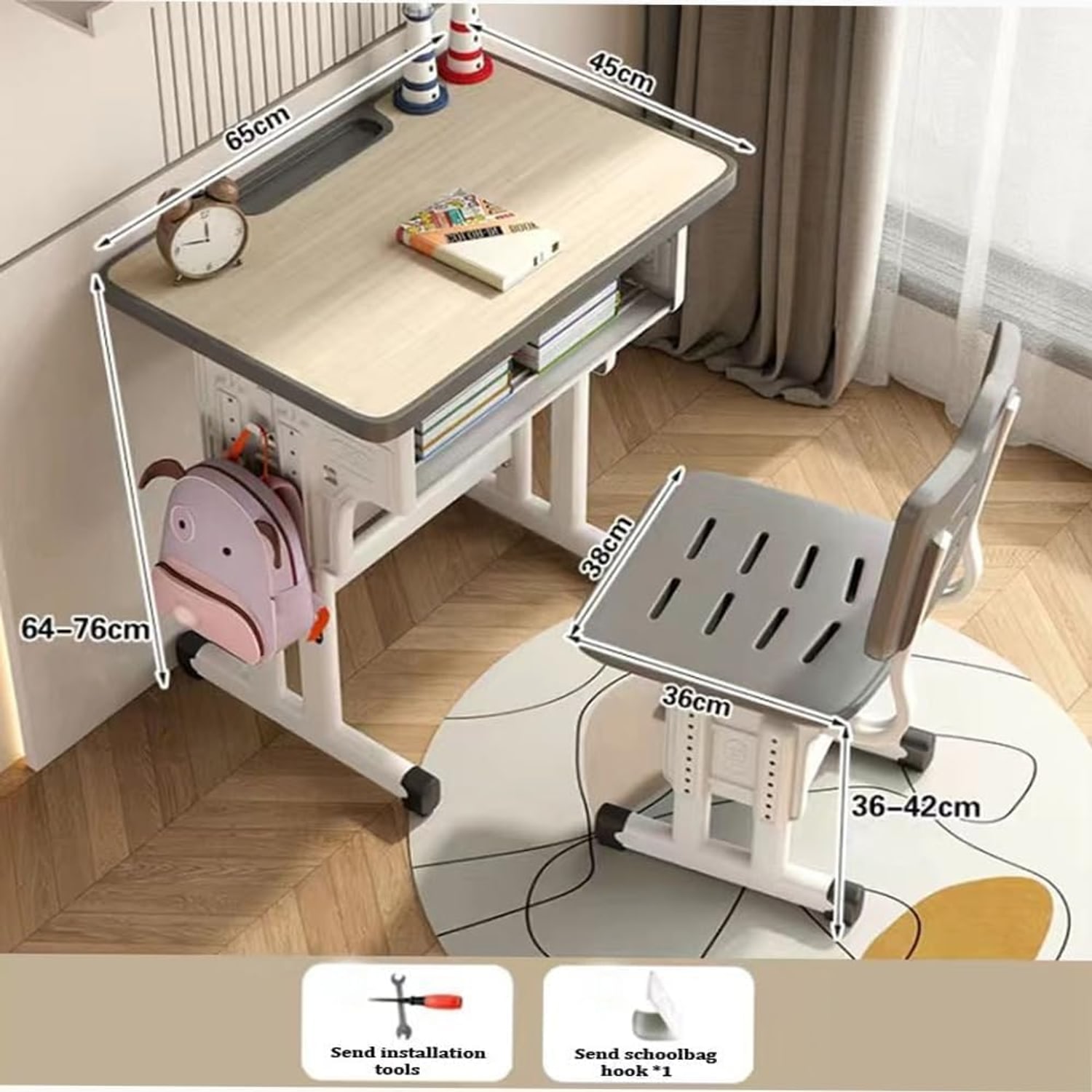
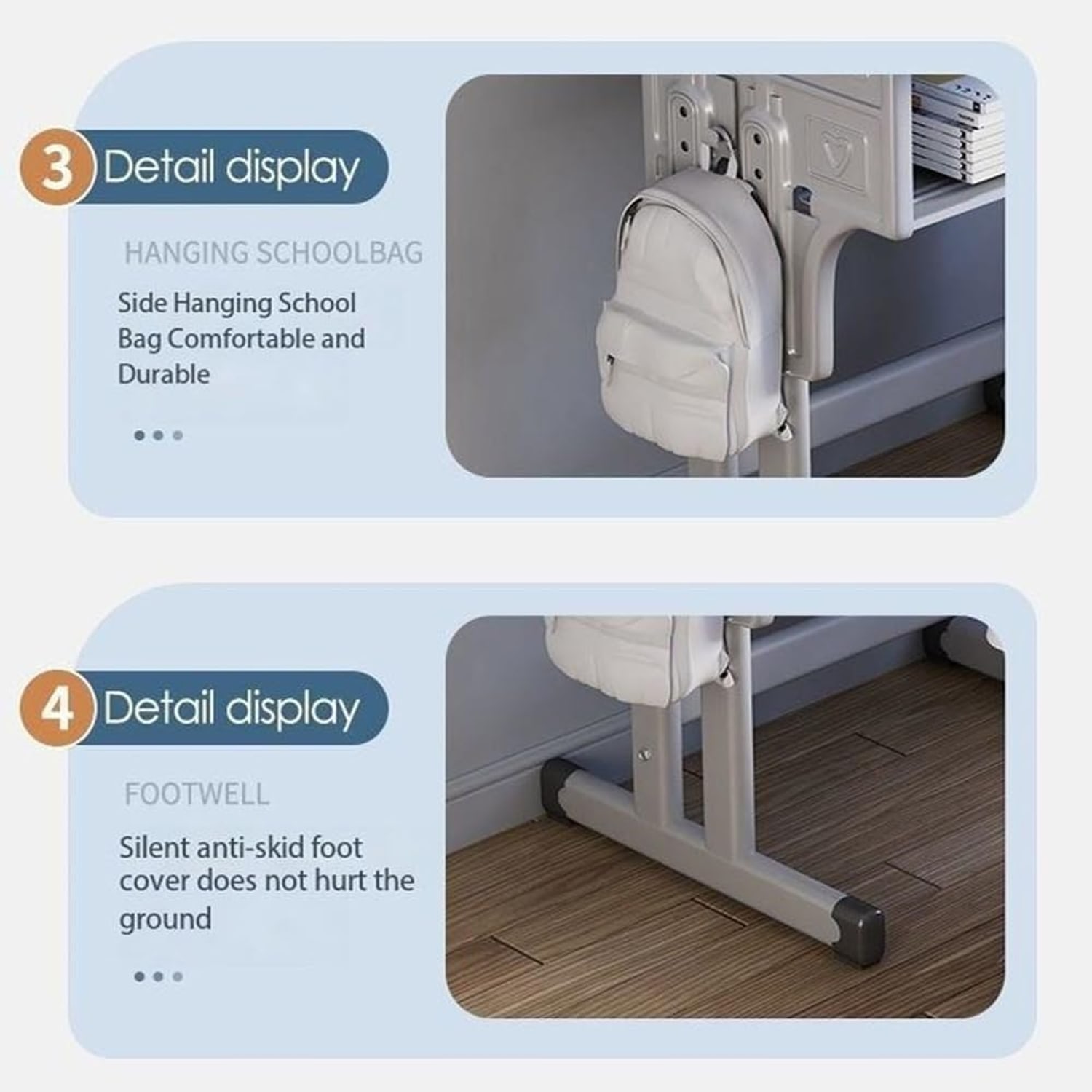
This set handles that with two features. There is a single drawer under the desktop that takes exercise books, pencils, scissors and the general stationery drift. There is also a hook on the side of the desk for a school bag, so the bag has a spot instead of the floor.
That second one is underrated. A bag on the floor is a tripping hazard and a nightly argument. A bag on a hook is neither. If you are comparing options and looking for the best kids desk with storage, check whether bag storage is included, because plenty of desks offer a drawer and nothing else.
Where to put it
The set has a compact listed footprint, 30 x 30 x 32 cm with a listed item depth of 45 cm, so it suits rooms where a full-size desk would dominate. Measure the wall space before you order and then add room for the chair to pull back. A desk that fits the wall but leaves no room to sit down is not much use.
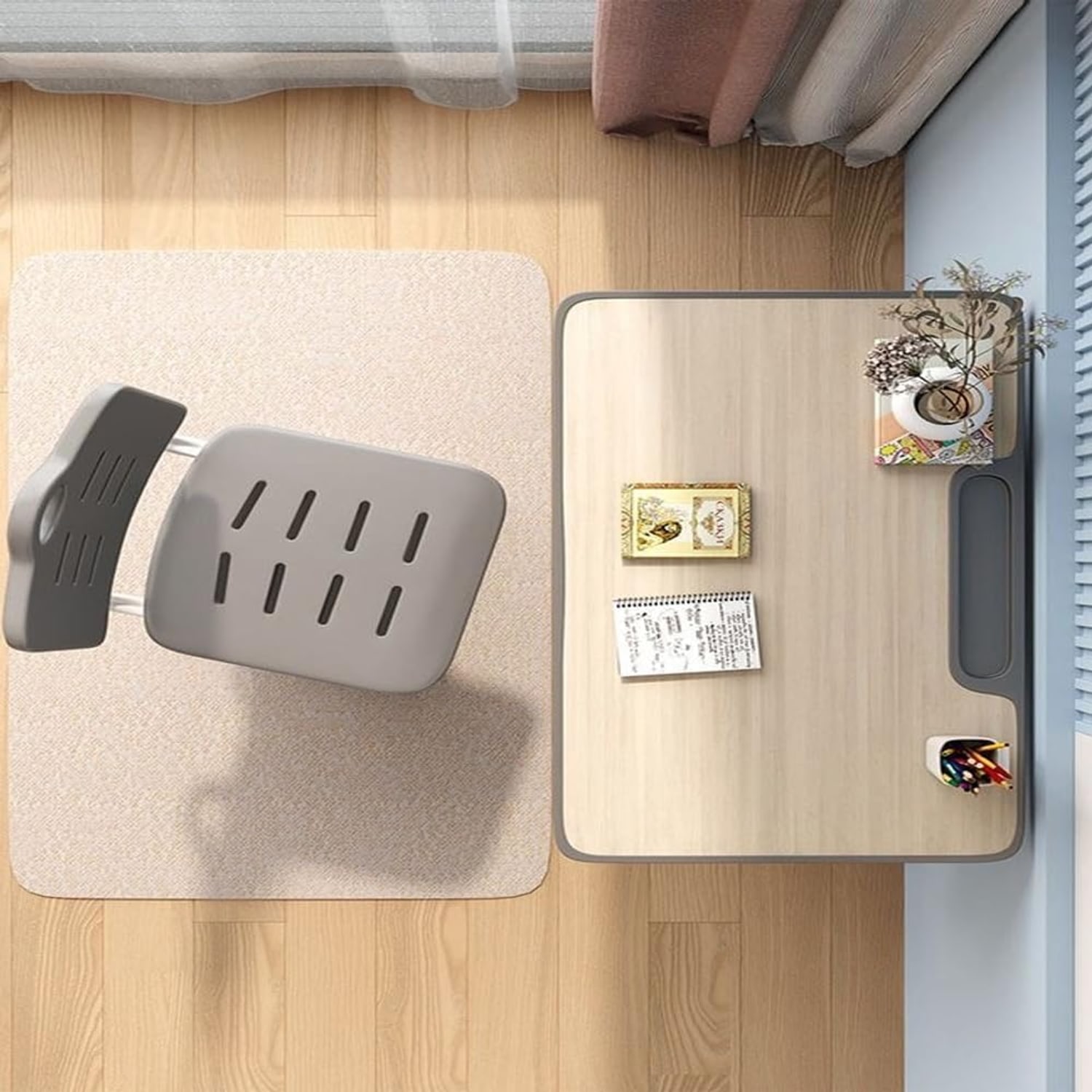
A few placement notes worth thinking about. Natural light from the side is easier on the eyes than light from directly behind, which puts the work in shadow. Keep the drawer clear of any skirting or window sill so it opens fully. And if the set is going under a window, check the curtains do not fall across the desktop.
On hard floors, felt pads under the feet stop scuffs and cut the scraping noise when the chair moves. On deep carpet, check all four feet land evenly so the desk does not rock when someone leans on it.
Assembly and what to expect
The set arrives flat in a single pack with complete fittings and an illustrated manual. Assembly is required. For a compact set with one drawer, it is a short job for one adult working on the floor with a bit of clear space.
A few habits make it go smoothly. Lay out every part and match them to the manual before you pick up a screwdriver. Leave all the fittings slightly loose until the whole frame is together, then go back and tighten in sequence once everything is square. Keep the leftover fittings and the manual together, ideally in the drawer, because you will want them the first time you adjust the height.
Keep the small screws and fittings away from young children while you build. They are small parts, and the build is not a job to do with little ones crawling around the parts tray.
Looking after it
Maintenance is light. Wipe the surfaces with a soft, damp cloth and dry them straight away rather than letting water sit on the timber parts. Skip harsh solvents and abrasive pads, which can take the finish off.
The one job that genuinely matters is checking the fixings. Give everything a quick tighten every few months, and always after a height change, since that is the moment fittings get loosened and reset. A set that stays tight feels solid for years. A set that nobody ever checks starts to wobble and then people assume it was badly made.
Keep it out of prolonged direct sun and away from damp spots, same as any furniture mixing timber and metal.
Judging it by measurements, not by age
It is tempting to shop for children's furniture by age bracket. With an adjustable set, that is not the most useful filter. The thing that decides whether it suits your child is the height adjustment range against their current size, and the desktop area against the way they actually work.
So pull out a tape measure. Check the footprint against the spot you have in mind. Think about whether they usually have one book open or three, because that changes how much surface you need. If the answer is a sprawl of books, folders and a tablet, a compact set is the wrong shape regardless of how well it adjusts.
The short version
This is a compact, height adjustable kids study desk sold with a matching chair as one set. Both pieces lift and lock, so you reset them as the child grows instead of buying again. There is one drawer for stationery and a side hook for a bag. The chair back flexes rather than sitting rigid, which suits a child who moves while they work.
It is built from alloy steel, plastic and wood, finished in pink, weighs 3 kg, and needs assembling from the included parts and manual. Check the listed dimensions against your space, set the chair height first and the desk second, and retighten the fixings now and then. Do that and it earns its spot in the room for a long time.