
The complete guide
How To Choose A Kids Table And Chairs Set That Actually Gets Used
The dining table problem
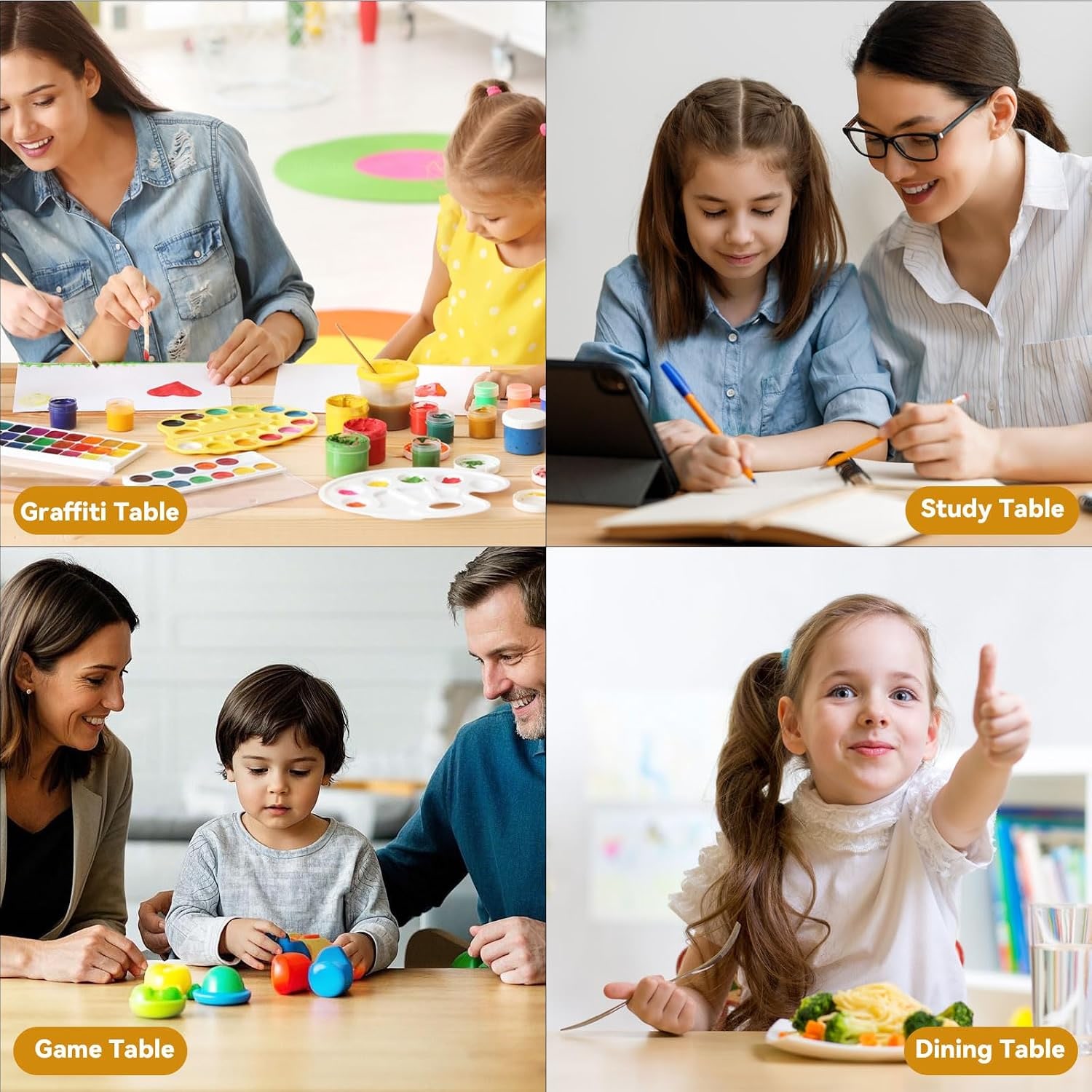
Every home with children under about eight ends up with the same routine. Someone wants to draw, so the paper and the pencil tin come out onto the dining table. Then it is nearly dinner, so everything gets swept into a pile and moved to the bench. The next morning the pile is still there. Nobody finishes anything because nothing has a place to stay.
A dedicated kids table and chairs set fixes that, not because it is clever furniture but because it removes the clearing-up step. The work stays where it is. A half-finished drawing is still there after dinner. A brick build survives the night. That is the whole point, and it is the reason a plain table often gets more use than a themed play table with built-in storage bins.
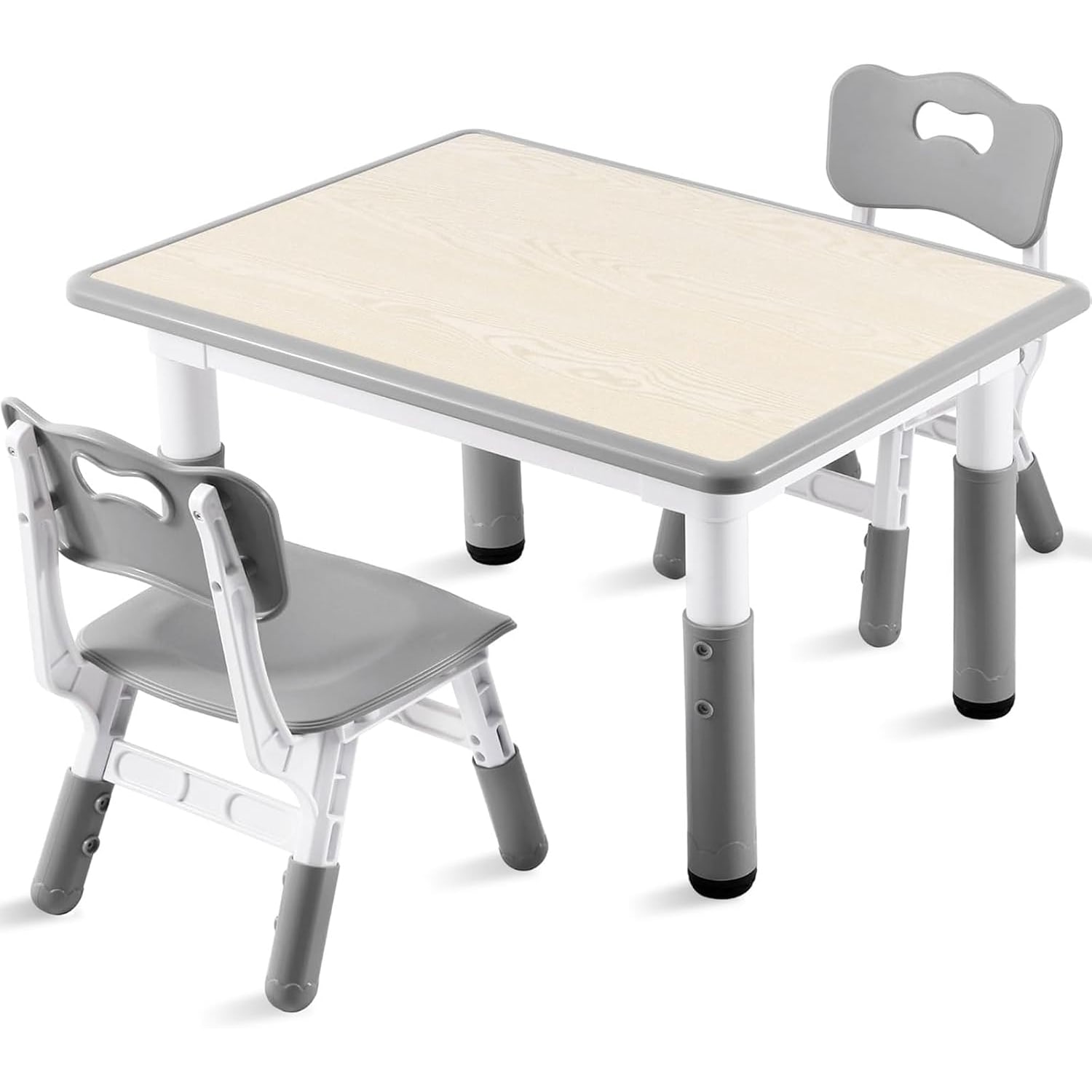
This guide covers what actually matters when you pick one, using the specifications of this set as the reference point.
Surface area is the spec that matters most
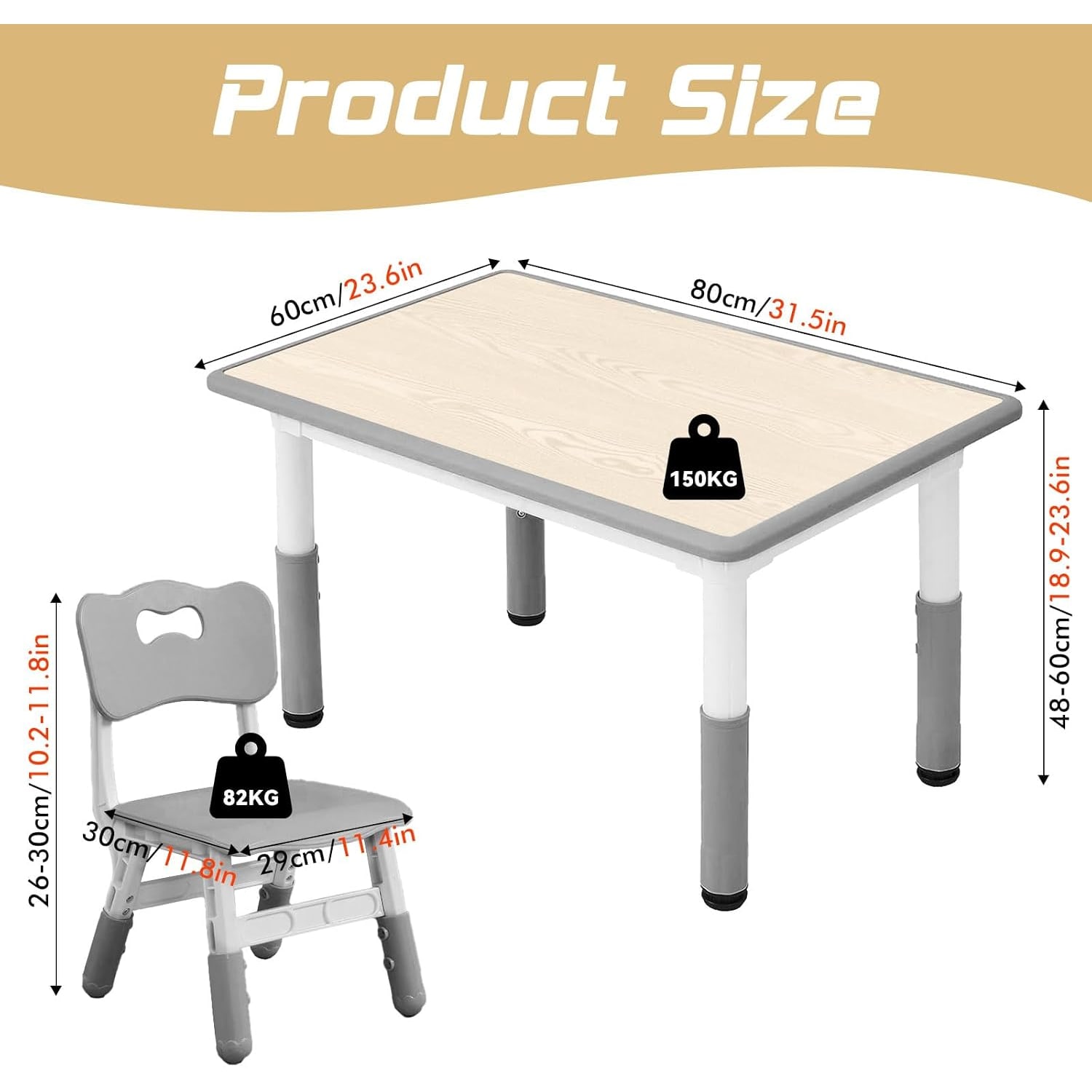
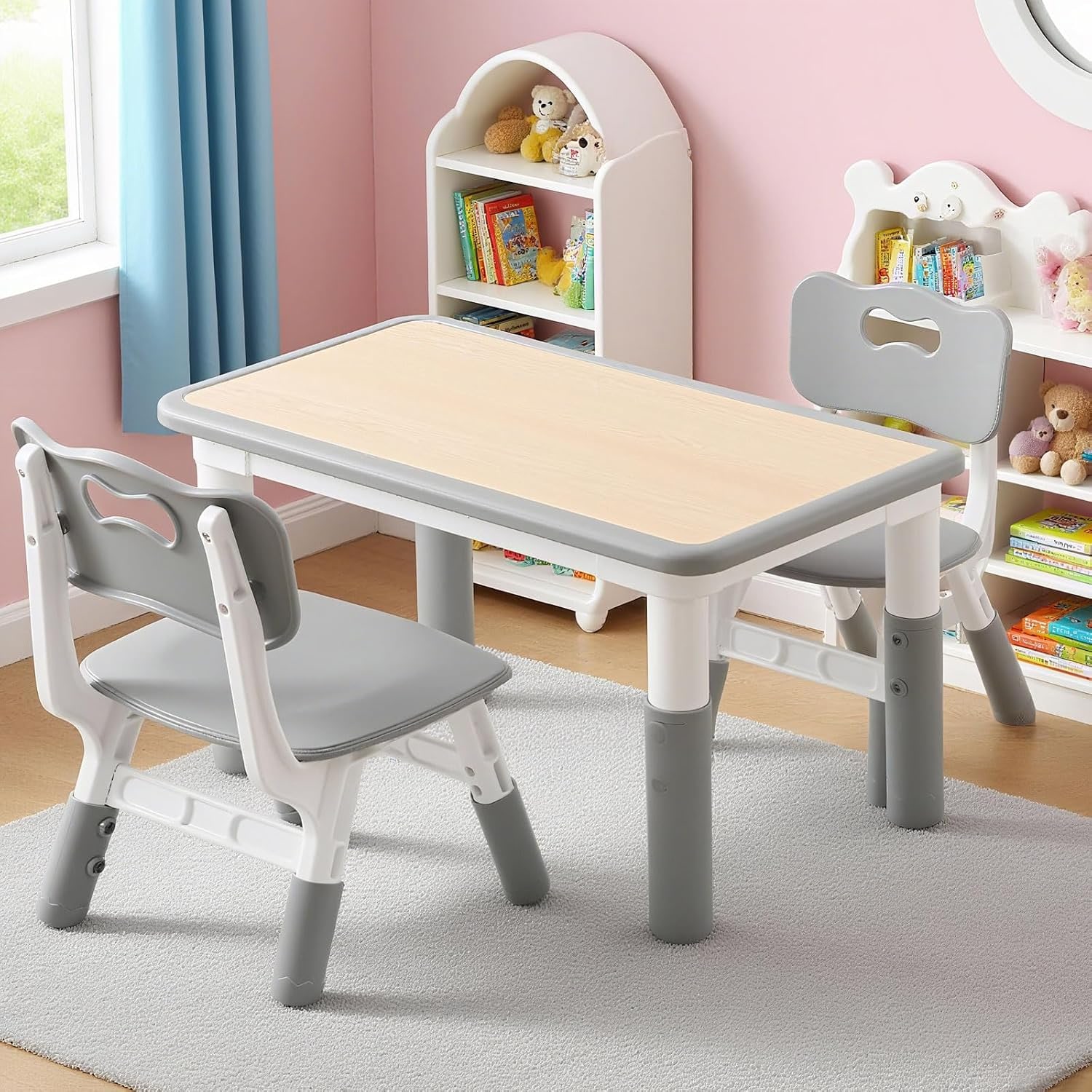
If you only check one number, check the top. This set gives you 60 x 80cm. That is roomy for a children's table. A lot of sets on the market sit nearer 50 x 50cm, which is fine for one child with a colouring book and immediately cramped for two.
Here is a useful test. An A3 sheet is 30 x 42cm. On a 60 x 80cm top you can lay two of them side by side and still have a strip free for the pencil tin. On a small square table you cannot do that, so the pencils end up on the floor and the drawing gets bumped.
The same logic applies to building. Block play spreads sideways. A child sorting pieces will claim about twice the area they are actually building on. More surface means fewer pieces on the carpet.
Two chairs, and why backrests matter
This set comes with two chairs, both with backrests. That combination is worth more than it sounds.
Two seats means the table works for siblings, for a playdate, or for a parent pulling up alongside to help with something tricky. One-chair sets quietly become single-child furniture, and then there is an argument every time a friend comes over.
Backrests change how long a child stays seated. A stool is fine for a quick snack. For a thirty-minute puzzle or a drawing they are genuinely absorbed in, a back to lean against is what keeps them there. Shoppers comparing the best kids table and chairs options often focus on looks and miss this, then wonder why the set gets abandoned after a fortnight.
Plastic versus timber
Both work. They fail in different ways.
Timber looks better in a photo and feels more substantial. It also drinks up anything spilled on it. Juice leaves a ring. A texta that slips off the paper leaves a mark you will be looking at for years. Unless the timber is well sealed, it ages fast in a child's hands.
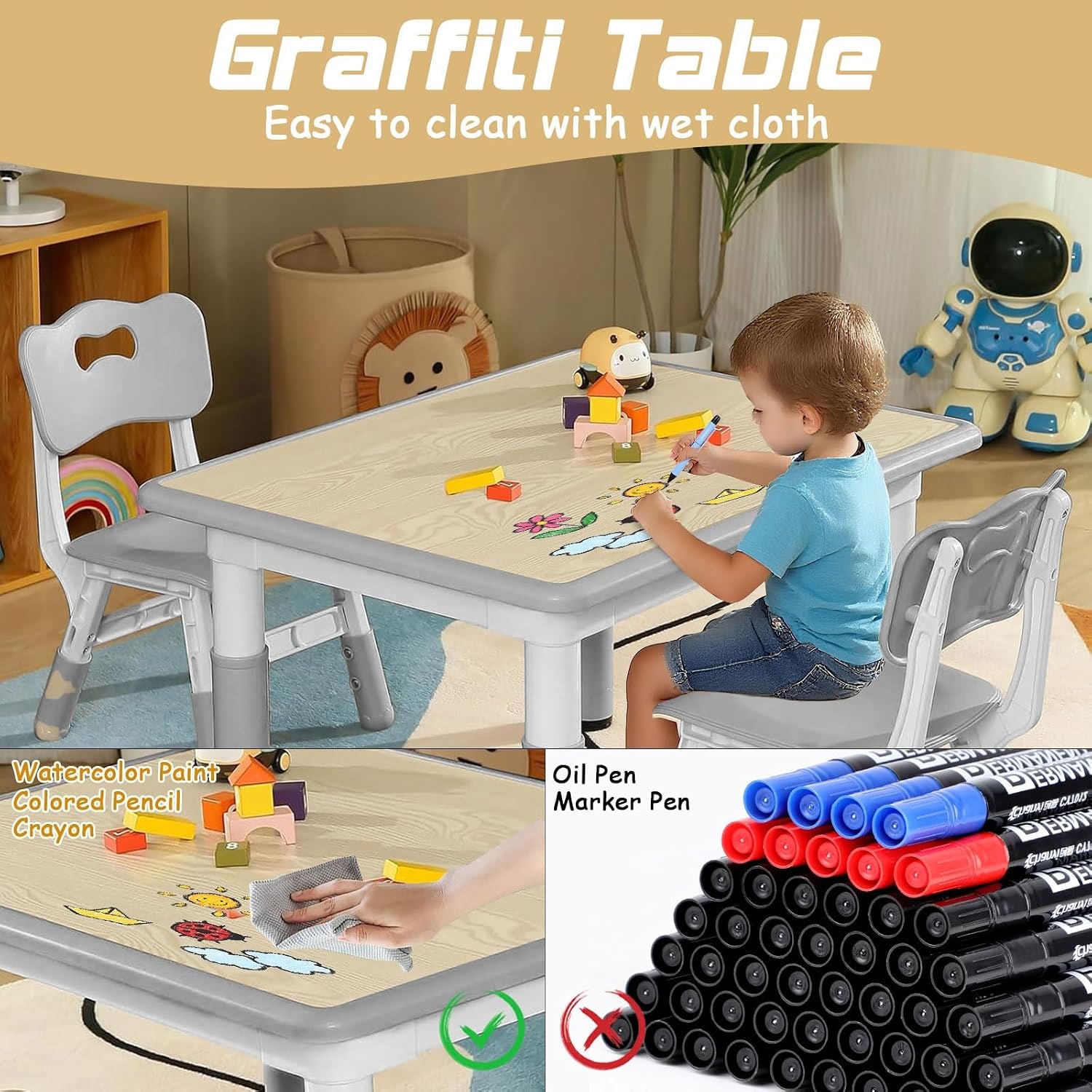
This set uses HDPE plastic. HDPE is the same rigid plastic used for outdoor furniture and storage crates. It does not absorb liquid, which is why the maker's care instruction is simply to wipe it with a dry cloth. Glue, paint water, playdough crumbs and the remains of a muesli bar all come off the surface rather than into it.
Plastic is also lighter. If your table needs to move between the kitchen and the bedroom, or get pushed aside for a visitor's air mattress, that weight difference is something you will notice weekly. Anyone searching for the best wipe clean kids table is really searching for exactly this trade-off, whether they phrase it that way or not.
Measuring your space properly
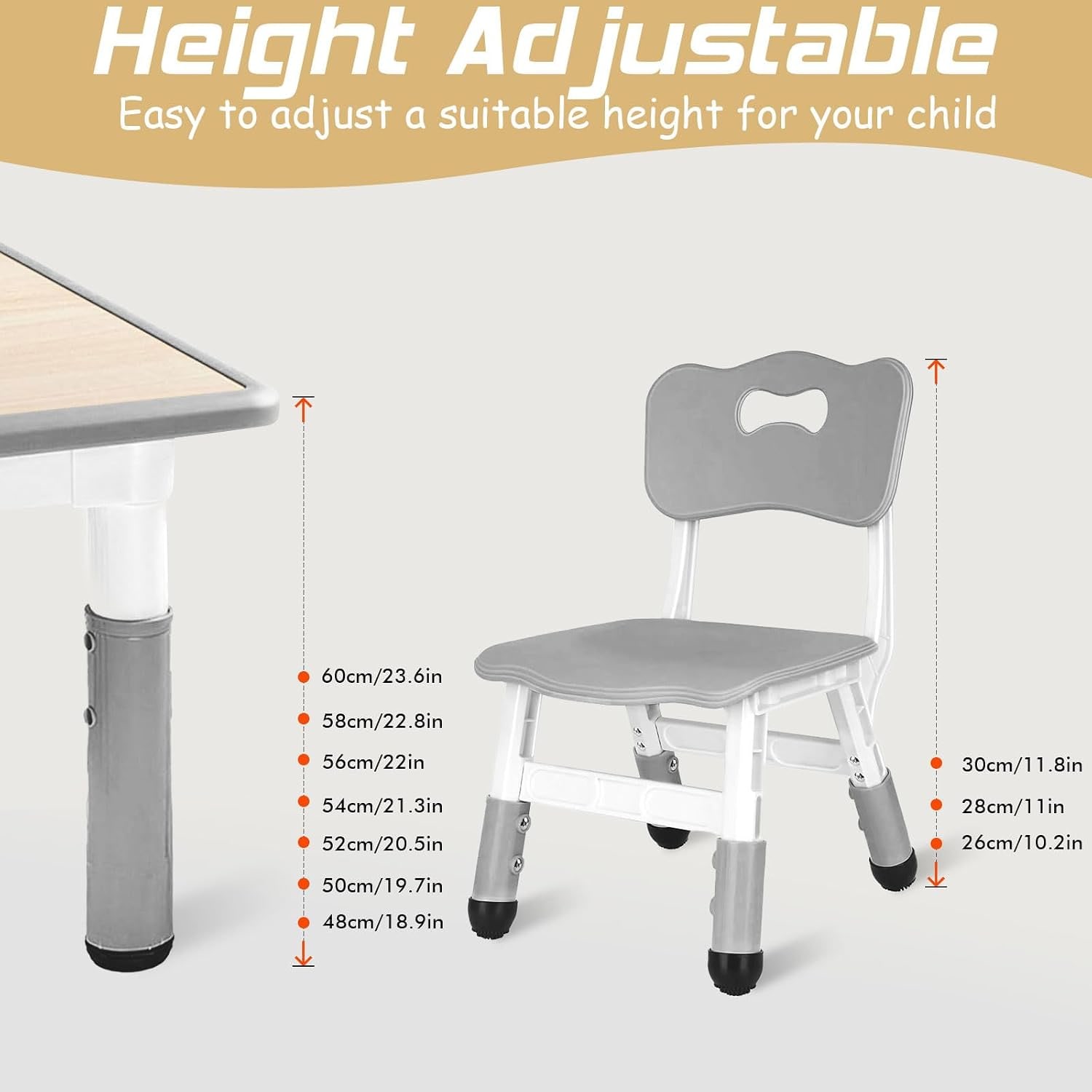
The footprint on this set is 60 x 80cm, with an overall height of 60cm. That is the furniture. It is not the space you need.
Add about 40cm behind each chair. A child has to be able to push the chair back and stand up without hitting a wall or a bed frame. So for a two-sided layout, plan for roughly 60 x 160cm of clear floor. In a corner setup with the table against a wall, you need less.
Also look up. If the table is going under a window ledge or a shelf, check the 60cm height clears it comfortably. A table that just fits is a table that gets scraped every time it moves.
One more thing people forget. Measure the doorway and any turn in the hallway. This set arrives flat packed, so getting it into the room is easy, but once it is built you will not want to take it apart again to move it.
What a child this size actually does at a table
It helps to think about activities rather than age, because children of the same age vary enormously in size and in what they are into.
Drawing and painting need flat, wide and wipeable. This set delivers all three. People hunting for the best kids art table are usually balancing surface size against mess tolerance, and plastic wins the second one outright.
Building and construction need area more than anything. A 60 x 80cm top handles a decent Lego base plate plus sorting space.
Reading and quiet time need a comfortable seat, which is where the backrests earn their place.
Snacks need a surface you are happy to wipe rather than treat carefully. Again, plastic.
Early homework and workbooks need enough room for a book open flat plus a writing pad beside it. That is about 50cm wide, so there is room to spare here.
That mix is why a plain table outlasts a themed one. A table with a built-in racetrack is brilliant for six months and awkward forever after. A flat top just keeps working. If you are weighing up the best kids activity table choices, ask yourself what it will be used for in two years, not this week.
Assembly, honestly
Assembly is required. The maker describes it as fast, and with only three items in the box (one table, two chairs) there is not much to go wrong.
A few practical notes. Build it in the room where it will live, not in the garage. Lay the parts out and count them against the sheet before you start. Hand-tighten everything first, then go around a second time and firm it all up once the shape is holding together. That second pass is what stops a wobble appearing a week later.
Keep the instruction sheet somewhere findable. In six months you may want to check a fitting, and a flat pack sheet is always easier to look at than to reconstruct from memory.
Keeping it looking decent
Care here is simple. Wipe with a dry cloth, which is what the maker specifies. For anything sticky, use a cloth that is barely damp and follow it immediately with a dry one.
Avoid scouring pads and strong solvents. They can leave the plastic looking dull and scratched, and once a plastic surface is scuffed it holds dirt in a way a smooth one does not.
Check the fittings every few months, particularly after the set has been moved. Children lean on tables, sit on edges and occasionally climb. A quick hand-tighten takes a minute and prevents the slow development of a wobble.
Store it indoors. The record does not list this as an outdoor product, and leaving plastic furniture in full sun for months on end is the fastest way to make it brittle.
The short version
If you want a table that two children can genuinely share, one with a top big enough for real projects and a surface you are not precious about, this set does the job. The 60 x 80cm top is the headline. Two chairs with backrests is the detail that makes it get used rather than looked at.
Measure your floor space, allowing for chairs pushed back. Confirm the 60cm height suits your child and your room. Then build it where it is going to live and let it earn its keep.
Delivery runs 3 to 7 working days from Australian warehouses, and returns are open for 14 days from delivery for unused items in the original packaging. If you are unsure whether it fits, order it, measure it unopened, and send it back if the numbers do not work.