


The complete guide
Choosing a Kids Doctor Play Set That Actually Gets Played With
The problem with most doctor toys
Walk down any toy aisle and you will find half a dozen doctor kits. Most of them share the same flaw. The stethoscope is a loop of moulded plastic with a flat disc on the end that hears nothing. The thermometer has a painted red line. The syringe does not move. A child picks the set up, works out in about ninety seconds that none of it does anything, and the whole lot ends up under the bed.
Role play runs on belief. A child will happily pretend a cardboard box is a rocket, so it is not realism for its own sake that matters. What matters is that the props reward attention. When a child presses a stethoscope to their chest and actually hears a thump, something clicks. The game gets real stakes. They want to listen to everyone in the house. That one working detail can be the difference between a kit that gets used twice and one that stays in rotation for a couple of years.
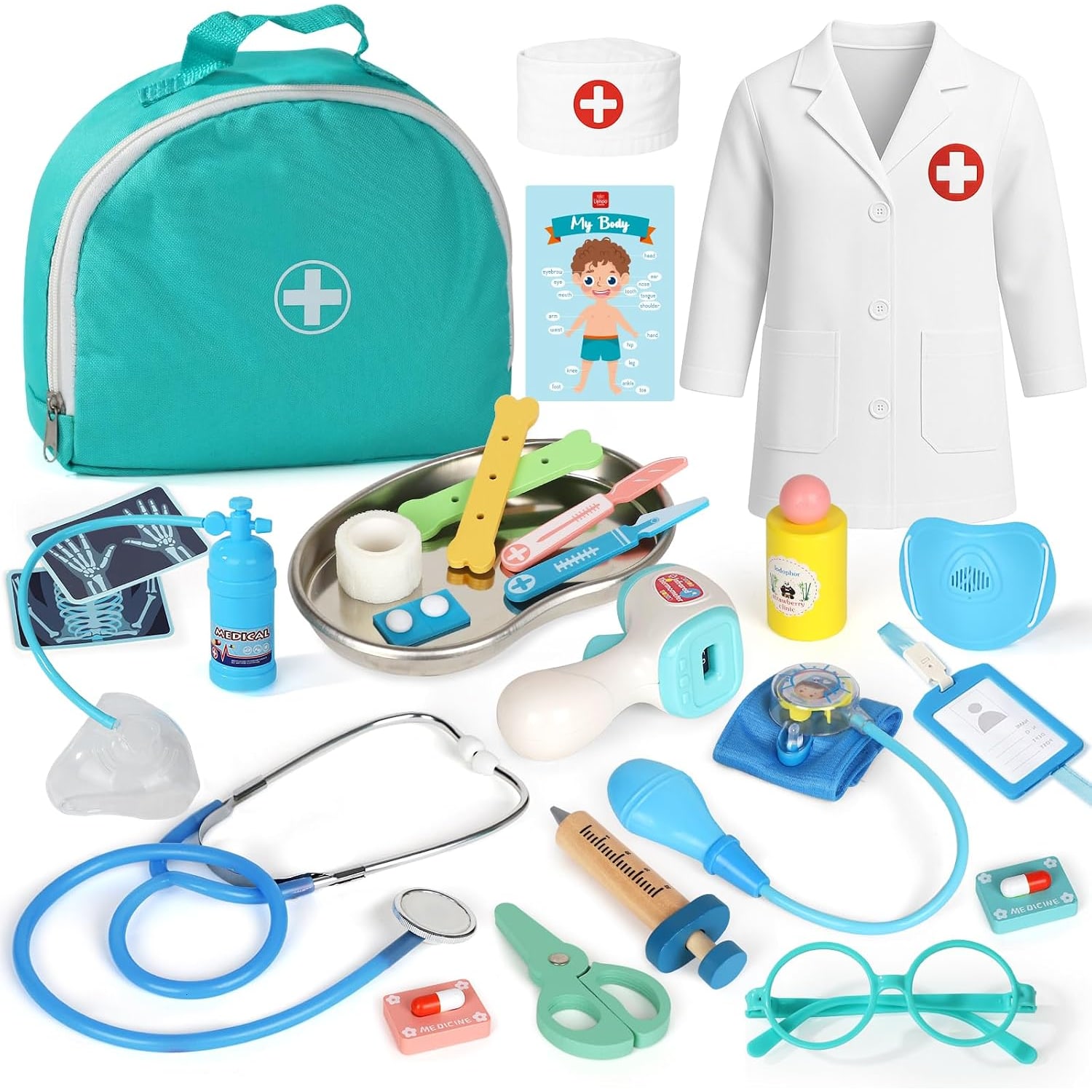
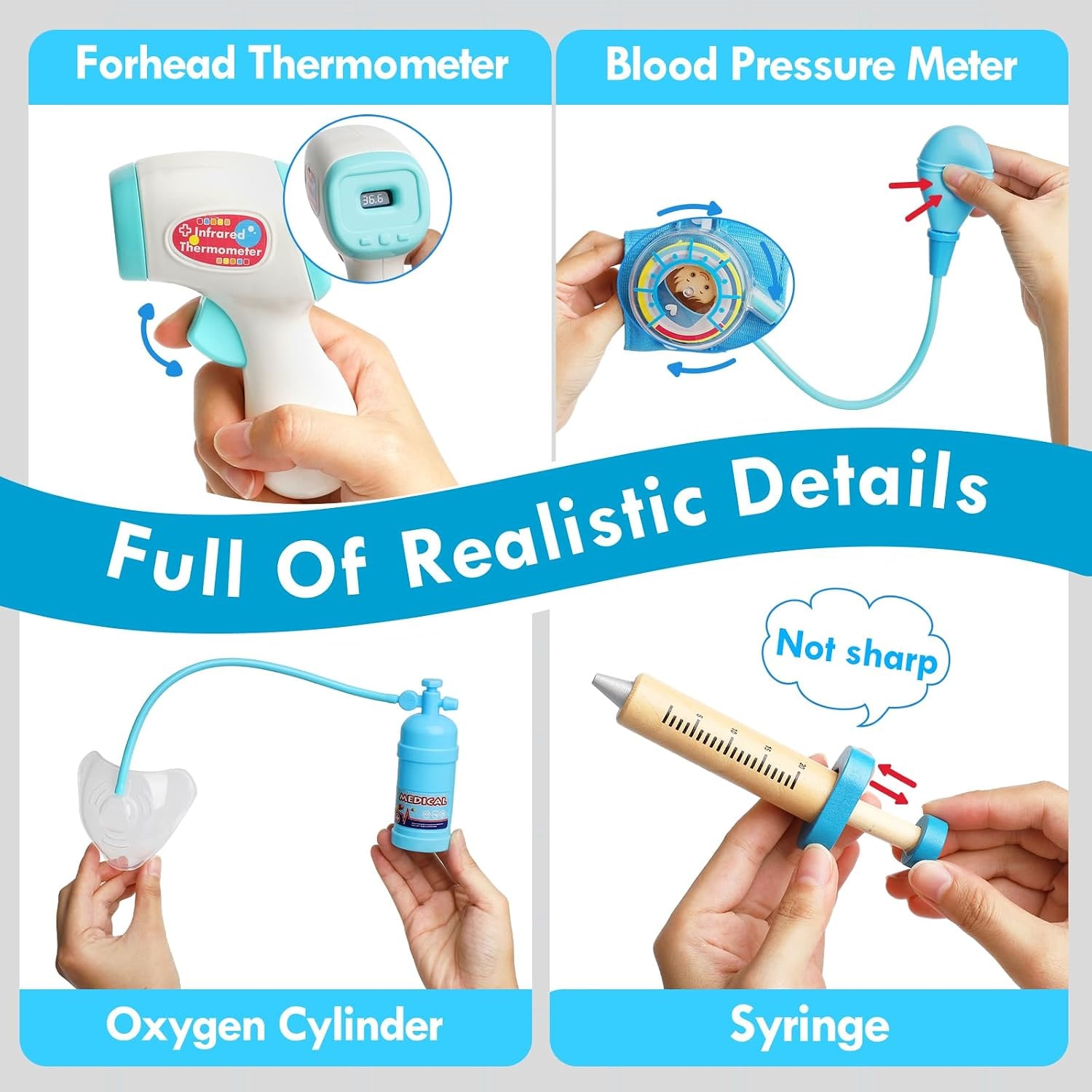
This set takes that route. The stethoscope picks up a heartbeat. The digital thermometer shows a temperature on a screen. Around those two pieces sits a spread of tools, clothing and a steel tray, so there is enough to run a full appointment from check-in to treatment.
What you actually get
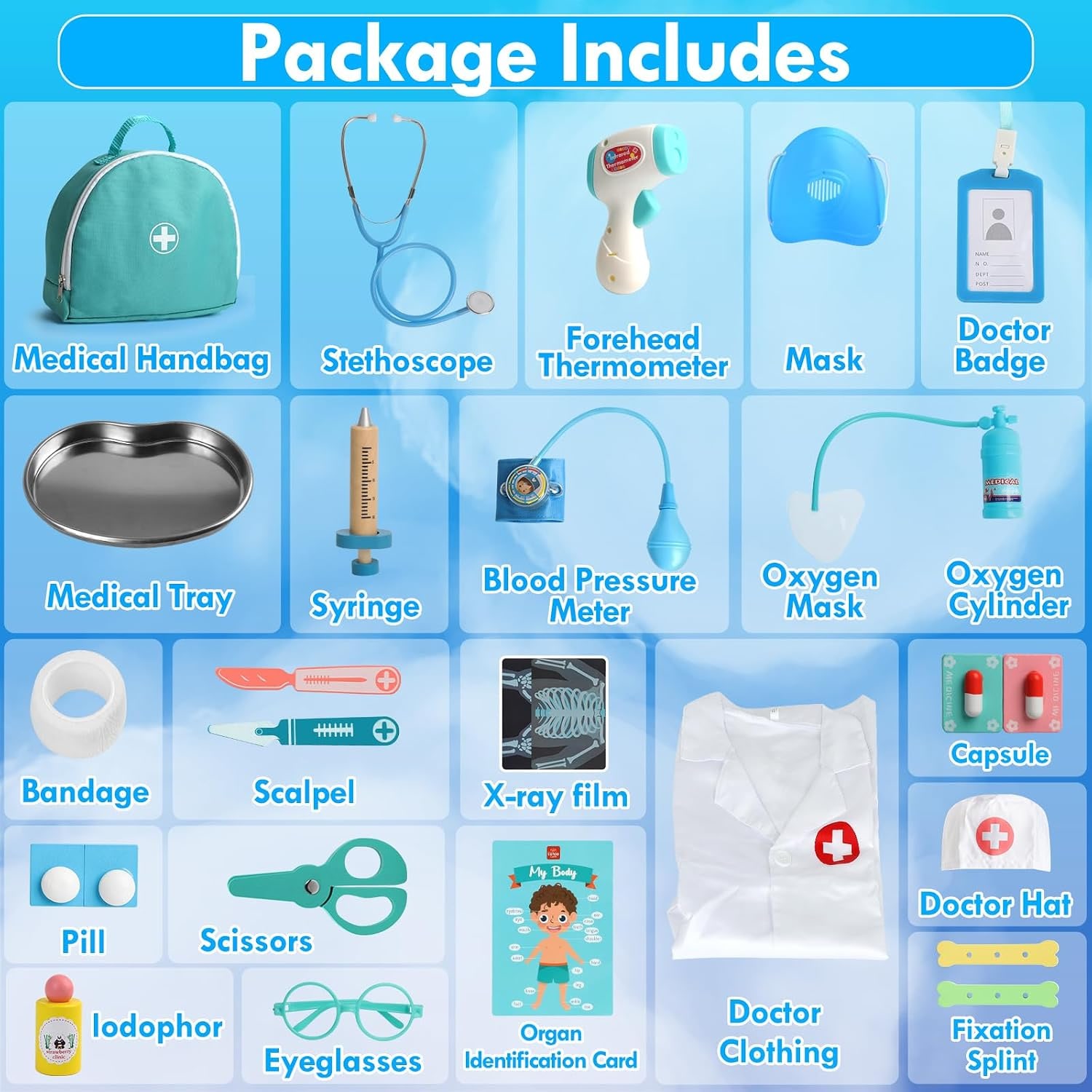
The kit includes a stethoscope, a digital thermometer, doctors' clothing, a stainless steel tray, a wooden syringe, a capsule, a scalpel, a mask and a range of other medical tools and accessories. The listed material type is plastic, with wood used for several of the instruments and steel for the tray.
That material mix matters more than it sounds. Children notice weight. A wooden syringe sits differently in the hand to a hollow plastic one, and a steel tray makes a small clink when a tool is set down on it. Those sensory details are part of what keeps a child in the game. They also mean the set survives being handled roughly, which any toy in this category will be.
The clothing is the other hook. Putting on the coat is the moment the child steps into the role. Some children will not touch the tools until they are dressed. Others will carry the stethoscope around all day and never bother with the coat. Both are fine, and having both options in the box means the set adapts to the child rather than the other way round.
The whole thing packs down to 23.1 x 16 x 13 cm in blue and white. That is a small shelf footprint for a set with this many pieces.
Who it suits
This is a toy for ages 3 and up. It contains small parts, so it is not for children under 3. Within that band it has a wide spread. A three or four year old will do a lot of dressing up, a lot of listening to chests and a lot of announcing that you are very sick. A six or seven year old will build a waiting list, invent diagnoses, give out instructions and expect the patient to follow them. Same kit, completely different game.
It also works for children who are not especially interested in medicine but love being in charge. A clinic is a small world with clear rules, and some children find that very satisfying. The best imaginative play doctor kit for your child is often less about the theme and more about whether they enjoy running a system.
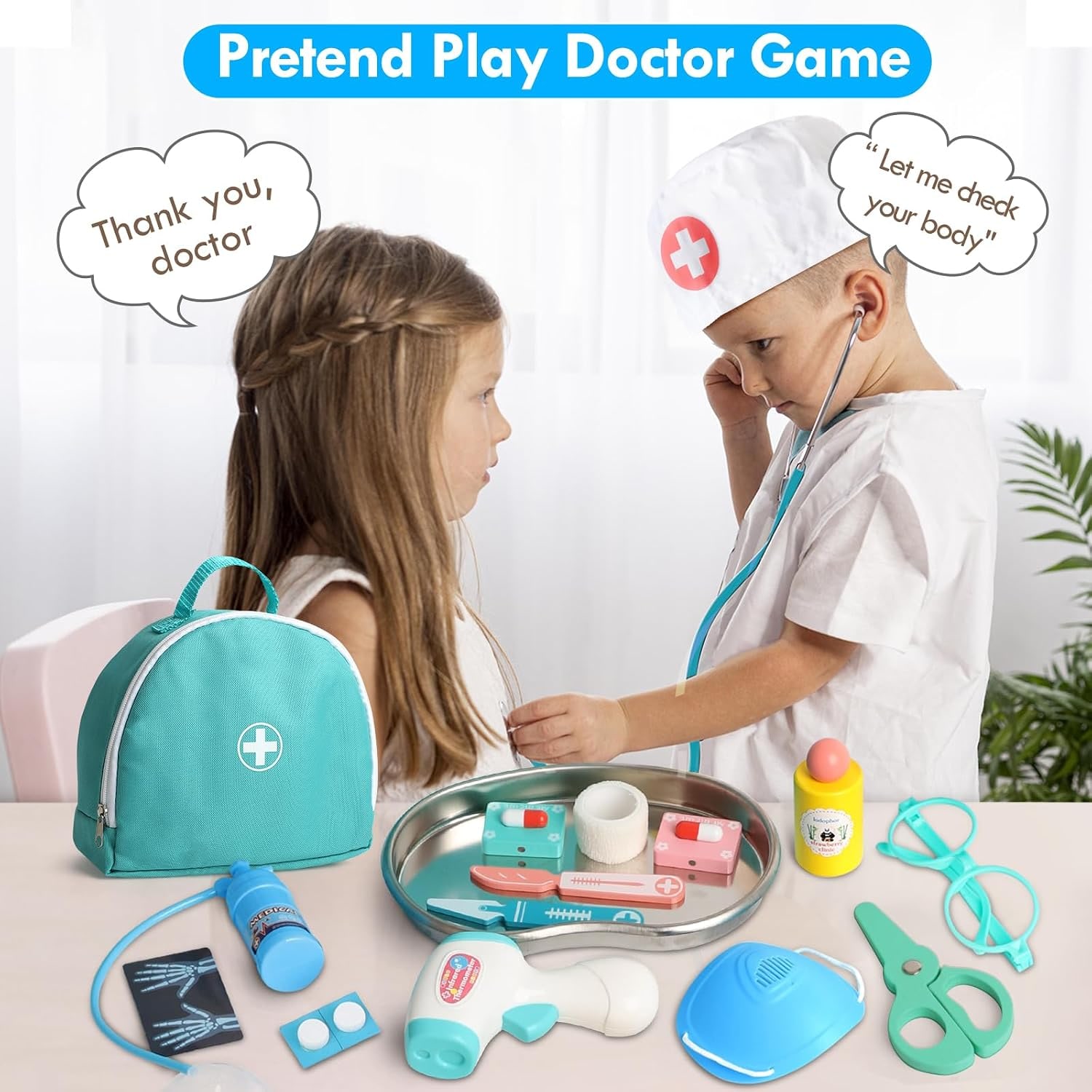
Siblings do well with it because the roles swap naturally. One doctor, one patient, then trade. Soft toys fill in when there is no one else around, and the set turns into a vet clinic without any effort at all.
How to choose between doctor kits
A few things to weigh up when you are comparing options.
Working parts. Ask whether the stethoscope hears anything and whether the thermometer displays anything. If both are decorative, you are buying a costume, not a kit. The answer here is yes to both.
Number of pieces versus quality of pieces. A set with forty tiny bits sounds generous until you lose twelve of them in a fortnight. A moderate number of solid pieces usually gets more play. Look for wood or steel in the mix rather than all moulded plastic.
Storage. If the set does not come with somewhere to put the tools, you will be hunting for them in the couch. This one packs back into its box, which is enough as long as you build the habit early.
Clothing. A coat or scrubs adds a lot for very little cost. It is the part children reach for first.
Age fit. Small parts mean a clear age floor. If you have a younger child in the house, plan where the box will live when it is not out.
Getting the most out of it
A doctor kit is one of the few toys where an adult joining in for five minutes transforms the session. Sit down, be the patient, describe a symptom and let the child work out what to do. Give them something to solve rather than just something to copy. A sore knee, a strange noise in your chest, a toy with a broken leg.
Set up a waiting area with a couple of chairs. Give the child a notepad for appointments. Line up soft toys as patients with different complaints. These small bits of structure extend a twenty minute game into an afternoon, and none of them cost anything.
Expect the stethoscope to get the most use by a wide margin. That is normal. Children test it on chests, backs, pillows, the fridge and the cat. The novelty of hearing something real takes a long while to wear off.
Looking after the set
Care here is simple. Wipe the plastic and stainless steel pieces with a soft damp cloth and dry them properly before packing away. Do not soak the wooden tools. Wood and standing water do not mix, and a quick wipe is all they ever need.
The clothing should be washed according to its own label. If the thermometer will be stored for months, take any batteries out so they cannot leak in the box.
The one habit worth building is the pack-down. Make returning the tools to the box part of the game, the end-of-shift tidy that any real clinic does. Children take to this surprisingly well when it is framed as part of the role rather than as a chore from a parent.
Delivery and returns
Orders ship from Australian warehouses and generally arrive in 3 to 7 working days, with tracking sent once the parcel is on its way. Returns are accepted within 14 days of delivery, provided the item is unused and in its original packaging. If something turns up damaged or a piece is missing, contact us with a photo and we will sort it out.
The short version
If you want a pretend play doctor kit that holds attention past the first afternoon, the working parts are what to look for. This set has a stethoscope that picks up a heartbeat and a digital thermometer that shows a reading, plus doctors' clothing, a steel tray, wooden tools and a mask to fill out the clinic. It is for ages 3 and up, contains small parts, and packs down to a tidy 23.1 x 16 x 13 cm box.
It is not complicated. Open it, put the coat on, find a patient. Everything after that is up to the child.