
The complete guide
Choosing a Toy Kitchen Appliances Set, A Buyer's Guide
The problem with most play kitchens
Walk past almost any play kitchen and you will see the same thing. A sink, two or three pots, a frying pan, a stack of plastic food. It looks complete in the shop. Then a child plays with it for a week and the whole thing stalls, because there is only one thing to do with it, which is to put food in a pot and stir.
What children actually watch adults do in a real kitchen is operate machines. The coffee machine in the morning. The toaster. The blender that goes on when someone makes a smoothie. Those machines have buttons, sounds and a moment where something happens. A play kitchen without any of them is missing the part a child most wants to copy.
That is the gap a toy kitchen appliances set fills. Four pretend appliances, each with its own job, turn a quiet kitchen corner into somewhere with a routine.
What is in this set
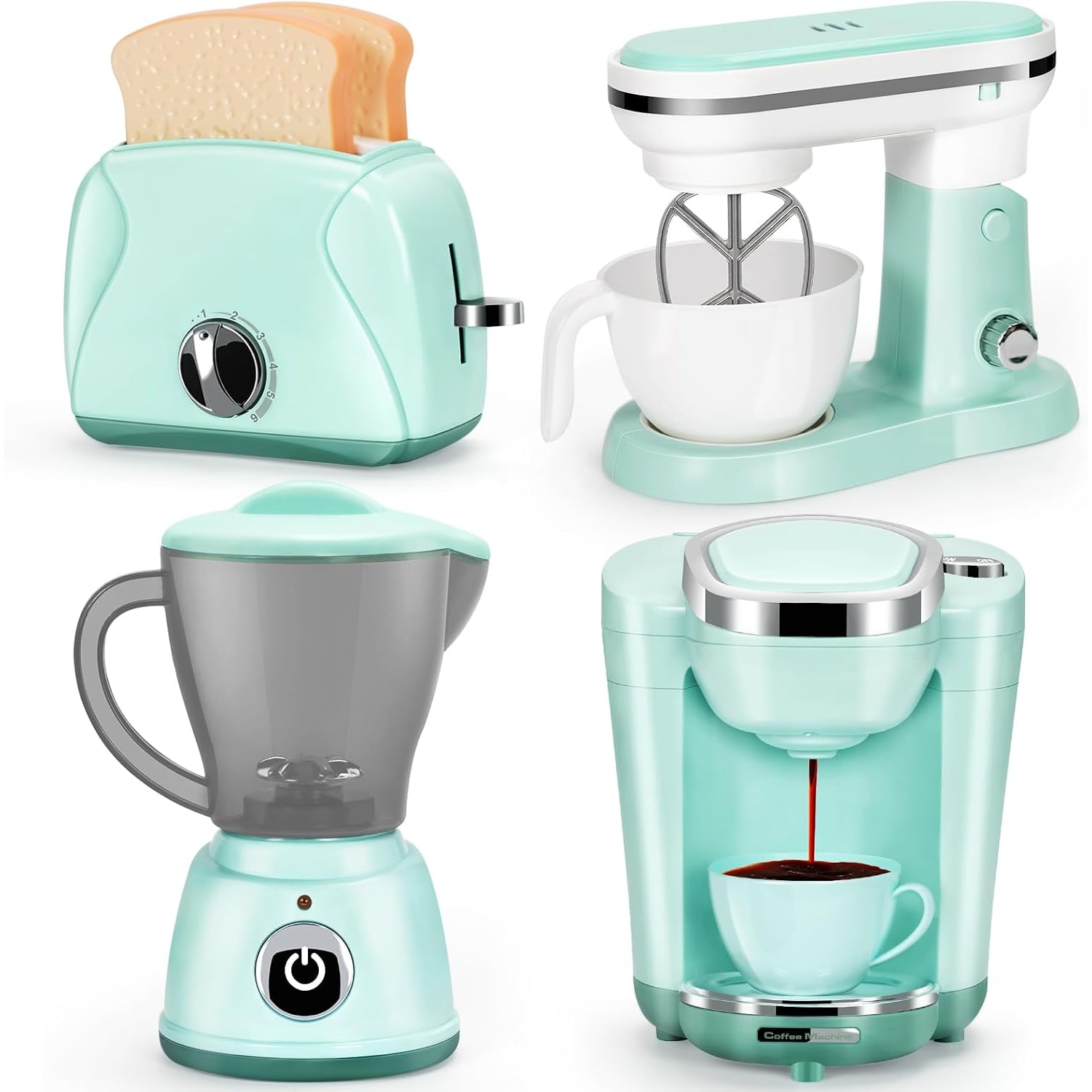
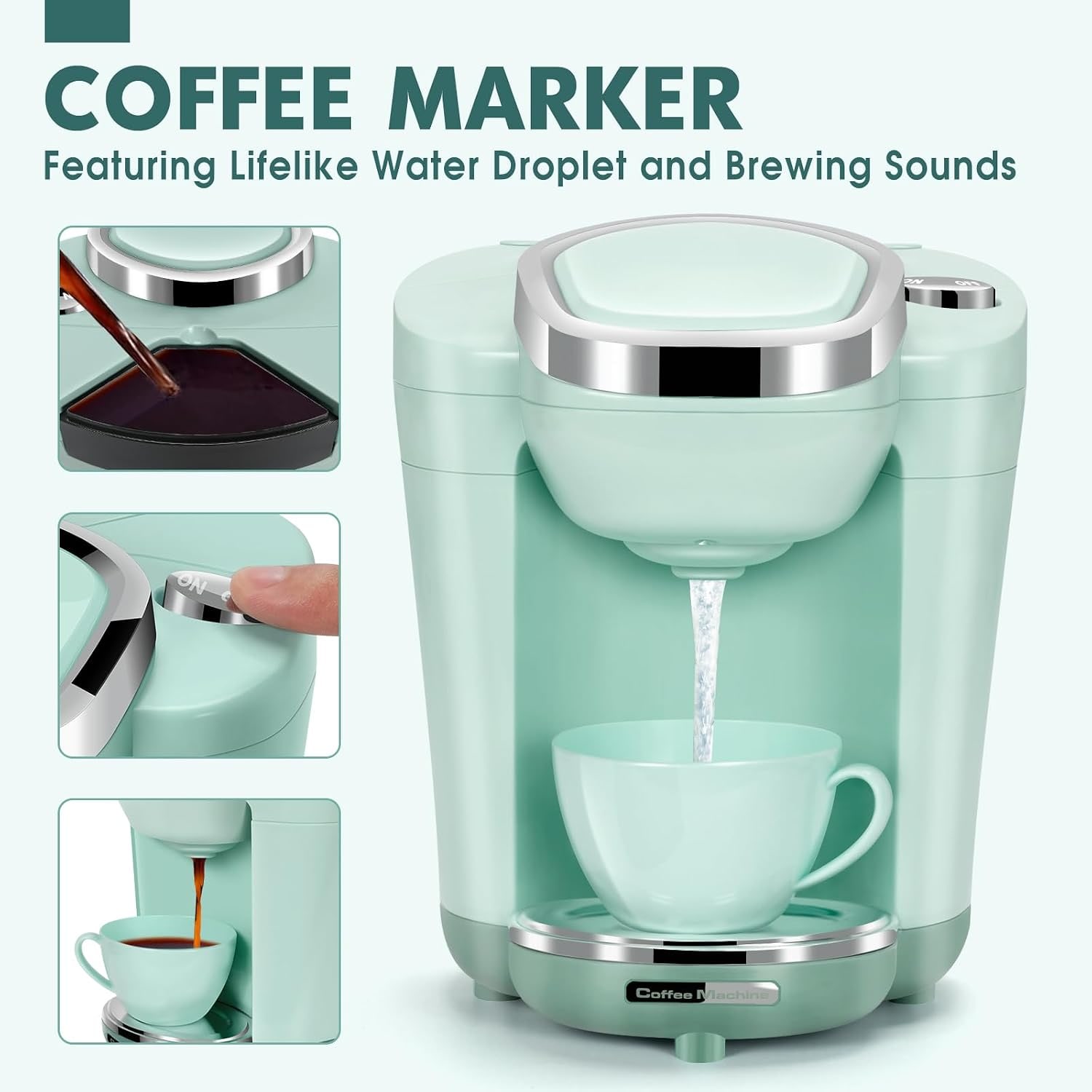
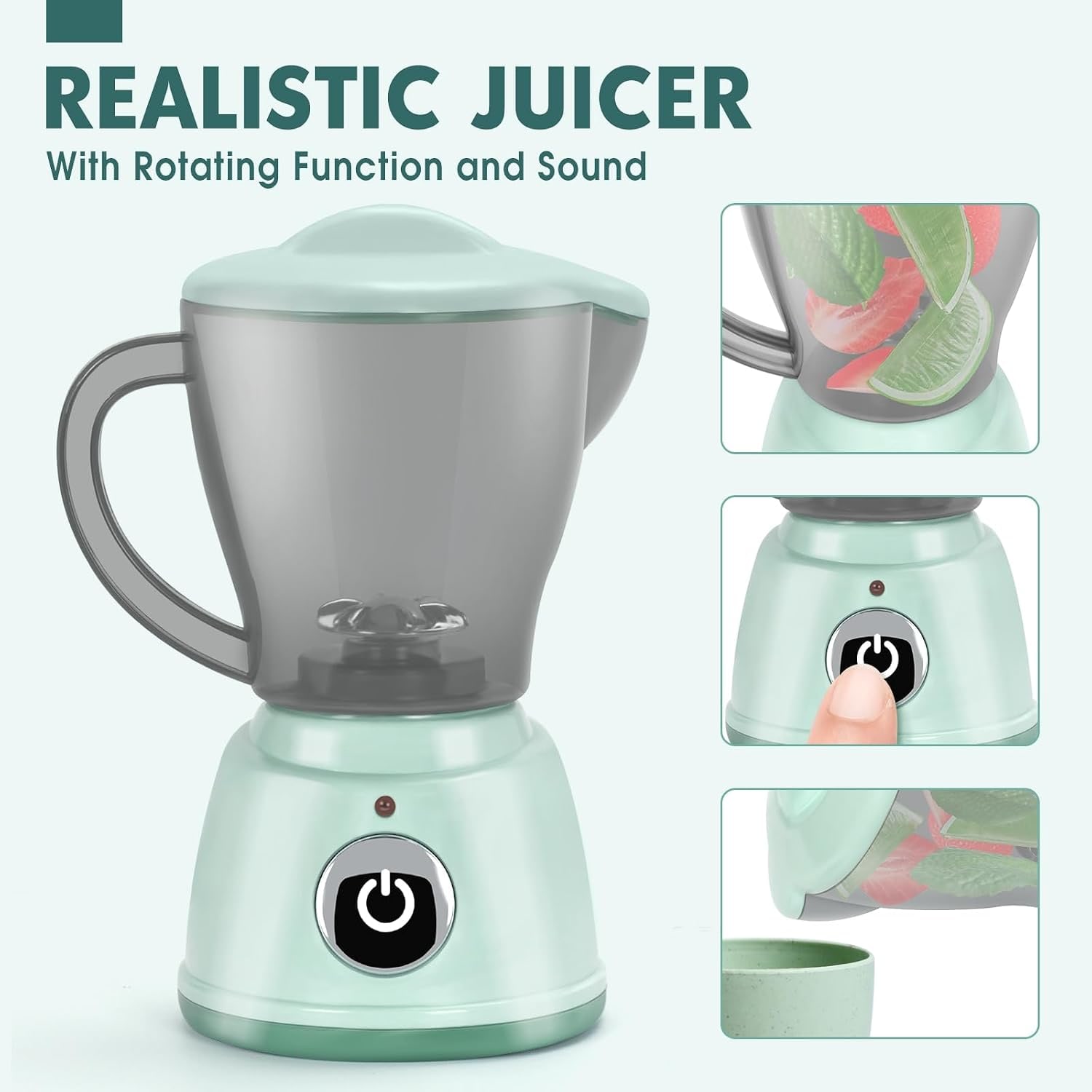
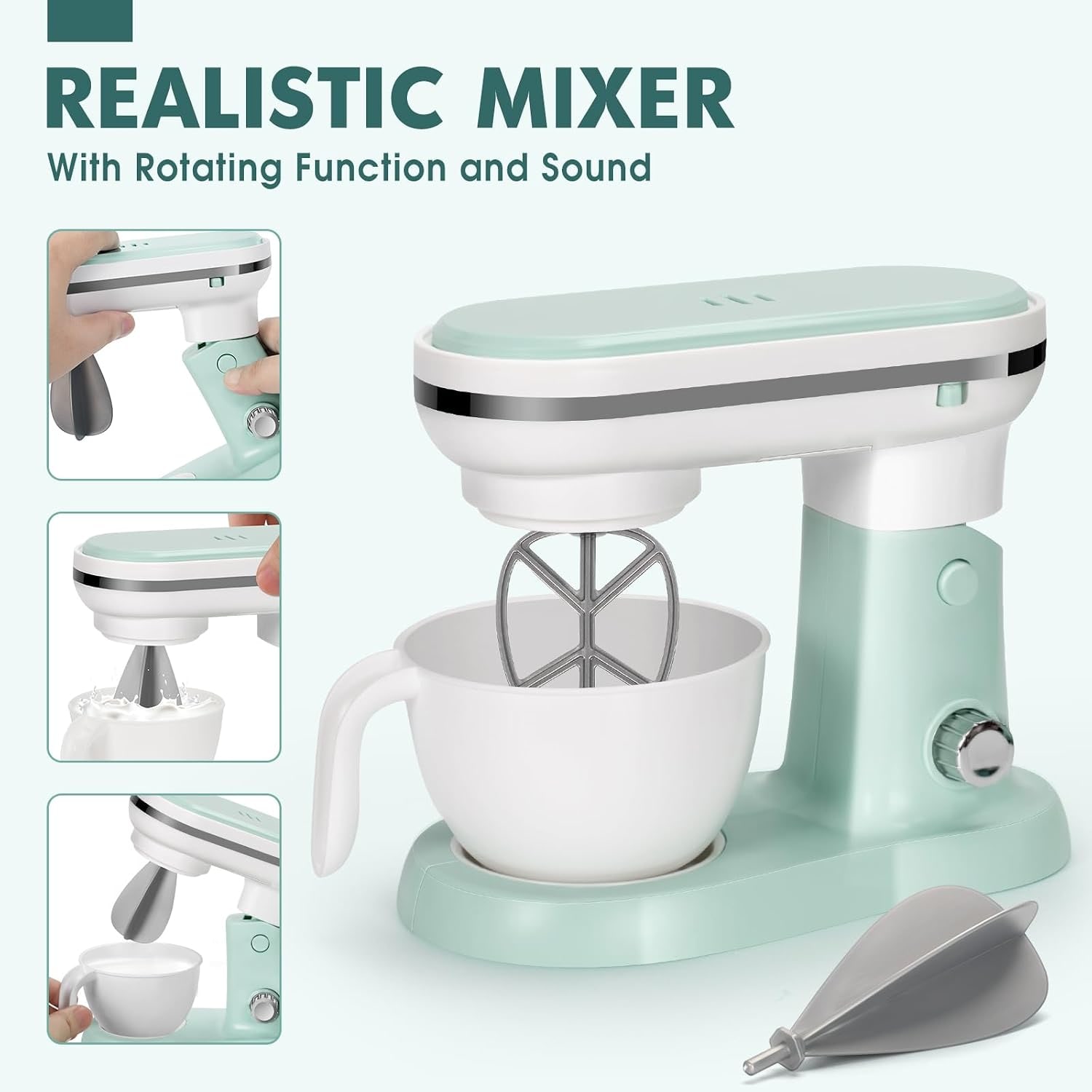
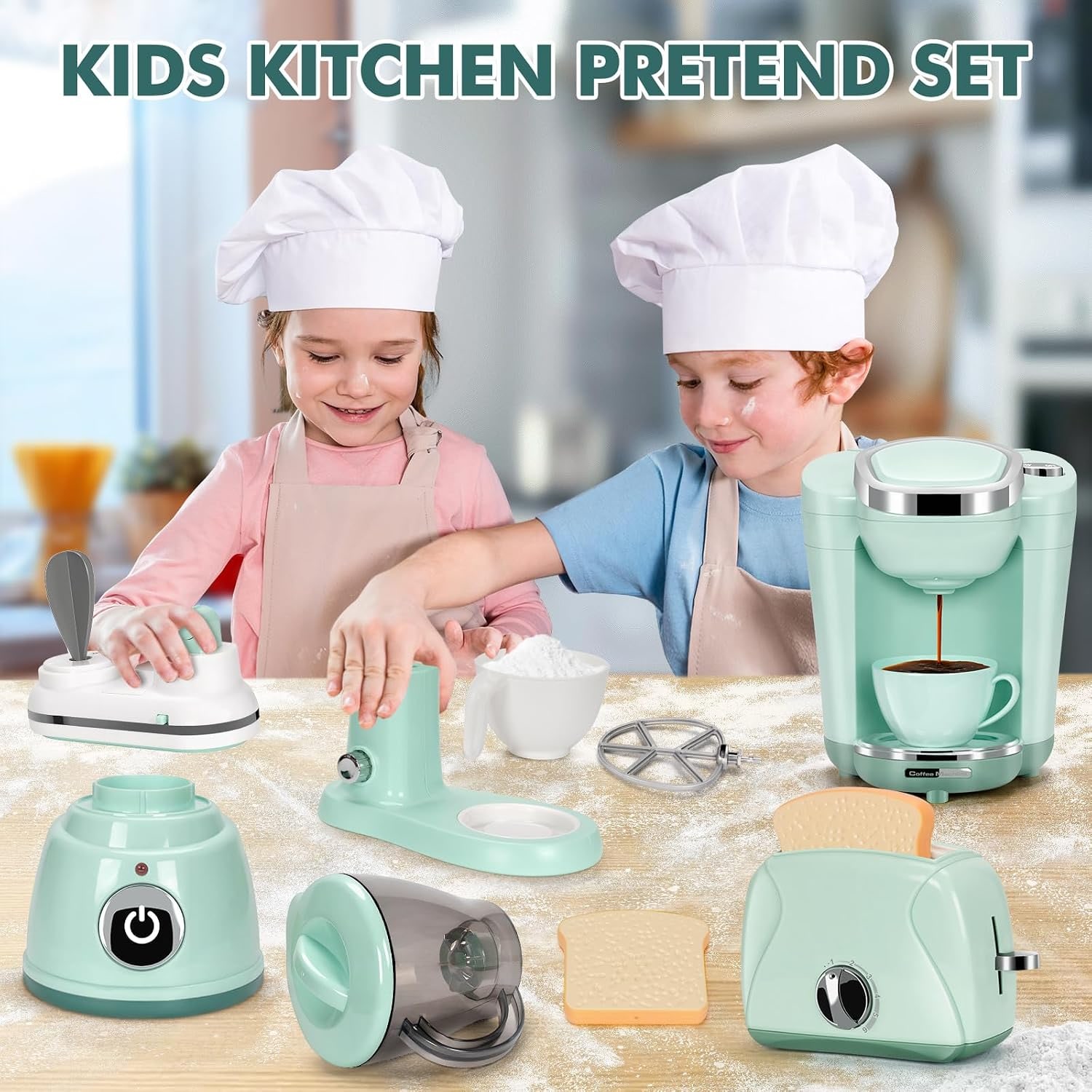
This set includes a coffee maker machine, a mixer, a toaster and a blender.
The material is plastic. The packed carton is 20 x 10 x 5 cm and the complete set weighs 1.26 kg. Colours are listed as blue, red, green or yellow. It is for ages 3 and up, and because it contains small parts it is not suitable for children under 3.
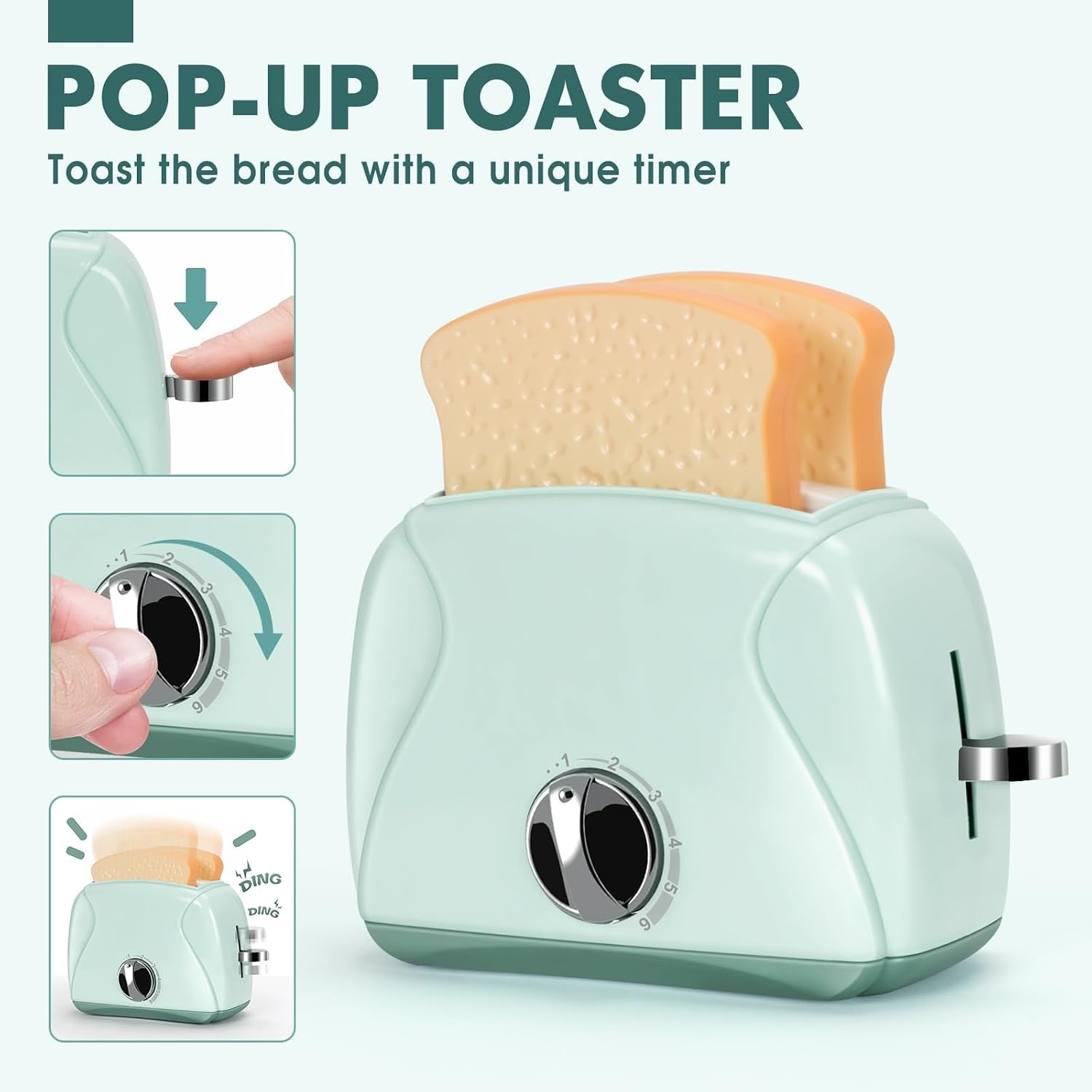
The actions are the interesting part. The toaster runs a timer, and when it finishes the toast pops back up. The blender spins for mixing. There is a rotating action for working pretend fruit. None of this is complicated, and that is the point. Simple, repeatable actions are what a young child can operate without an adult standing over them.
Why moving parts change the play
A static plastic toaster is a box. A toaster that pops gives the child a beginning, a wait and an ending. That tiny structure is what lets a three minute game turn into a twenty minute one.
Think about how a child uses it. They put the toast in. They press the lever. They go and do something else, usually making a pretend coffee, because they know they have a few seconds. The toast pops. They come back. Now they have made breakfast, and breakfast has to be served to someone.
That is the whole mechanism. Appliances with timing create waiting, waiting creates a second task, and a second task creates a sequence. Pretend play toys with no moving parts rarely get there on their own.
Who it suits
It suits a child aged 3 and up who already likes copying what adults do around the house. If your child hovers near the kettle or asks to press the button on the coffee machine, this is the right shelf.
It suits houses with two or more children, because four separate appliances mean two kids can work at once without fighting over one toy. One runs the coffee station, one runs the toaster, and within a minute or two they have invented a cafe with customers.
It also suits a family who already owns a play kitchen that has gone quiet. Rather than replacing a perfectly good bench, adding play kitchen accessories with new functions is the cheaper way to restart interest. It is one of the easier play kitchen add on sets to slot in, since nothing needs mounting or assembling.
It is less right for a child under 3, and that is not negotiable. Small parts are small parts.
How to choose between sets
If you are comparing options, a few things are worth checking before price.
Count the separate pieces, not the photo. Some listings show a crowded picture that includes pretend food and cups that are not actually in the box. Here the stated components are the four appliances. Anything else in a photo should be treated as styling.
Look for actual functions. A moulded shape that only looks like a blender will be abandoned faster than one that spins. When people hunt for the best toy kitchen appliances set, the deciding factor is almost always how many of the pieces actually do something.
Check weight and size against your space. This set is 1.26 kg in total and packs to 20 x 10 x 5 cm. That is light enough for a child to carry and small enough to live in a tub under a bed. A heavy, bulky set tends to stay in one room and get played with less.
Think about how many children will use it. One child can manage one appliance. Two children need at least three pieces before the sharing stops being a negotiation.
Decide whether you want a full kitchen or just the machines. If you have no play kitchen, a set of kitchen playset accessories on a low table works fine and costs far less than furniture. You can always add the bench later.
Setting it up at home
Give the appliances a surface of their own. A low shelf, the end of a coffee table, or a spare chair all work. Children treat a defined space as a shop and an undefined pile on the floor as clutter.
Keep the four pieces together in one basket. Sets like this lose value when one appliance goes missing, since the sequence breaks. A single tub by the play area solves that better than any amount of asking.
Add a few props if you have them. A couple of cups, some pretend toast, a tea towel. You do not need much. Two or three extra items are enough to turn pretend cooking toys into a running cafe, and most households already have the props in the toy box somewhere.
Using it with real ingredients
The maker mentions the mixer can stir things like eggs and flour. Plenty of families do this and it is a good rainy afternoon activity, but treat it as supervised cooking rather than toy play. Wash the parts straight after. Do not heat anything in the appliances, and do not put them in the oven, microwave or dishwasher.
For everyday use, pretend food is simpler and keeps the set in better condition.
Looking after it
Care is straightforward. Wipe each piece with a soft damp cloth and dry it before it goes back in the tub. Avoid leaving the plastic in direct sun for long stretches, which can fade and weaken it over time.
Check the moving parts now and then, especially after play with real ingredients, since crumbs and batter can gum up a timer. If any piece cracks or chips, take it out of the set.
If the appliances use batteries, remove them before a long period in storage.
The short version
This is a four piece toy kitchen appliances set, a coffee maker, mixer, toaster and blender, made of plastic and weighing 1.26 kg in total. The toaster pops on a timer, the blender spins, and there is a rotating action for pretend fruit.
It is built for ages 3 and up and contains small parts, so it is not suitable for children under 3.
Buy it if you want a play kitchen that children actually operate rather than look at, if you have more than one child who needs their own job, or if you want to bring life back to a kitchen corner that has gone quiet. It ships from Australian warehouses in 3 to 7 working days, and returns are open for 14 days from delivery if it is unused and still in its packaging.