
The complete guide
How to Choose a Bubble Machine That Actually Keeps Going
The problem with blowing bubbles by hand
Every parent has done the same routine. You buy a tub of bubble mix, sit on the back step and blow through a plastic wand until your jaw aches, and the children want more the second you stop. Hand wands produce maybe a dozen bubbles at a time. Children want hundreds. The gap between those two numbers is why a bubble machine exists.
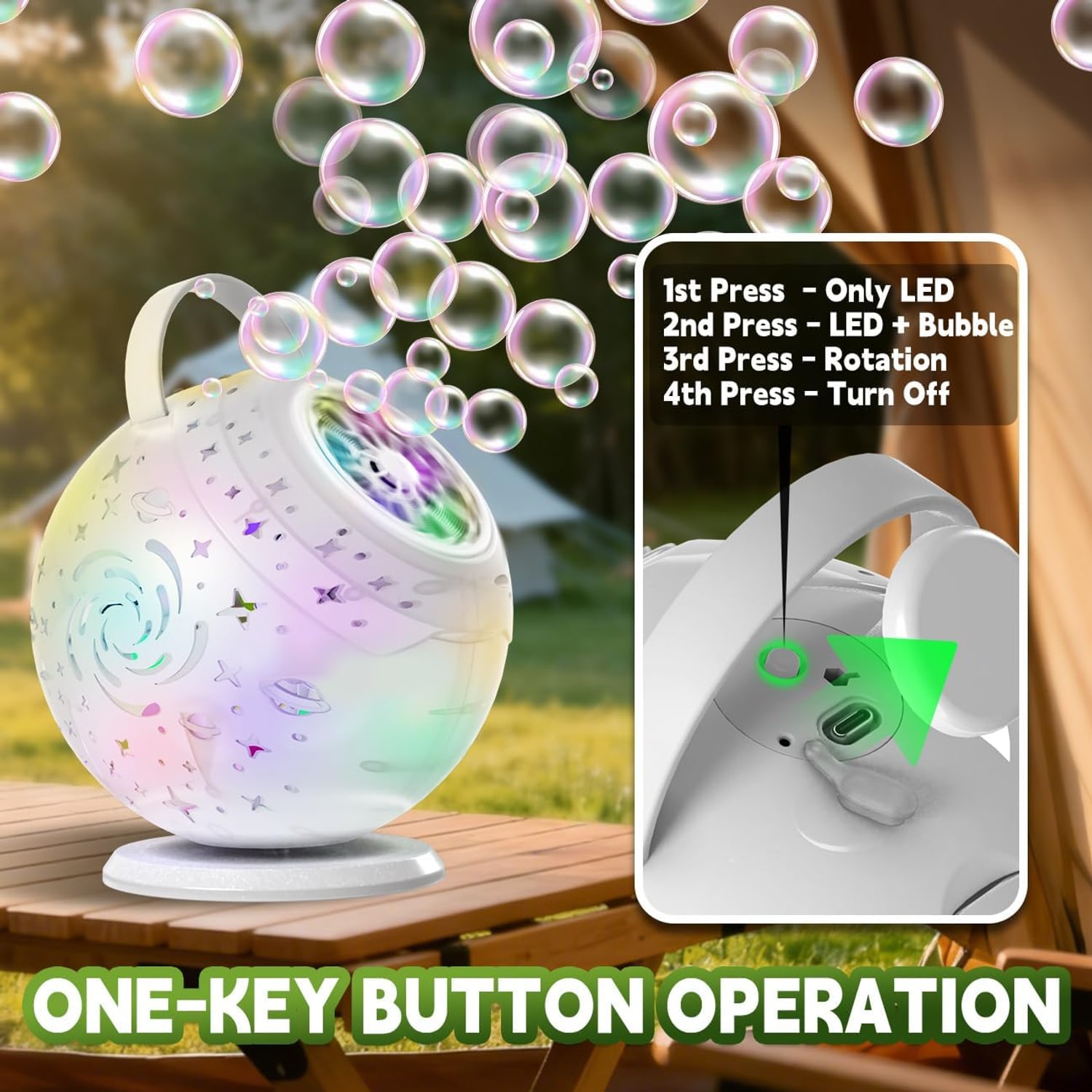
The other problem is batteries. Plenty of cheap bubble blowers chew through four AA cells in half an hour, and the moment they fade the bubbles get weak and the fun stops. You end up raiding the TV remote. A rechargeable bubble machine sidesteps that entirely by using a built-in battery you top up over USB-C, the same cable that charges most phones in the house.
How a bubble machine actually works
The mechanics are simple once you see inside one. A small motor turns a wheel or a disc of rings through a tray of soapy solution. Each ring picks up a film of liquid. A fan behind the wheel then pushes air through that film and the film becomes a bubble. Repeat that fast enough across enough rings and you get a stream rather than a trickle.
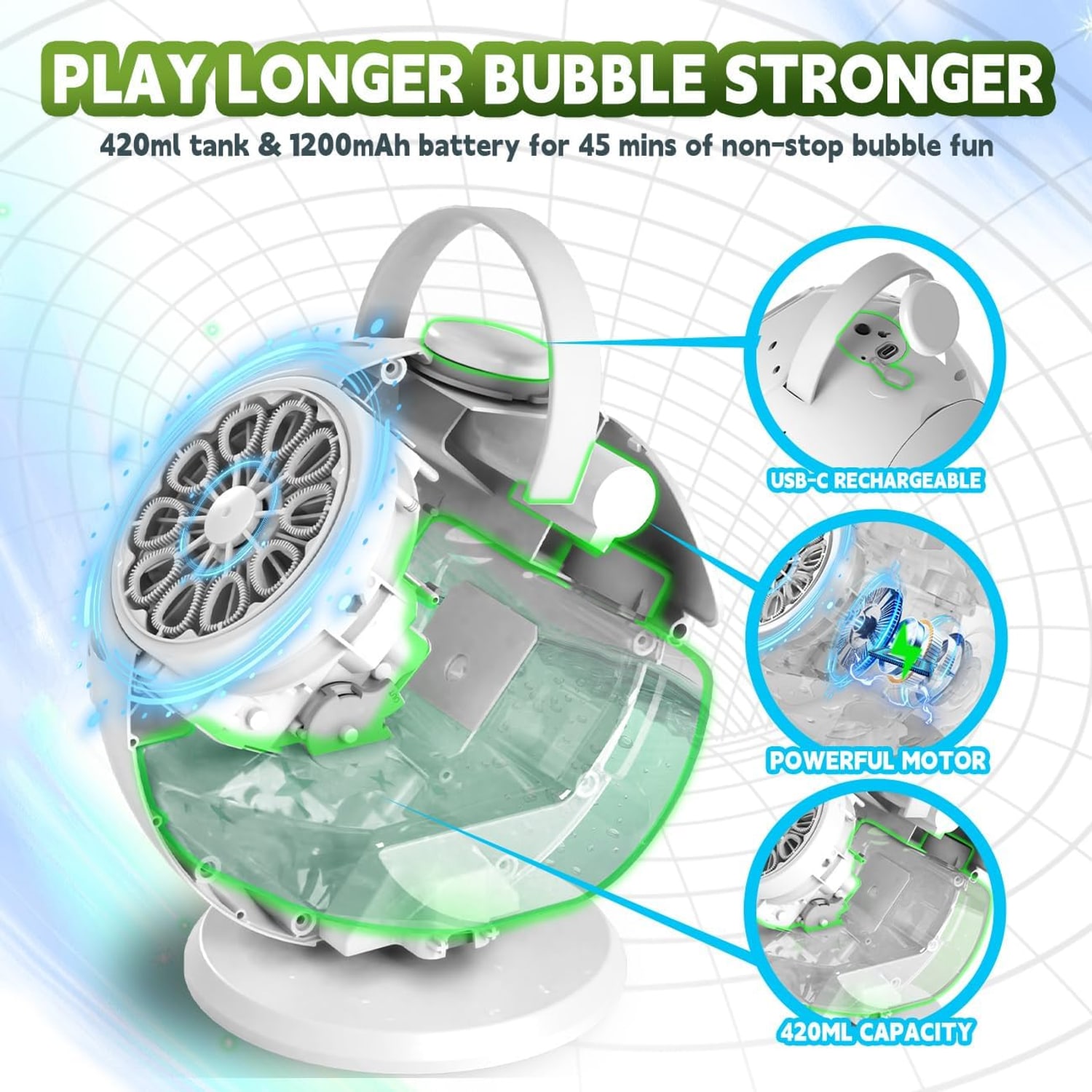
That is where the hole count matters. This machine uses a ten-hole head with a larger bubble design, so there are ten films being filled with air at once instead of two or three. The result is a thick cloud rather than a scattering. More holes also means the machine keeps producing even when a couple of rings miss a clean film, which happens naturally as the solution level drops.
The second piece is the tank. At 420ml, this one holds a decent amount of mix, and the see-through window on the side matters more than it sounds. Without a window you are opening the lid every few minutes to guess how much is left. With one, you glance across the lawn and know.
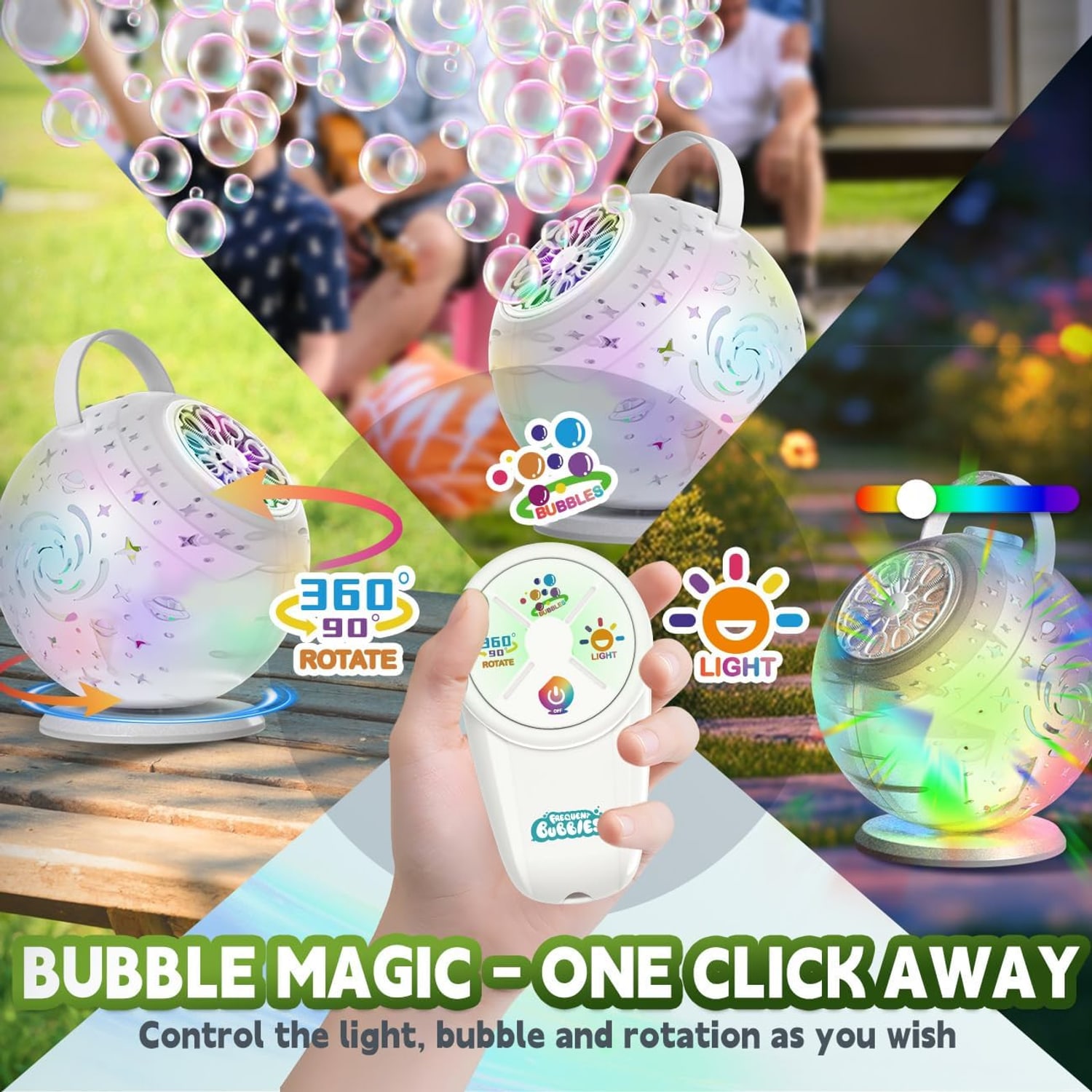
Rotation is the third element. A fixed bubble machine pours everything into one narrow cone, which works if the children stay put, and they never do. This head can sweep 90 degrees or turn a full 360. The sweep suits a machine placed against a fence or wall, pushing bubbles out across the open space in front of it. The full spin suits a machine in the middle of a group, where you want everyone covered.
Who this suits
It suits households with children aged 3 and up who already spend time outside. Backyards, driveways, front lawns and the grassy bit of a local park are all fair game. It is also well matched to anyone hosting a birthday, because setting it on a table and walking away does more for the atmosphere than most of the decorations.
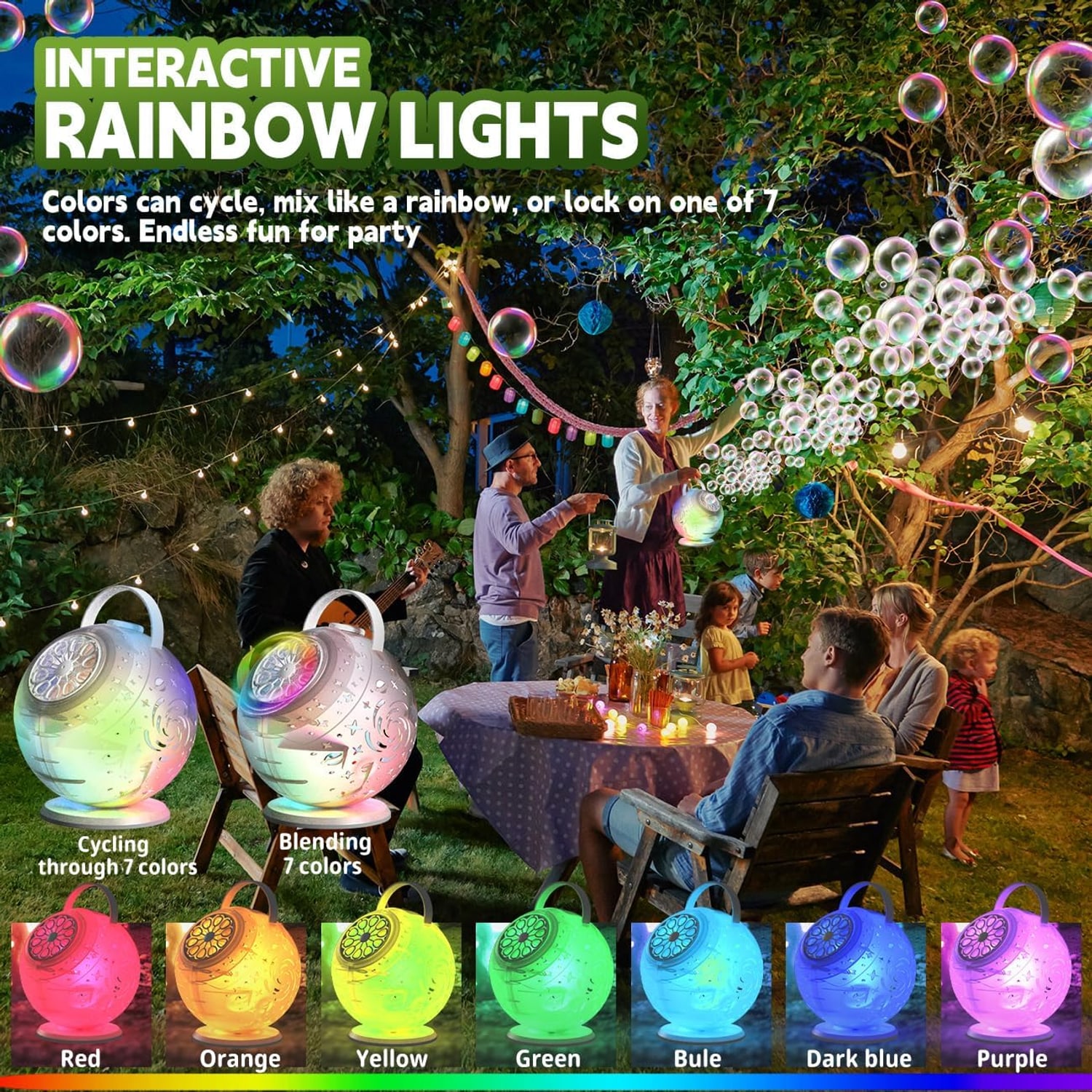
The LED lighting widens the use considerably. Nine colours cycling behind a stream of bubbles turns a dark patio into something worth standing in, which means the machine does not go back in the cupboard the moment the days get shorter. Parents who have run a summer party know the awkward hour between the cake and the pickups. This fills it.
It also suits people who travel light. The body measures 12.7 x 10.2 x 17.8 cm and it is cordless once charged, so camping trips, beach afternoons and days at the grandparents' place are all practical. There is no assembly, so it goes straight from bag to table.
Who it does not suit: anyone hoping for an indoor party prop. Bubble solution lands on floors and makes them slippery, and it leaves a film on furniture. Outdoors is where this belongs.
What to look for when you compare machines
Hole count. This is the single biggest factor in bubble volume. Two-hole units look fine in a photo and disappoint in a garden. Ten holes is at the generous end for a unit this size.
Power source. Battery-only machines are cheap up front and expensive over a summer. A built-in rechargeable lithium-ion cell charged over USB-C avoids that running cost and means you are not stranded when the shops are shut.
Tank size and visibility. A small tank means constant refills. A tank with no window means lifting the lid to check. Look for both a reasonable capacity and a way to see inside.
Rotation. Fixed heads cover a narrow strip. Rotating heads spread the bubbles. A machine that offers both a partial sweep and a full turn lets you match the setting to the space.
Controls. A single button is ideal for a child who wants to run it themselves. A remote is ideal for an adult who wants to stop it from across the yard without walking through a cloud of soap. Having both covers everyone.
Lighting. Not essential, but it roughly doubles the number of occasions a machine gets used.
Setting it up well
Height matters more than people expect. Bubbles fall as they travel, so a machine on the ground sends them straight into the grass. Put it on a table, a bench, a tree stump or an upturned crate and the bubbles have room to drift at head height, which is where children can chase them.
Mind the wind. A gentle breeze is your friend because it carries the stream further across the yard. A strong one will pop bubbles as they form. If it is gusty, set the machine so the wind blows across the head rather than into it.
Think about what is downwind. Bubble solution is soapy water, and it will leave spots on car paint, outdoor cushions and glass doors. Point the machine at the lawn, not the driveway.
Mix the solution as the maker directs. The included bottles are a concentrate, so adding water at the stated ratio gets you a mix that forms properly. Too thick and the holes clog. Too thin and the films break before they lift off.
Care that keeps it running
Most bubble machines that die young die of dried solution, not broken motors. The habit worth building is simple. When play finishes, tip the leftover solution out of the tank, rinse the tank with clean water and run the machine briefly with plain water in it so the rings and holes get flushed. Then leave the lid off until everything dries.
Wipe the housing with a dry cloth. Do not submerge the machine or hold it under a tap, because the battery and motor sit inside that ABS shell. Store it indoors, out of direct sun, and give the battery a top-up charge every few months if it is sitting unused over winter. Lithium-ion cells do not like being left flat for long stretches.
If output drops one day, check three things in order: solution level, battery charge, then blocked holes. A rinse with warm water usually clears the third.
What comes with it
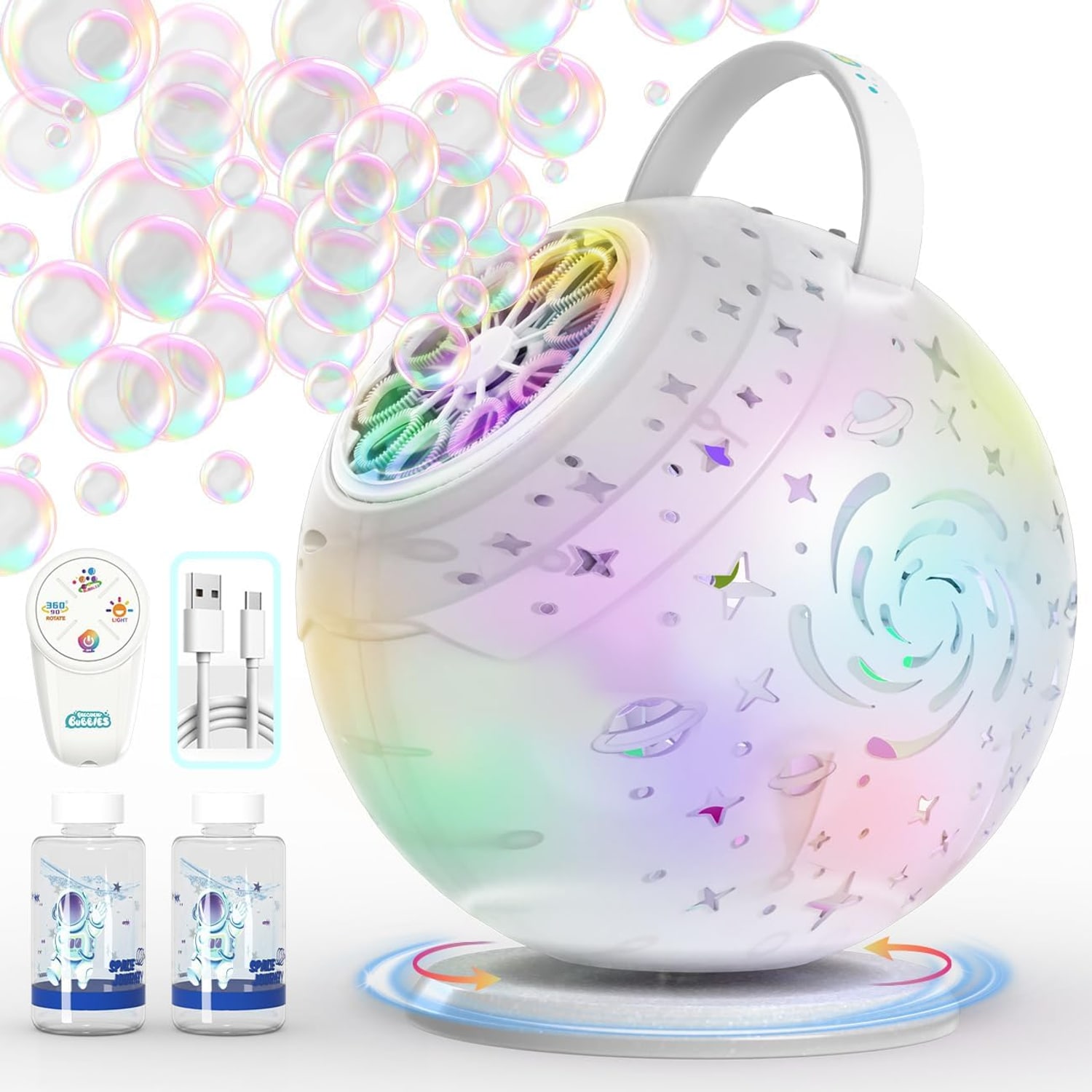
The box holds the machine, two bottles of bubble solution, the remote, two USB cables and two AA batteries for the remote. That is everything required, which is worth noting because a surprising number of outdoor bubble toys arrive without the mix or without the cells they need.
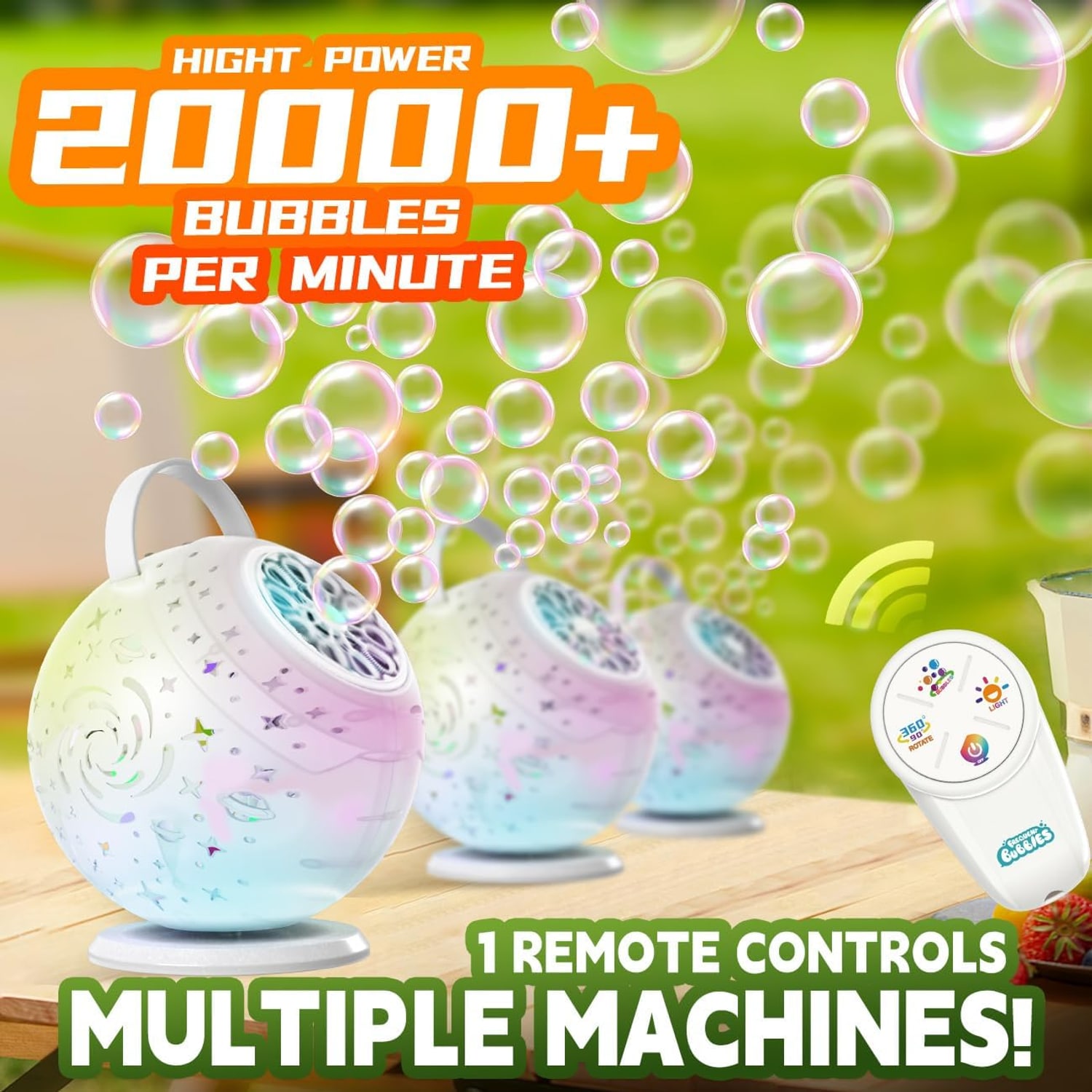
The remote is the quiet highlight. It starts and stops the bubbles, changes the light modes and switches the rotation, and the maker notes one remote can run more than one machine. If you buy a pair for a bigger party, you control both from one hand.
The short version
A good bubble machine does one thing properly: it keeps producing bubbles long after a human wand-blower would have given up. This one does that with a ten-hole head, a 420ml tank you can see into, a head that sweeps or spins, and a rechargeable battery that fills over USB-C in the same way as a phone.
It is suited to ages 3 and up, needs no assembly, and fits in one hand for trips away. Keep it out of the rain, rinse the tank after use, and it should be the thing you reach for whenever the garden needs livening up.