
The complete guide
Choosing a Folding Kids Art Easel That Actually Gets Used
The problem with drawing on the floor
Kids draw wherever they land. The coffee table, the kitchen tiles, the back of a cereal box. There is nothing wrong with that, but it has two side effects most parents will recognise. The art never has one place to live, so paper and pens drift across the house. And drawing lying down or hunched over a low table tends to produce small, cramped marks, because the arm cannot swing.
A standing easel fixes both. It gives drawing a fixed address in the house, which means supplies stay in one spot. And it puts the paper vertical at roughly shoulder height, so the whole arm moves instead of just the fingers. That is usually when the drawings get bigger and looser.
The catch has always been space. A big wooden easel parked in the middle of a living room is a lot of furniture to look at every day. That is exactly what a folding kids art easel solves, and it is why foldable models have become the default choice for anyone who does not have a dedicated craft room.
What this one actually is
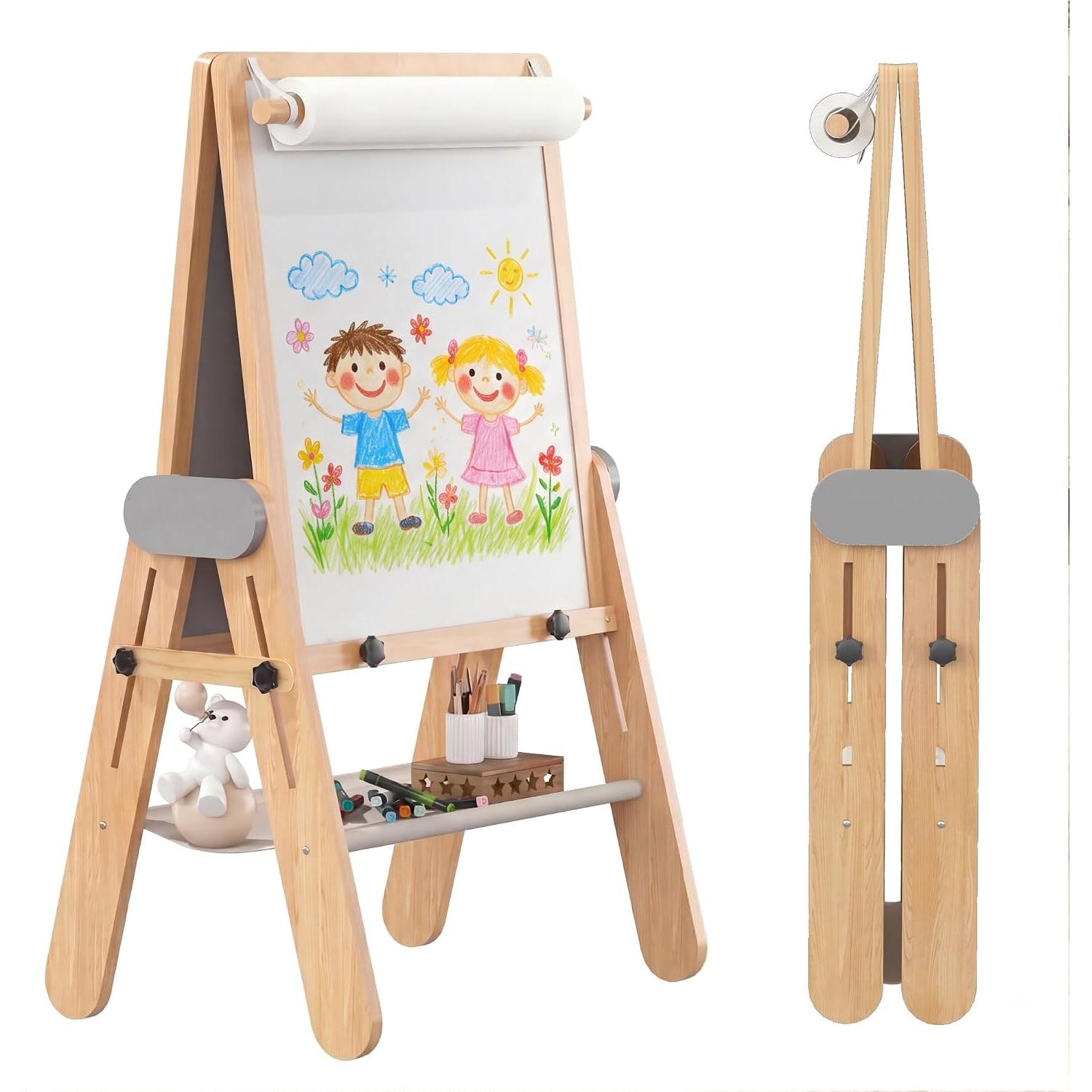
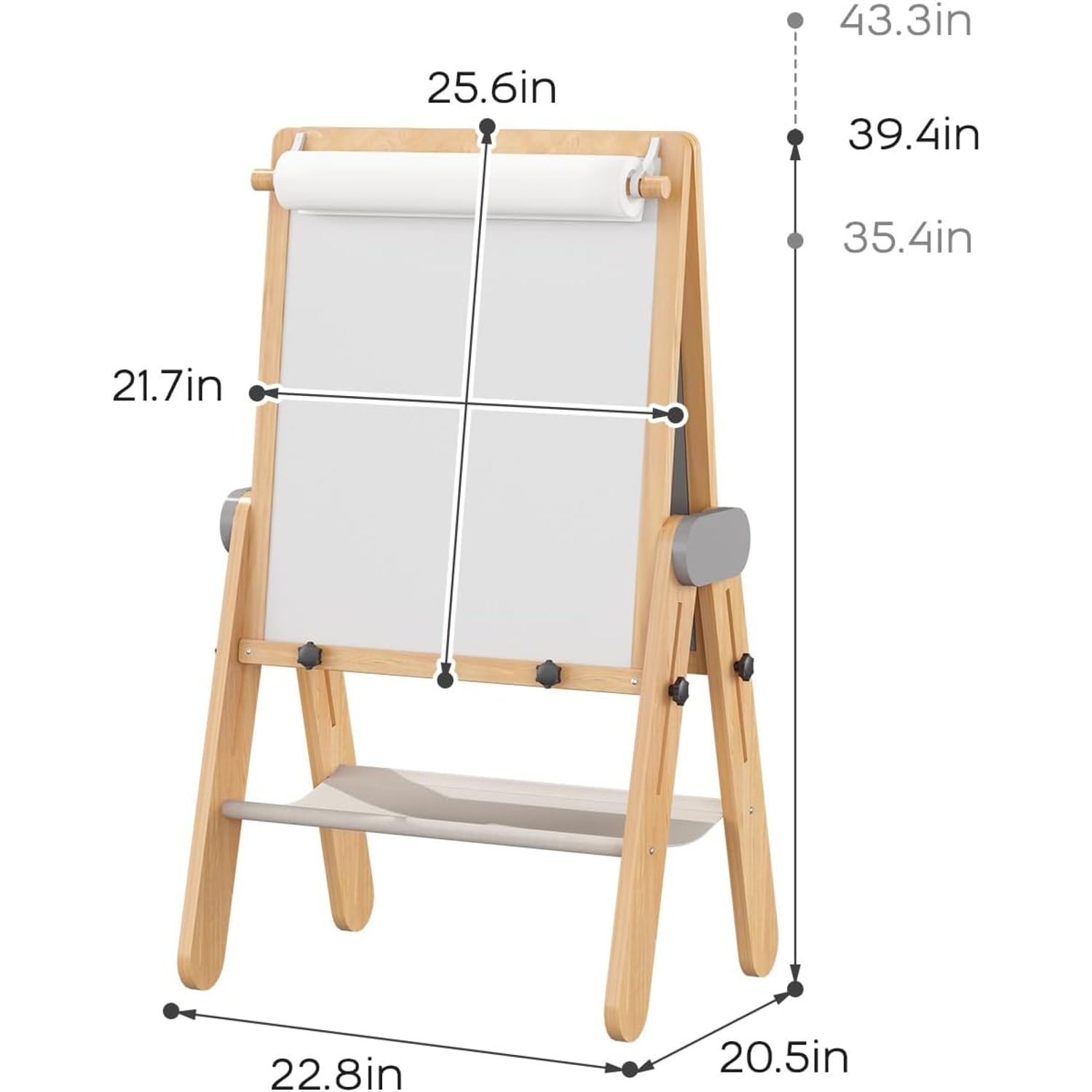
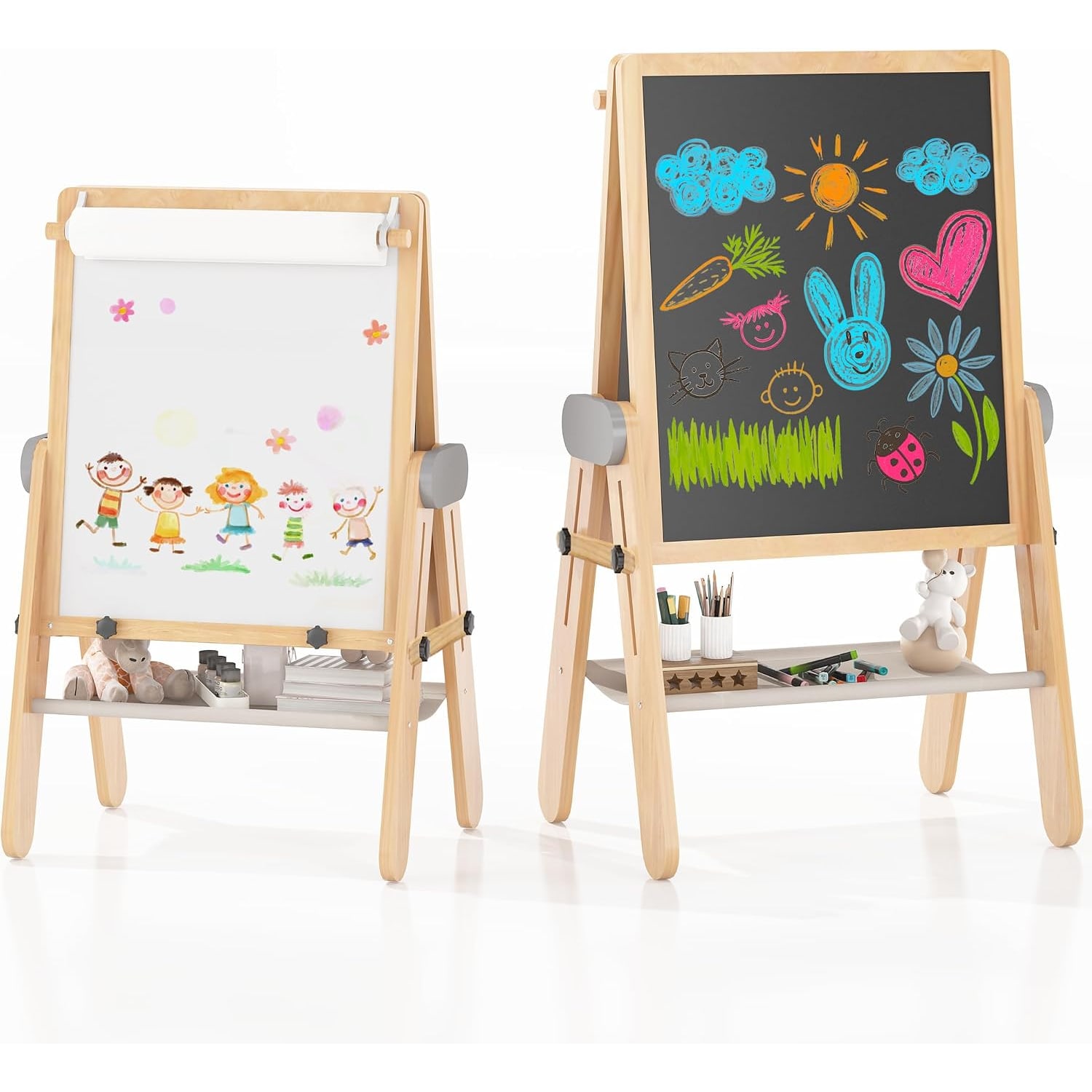
This is a wooden easel in grey, built as a single mast design. It stands 100 cm high with a footprint of 52 cm deep and 58 cm wide, and it weighs 7.26 kg.
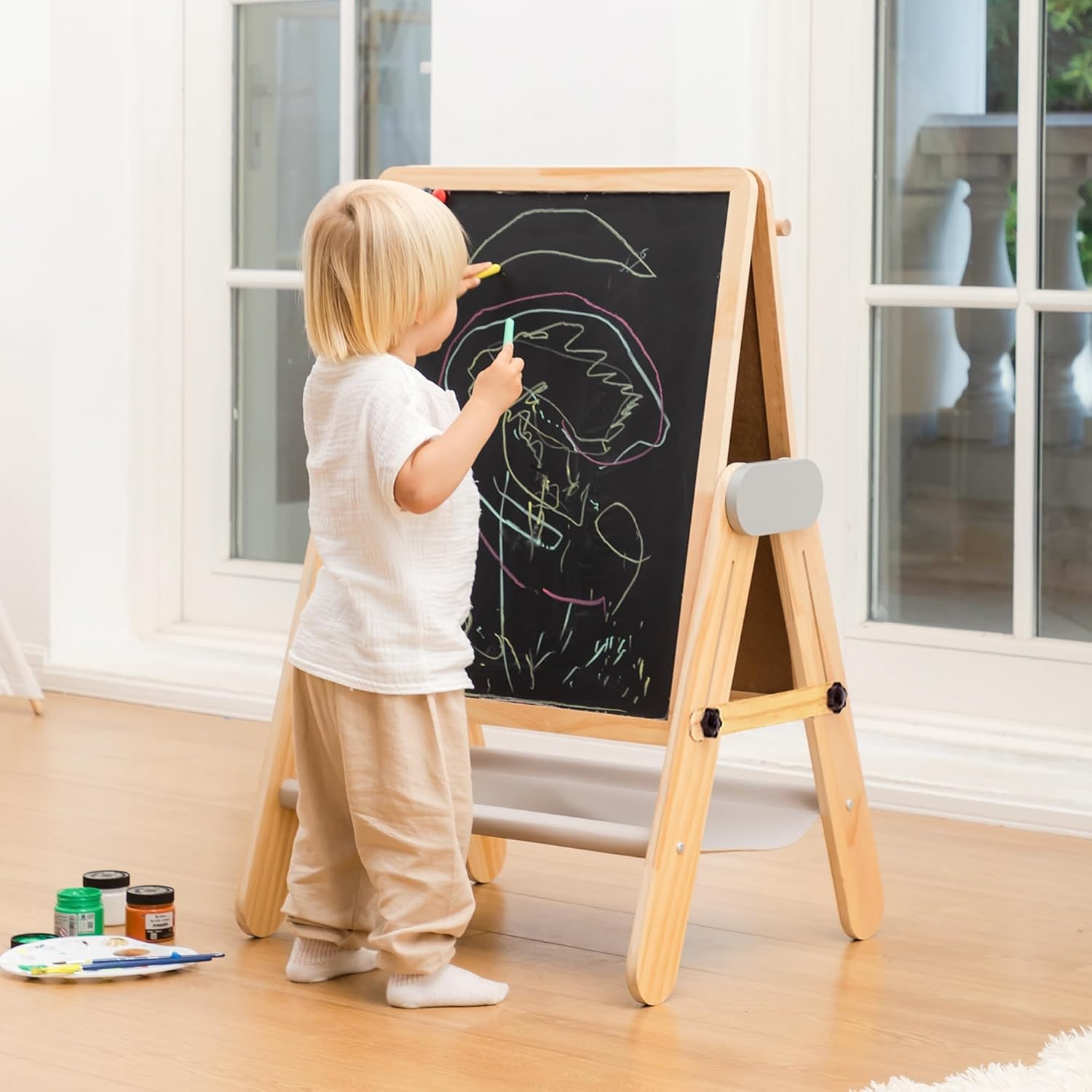
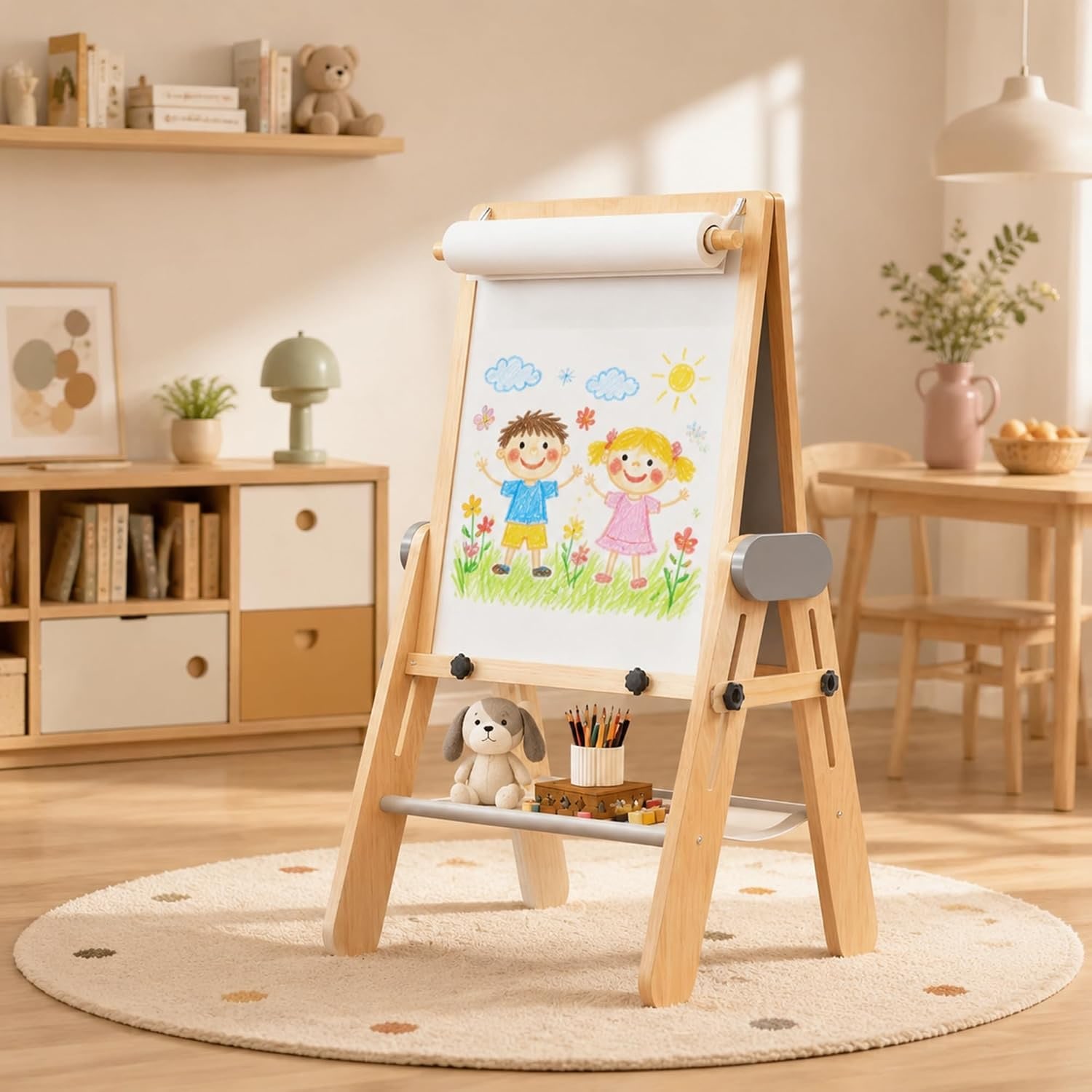
One face is a magnetic chalkboard. The other is a whiteboard. Across the top there is a paper roll holder, so a child who prefers paper can pull down a fresh sheet rather than wiping a board. The roll itself is not included, which is normal for this type of product since roll widths vary by brand.
Below the drawing board sits a PU pouch for supplies. Markers, chalk, an eraser, a handful of magnets. It is a small feature, but it is the difference between an easel that is ready to use and one that needs five minutes of searching first.
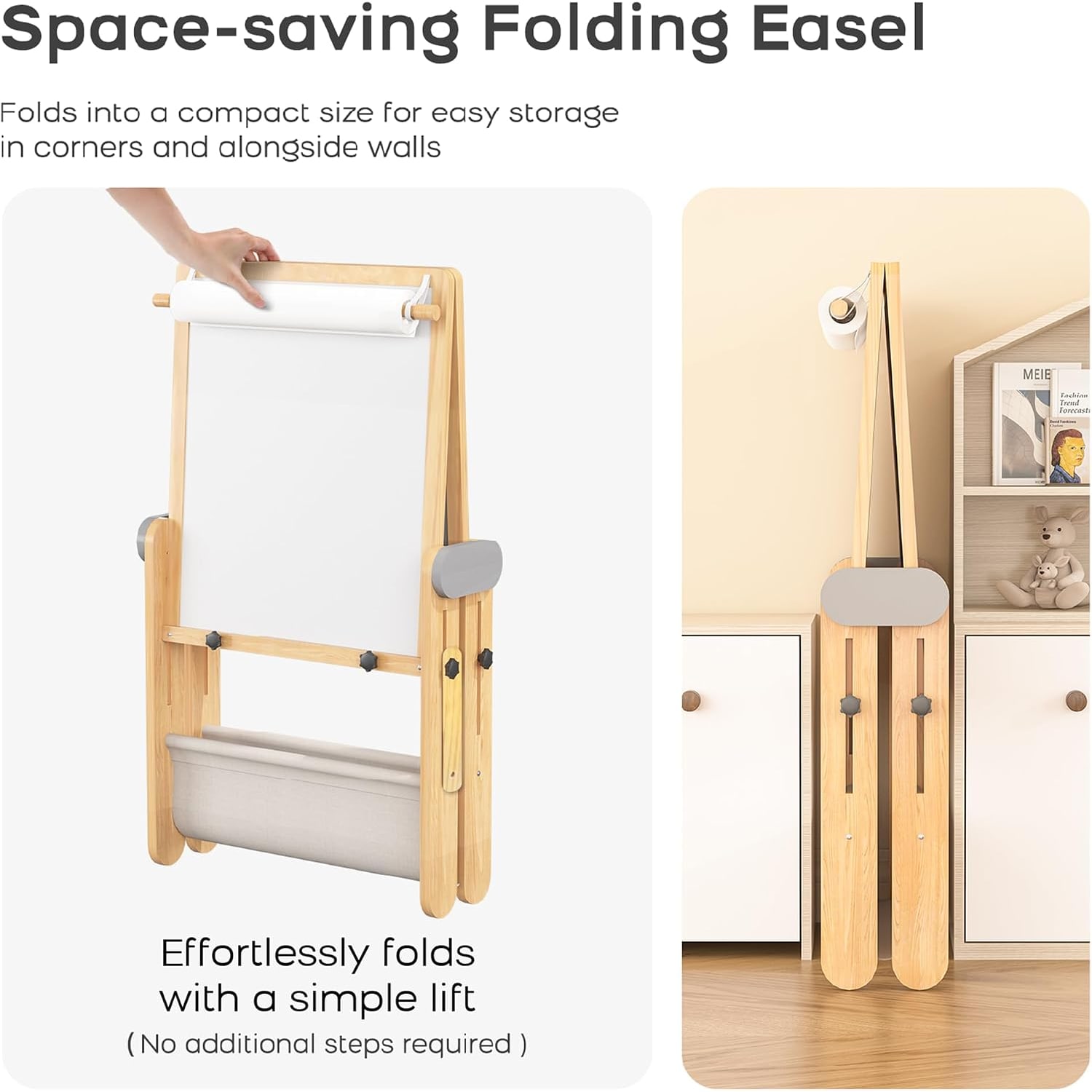
The board height adjusts between 35.4 inches and 43.3 inches. The easel arrives highly pre-assembled, so there is no flat-pack build to work through, and folding it down is a single movement: lift the frame and it collapses.
Why the two sides matter more than you think
A double sided children's easel seems like a nice extra until you have two kids in the house. Then it is the whole reason you bought it. One child takes the chalk side, the other takes the markers, and nobody is elbowing anyone.
Even with one child, two surfaces are useful. Chalk and dry marker feel completely different under the hand, and children often prefer one over the other on a given day. Having both means you are not committing to a single medium when you buy.
The magnetic chalkboard adds a third mode of play. Magnetic letters, numbers and shapes stick to the board, which turns it into a layout surface rather than just a drawing one. Plenty of families use that side for spelling practice, shopping lists written by a five year old, or just arranging coloured shapes.
Getting the height right
This is the thing people get wrong, and it is easy to fix. Set the board so that the middle of the drawing area sits somewhere between your child's chest and chin when they stand normally. Too high and they reach up, which tires the shoulder and makes marks go wobbly. Too low and they bend forward, which is uncomfortable within a few minutes.
The 35.4 to 43.3 inch range covers a long stretch of childhood. A child who starts at the bottom setting around age three or four will still be comfortable several years later near the top of the range. That is the real value of a height adjustable easel: you are not replacing it after eighteen months.
Check the setting every so often. Kids grow in jumps, and a board that was perfect in March can be two inches too low by September.
Who it suits
Families in apartments and smaller houses get the most out of a folding frame. If the easel has to share the living room, being able to collapse it in one motion changes how often it actually gets used. An easel that is annoying to put away ends up permanently out, and then it ends up resented.
It also suits households where the drawing happens in different rooms. At 7.26 kg you can carry it from the lounge to a bedroom without much effort. Grandparents' houses are another common use, since it folds small enough to travel in a car boot.
If you have a dedicated playroom with space to spare, you might lean toward a fixed, larger board instead. But most people do not have that, and the folding design costs you almost nothing in drawing area.
Choosing between easel types
There are roughly four styles on the market and they suit different homes.
Wall mounted boards save the most floor space but fix the height permanently and do not travel. Tabletop easels are cheap and small but put the child back into a seated, hunched position, which undoes much of the benefit. Fixed A-frame wooden easels are solid and roomy but always in the way. Folding standing easels, like this one, sit in the middle: proper standing height, two surfaces, and they disappear when you fold them.
If you are comparing a few options, look at three things beyond the price. First, whether the height adjusts and by how much. Second, whether it folds in one motion or requires loosening knobs and pulling pins, because the fiddly ones stop getting folded. Third, whether there is somewhere to keep the supplies, since a board with no storage means the pens end up everywhere.
Setting it up at home
Put it on a flat, hard floor if you can. Thick carpet lets the feet sink unevenly and the board can rock a little. A mat or an old sheet underneath catches chalk dust and the inevitable stray marker line, and it rolls up for shaking out later.
Natural light helps. Kids notice their own colours better near a window than under a ceiling light, and it saves them casting a shadow across their own work.
Keep the easel away from the wall by a few centimetres when in use. Children lean, and a board pressed flat against plaster can leave chalk marks behind it.
Looking after it
Both surfaces clean with a damp cloth. Wipe and then dry, especially on the whiteboard, because leaving moisture to evaporate can leave faint streaks that build up over months.
Use markers made for whiteboards. Permanent markers are the main thing that ruins a whiteboard face, and they will not come off with water. If someone does get a permanent mark on it, drawing over it with a dry erase marker and wiping straight away sometimes lifts it, but it is not guaranteed.
For the chalkboard, a dry cloth or board eraser handles day to day cleaning, with a damp wipe now and then to clear the grey haze that builds up. Let it dry fully before the next chalk session or the chalk will smear.
The wooden frame just needs a dry dust. Do not soak it, and keep the easel indoors or under cover. Timber and damp air do not get along. Every month or two, fold and unfold it a few times and check the height setting still holds firm.
Making it part of the routine
An easel earns its place when it is used, and that usually comes down to habit rather than the product. A few things help. Leave one side with something on it, a half-finished drawing or a word of the day, because a blank board is less inviting than one with a starting point. Keep the pouch stocked so there is never a search for a working marker. And put the easel somewhere the child passes often, rather than tucked in a room they only enter at bedtime.
Rotating the use keeps it fresh too. Drawing one week, magnetic letters the next, a paper roll mural on a rainy Saturday. The three modes are there for a reason.
The short version
This is a wooden folding kids art easel in grey, 52 by 58 by 100 cm, weighing 7.26 kg. It has a magnetic chalkboard on one side, a whiteboard on the other, a paper roll holder at the top (roll not included) and a PU supplies pouch below the board. The height adjusts from 35.4 to 43.3 inches, it arrives highly pre-assembled, and it folds by lifting the frame.
If you want a drawing station that gives your child a proper standing surface and then vanishes into a corner when the session is over, this covers it. Set the height right, keep the pouch stocked, and wipe the boards down now and then. That is most of what it needs.