
The complete guide
How to Choose a Travel Backgammon Set That Actually Gets Played
The game that never gets played
Most households have a board game problem. There is a cupboard, there are boxes, and the boxes mostly stay shut. Part of that is the games themselves, but a bigger part is friction. A game that needs half an hour of setup, a cleared table and four willing people is a game you play twice a year.
Backgammon dodges most of that. Two players, five minutes of setup, and a game that finishes in the time it takes to drink a cup of tea. The trouble has usually been the board. A proper wooden backgammon board is lovely and it weighs a lot, and it stays exactly where it is. So the game lives at home, and only comes out when the right two people happen to be standing in the right room.
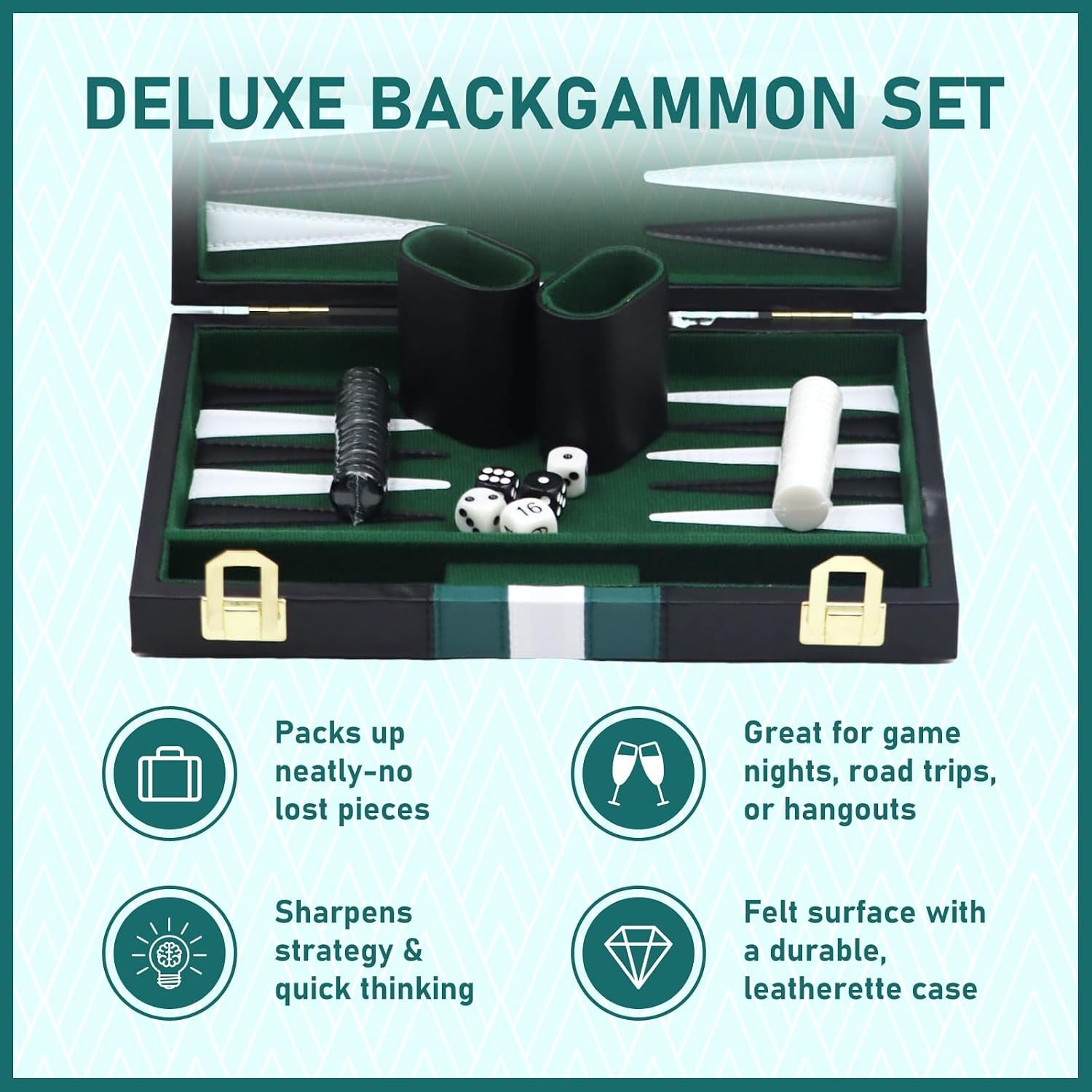
A set built into a carry case solves that. The board folds shut on its own pieces, clips closed, and goes in a bag. That changes where and when the game gets played, which is the whole point.
How this set works
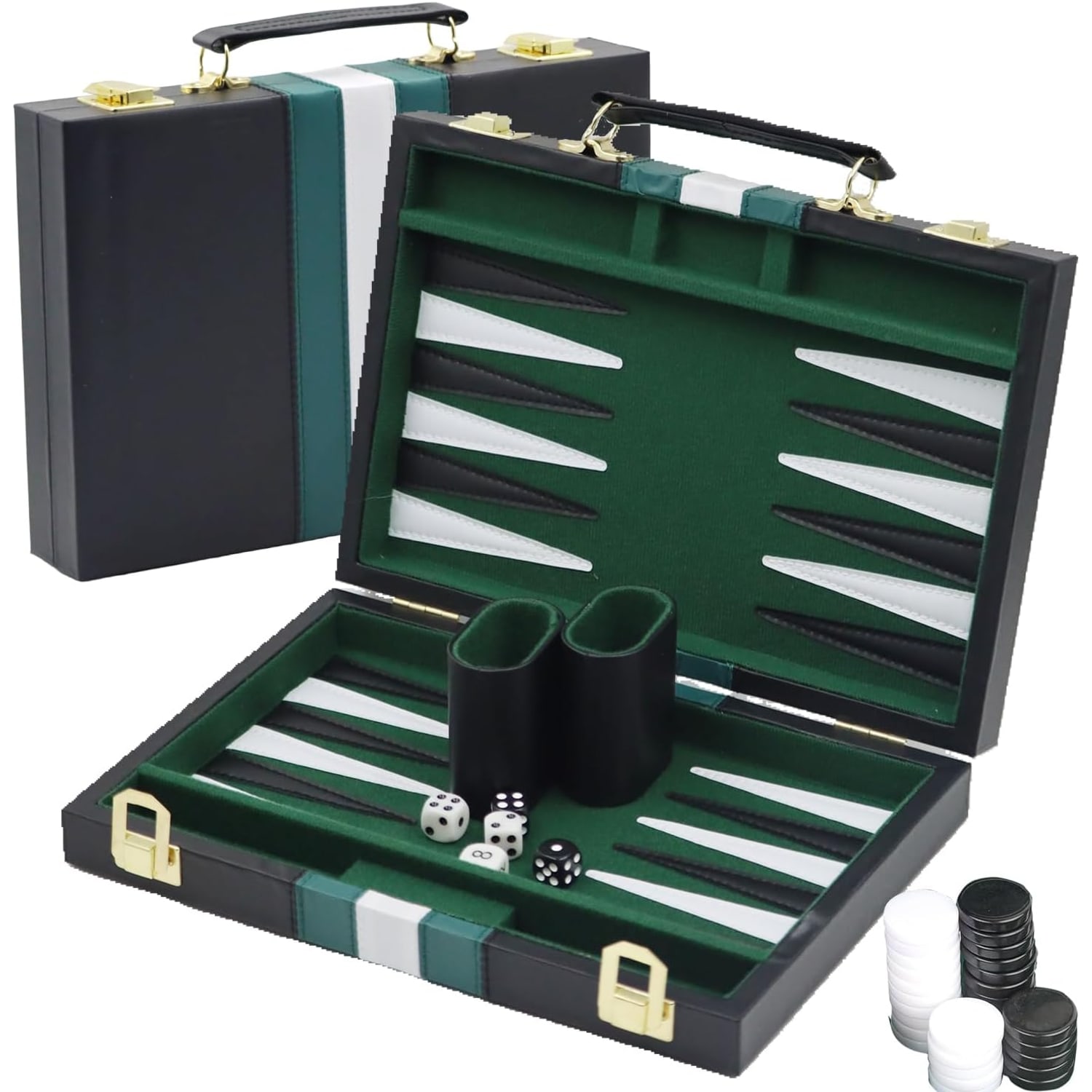
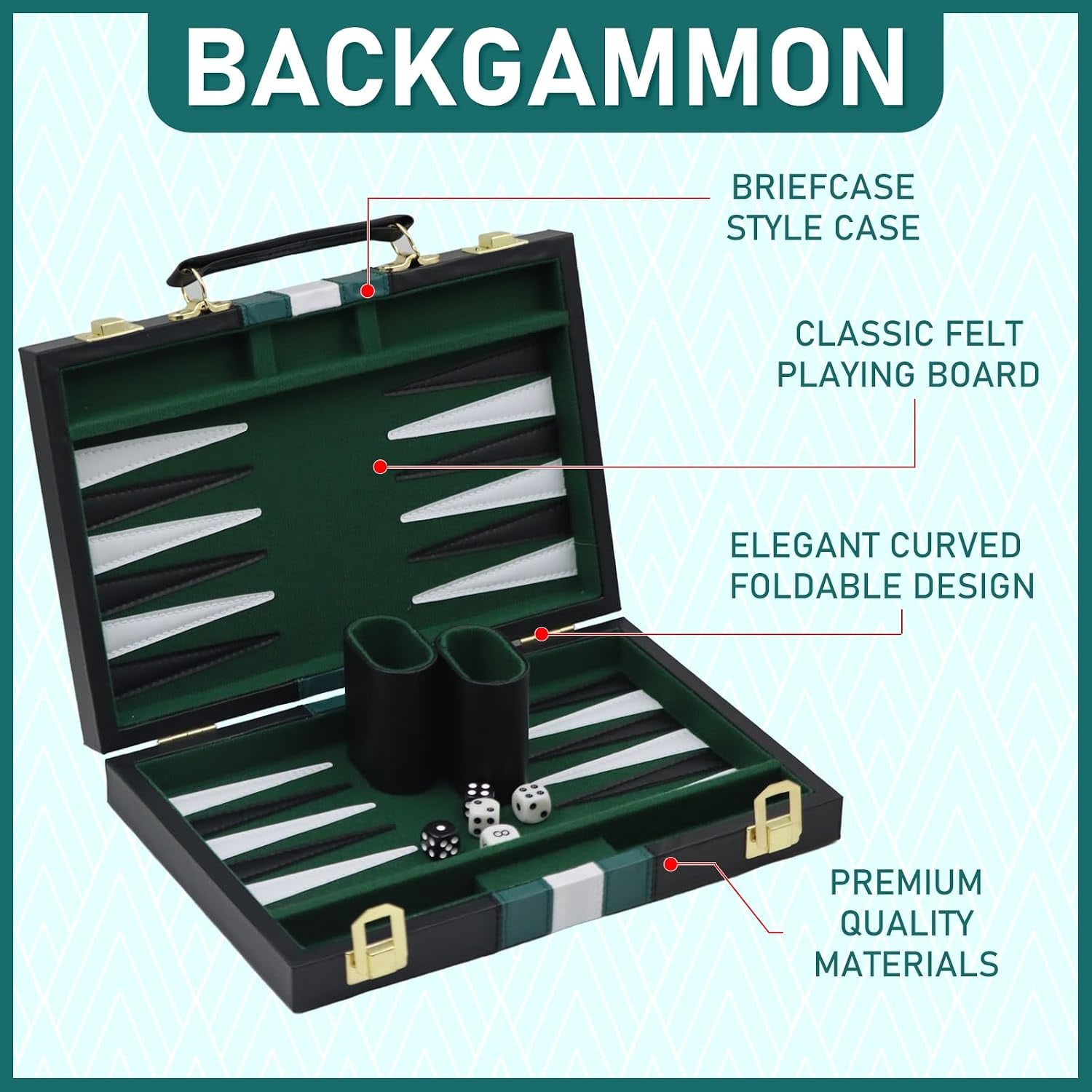
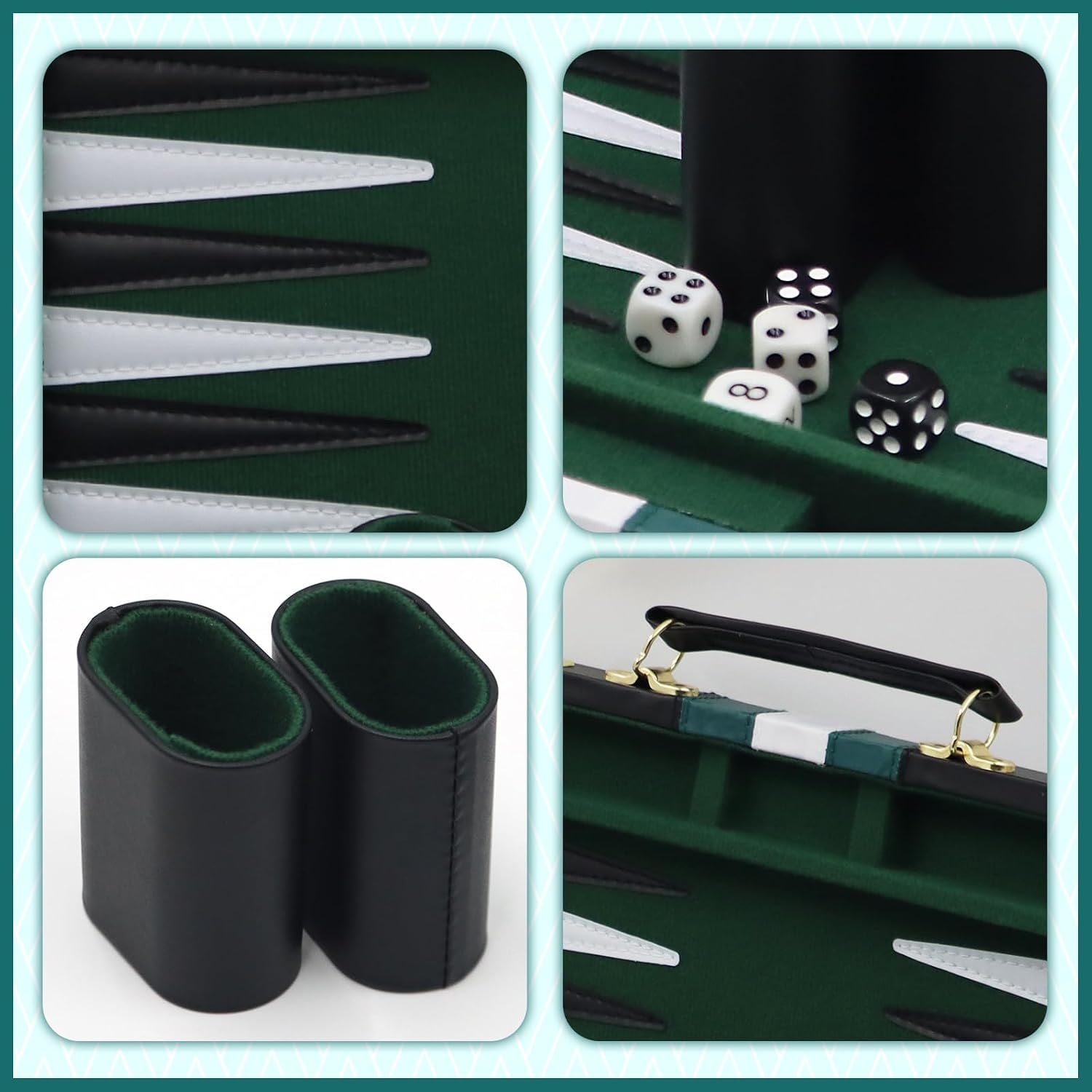
Open the clasps and the case lies flat. The inside faces are the playing surface, with the points running in the standard pattern. Side compartments along the edges hold the 30 stones, the four dice and the doubling cube, so everything you need sits inside the case rather than in a separate pouch that gets lost.
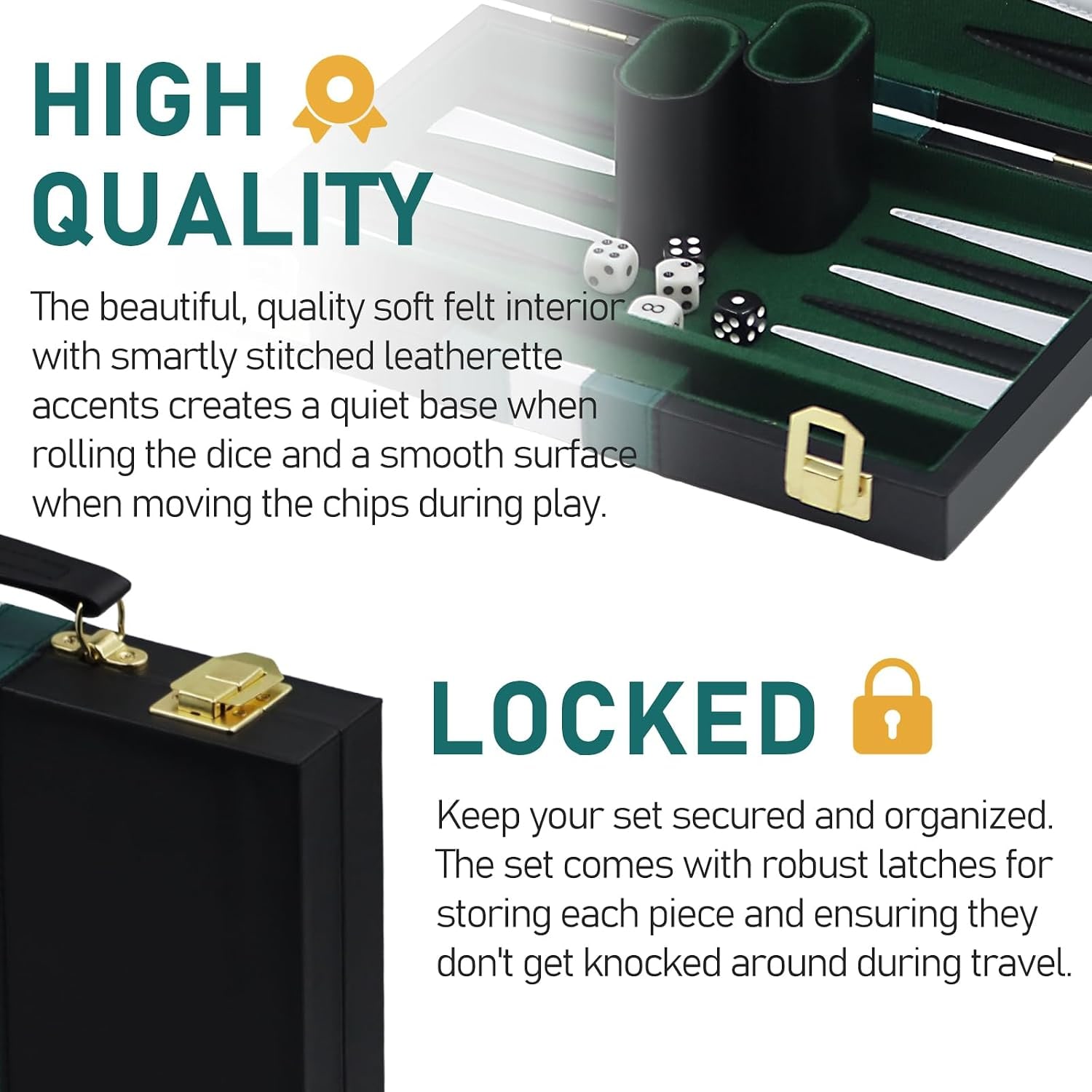
Inside the case there is a lining. It serves two purposes. It softens the sound of stones hitting the board, and it holds the pieces steady so they are not sliding and clattering while you carry the case. Anyone who has carried a hinged wooden box full of loose pieces will know why that matters.
Closing up is quick. Pieces back into their compartments, fold the halves together, snap the clasps, pick it up by the handle. There is nothing to pack, nothing to count into a bag, nothing to balance.
Who it suits
Travellers get the most from a set like this. If you are heading away for a week, a best travel backgammon set takes up less room than a paperback and gives you something to do on a wet afternoon. It also suits caravans and boats, where storage is tight and loose pieces are a genuine nuisance.
It works for people learning the game, too. Backgammon has a short rulebook and a long ceiling. You can teach the moves in ten minutes and still be finding new ideas years later. A plain classic edition with no gimmicks is the right place to start, which makes this a sensible best backgammon set for beginners.
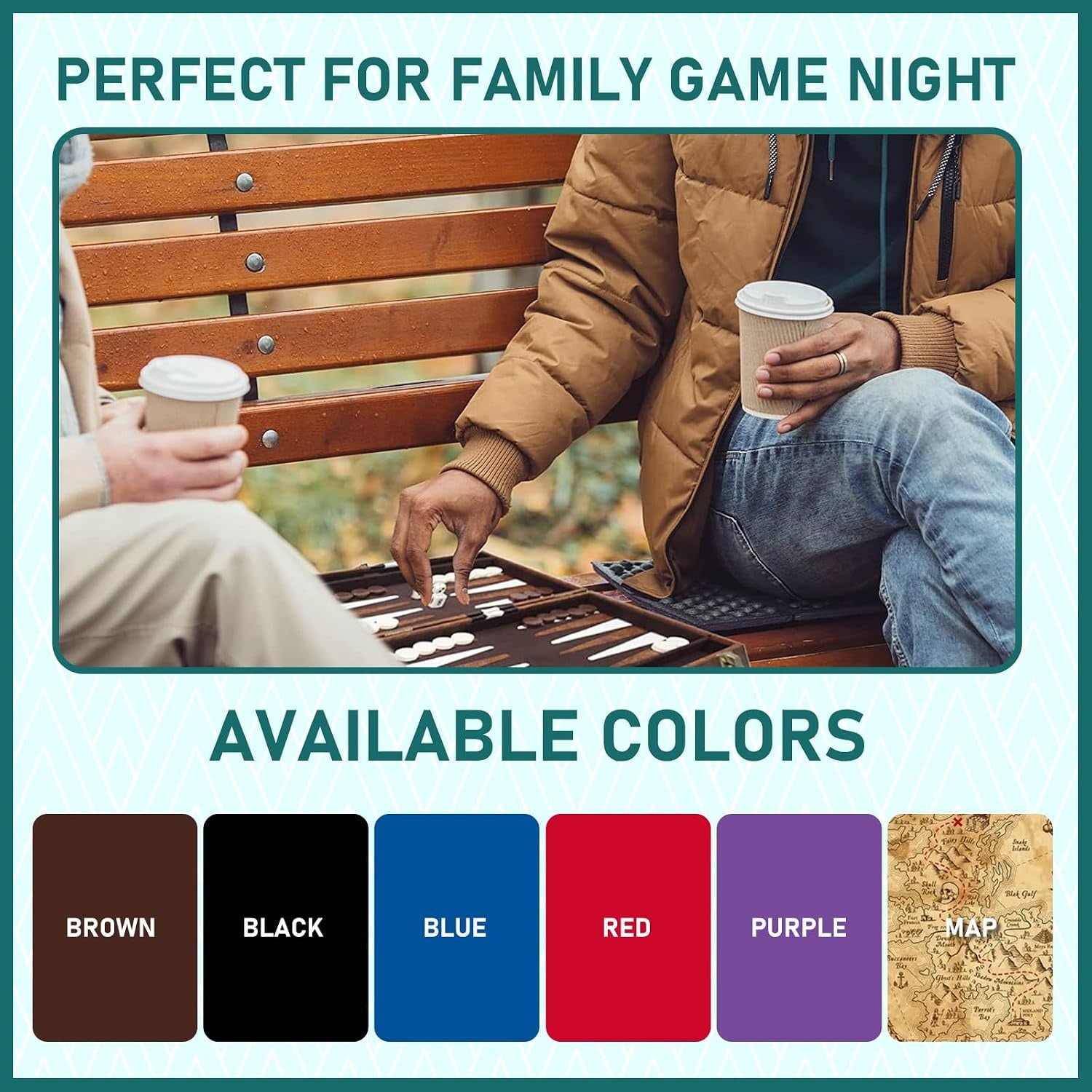
Then there are the households where a game needs to be grabbable. Keep it in a drawer near the kitchen table and it gets used, because getting it out costs nothing. A best two player travel game is often the one that ends up seeing the most hours, simply because it is easy to start.
It also suits camping and outdoor use reasonably well, as long as you keep the case out of rain and off wet ground. A best caravan board game earns its spot by being light, quiet and quick.
Choosing between sets
There are a few things worth weighing up before you buy any backgammon set.
Size. A big board feels great to play on but needs a dedicated spot. This one is listed at 28 x 20 x 0.1 cm with an 11 inch board, which puts it squarely in the travel category. If you want a centrepiece for a study, look for something larger. If you want a game that moves, compact wins.
Weight. At 0.9 kg this is light enough to carry without thinking about it. Wooden sets can be three or four times that. There is no right answer, only what you plan to do with it.
Closure. This is the detail most people overlook and then regret. Clasps that actually hold matter more than almost anything else, because a case that pops open in a bag empties 30 stones into your luggage. Look for a positive, firm closure. This set uses clasps that hold the two halves together.
Noise. Hard cases with no lining are loud, both in play and in transit. A lined interior is a quiet upgrade in every sense. If you play late at night or near sleeping people, it matters.
Completeness. Count what is in the box before you buy. This set includes the board, 30 stones, four dice, a doubling cube and two dice cups. Some cheaper sets skip the cups or the doubling cube, and buying them separately costs more than the saving.
Materials. The case here is faux leather. It wipes clean easily, handles knocks reasonably and does not need conditioning the way real leather does. The maker does not state what the stones and dice are made from, so we have not guessed.
Setting up and playing
If you are new to the game, here is the short version. Each player has 15 stones. You roll two dice and move your stones that many points around the board, always in the same direction, with the goal of getting all 15 into your home quarter and then off the board. Land two or more stones on a point and your opponent cannot land there. Land exactly one and you are exposed, because an opponent landing there sends your stone back to the start.
That is almost the whole game. The depth comes from deciding whether to build safe stacks, run for home, or leave a stone open because the odds say you will probably get away with it. The dice decide a lot in any single game, which is why matches are usually played to a set number of points rather than one and done.
The doubling cube is worth learning once the basics feel comfortable. It adds a layer of judgement about when you are genuinely ahead and how much your opponent believes it.
Looking after it
Faux leather is low maintenance but not indestructible. Wipe the outside with a soft cloth that is only slightly damp, then dry it. Keep solvents, bleach and rough pads away from it, because they strip the finish and leave patches you cannot fix.
Inside, brush out crumbs and grit now and then, especially if the set has been out on a picnic table. Grit caught between stone and board is what causes scuffing over time.
Store it flat or on edge, out of direct sunlight and away from heaters. Heat is the main enemy of faux leather, so avoid leaving it in a parked car through summer. Always put the pieces back in their compartments before closing the clasps, both to protect the playing surface and to stop things rattling on the next trip.
The short version
Backgammon is a quick, two-player game with far more depth than its short rulebook suggests, and the main reason people do not play it more is that most boards are awkward to move. This set fixes that by building the board into a faux leather case with clasps, a handle, a quiet lining and compartments for all the pieces.
You get everything a game needs, 30 stones, four dice, a doubling cube and two cups, in a package listed at 28 x 20 x 0.1 cm and 0.9 kg. No batteries, no assembly, nothing to set up beyond laying out the stones. It suits ages 6 and up, with the usual caution that small parts are not for children under 3.
If you want a board that lives on a table and looks the part, a big wooden set is the answer. If you want a backgammon set that actually gets played, on trains, in caravans, in hotel rooms and at the kitchen table, this is the kind of set that earns its keep.