
The complete guide
How to Choose a Toss and Catch Game Set That Kids Actually Keep Playing
The problem with most backyard ball games
Here is how it usually goes. You buy a bat and ball, take it to the park, and spend the next twenty minutes watching a child sprint after a ball that keeps getting past them. The actual playing time is maybe four minutes. The rest is chasing.
That gap between buying a game and the game being fun is bigger than most people expect. A ball that bounces off a hard bat needs a decent amount of hand-eye coordination before anything resembling a rally happens. For a younger player, that skill is still being built, and a string of misses gets dull fast.
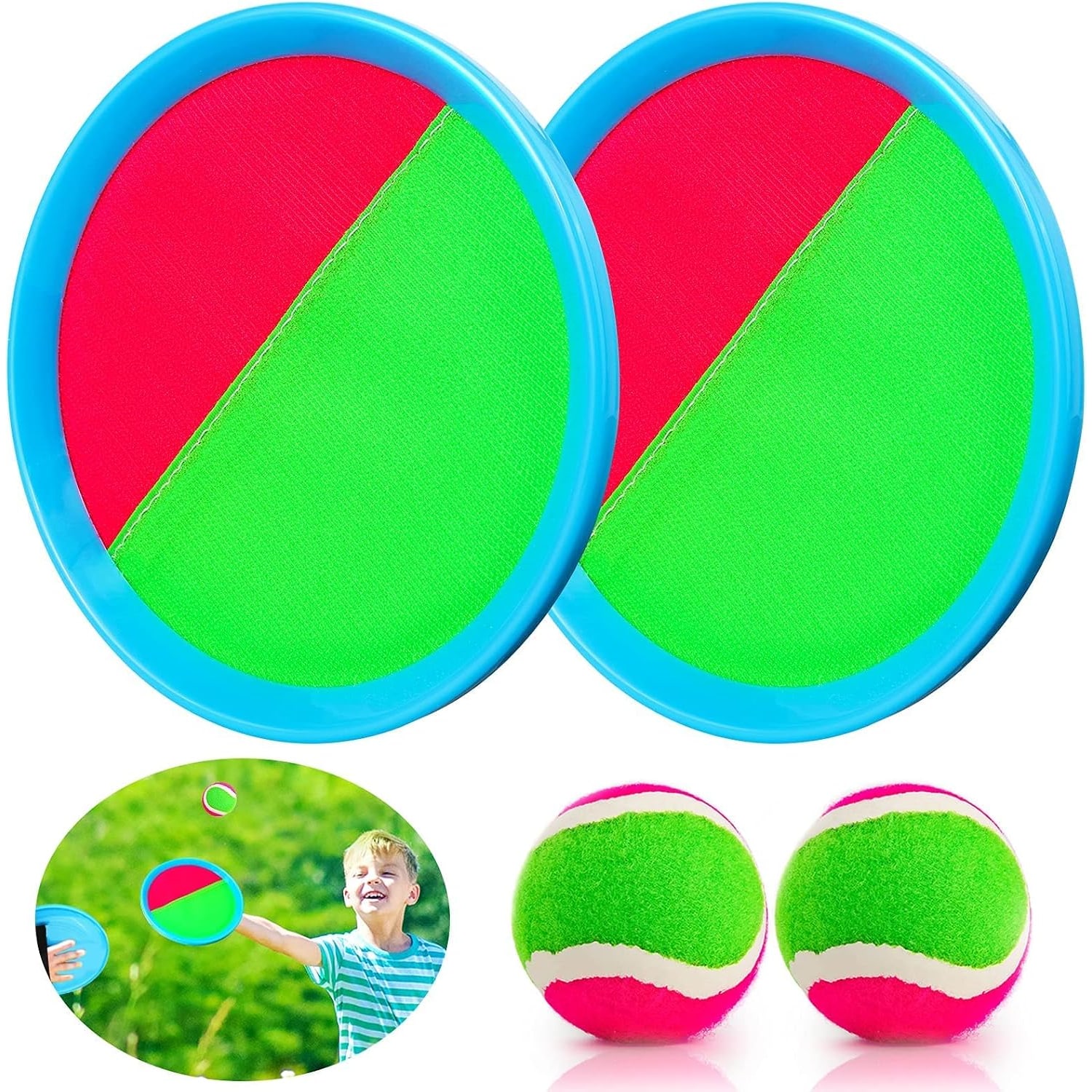
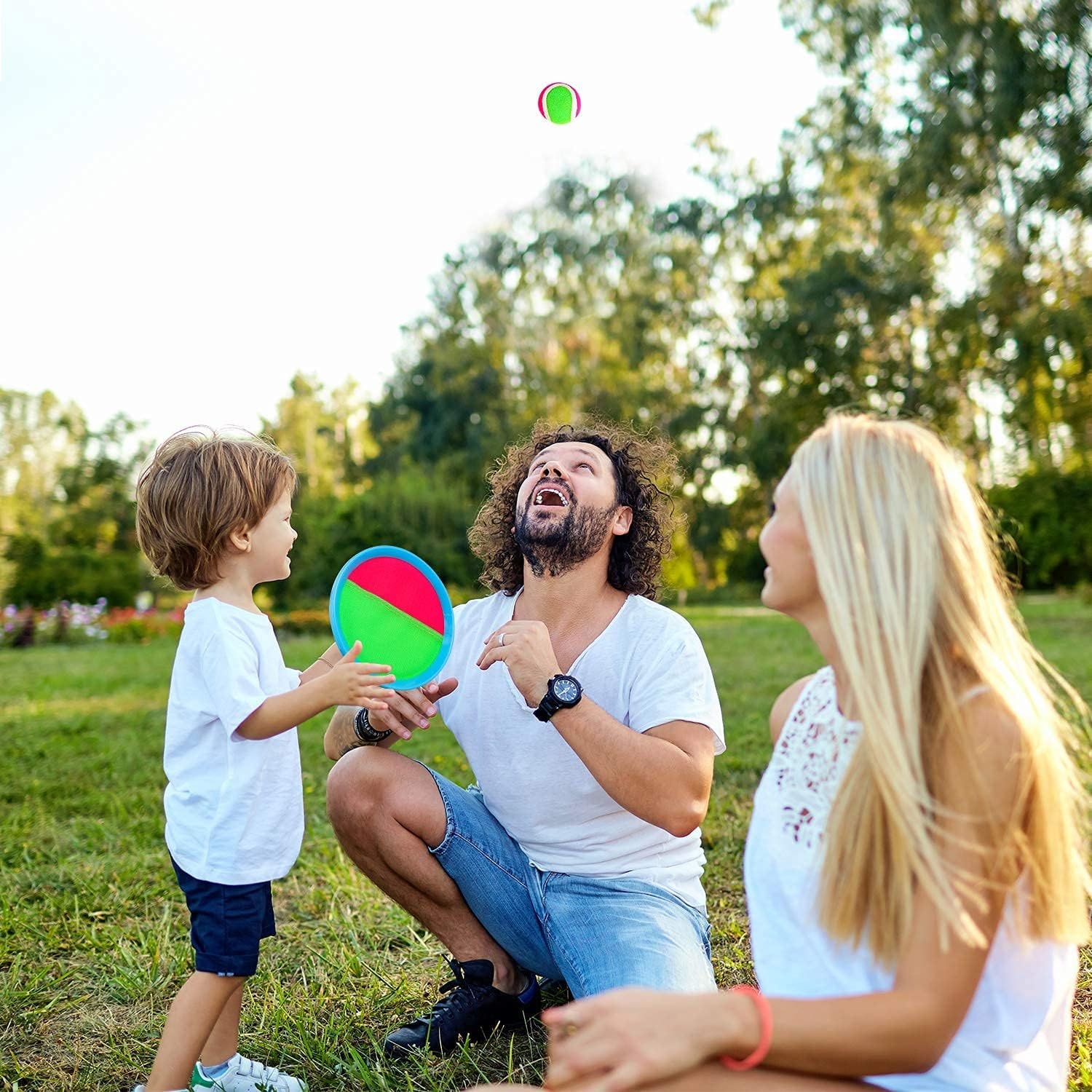
A toss and catch game set fixes the problem from a different angle. Instead of making the child better at catching a bouncy ball, it changes the ball and the paddle so that contact equals a catch. Put the paddle roughly in the right place, and the ball sticks. That one change turns a frustrating game into one where the rally keeps going.
How the grip faces work
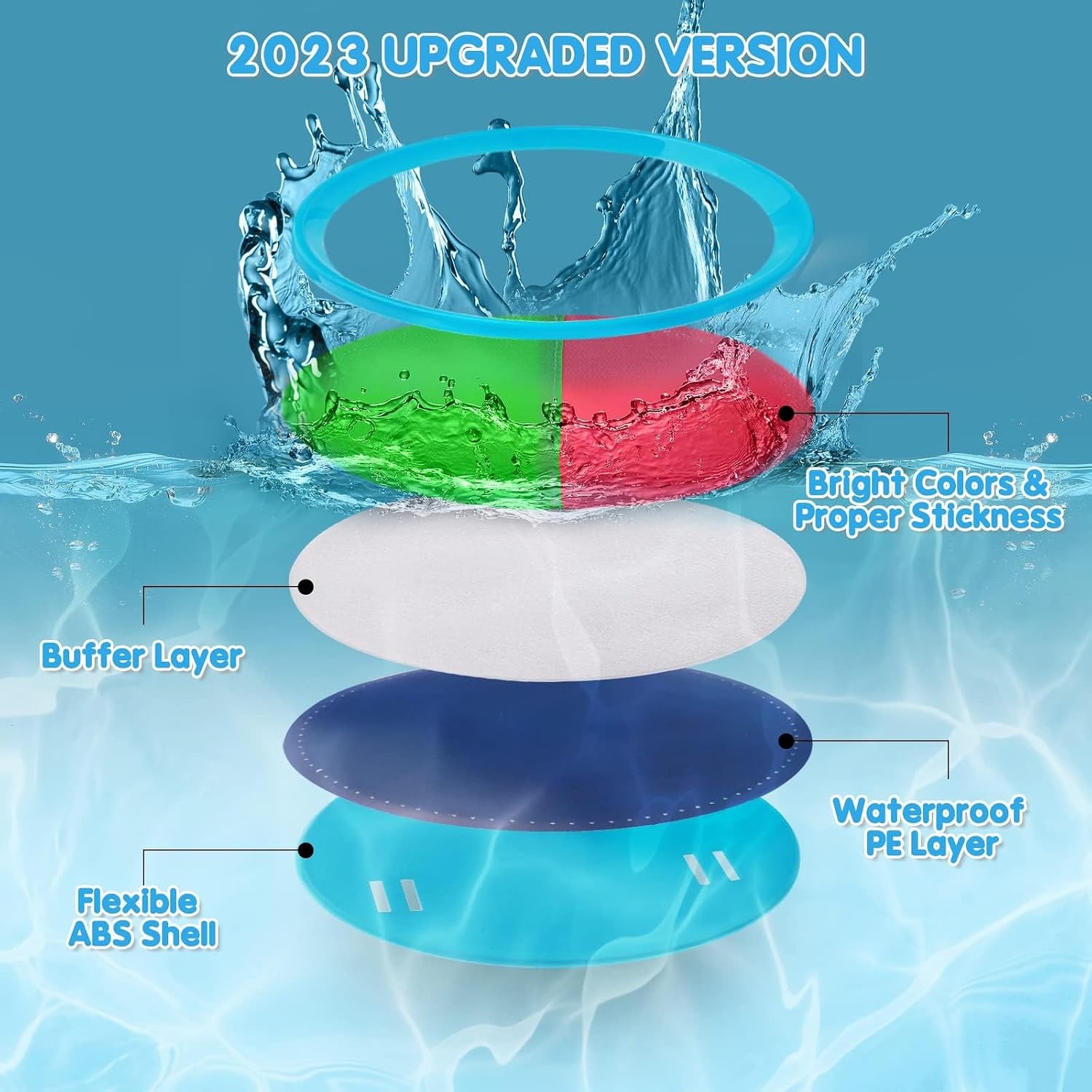
Each paddle has a hook-and-loop face. The ball is made to grab onto that surface. When the ball lands anywhere on the paddle, it holds rather than bouncing away.
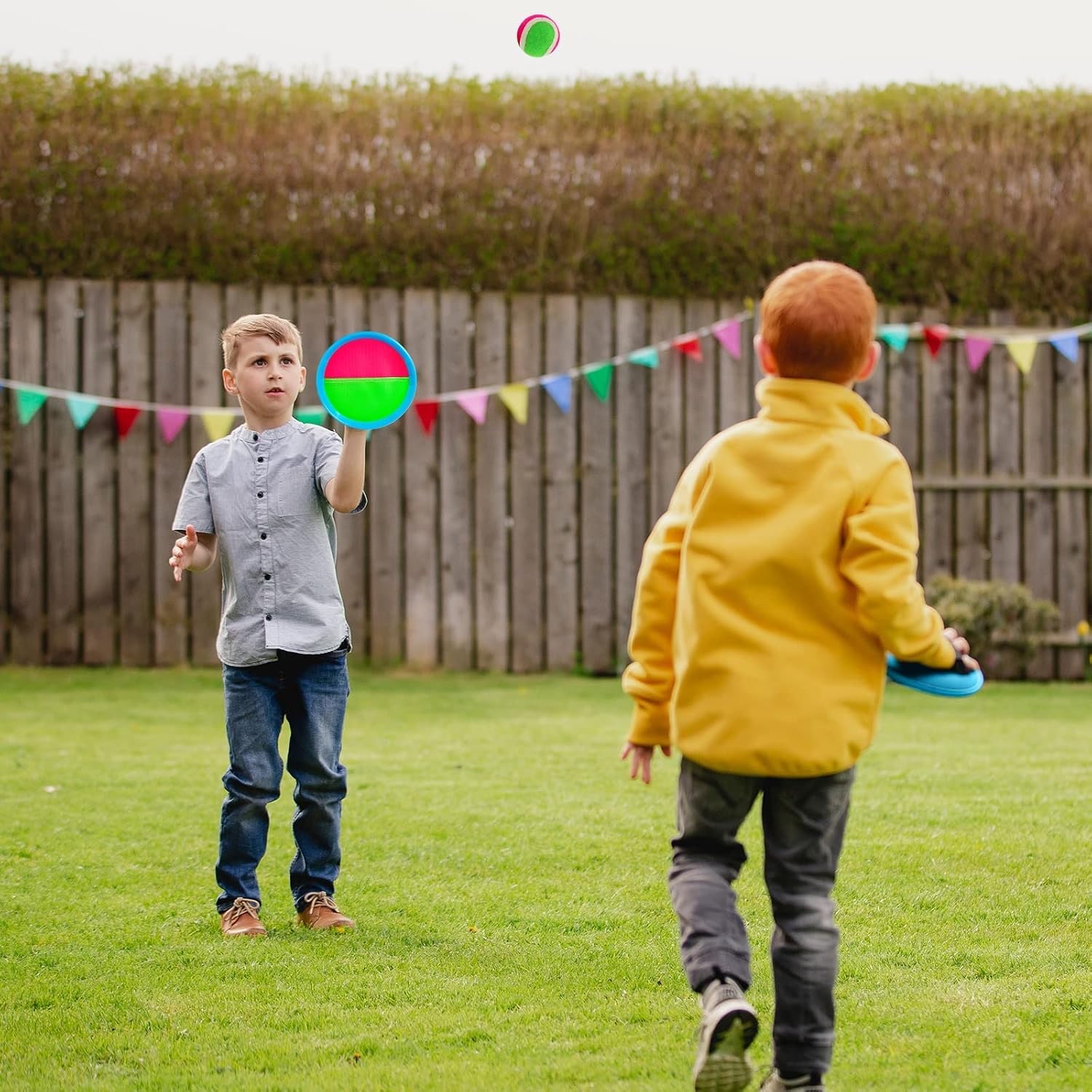
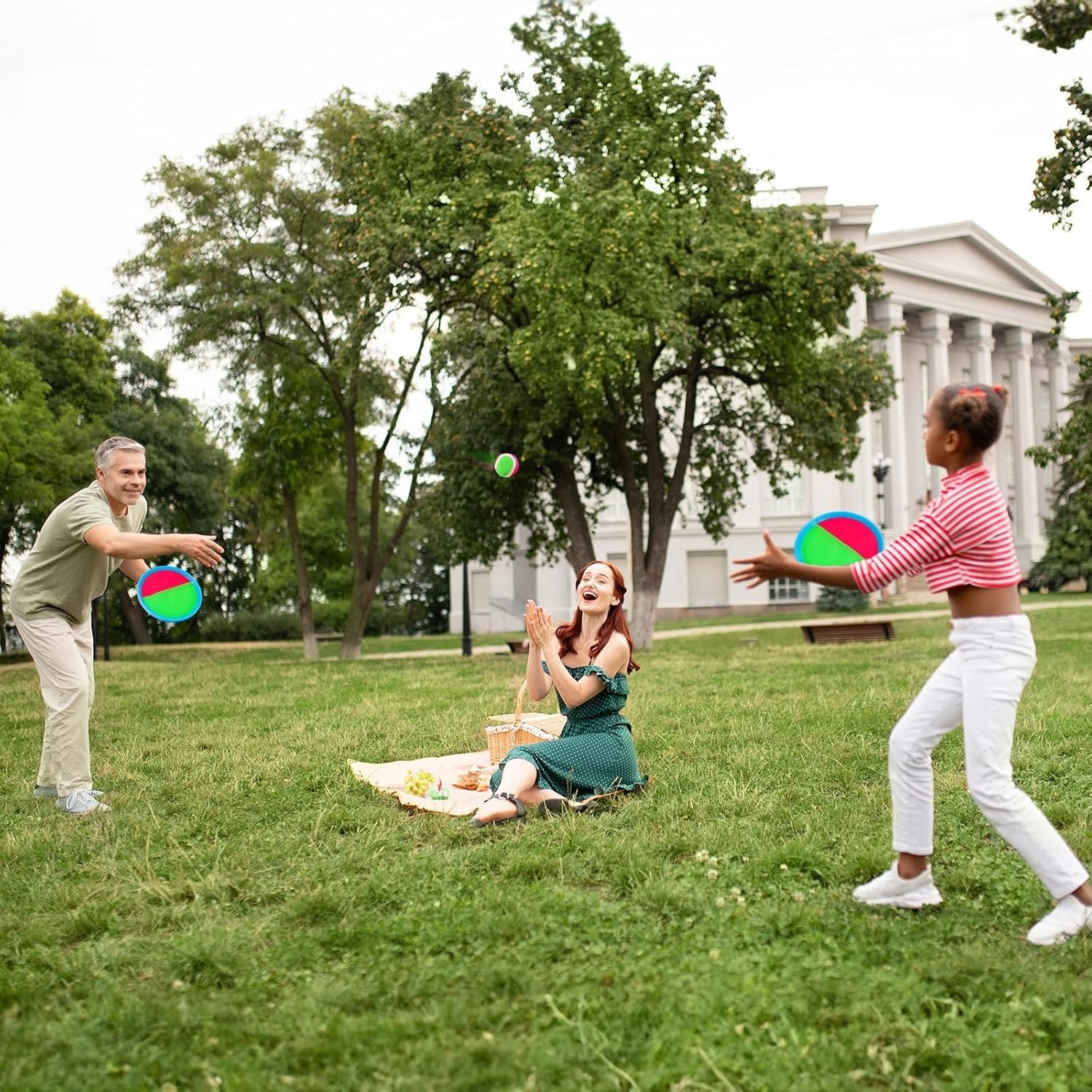
The effect in play is simple. You throw, your partner holds the paddle up, the ball sticks, they peel it off and throw it back. There is no awkward moment of the ball glancing off the edge and rolling into a hedge.
That also means the game is more forgiving about where you stand and how hard you throw. A soft lob works. A fast flat throw works. A slightly wild throw still gets caught if the paddle moves across to meet it. The skill involved is reading the flight and getting the paddle there in time, which is a satisfying thing to get better at without being punishing when you do not.
Because the ball sticks, you also play on surfaces where a bouncing ball would be hopeless. Deep sand swallows a bouncing ball. Long grass does the same. Neither matters much here, since the ball rarely hits the ground in the first place.
Who the set suits
The set is built for two players and comes with two paddles. That shapes who it works for.
It is ideal for a parent and a child wanting ten minutes outside after school. It is good for two siblings who can be trusted to take turns. It works at a party where kids swap in and out. And it is genuinely decent for two adults at the beach, which is a thing that surprises people.
The age guidance is ages 3 and up. A player at the younger end of that range will want to start close, maybe two or three metres apart, with gentle underarm throws. The distance grows naturally as their timing improves. There is no need to make a rule of it, kids tend to back up on their own once they are catching everything.
If you want more than two people playing at once, the simple answer is a second set. Four paddles turns it into a round game where the ball moves between players, which is a better crowd activity than a queue.
Choosing between the sizes
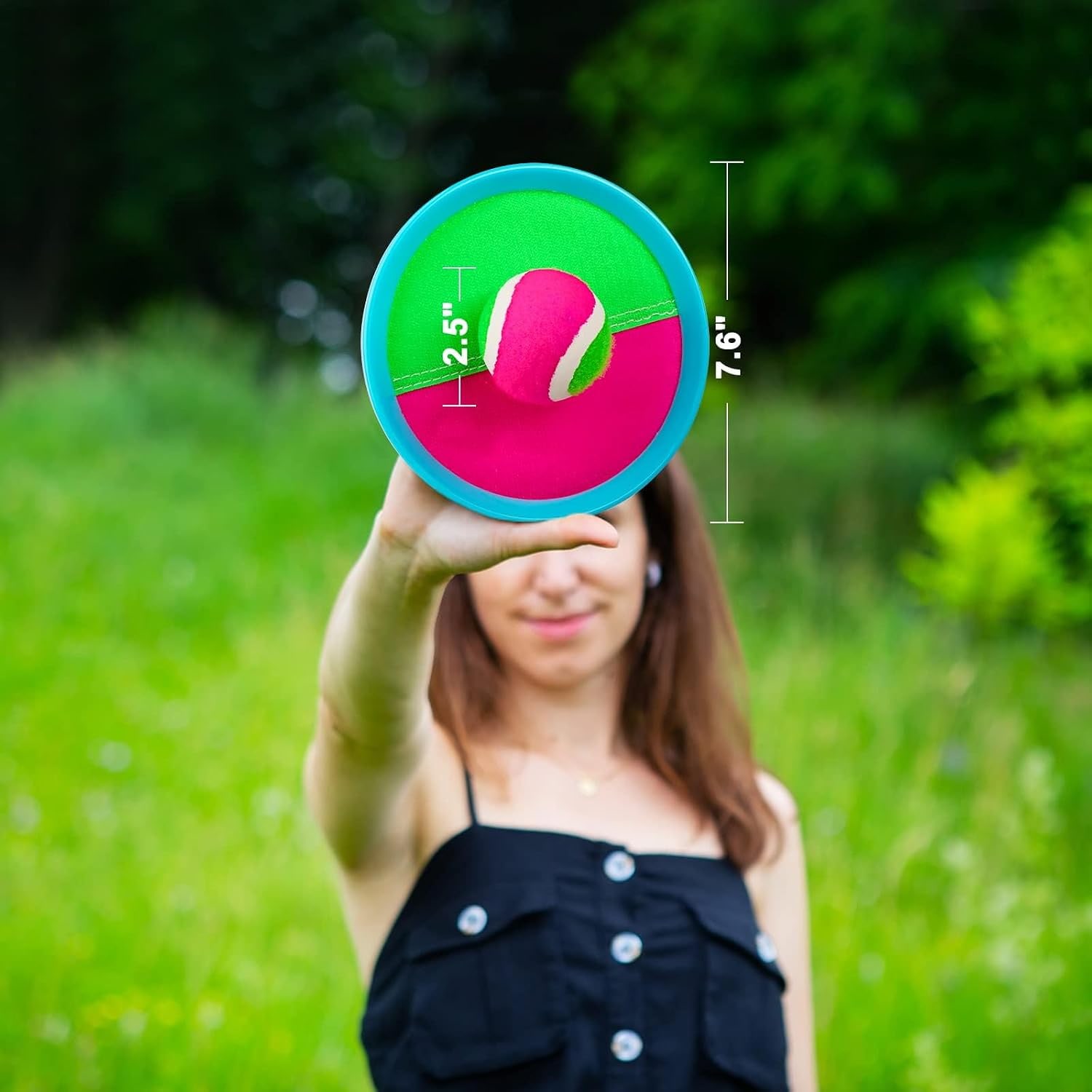
Two sizes are listed, medium and small. The maker does not publish exact measurements for either, so treat the names as a guide to hand size rather than a precise spec.
A small paddle suits a smaller hand. It is easier to hold for a long stretch and easier to swing across the body to meet a throw. A medium paddle gives a larger catching face, which makes catches easier but gives a slightly bigger thing to control.
If you are buying for two children of a similar age, match the size to them. If one player is an adult and the other is a child, the medium tends to be the more comfortable all-rounder for the grown-up while still being manageable for the child.
Colour is a cosmetic choice. Red, blue, green and yellow are the listed options, and none of them change how the set plays. The one practical point is that a brighter paddle is easier to spot when it gets left on a lawn.
Where to play it
Backyards, parks, lawns, beaches and campsites are all listed uses, and they all work for the same reason. The game needs about five metres of clear space and nothing else.
A beach is probably the best single setting. There is space, a soft landing for dropped paddles, and no fences or roads to lose a ball over. A park runs a close second. A backyard is the one you will use most often simply because it is right there.
Camping and caravan parks are worth a mention too. Nothing needs power, nothing needs setting up, and the whole set takes up less room than a pair of shoes. For families who travel with a boot full of gear already, that matters.
Indoors is not what the set is listed for. A large hall or garage with nothing breakable is fine for a gentle rally, but a lounge room is asking for trouble once someone starts throwing properly.
Looking after it
The single thing that determines how long a catch set lasts is whether you keep the grip faces clean.
Hook-and-loop surfaces fill up. Fine sand, grass clippings, hair, lint from a bag. Once the face is clogged, the ball stops holding and the whole appeal of the game disappears. People then assume the set is worn out when it mostly needs a clean.
So after a session at the beach or on the grass, give both paddles a good shake and pick out anything stuck in the face. A stiff brush is quick and effective. If the paddles are wet or sandy, wipe them with a damp cloth and let them dry fully in the air before packing.
Do not put them in the washing machine or the dryer, and do not iron them. Foam and heat are a bad pairing.
Then use the bag. It sounds obvious, but the bag is the reason the set is still complete in six months. The ball is what disappears, and a ball in a bag with the paddles is a ball you can find. Store the bag somewhere dry and out of direct sun. A hot car boot over a summer is harsh on foam, so bring it inside when you can.
A few honest limits
It is worth saying what this is not. It is not a competitive racquet sport. The ball sticking is a feature, but it also means there is no bounce, no spin and no volley. If you want a game with real rallies and technique, this is not that, and a proper beach bat set would suit better.
It is also a two-player set out of the box. Great for pairs, less great for a group of six unless you buy more than one.
And some details simply are not published. Paddle dimensions, total weight, brand and country of origin are not specified. We have left those blank rather than fill them with guesses. If an exact measurement is a deal breaker, ask us before you order.
The short version
If you want a game that two people can start in ten seconds, that works on sand and grass, that does not need batteries, and that keeps going instead of stopping for a chase every thirty seconds, this is a sensible buy.
Foam paddles with grip faces, a ball that sticks to them, a bag to keep it all together. Two players, ages 3 and up, outdoors. Keep the grip faces clean, store it dry, and it will come out of the cupboard a lot more often than most toys do.