
The complete guide
Choosing a Full-Size Chess Set You Will Actually Keep Using
The chess set problem nobody warns you about
Most people buy their first proper chess set after playing online for a while, or after a family game night where someone dug out a dusty box from a cupboard. Then the new set arrives and something is off. The board is too small, so the pieces lean on each other in the centre and you can barely tell a knight from a bishop at a glance. Or it is a cardboard folder and the hinge has already started to lift, leaving a ridge down the middle of the board that catches a rook every time it slides along the file. Or it is vinyl, rolled in a tube since the factory, and it curls back up the moment you let go of the corners.
None of those are small annoyances. They change how the game feels. Chess is a game of reading patterns, and a board that fights your eyes or your hands puts a layer of friction between you and the position.
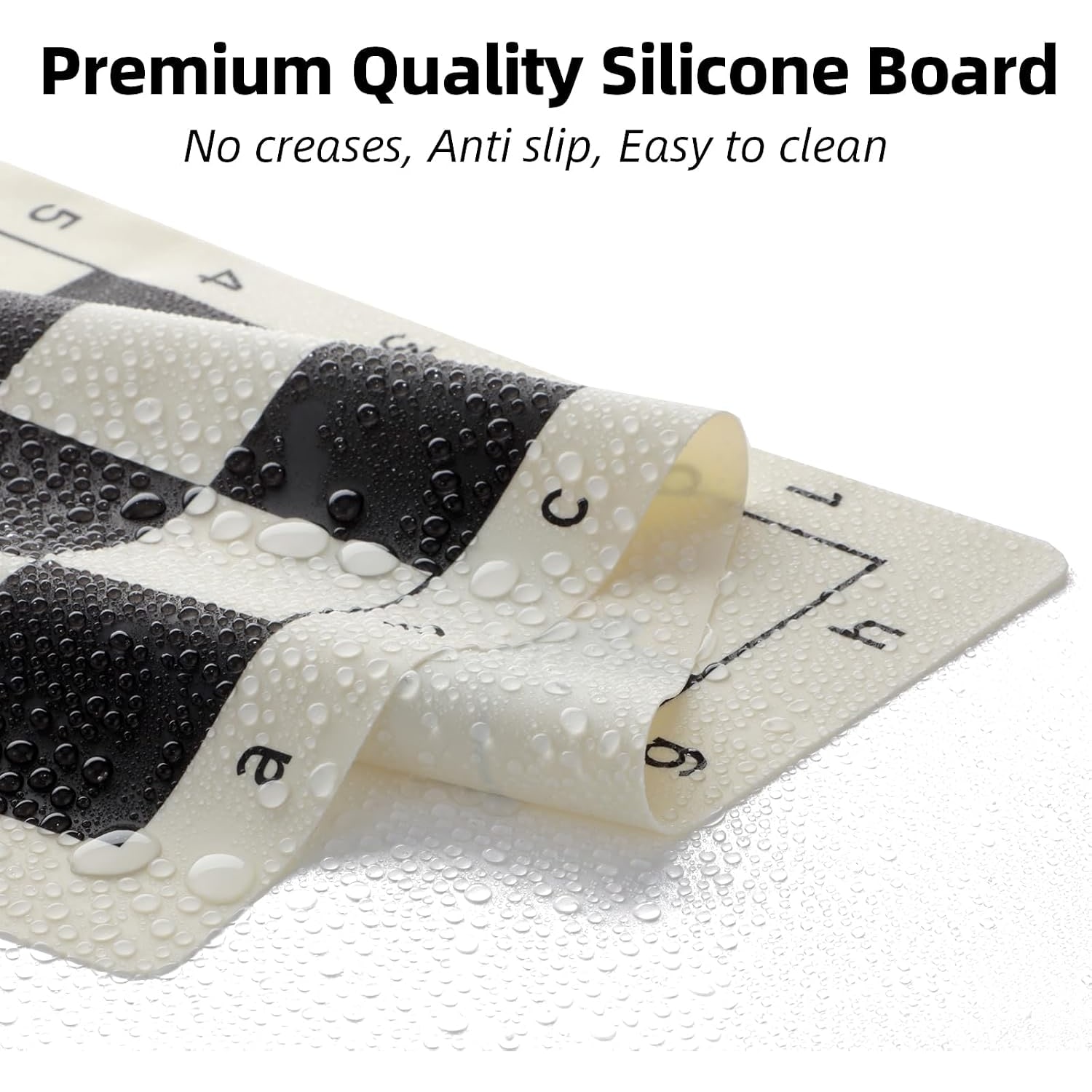
That is the gap a silicone board chess set fills. Silicone is flexible enough to fold into a case, but it has enough body to go back to flat on its own. No crease, no curl, no weighted books on the corners for ten minutes before you start.
How this set is put together
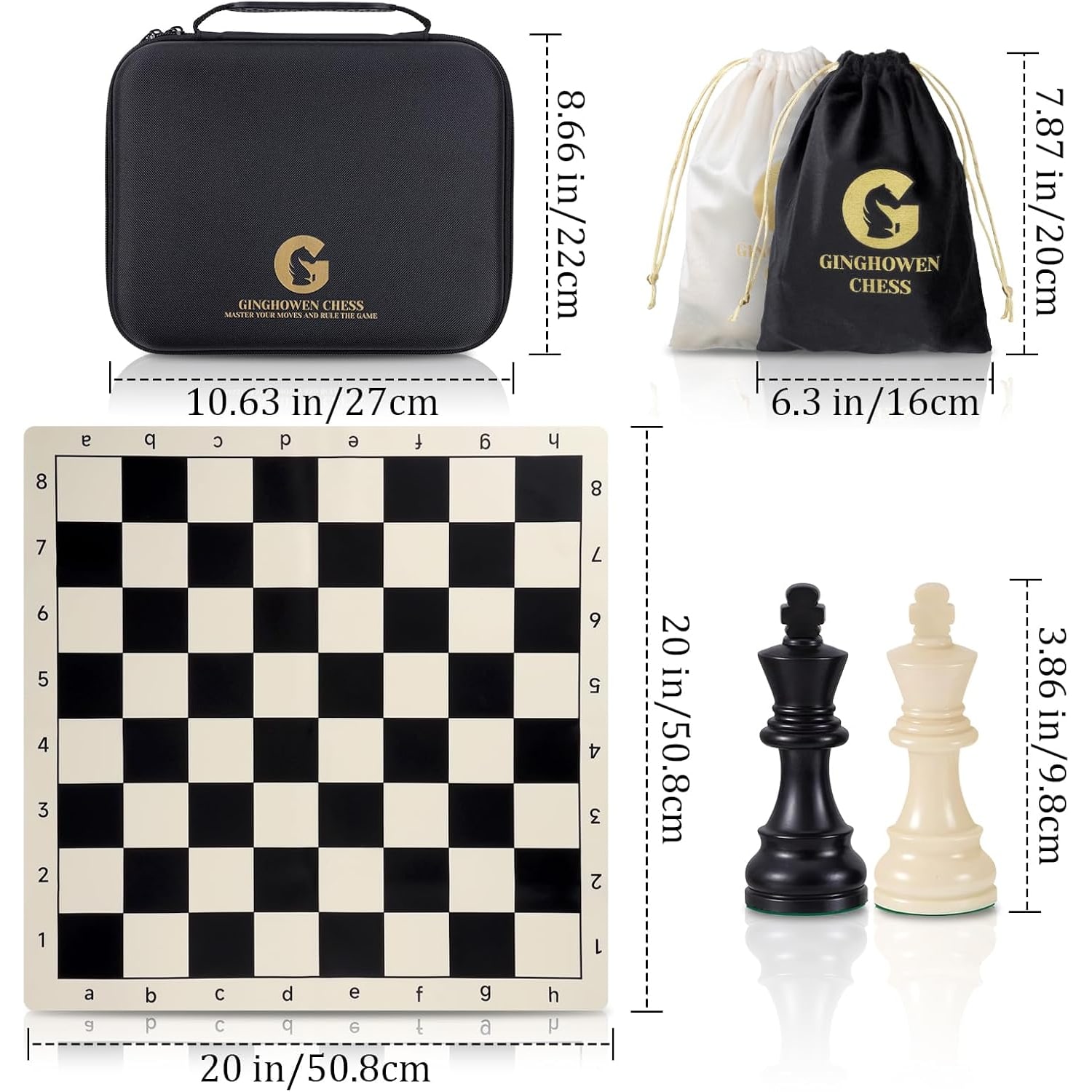
The board is 50.8cm by 50.8cm, which is 20 inches square, and just 0.1cm thick. Each playing square is 2.25 inches, the standard tournament size. That square measurement is the number worth paying attention to, more than the overall board width, because it determines whether the pieces have room to sit properly.
The surface is black and white with a matte, non-reflective finish. Glossy boards look good in a product photo and much less good under a kitchen pendant light, where they bounce glare across half the squares. Matte keeps the contrast even from both sides of the table. The silicone is also slip-resistant, so the board holds position on a table instead of creeping when someone leans in.
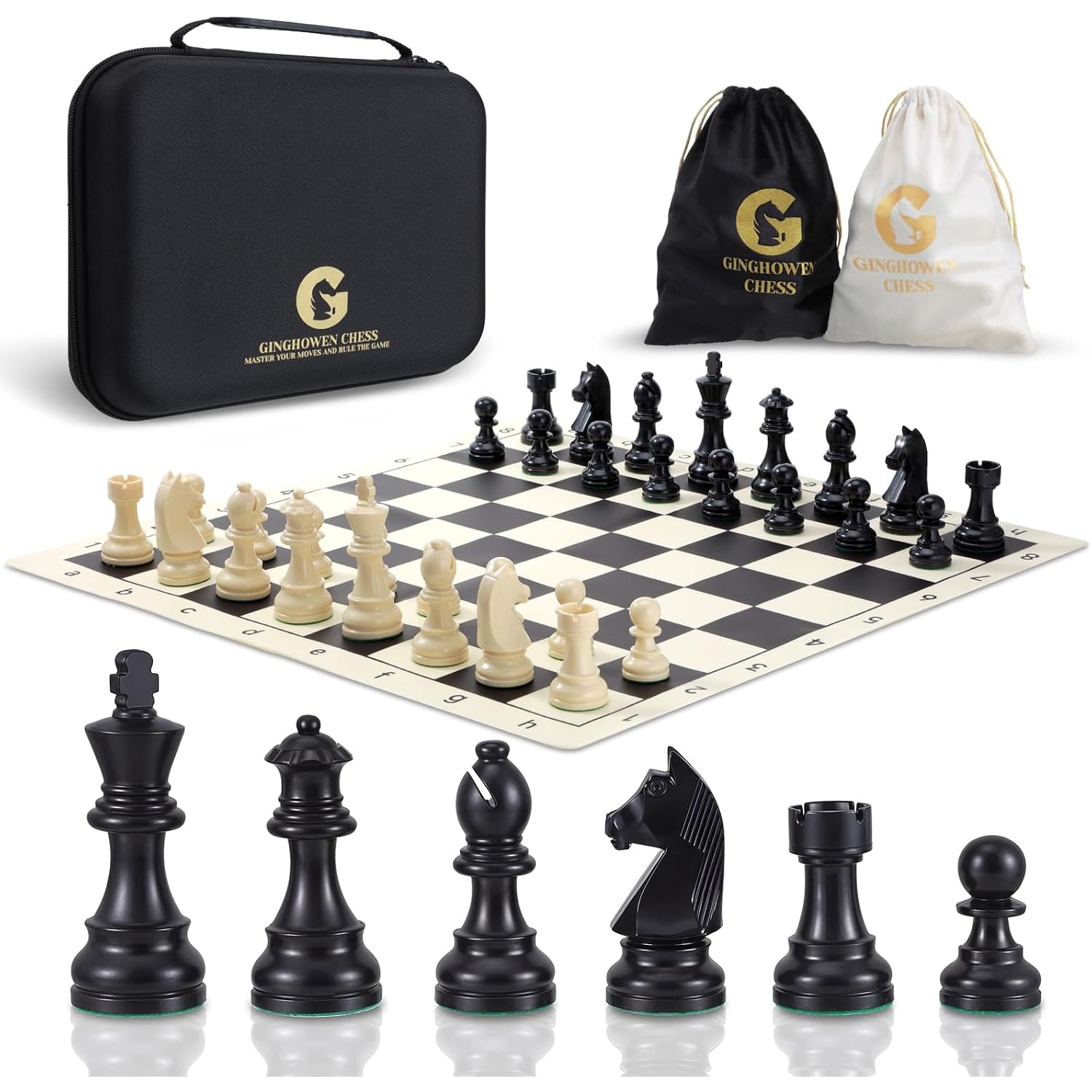
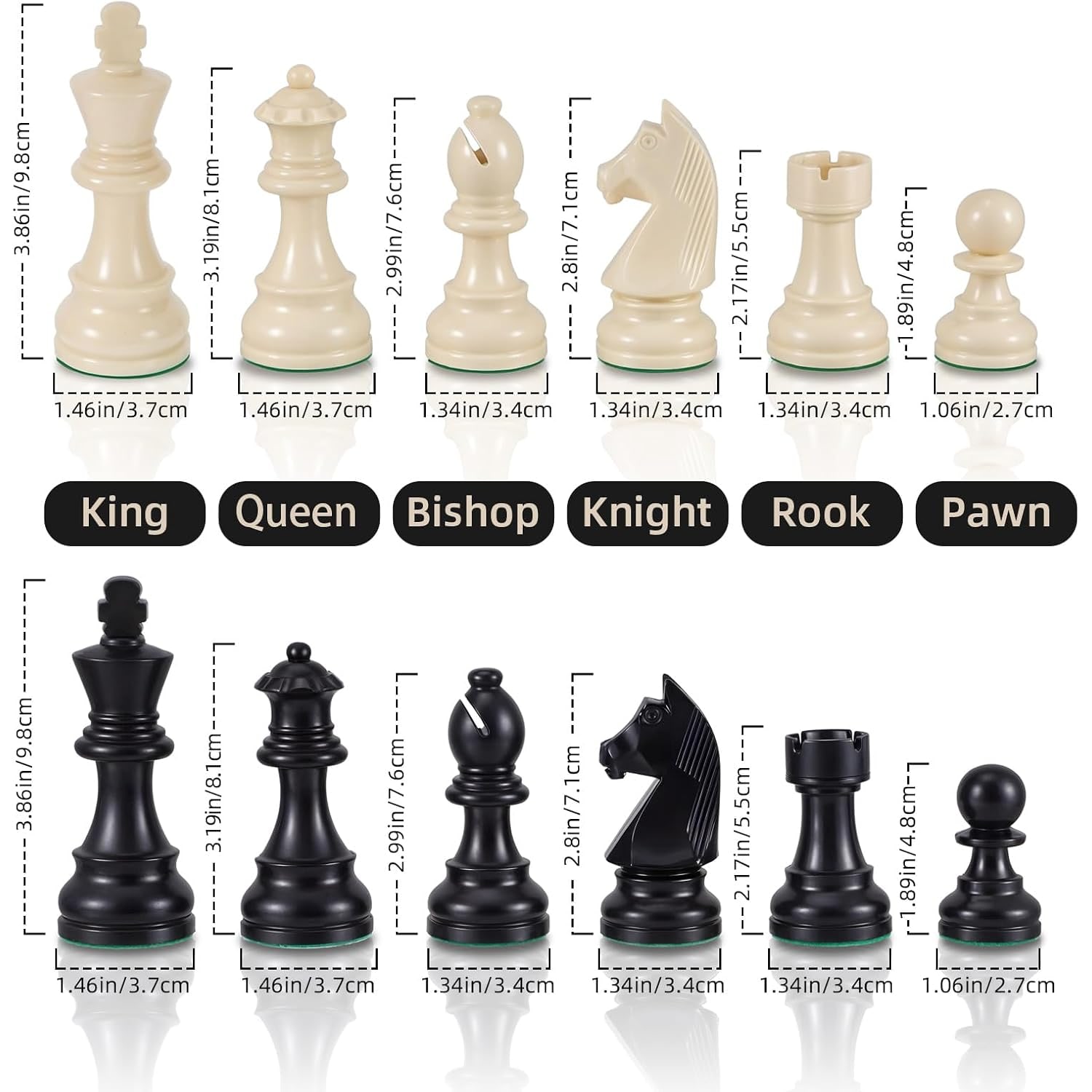
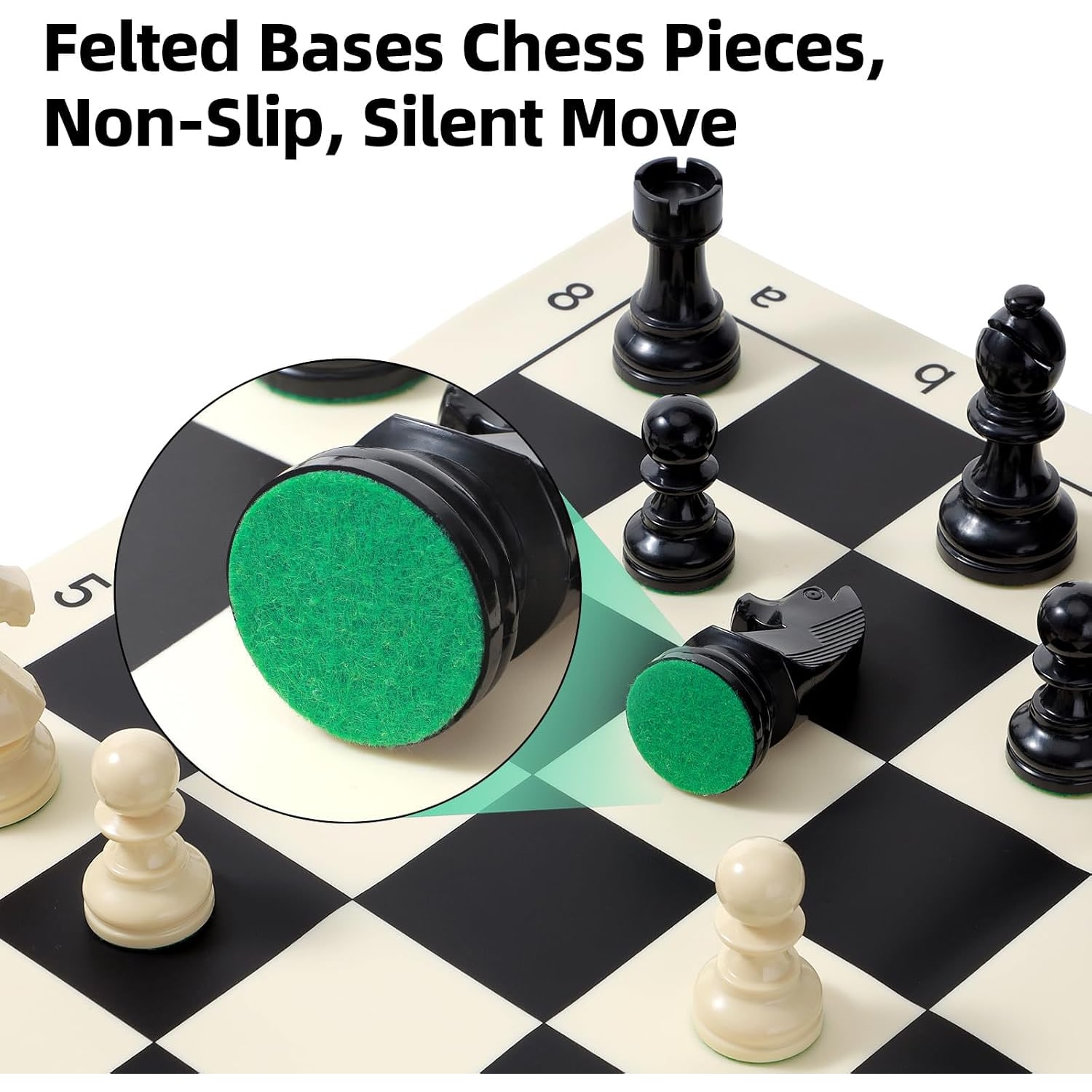
There are 34 pieces, which is the standard 32 plus two extra queens. Each piece is moulded plastic with a heavy iron block built in, and the bases are felted. The weight does two jobs. It keeps pieces upright when the table gets bumped, and it gives you something to feel when you lift and place a move. Felt bases mean a quiet tap instead of a clack, which matters more than you would think during a long evening in a quiet room.
Everything stores in a zippered carry case. The board folds into an inner pocket and the pieces go into two velvet drawstring bags. The complete set weighs 1.67kg.
Who this suits
If you are learning, a full-size board is genuinely easier to learn on. Beginners spend a lot of time scanning the board to check what is attacking what, and crowded squares slow that down. Someone hunting for the best chess set for beginners is usually better served by a tournament-size board than by a compact travel one, even though the travel one looks more convenient on paper.
If you already play regularly, the things you will notice are the square size, the piece weight and the spare queens. Those three details are what separate a club-standard set from a supermarket one. For club nights or a regular game with a friend, this covers the practical ground.
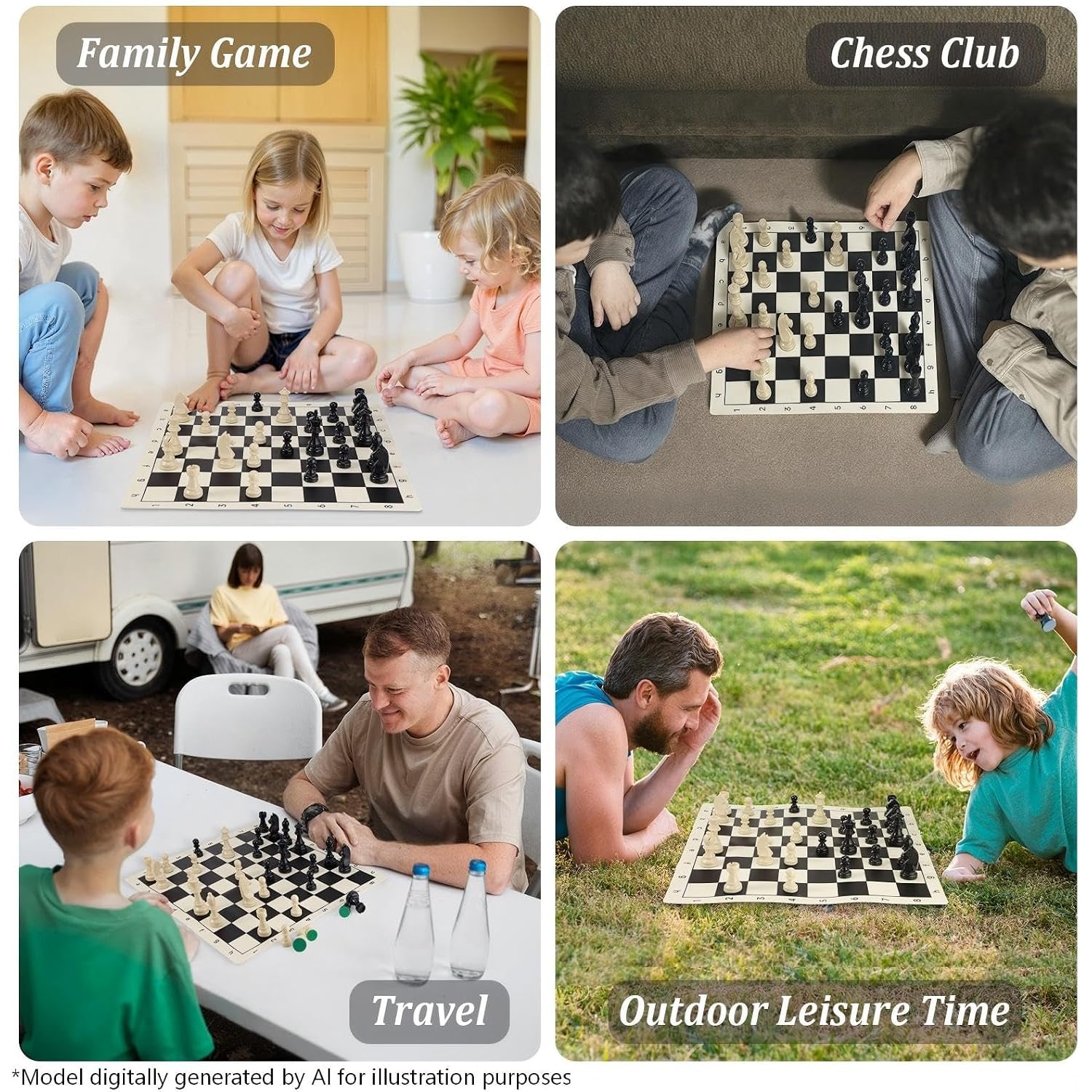
If you travel with chess, the folding board and zip case are the point. A full 20-inch board that packs into a case and weighs under 2kg is a reasonable trade. People searching for the best travel chess set often end up compromising on square size, and this is a way to avoid that.
If you have young children in the house, note that the set includes small parts and is not for children under 3. Ages 3 and up, with supervision while the pieces are out.
What to look at when comparing sets
Square size first. Anything under 2 inches will feel tight with standard pieces. At 2.25 inches you have the size used in competition, and almost any standard Staunton-pattern piece will sit comfortably. If a listing does not tell you the square size, that is usually a sign it is small.
Then the board material. Cardboard folders are cheap and they fail at the hinge. Vinyl roll-ups are tough but hold the shape of the tube. Wooden boards are lovely and completely impractical to carry. Silicone sits in a useful middle spot: it folds, it lies flat again, it wipes clean, and it does not hold dust the way felt-backed boards do.
Then the pieces. Weight is the single biggest difference between a set that feels like a game and one that feels like a toy. Hollow plastic pieces tip over constantly. A set with an internal metal weight and a felted base stays where you put it. Anyone comparing the best weighted chess pieces will find this is the detail reviewers mention most often.
Then the extras. Two queens is a small thing that saves a recurring irritation. A case with a dedicated board pocket keeps the board flat rather than folded around the pieces. Separate bags for each colour cut your setup time roughly in half.
Then storage. Think about where the set will live. A set that goes back in a case in under a minute gets played far more often than one that needs a cupboard shelf and five minutes of packing.
Setting up and playing
Unzip the case, pull the board from the inner pocket and lay it out. Give it a minute if it has been packed tightly in a cold car; silicone relaxes faster at room temperature. Check the orientation: the light square goes in the bottom right corner for both players.
Empty one bag at a time. Rooks in the corners, then knights, then bishops, queen on her own colour, king beside her, and the pawns across the second rank. Set the extra queens to the side of the board where both players can reach them.
If the table is uneven, the silicone will follow the surface rather than bridge over a dip, so a flat table gives the best result. A tablecloth works fine. A loose placemat does not, because the board grips the mat and the mat slides.
Keeping it in good shape
Care is simple. Wipe the board with a damp cloth and a little mild soap, then let it dry completely before folding it away. Trapped moisture inside a folded board is the one thing that will cause problems, so give it the extra few minutes.
For the pieces, use a barely damp soft cloth and wipe them individually. Do not soak them. The bases are felted and wet felt takes ages to dry and can smell if you bag it early. Air dry on a towel, then back into the drawstring bags.
Keep the set out of long direct sun and away from heaters. Store the board flat in its pocket rather than squashed under something heavy. Avoid letting it sit against anything sharp, since silicone is tough but not cut-proof.
The short version
This is a 20-inch silicone board with tournament-standard 2.25 inch squares, 34 weighted plastic pieces including two spare queens, two velvet bags and a zip case, at 1.67kg all up. The board folds away and comes back flat. The pieces have an iron weight inside and felt underneath. No batteries, no assembly, nothing to set up beyond laying out the board.
It suits a learner who wants room to see the position, a regular player who wants club-standard sizing without a wooden board to lug around, and anyone who wants a set that packs away quickly enough to actually come out again next week. Small parts, so not for children under 3.
Delivery runs 3 to 7 working days from local warehouses, and returns are open for 14 days from delivery if the set is unused and in its original packaging.