
The complete guide
Choosing a Beach Pail and Shovel Set That Actually Lasts the Day
The problem with one bucket and one spade
Every family has had this beach day. You pull a single bucket out of the bag, hand over the one spade, and then spend the next hour negotiating turns. Meanwhile the child who is waiting digs with their hands, gets bored, and ends up back on the towel asking when you are going home.
A set like this exists because sand play is really several different activities, not one. There is digging. There is carrying water. There is shaping and moulding. There is pouring, which is its own separate obsession for a lot of children. One spade covers exactly one of those, and once a child has dug a hole they tend to look around for what happens next.
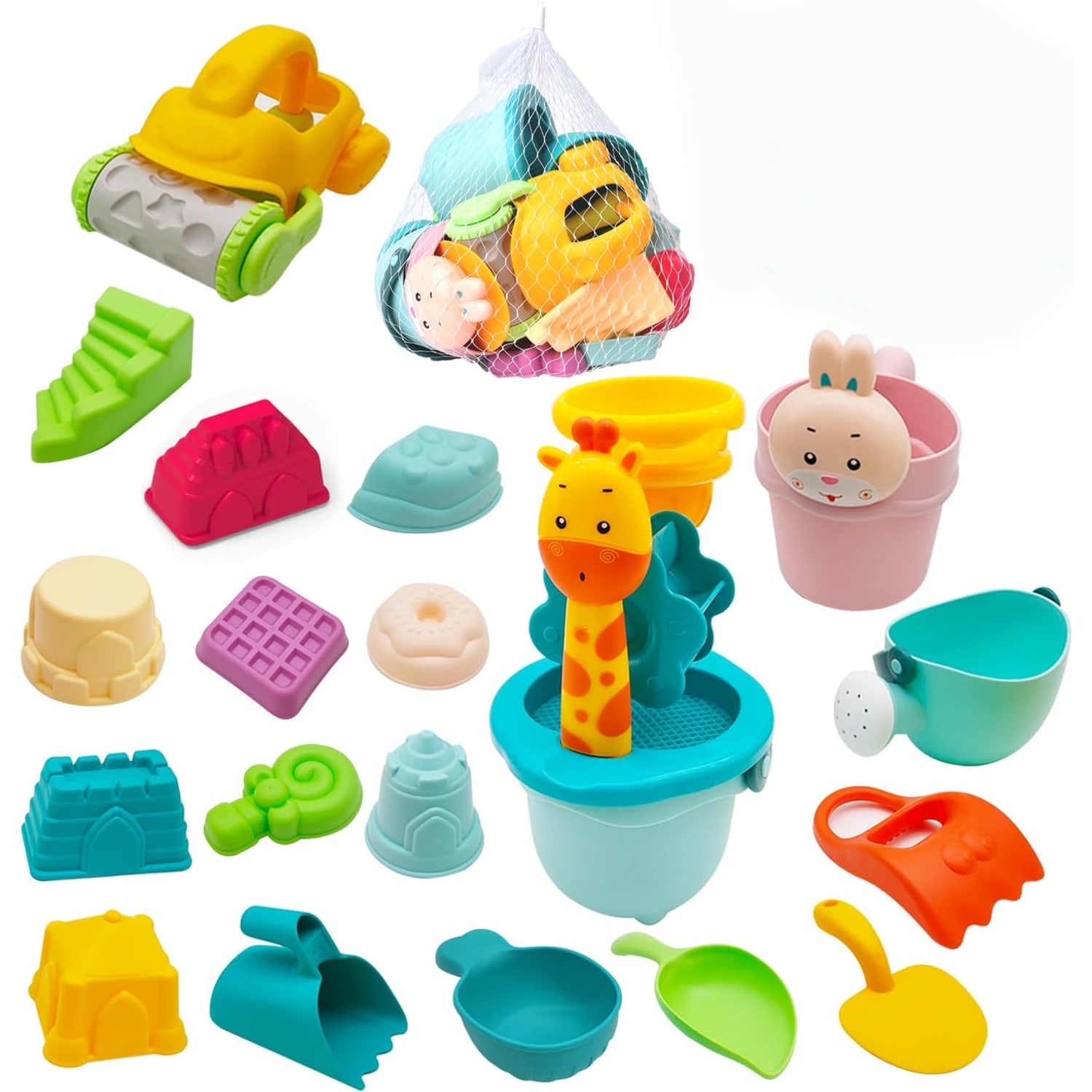
Twenty-one pieces sounds like a lot until you actually use them. Three shovels means three children can dig the same hole. Two buckets means one for water and one for sand. Ten moulds means a child can line up a row of castles without having to turn one out and immediately wreck it to make the next. The quantity is the point.
What is actually in the box
The practical tools come first. Two buckets handle the carrying, three shovels cover the digging, one rake does the smoothing and one watering can does the dampening. Those five types of tool account for most of the time the set spends in use.
Then there are the moulds, ten of them. Six are castle shapes and four are candy shapes. Colours are sent at random, so you find out what you have when you open it. Moulds are what take a child from making a mess to making something, which is a different kind of play and generally a longer-lasting one.
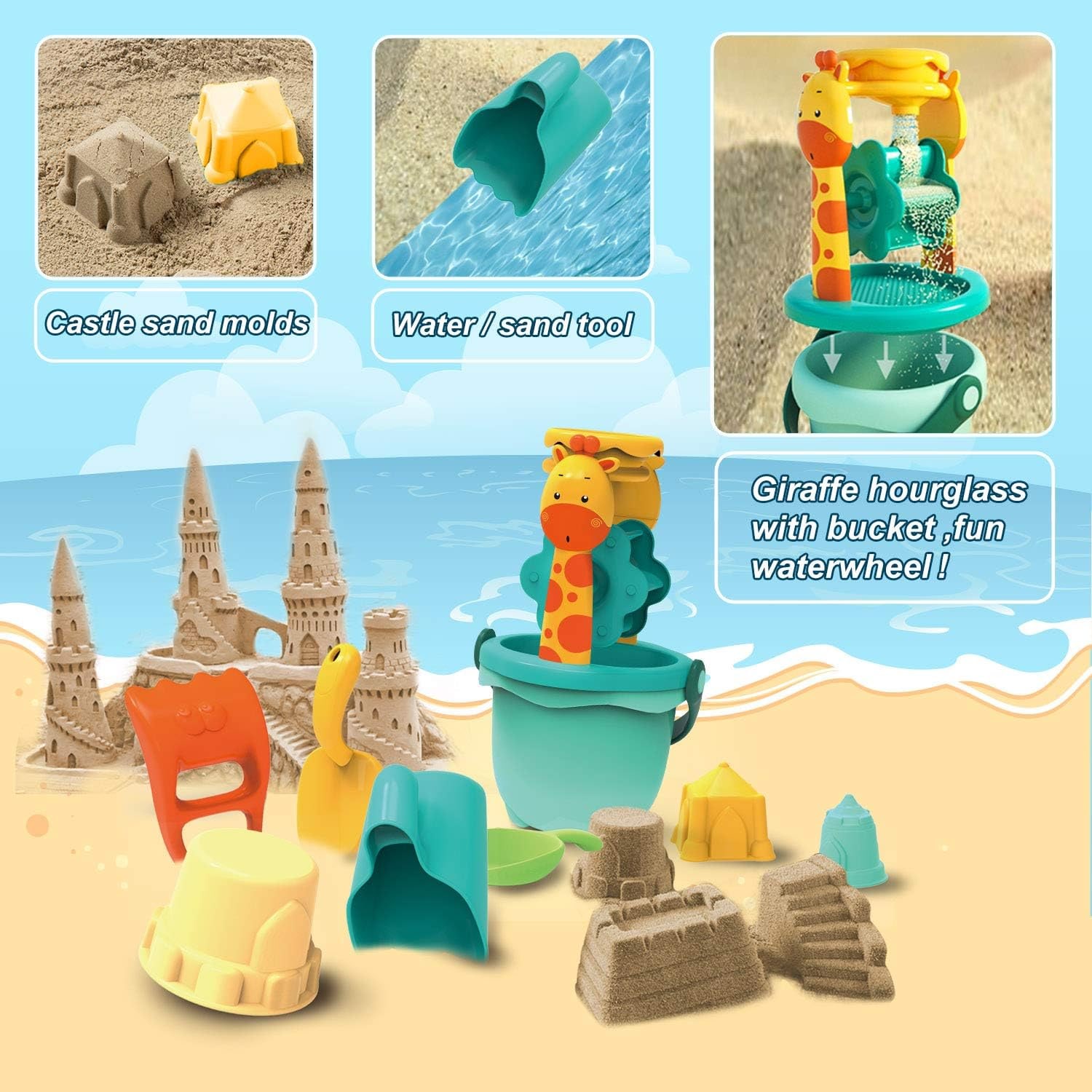
The last two pieces are the extras. An animal sand wheel, which clips together in a few seconds without tools, and a small car. The sand wheel is the piece that most often surprises parents, because it works with both dry sand poured from above and water poured in from the can. Children who are done with digging will often sit with it for another twenty minutes just watching things fall through.
How the pieces work together
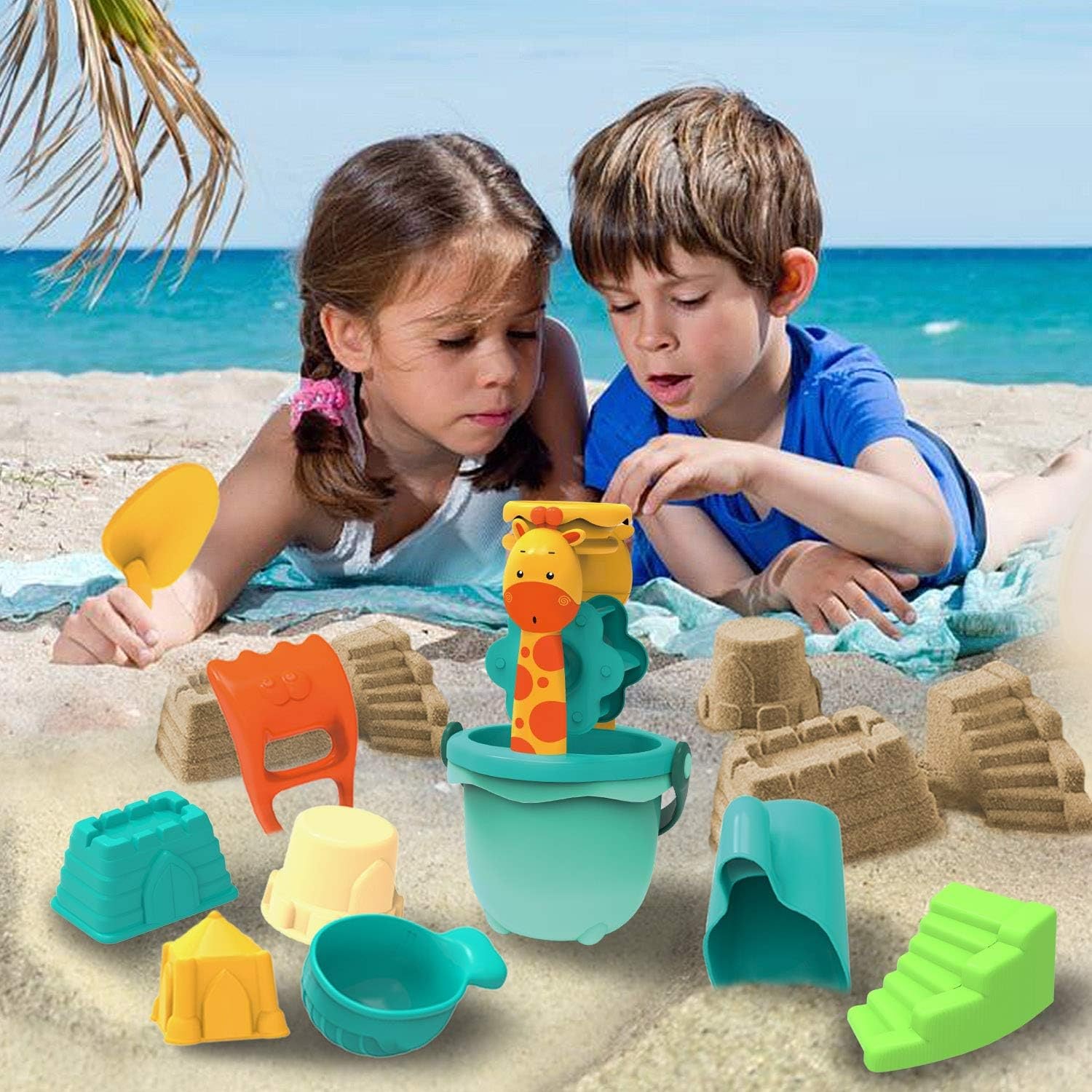
A good session usually runs in a loop. Someone digs a hole with a shovel. Someone else runs a bucket down to the water and back. The watering can gets used to damp the sand around the edge of the hole until it packs properly. Then out come the moulds, and the rake gets used to flatten a bit of ground to stand them on.
That loop is why a mixed set beats buying another spade. Each tool hands off to the next one. The watering can exists because loose dry sand will not hold a mould shape, and damp sand will. The rake exists because a mould sitting on uneven ground falls over. None of these are complicated ideas, but a child works them out by doing, and they need the tools present to work them out.
The sand wheel sits slightly apart from that loop and that is useful too. When a child has had enough of construction, pouring sand through a wheel is a lower-effort activity they can do sitting down. It buys you another stretch of time on the sand.
Who it suits
The recommended age is 3 and up. Because the set contains small parts, it is not for children under 3, so if you have a younger child in the family, keep the moulds and the smaller pieces out of reach.
At the younger end of the range, children mostly dig, fill, tip out and repeat. The buckets and shovels do the heavy lifting there, and the moulds get used as containers rather than as shape-makers. That is fine. Nothing is wasted, it just gets used differently.
Older children start building properly. They will dig moats, use the rake to shape walls, and line castle moulds along the top. This is the stage where having ten moulds instead of two actually changes what they can make. A sandcastle building kit with enough pieces lets a child work on something for a long stretch rather than finishing in five minutes.
Groups benefit most. Three shovels is the magic number for siblings or cousins, because it means nobody is standing around. If you are often the family hosting other kids at the beach, this is the sort of set that quietly keeps the peace.
How to choose between sets
A few things matter more than they look.
Piece count and piece mix. A set with twenty small moulds and one shovel is worse than a set with ten moulds and three shovels, because digging is where most of the time goes. Check the tool-to-mould balance, not just the headline number.
Handle size. Tools made for small hands get used. Scaled-down adult tools with thin handles get dropped. This set is described as suited to children's hands, which is the sensible approach for anything going to a beach with a three-year-old.
Material. Plastic is the right choice for sand and salt water. It does not absorb, it does not rust and it rinses in seconds. The trade-off is that plastic dislikes long periods in direct heat and sun, so store it in the shade. This set is plastic throughout.
Portability. Nesting buckets and stackable moulds matter when you are already carrying towels, water bottles and a shade tent. A set that packs flat gets taken to the beach. A set that does not stays in the garage.
Versatility. The best beach toys for kids are not only beach toys. If the same set works in a sandpit, a paddling pool, a bath and snow, it earns its storage space the rest of the year.
Looking after it
Sand and salt are the two things to deal with, and both rinse off with fresh water. Do it at the beach tap if there is one, or in the laundry sink when you get home. The moulds need a shake because sand packs into the corners, and the sand wheel is worth a rinse through because grit collects inside the housing.
Let everything dry fully before packing it away. Damp sand sealed in a bag for a week is unpleasant to open and does the plastic no favours. Standing the buckets upside down on the grass for an hour is usually enough.
If something needs a proper wash, warm water with a little mild dish soap works. Skip the dishwasher, because hot cycles can warp thin plastic. Store the set out of long direct sun, with the buckets nested and the moulds stacked inside them, and you will not spend the next trip hunting for a missing shovel.
Check the pieces over now and then. Plastic that has been cracked or split should be retired rather than patched, since broken edges are no fun on bare feet.
The short version
This is a 21 piece plastic set built around the idea that sand play needs more than one tool. Two buckets, three shovels, a rake and a watering can cover the digging and pouring. Ten moulds, six castle and four candy, cover the building. A clip-together animal sand wheel and a small car round it out.
It works on the beach, in a sandpit, in a pool, in the bath and in snow. It rinses clean in a couple of minutes. It is for ages 3 and up, and because it has small parts, it is not suitable for children under 3.
If you have more than one child, or you are the family other families bring their kids to, the piece count is the whole reason to buy it. Three shovels and no waiting is a better beach day than one shovel and a roster.