
The complete guide
Choosing a Kids Table and Chairs with Storage, A Practical Buyer's Guide
The pile on the floor
Every house with children has the same spot. It might be the coffee table, the end of the dining table, or a patch of carpet near the window. It is where the drawing happens, where the blocks get spread out, and where the half-finished craft project sits for three days because nobody wants to be the one who throws it away.
The problem is not that children make mess. The problem is that the mess has nowhere to go, and the surface it happens on belongs to someone else. You end up clearing the dining table before dinner, every single night.
A kids table and chairs with storage solves this in the most direct way possible. It gives the activity its own flat surface at the right height, and it gives the supplies a box to live in that sits right underneath. Nothing has to migrate to the kitchen bench. Nothing has to be packed into a cupboard in another room and then dragged back out again tomorrow.
What this set actually is
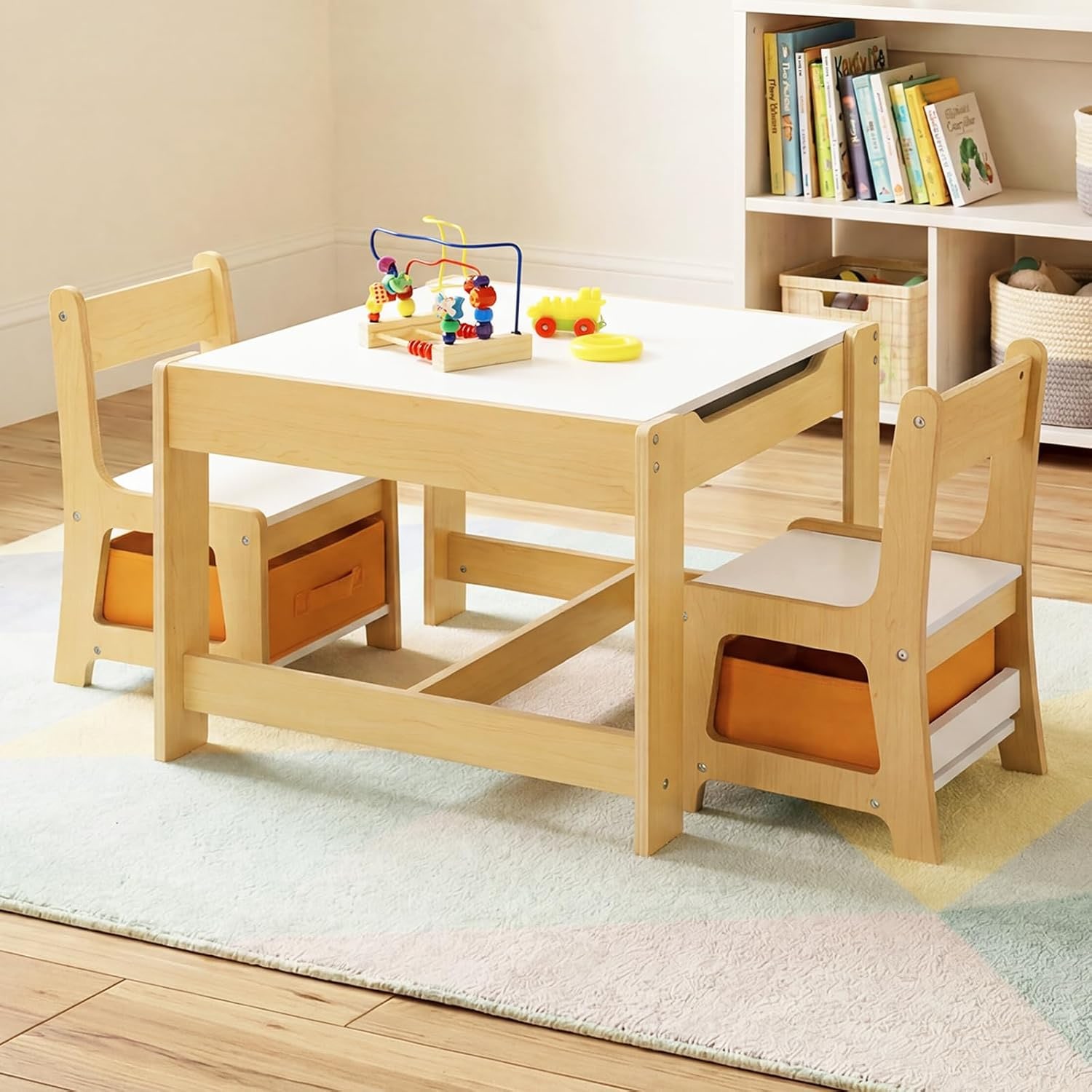
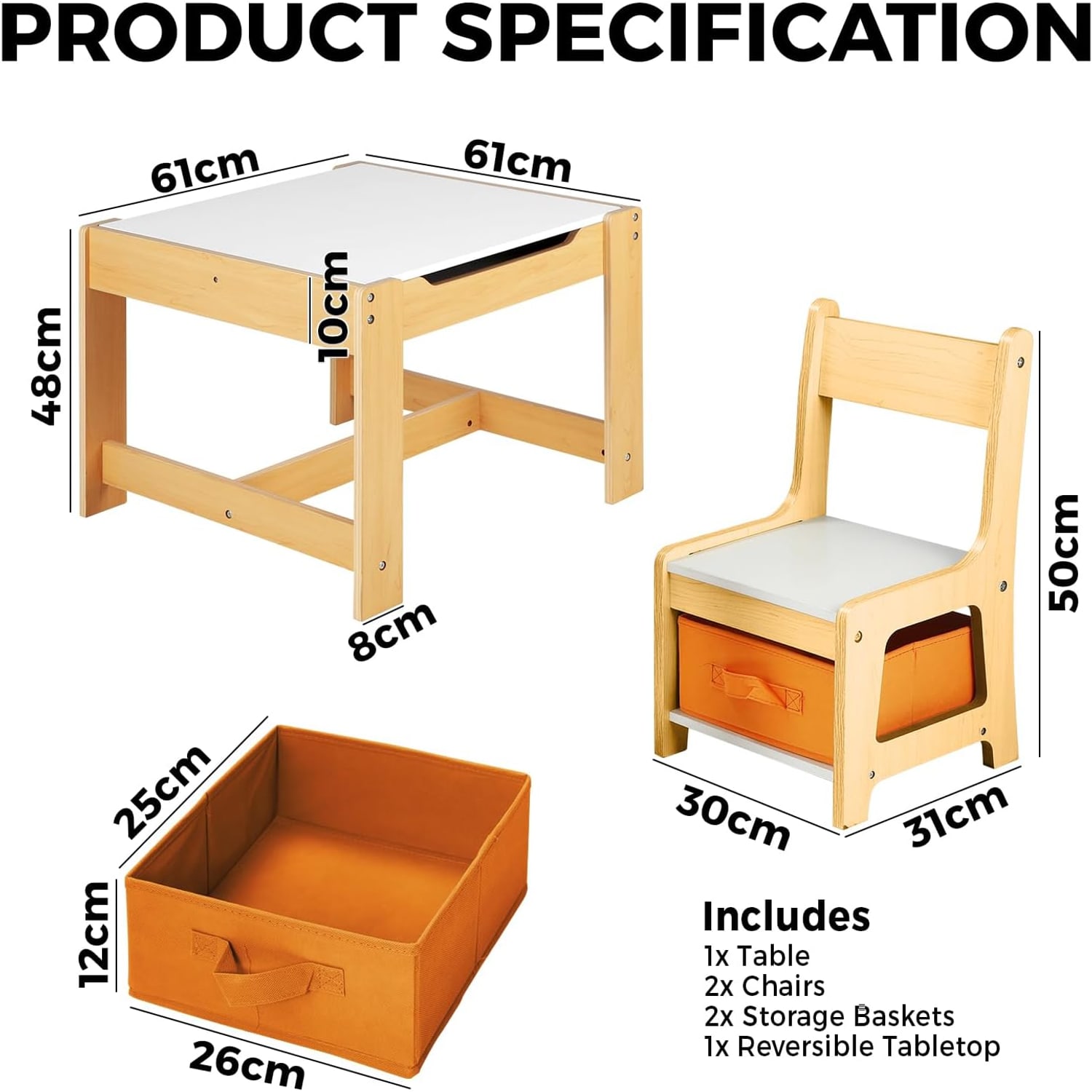
It is one square table with a built-in storage box and two matching chairs, finished in white and wood. The table measures 61 x 61 x 48 cm and the full set weighs 17.1 kg. Construction is MDF board with a surface that cleans up with a damp cloth.
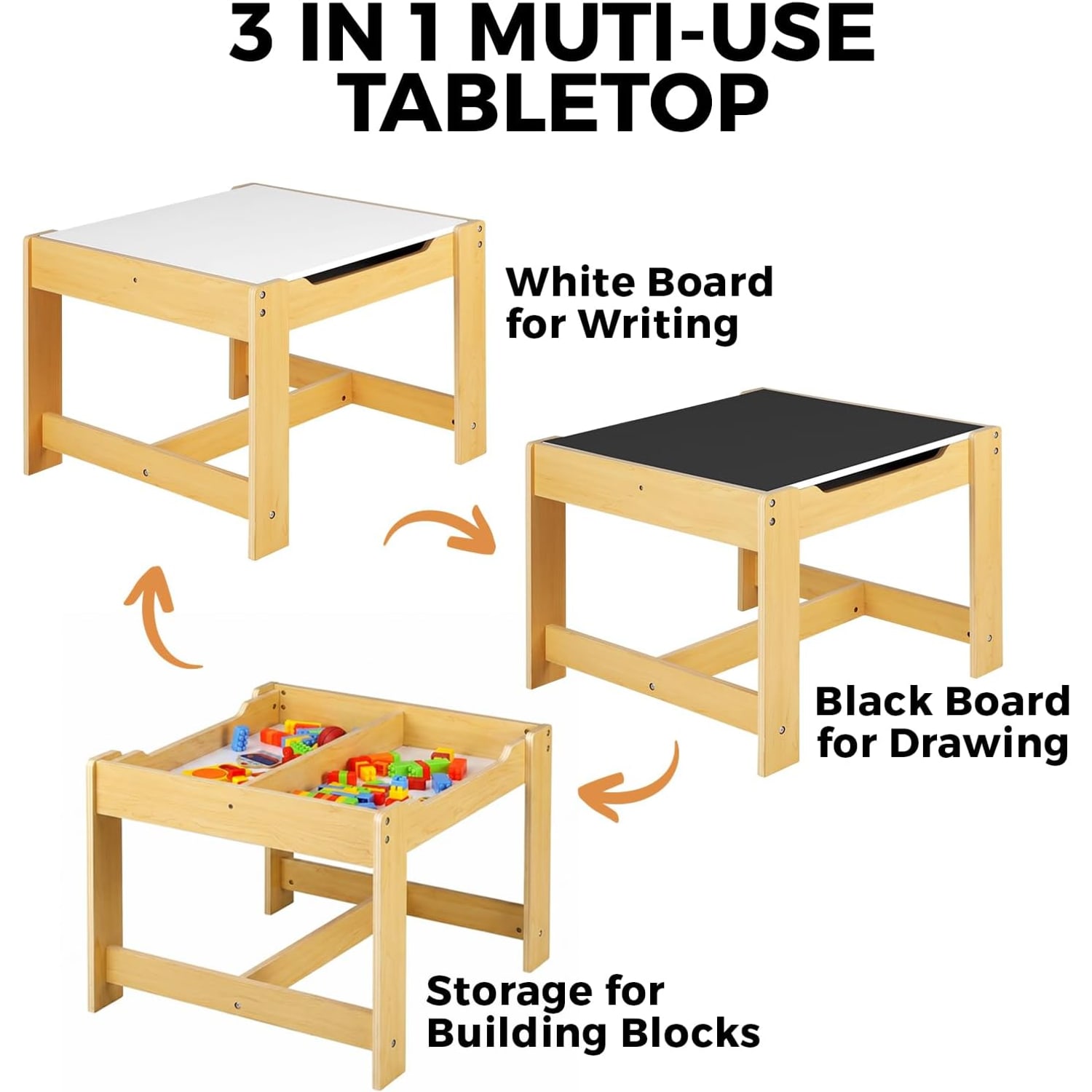
The tabletop is the part worth understanding properly. It is removable, so you can lift it right out. It is also reversible, so one face is a plain smooth work surface and the other is a chalkboard. Flip it depending on what is happening that afternoon.
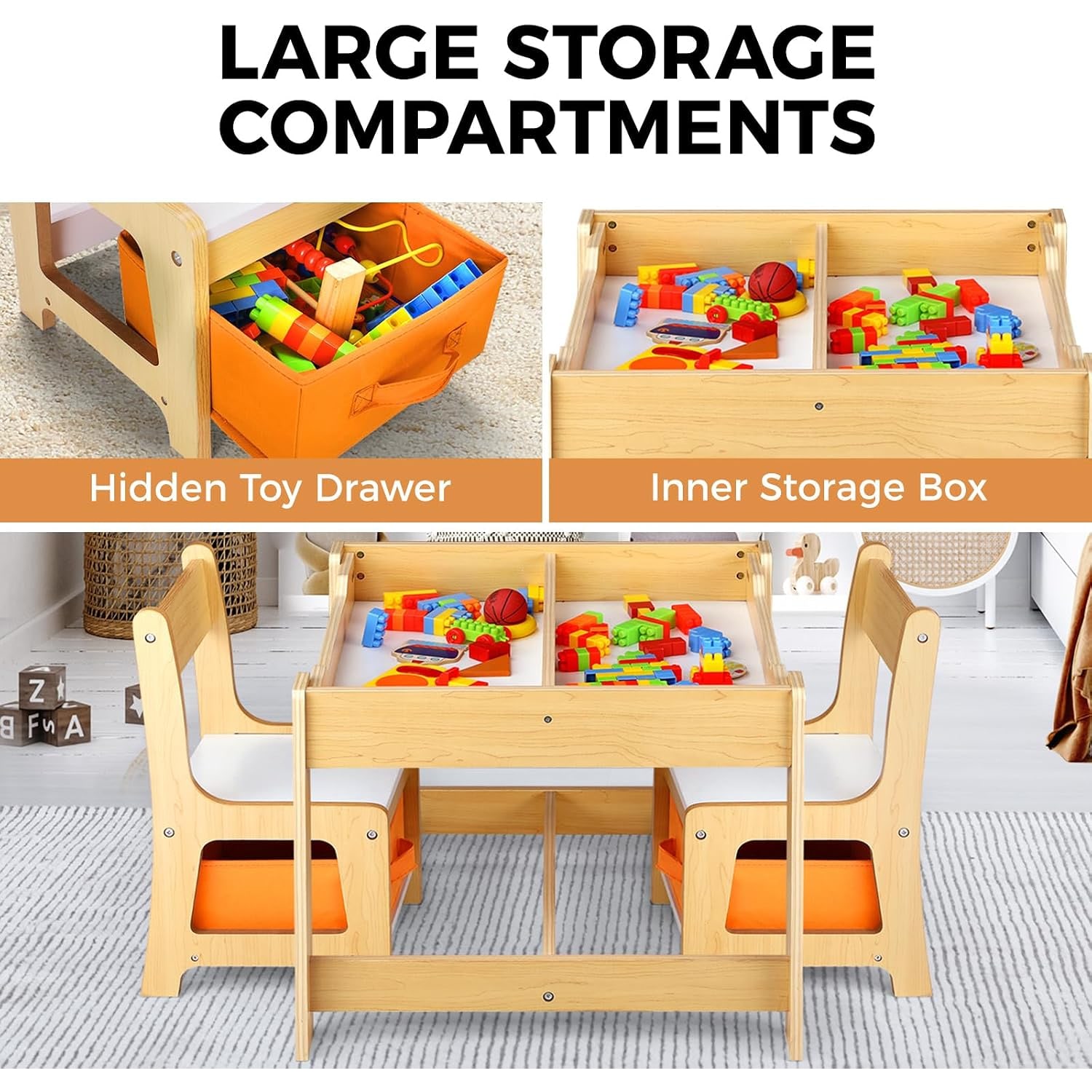
Underneath the top is the storage box, running the full footprint of the table. That is a decent volume. Colouring books lie flat, pencil tins fit upright, and loose blocks go in by the handful rather than one at a time.
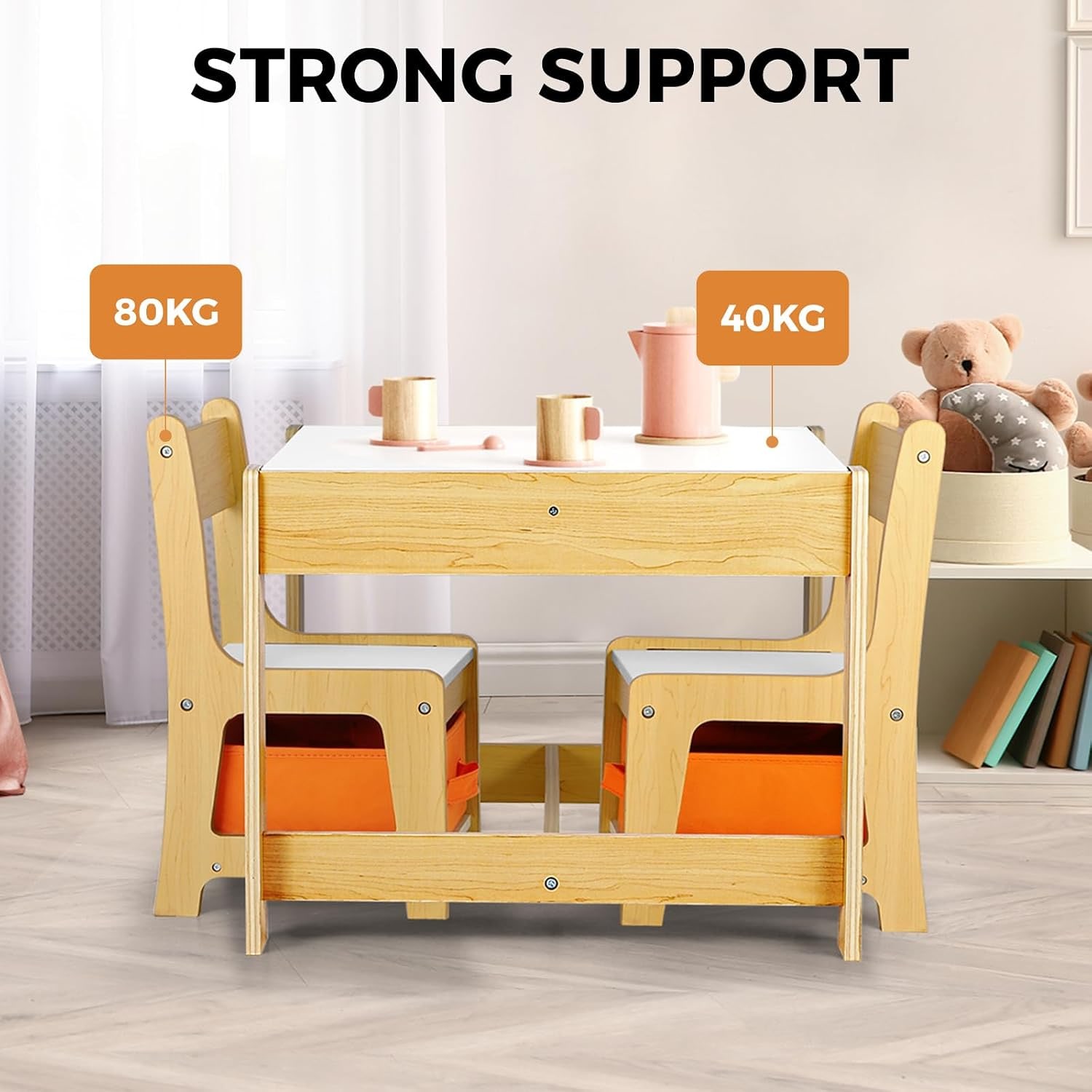
The maker states a 40 kg weight capacity for the table and 80 kg for each chair. Those numbers tell you something useful, which is that the set is not a flimsy thing designed to look good in a photograph.
How the storage changes the routine
Hidden storage under a lid works better than open shelving for one reason. Tidying up becomes a single movement. Sweep the pencils in, drop the lid, done.
Open bins and shelves ask a child to sort things into categories. That is fine in theory and it rarely survives contact with a tired five-year-old at bedtime. A box that takes everything is a box that actually gets used.
The trade-off is that the box becomes a jumble over time. The fix is simple, put a couple of small containers or a pencil case inside it so the fiddly things stay grouped. You still get the one-movement tidy-up, but the crayons are not scattered through the board game pieces.
Because the tabletop lifts out rather than hinging on the spot, access is unrestricted. A child can reach into any corner of the box without fighting a lid that keeps falling.
The chalkboard side
A chalkboard surface on a child's table is one of those features that sounds like a gimmick and turns out to get used constantly. Part of it is that drawing directly on the furniture feels mildly forbidden, which children enjoy. Part of it is purely practical, no paper needed and nothing to tidy afterwards.
Use it for drawing, for games like noughts and crosses, for practising letters, or for a running score during a card game. Clean it with a dry cloth or a chalk eraser day to day. If it needs more than that, a barely damp cloth works, then dry it straight away rather than letting water sit on the board.
There is no mention of a magnetic layer in the product details, so plan for chalk rather than magnets.
When you want a plain surface again, lift the top out and flip it. That takes about five seconds.
Measuring up before you order
Furniture should be chosen by measurement, not by a child's age. Children of the same age vary enormously in height, and a table that is right for one is uncomfortable for the next.
The useful test is this. A child sitting on the chair should have their feet flat or close to flat, and their forearms should rest on the tabletop without their shoulders hunching up. If their elbows are below the top edge, the table is too tall. If they are leaning down into it, it is too short.
This table stands at 48 cm. Take a tape measure to a chair your child already uses comfortably and compare. It is a two-minute job that prevents the most common disappointment with any wooden kids table set.
For the room itself, mark a 61 x 61 cm square on the floor with masking tape, then add roughly 40 cm clear on at least two sides so chairs can pull out. Live with the tape for an evening. You will know quickly whether the spot works or whether it blocks a walkway.
Where to put it
A corner of a bedroom is the classic spot and it works well, because the square shape tucks in neatly and the white and wood finish does not fight with other furniture.
Playrooms are the obvious second choice. If the room is shared, remember that the set seats two, so a third child will need an extra chair from elsewhere or a second surface.
Plenty of people put theirs in the living room, which is where the storage box really pays off. The room can go from craft zone to adult space in under a minute, with everything hidden inside the table rather than carried off to another room.
Near a window is pleasant for drawing light, but avoid long hours of direct harsh sun on the finish. Keep it away from heaters and out of damp rooms, since MDF board and moisture are a poor combination.
Keeping it in good shape
Care is genuinely easy. A soft damp cloth across the surfaces handles everyday grime, and drying it afterwards matters more than people expect. Do not leave puddles sitting on the top.
Avoid bleach, solvents and abrasive scourers. They dull the finish and once that happens there is no going back.
Lay paper or a mat down for glue, glitter and heavy painting sessions. The surface wipes clean well, but why make work for yourself.
Every few months, go around the fixings with a screwdriver and snug them up. Almost every wobbly piece of children's furniture is a tight piece of furniture with one loose joint. This is especially worth doing after the set gets moved between rooms.
Lift from the frame rather than the tabletop when shifting it, since the top is removable and will come away in your hands if you grab it as a handle.
Who it suits, and who it does not
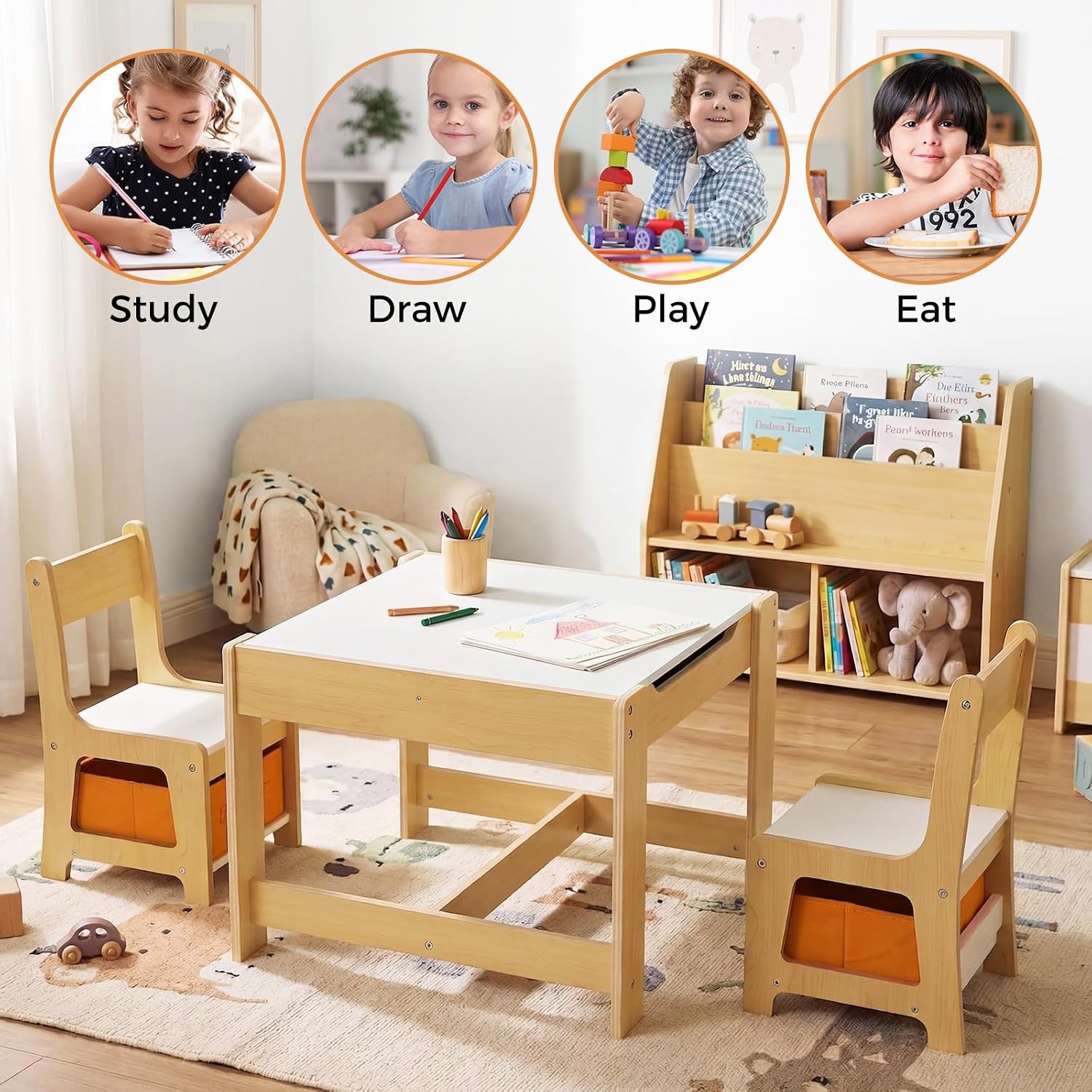
It suits a household that wants one piece of furniture to cover drawing, reading, puzzles, homework and board games, with the supplies stored in the same spot. It suits anyone short on floor space, because the storage is inside the table rather than taking up another metre of wall.
It suits shared living areas particularly well, for the same reason.
It is less suited to a child who is already tall for the 48 cm height, or to a household with three or more children who will all want to sit at once. It is also an indoor piece, so if you were picturing it on an uncovered deck, that is not the right home for it.
The short version
You get a square 61 x 61 x 48 cm table with two matching chairs in white and wood, weighing 17.1 kg all up. The tabletop lifts out and flips, giving a smooth work side and a chalkboard side. Underneath is a storage box that takes the lot.
MDF board construction, a wipe-clean finish, 40 kg rated for the table and 80 kg for each chair. Measure your child against the 48 cm height, tape out the footprint on your floor, and you will know in five minutes whether it is right.
Delivery runs from Australian warehouses in 3 to 7 working days, and returns are open for 14 days from delivery on unused items in their original packaging.