
The complete guide
How to Choose Fabric Storage Cubes That Actually Keep a Room Tidy
The real problem is not mess, it is homelessness
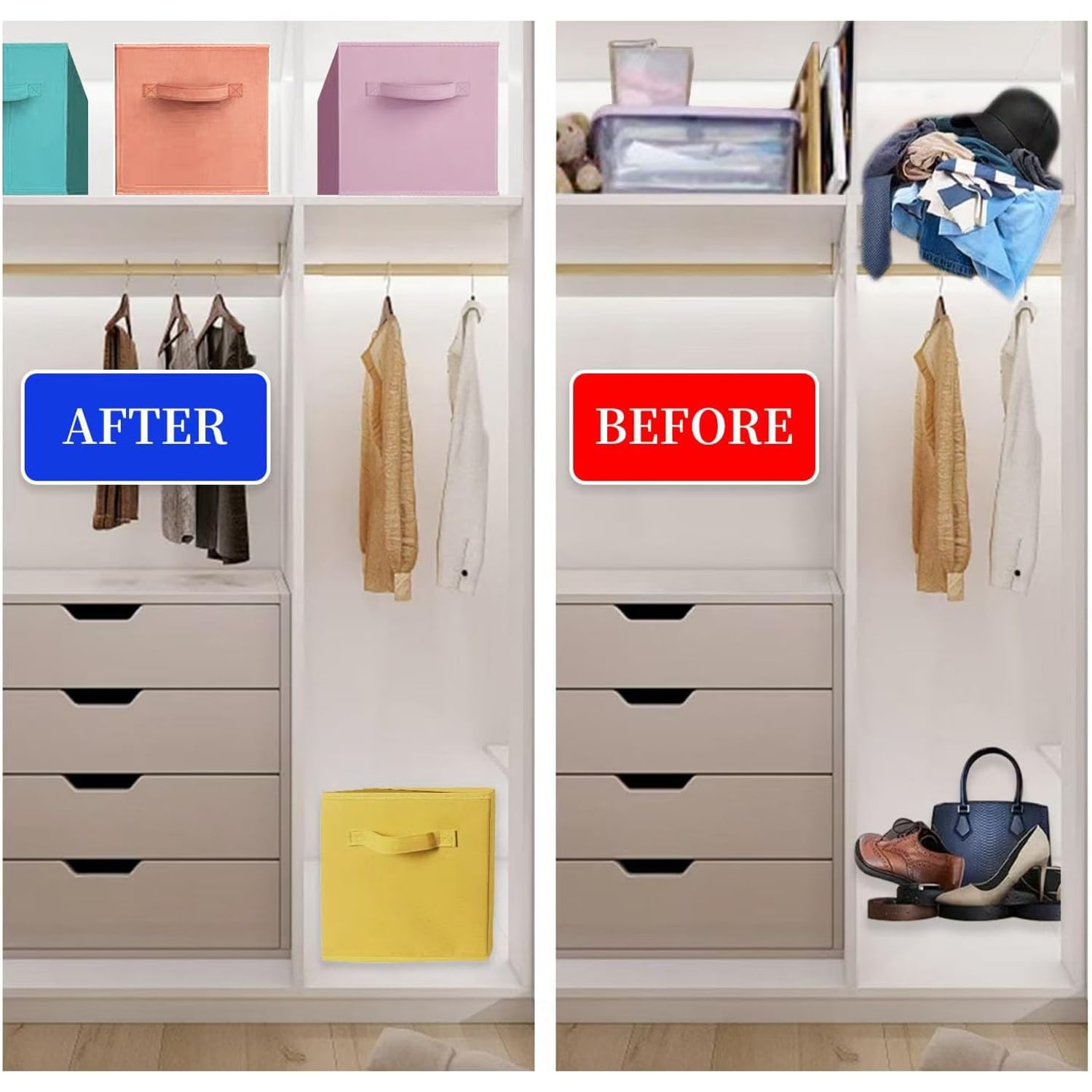
Walk into any room that looks untidy and you will usually find the same thing. The objects are not badly behaved. They simply have nowhere to go. A box of crayons with no box, a pile of books with no shelf space, cables in a drawer that is already full. People are good at putting things away when putting away takes under five seconds. The moment it takes longer than that, the coffee table wins.
Storage cubes work because they shorten that five seconds to about one. You lift, you drop, you move on. There is no lid to open, no label to read, no stacking order to respect. For a child aged 3 and up, that difference decides whether the room gets tidied at all.
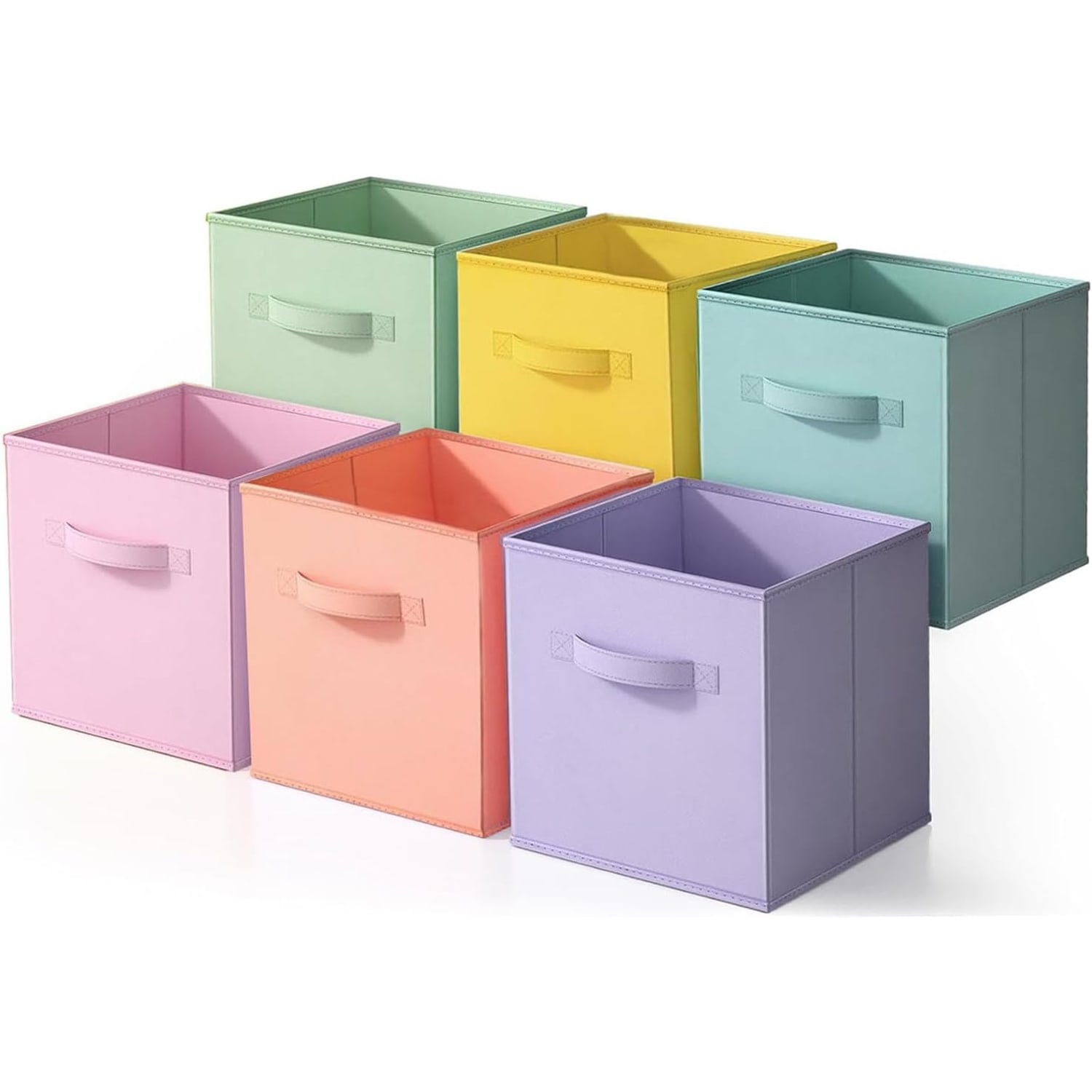
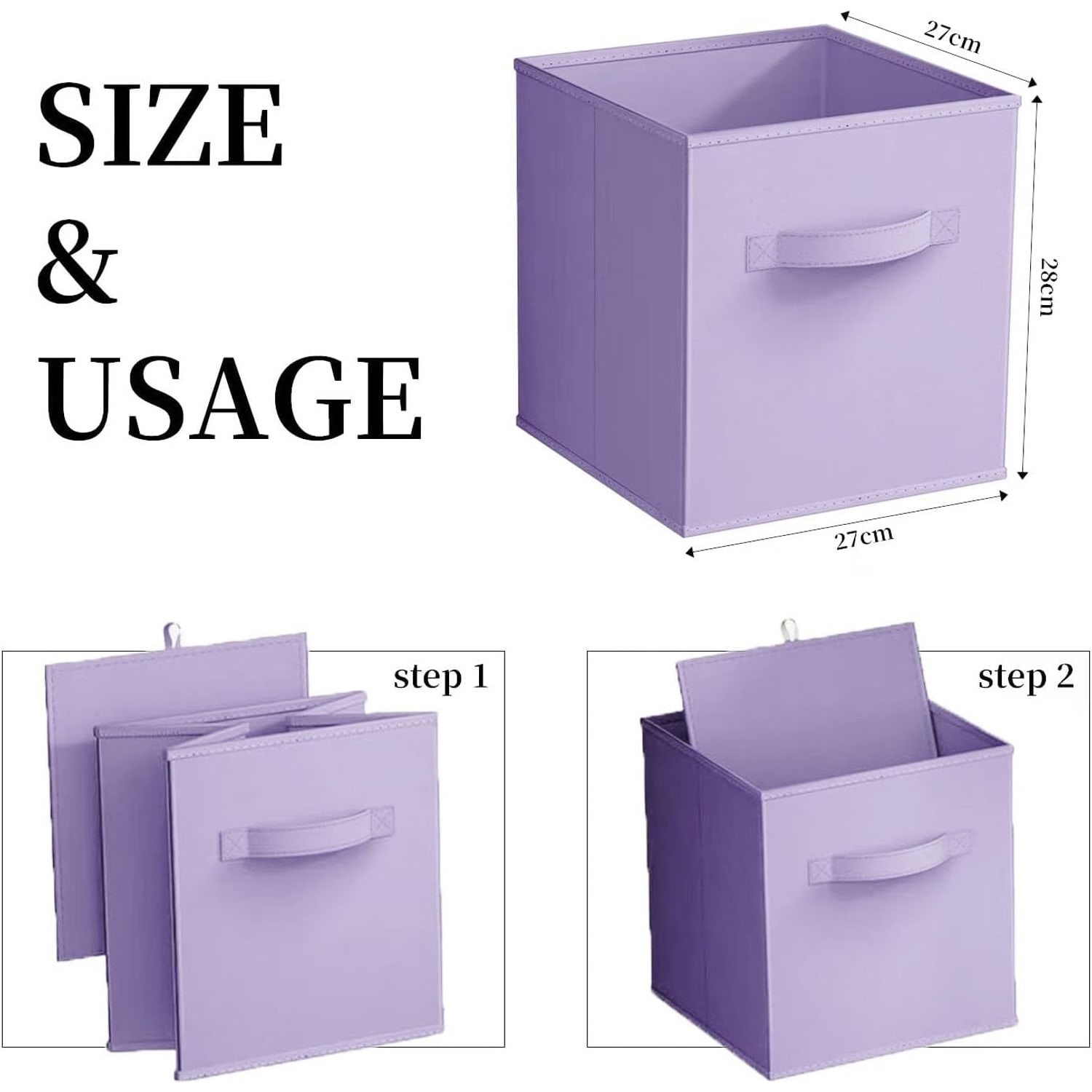
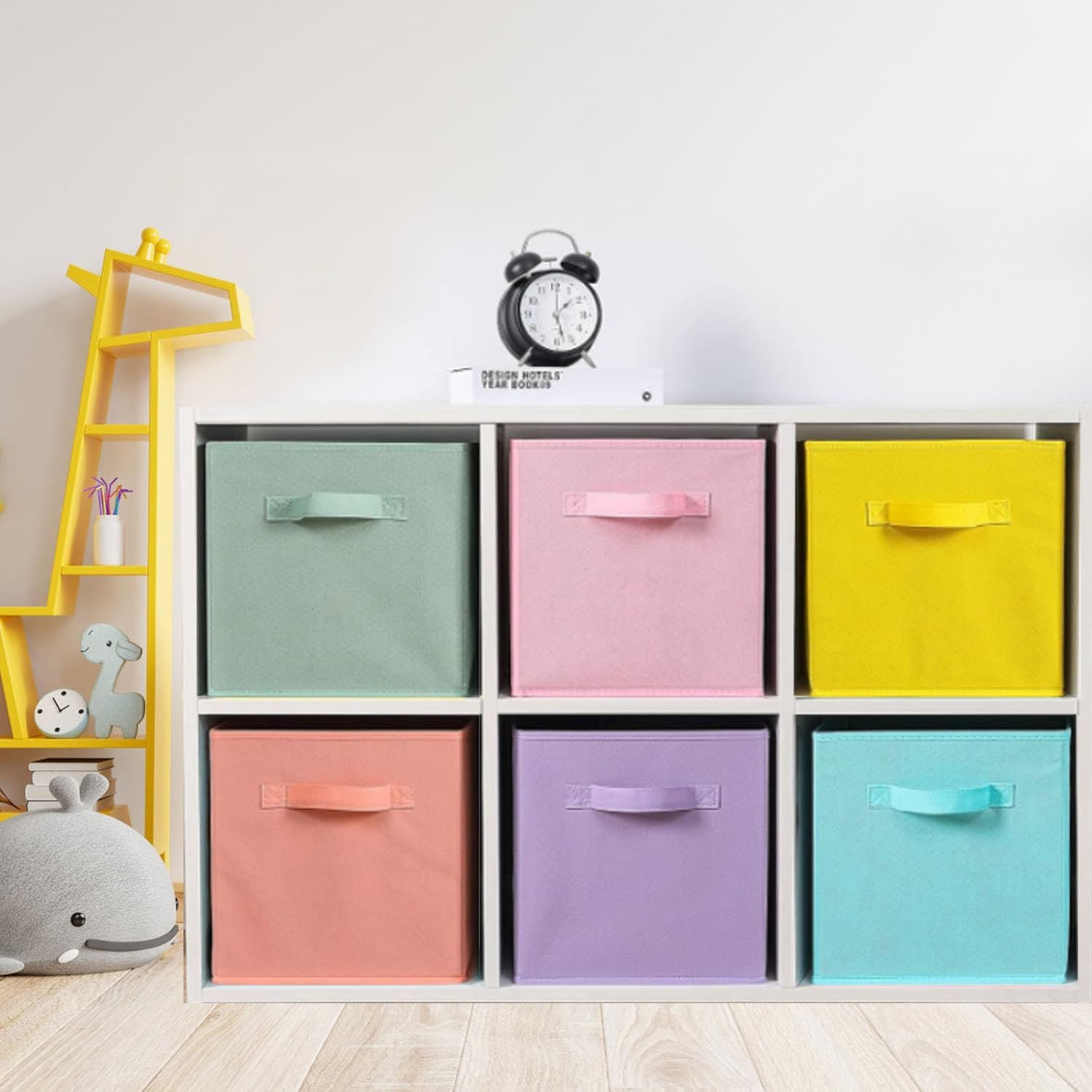
This set gives you six of them at once, in six colours, each measuring 27 x 27 x 28 cm. The whole pack weighs 2.71 kg. That is the short description. The rest of this guide is about how to use them well, and what to check before you order.
How a folding fabric cube is built
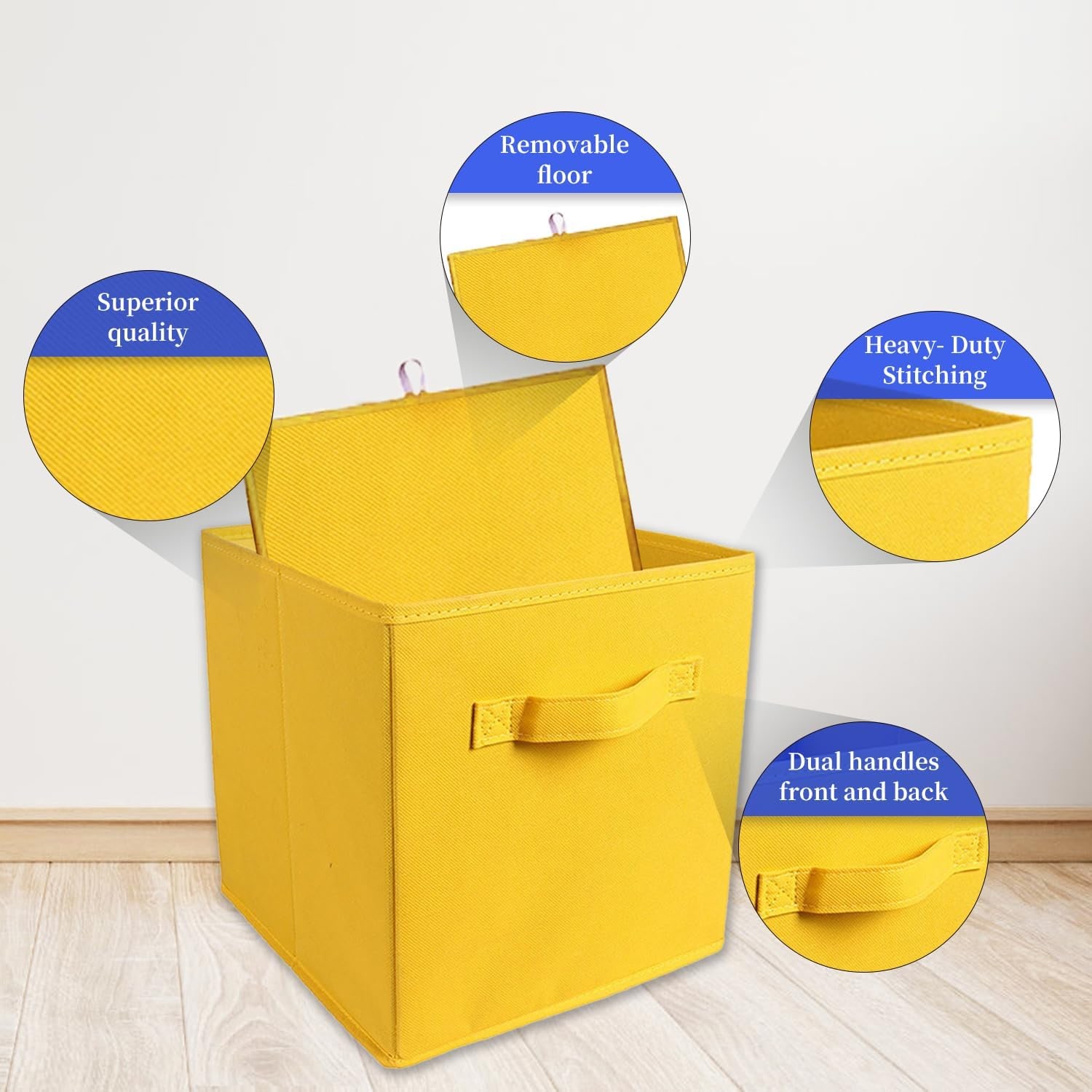
The idea is simple. The walls are fabric, sewn into a square sleeve. On its own that sleeve would flop over. So a flat cardboard panel drops into the base and pushes the four walls out to square. That panel is doing all the structural work.
Pull the panel out and the whole thing collapses. You can fold it flat and slide it behind a wardrobe or under a mattress until you need it again. That is the main advantage over rigid plastic tubs, which take up the same space empty as they do full.
It also sets the limits. A cardboard floor and fabric sides are built for light to medium loads. Soft toys, building sets, books, folded clothing, craft gear, linen, shoes, seasonal decorations. Not for tools, tins, or anything with a sharp corner that will work its way through the base over time. Spread heavy items across two bins rather than loading one.
Getting the size right before you order
This is the one measurement that trips people up. Cube shelving looks standard but it is not. Openings range from roughly 26 cm to 34 cm depending on who made the unit, and a bin that is two centimetres too wide simply will not go in.
Take a tape measure to your shelf before ordering. You want the opening to be at least 28 cm wide and 29 cm high to give a 27 x 27 x 28 cm cube room to slide without scraping. A centimetre or two of clearance is ideal. Any more than four or five centimetres and the bin will look lost in the hole, though it still works perfectly well.
For under-bed use, the number that matters is the 28 cm height. Measure from the floor to the underside of the bed frame. Plenty of beds clear that easily, but low platform frames will not, and a fabric cube cannot be squashed down the way a soft bag can.
For wardrobes, check the shelf depth as well as the height. A 27 cm deep bin on a 25 cm shelf will overhang, which is tolerable but not tidy.
Who these suit
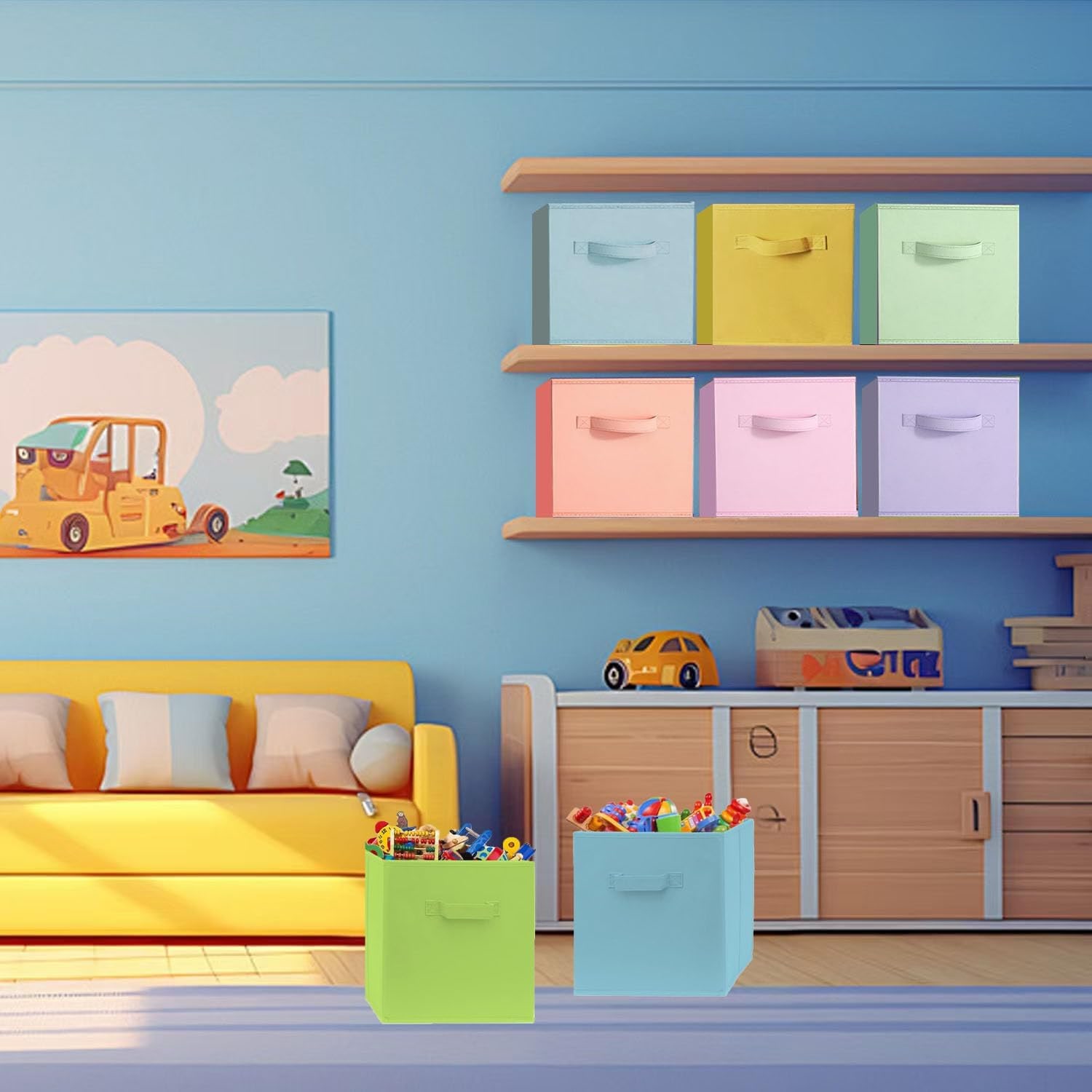
Families with a playroom get the most obvious benefit. Six colours means six categories, and colour-coding beats written labels for anyone who cannot read yet. Blocks go in the orange one. Cars go in the blue one. The system explains itself and does not need an adult standing over it.
Shared living rooms are the next best use. A set of bright cubes along the bottom shelf of a bookcase swallows the toys that migrate out of the bedroom each afternoon, and they read as part of the decor rather than as storage equipment.
Beyond kids rooms, people use these as closet storage cubes for jumpers and bags, as craft supply storage bins for wool and paper, in home offices for cables and chargers, and in hallways for caps and gloves. The soft sides make them friendlier in a room where a hard plastic tub would feel out of place.
If you are after something to hold car parts in a garage or heavy kitchen stock in a pantry, look at rigid containers instead. Fabric is not the right answer to a heavy load.
Building a system that survives the week
Having the bins is step one. Making them stick is step two, and it comes down to a few habits.
Give each colour a job and say it out loud a few times in the first week. People remember colours faster than positions, which is why a colour-coded set beats six identical grey boxes.
Do not fill a bin past the rim. Once things are piled above the top edge they fall out when the bin is pulled, and the whole point was that putting away is easy. If a category keeps overflowing, it needs two bins or a cull.
Keep one cube deliberately empty, or close to it. Every household generates a stream of odd items that do not fit any category. A catch-all bin stops those items colonising the dining table while you decide what to do with them.
Set the bins at a height the person using them can reach. A toy storage bin on a top shelf is a toy storage bin that never gets used. Bottom row, always, for anything a child is expected to manage themselves.
Looking after them
Fabric storage is low maintenance but it is not indestructible. Spot clean marks with a damp cloth and a little mild detergent, working gently rather than scrubbing. Pull the cardboard base out first so it does not absorb any moisture, and let the fabric dry completely in the air before you put the panel back and refill the bin.
Do not put these in a washing machine or a dryer, and skip the bleach. Keep them out of damp spots like a floor beside a washing machine or a bathroom, because the cardboard floor is the weak point if moisture gets in.
If a bin starts to sag at the corners, it usually means it has been overfilled or something heavy has been sitting on top of it. Empty it, lay the cardboard panel flat for a while, and reset the shape.
When you fold them away for storage, lay the flattened cubes flat rather than rolling or crushing them. Fabric keeps whatever crease you leave in it.
What to compare against
Rigid plastic tubs are tougher and wipe clean better, but they do not fold down and they look like storage. Wicker and seagrass baskets look lovely and cost more, and they can snag clothing. Open-front plastic bins are good for frequently grabbed items but they spill their contents if knocked. Soft fabric cubes sit in the middle: cheap enough to buy six at once, light enough for a child, and invisible once they are inside a shelf.
Among collapsible storage cubes in this size bracket, a six-pack is the sweet spot because it fills a standard shelving unit in one purchase rather than leaving you hunting for matching singles later.
The short version
Six fabric cubes, each 27 x 27 x 28 cm, one in each of six colours, 2.71 kg for the set. A cardboard floor drops in to hold the square shape and lifts out so the cube folds flat. Suitable for ages 3 and up, and best used for toys, books, linen, clothing, shoes and seasonal bits rather than anything heavy.
Measure your shelf opening first, give each colour a job, keep them within reach, and do not fill them past the rim. Do that and the floor stays clear without anyone having to think about it much. Australian warehouse delivery runs 3 to 7 working days, and returns are open for 14 days from delivery if they are unused and still in their original packaging.