
The complete guide
Choosing a Pretend Play Food Set That Actually Gets Played With
The toy that gets handed to you fifty times a day
If you have a child over three in the house, you already know this routine. Something gets pushed into your hand and you are told to eat it. Then you are told you ate it wrong. Then you are given another one.
Pretend food play is one of those things children arrive at on their own. They have watched meals being made and shops being visited, and they want a turn at running it. The problem is that without props, the game falls apart fast. A child can only pretend a block is a cake for so long before the block goes back to being a block.
That is the gap a pretend play food set fills. It gives the game something to hold.
What this particular set is
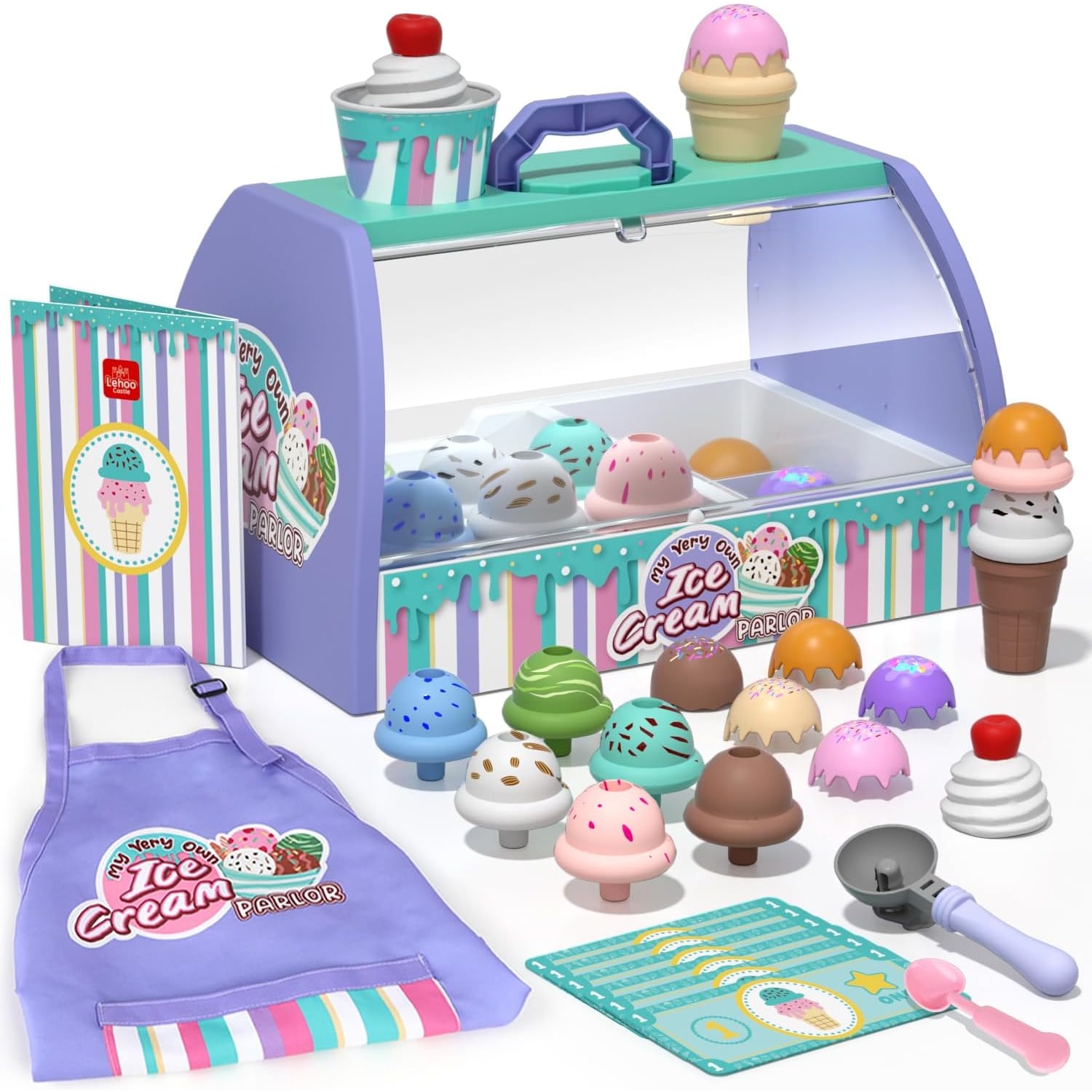
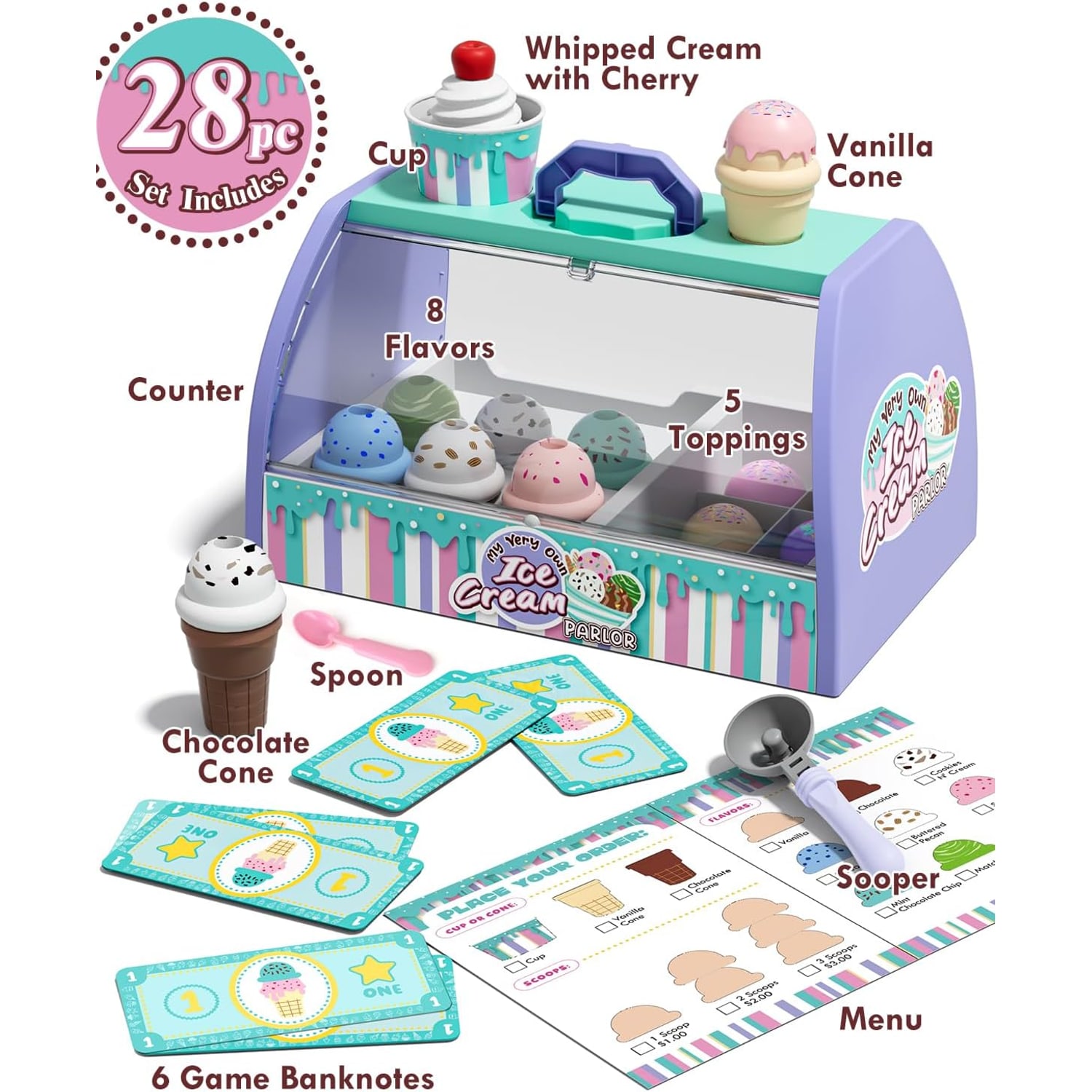
This one is themed around food, and specifically around ice cream shop play. The maker lists the included components as play food and the material type as wood. The size is listed as child-size, and the colour as various colours.
It is listed for ages 3 and up. It contains small parts and is not for children under 3.
That is the honest shape of it. No batteries, no screen, no sounds. Just pieces a child can stack, sort, serve and argue about.
Why wood behaves differently to plastic
This is worth a paragraph because it changes how the toy feels in use.
Wooden play pieces have a bit of weight. When a child sets one down on a table, it stays put. Lighter plastic pieces skid, tip and roll off the edge, and a toy that keeps running away gets abandoned. Weight also makes stacking more satisfying, because a stack that holds together feels like an achievement.
Wood also sounds different. There is a soft clack when pieces knock together that children seem to like. It is a small thing, but small things are what keep a toy in rotation.
The trade-off is that wood does not like water. You cannot hose it down or run it through the dishwasher, which some parents genuinely prefer to do with play food. A damp cloth is the limit.
Who this suits
It suits a child who has started narrating their play. You will hear it happen. Instead of just moving objects around, they begin saying what is going on, giving characters names, and setting rules about who is allowed to order what.
It suits houses where there is already a play kitchen with nothing much in it. An empty play kitchen is a piece of furniture. Fill the shelves with play food and it becomes a place children go.
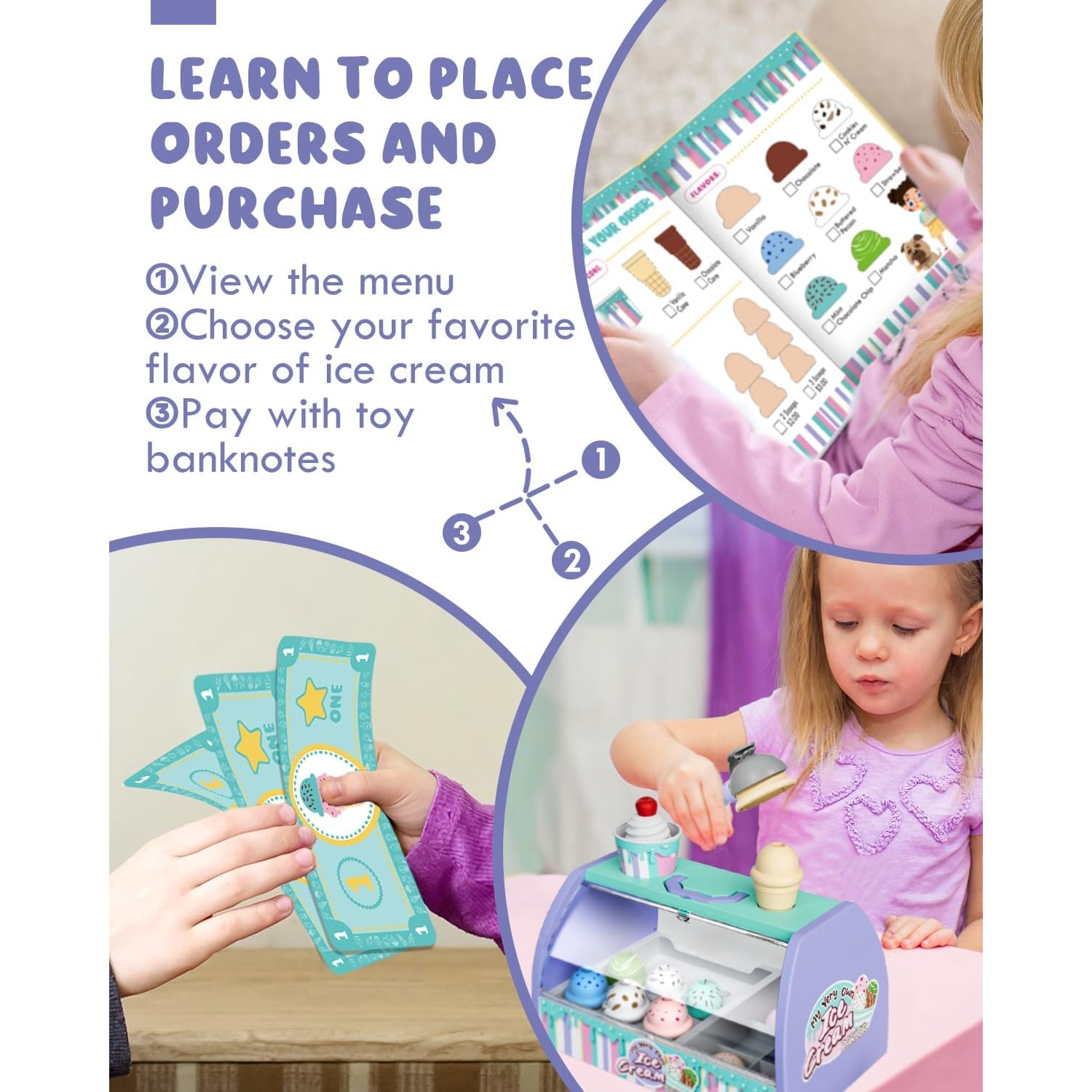
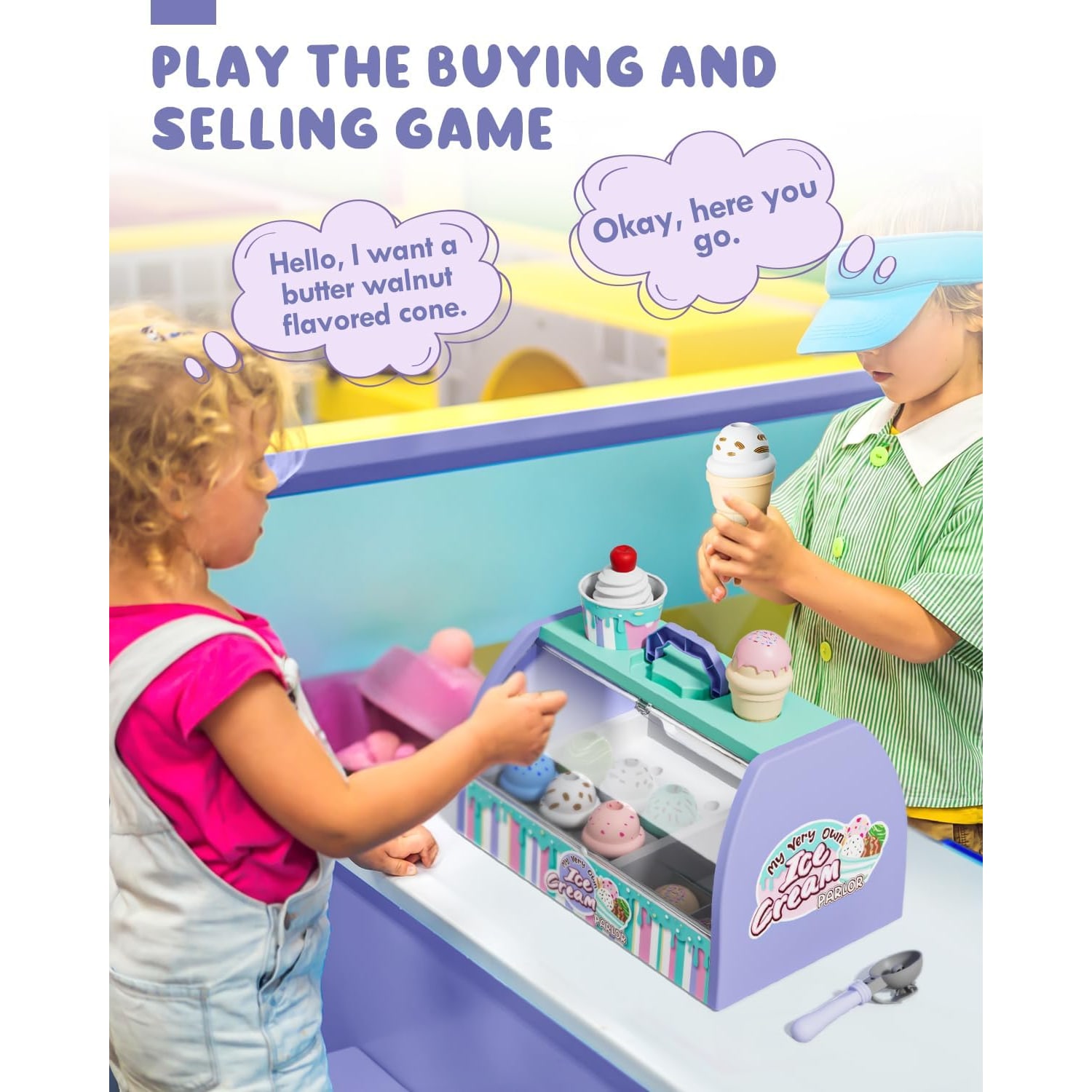
It suits siblings and playdates, because shop play needs two people. Someone has to buy and someone has to sell.
It is less of a fit if you are after a huge everything-included set covering breakfast, lunch and dinner. This is a themed set built around one idea, and it does that one idea well.
How to choose play food in general
A few things separate the sets that get used from the sets that end up at the back of a cupboard.
Pick a theme over a random pile. Children play better with a set that suggests a story. Ice cream shop, cafe, bakery, greengrocer. A bag of mismatched miniature food with no theme gets sorted once and then ignored. This is the single biggest difference between a good toy food set and a forgettable one.
Check the size is right for hands, not for display. Very small, very detailed play food looks lovely in photos and is fiddly in real life. Child-size pieces that a hand can close around get picked up more often.
Count how many people can play. If there is only one of something important, you get fights. Sets with multiple similar pieces let two children work in parallel.
Think about where it will live. Loose play food spreads across a house in about four days. Decide on a tub or basket before the box arrives, and the set will still be complete next year.
Be realistic about the age range. Anything with small parts is for over threes. If you have a younger child in the house, you need a storage plan that puts the set up high when play is finished.
Making the most of it once it arrives
The first session usually runs itself. After that, a bit of adult input keeps the game fresh for much longer.
Give the shop a name and write it on a piece of paper. Set up a counter using a low table or a box. Make play money out of cut paper. Give the shop opening hours and announce when it closes. These small framing details turn a pile of pieces into an ongoing game that gets picked up again tomorrow.
You can also build in quiet learning without making it a lesson. Ask for two of something. Ask which colour costs the most. Ask for the order to be repeated back. Children who are deep in a game will happily do counting and sequencing work they would refuse at a table.
Mixing in other play kitchen accessories helps too. Plates, cups and a cloth for wiping the counter cost almost nothing and double the length of the game.
Looking after it
Wipe pieces with a lightly damp cloth and dry them straight away. Never soak the set and never put it in the dishwasher. Keep it out of direct sun and off wet surfaces, and bring it inside if it has been used on the deck.
Store everything in one container. This matters more than any cleaning routine, because the main way play food dies is by slowly disappearing. One tub, one home, everything back in it at pack-up time.
Look over the pieces every few months. If anything has chipped or split, take it out of circulation.
And a reminder worth repeating. Pretend food is never for real food or drink. Keep the two apart.
The short version
This is a wooden, child-size pretend play food set themed around ice cream shop play. It is for ages 3 and up and not for children under 3, because it contains small parts.
It is a good choice if your child has started telling stories while they play, if you have a play kitchen that needs stocking, or if you want a toy that works best with two people rather than one. It wipes clean with a damp cloth, stores in a single tub, and does not need a battery or a charger.
Delivery is from Australian warehouses in 3 to 7 working days. If it is not right, you have 14 days from delivery to send it back unused in its original packaging.