
The complete guide
How to Choose a Collapsible Storage Box with a Lid and Divider
The problem is not mess, it is where mess goes
Walk into most family lounge rooms at six in the evening and you will find the same scene. Soft toys on the couch, blocks under the coffee table, a jumper on the arm of a chair. None of it is there because anyone wanted it there. It is there because there was no obvious place to put it, and nobody wants to carry eleven separate objects to eleven separate homes.
A single large lidded box fixes a surprising amount of that. Not because it is clever, but because it removes the decision. Everything goes in the box. The lid goes on. The room reads as tidy again, and the toys are still accessible tomorrow morning.
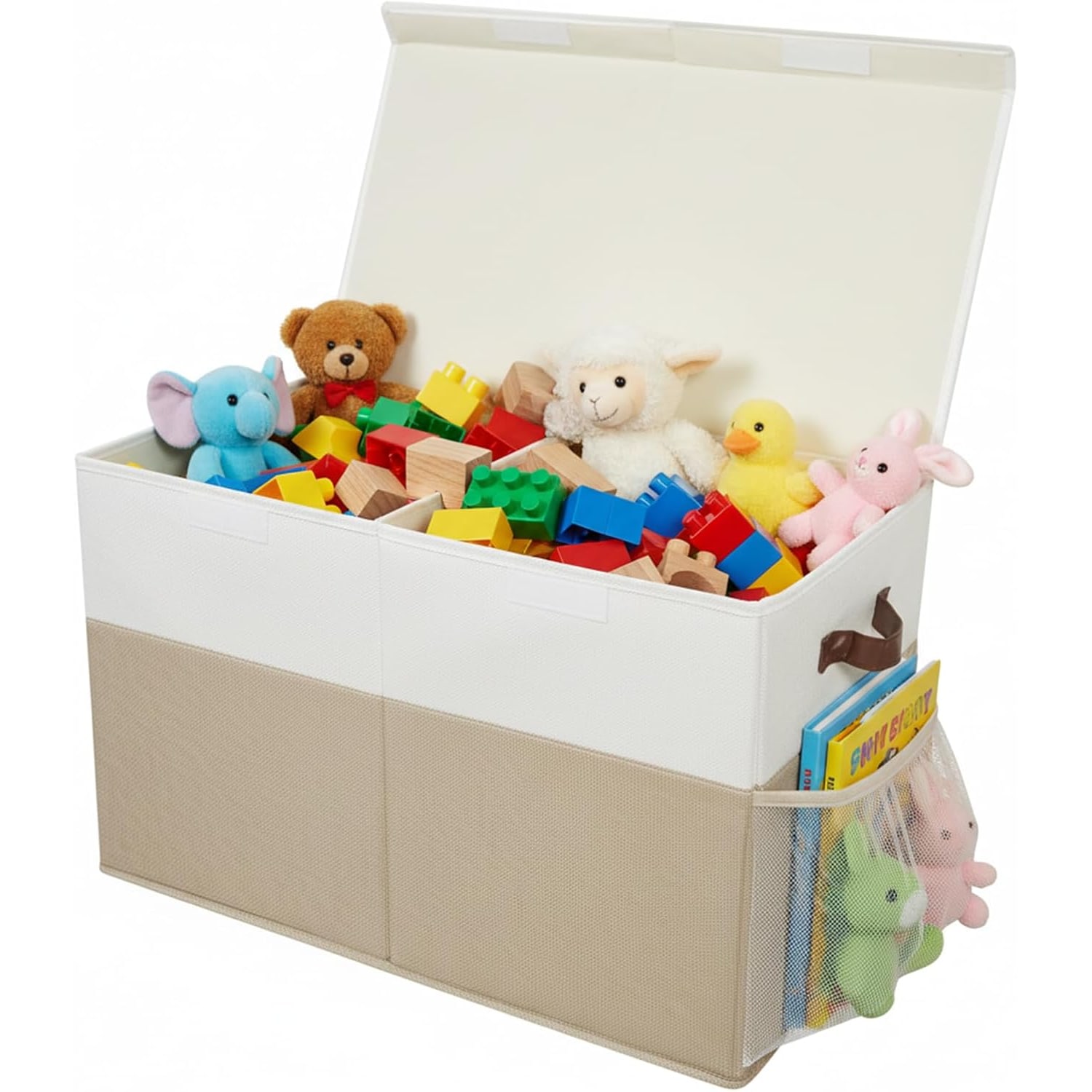
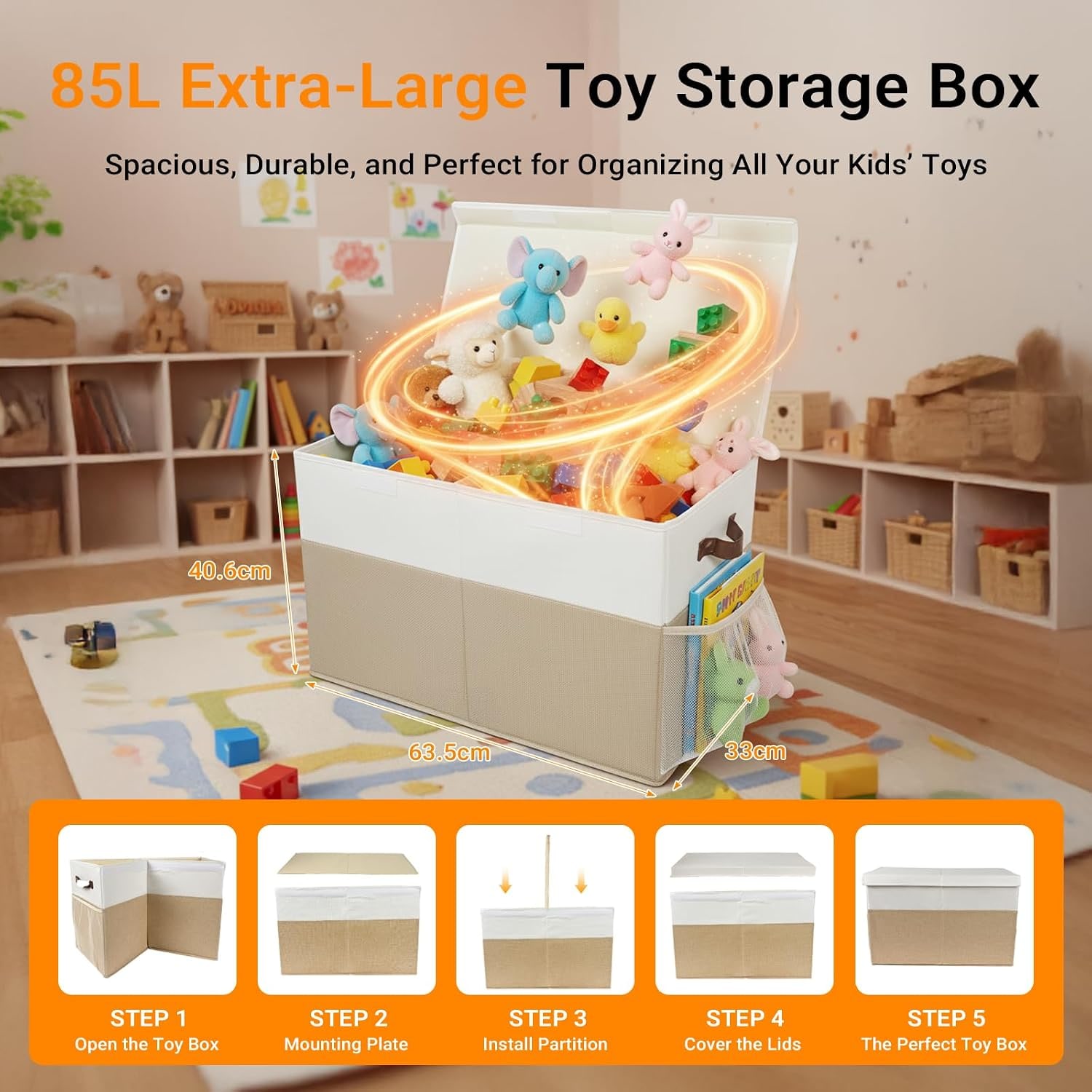
This one holds 85 litres, which is a genuinely large volume for a fabric box. For comparison, that is around four standard shopping bags of space. Fill it with plush toys and you will clear an entire couch.
How a collapsible fabric box actually works
There are three broad types of toy storage. Hard plastic tubs, wooden chests and fabric boxes with internal structure. Each one trades something.
Plastic tubs are cheap and wipeable, but they are ugly in a lounge room and the lids crack. Wooden chests look good and last, but they are heavy, they cost more, and once they are in a room they never move again. Fabric boxes sit in the middle. They look soft rather than industrial, they are light to shift, and when you do not need them they fold away.
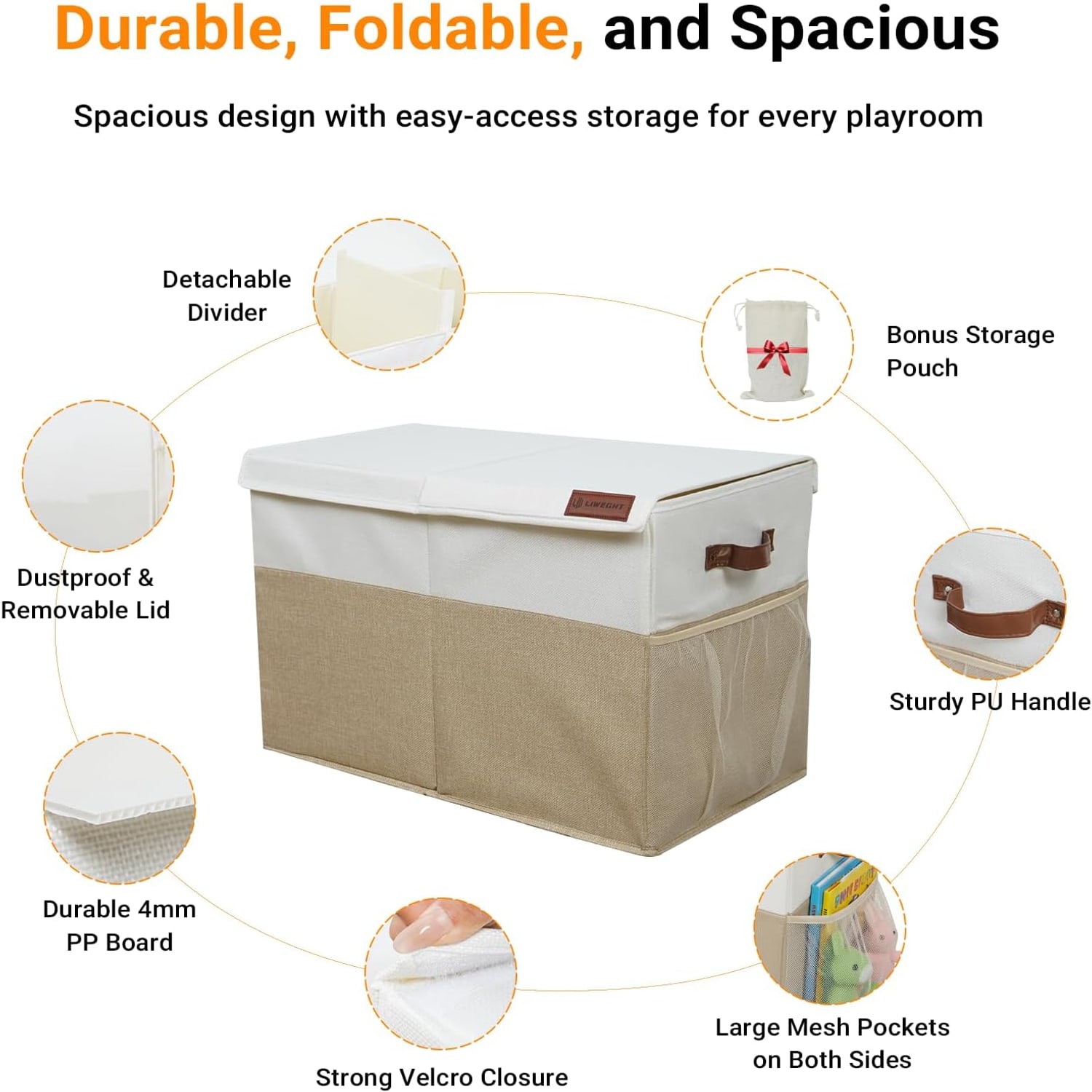
The thing that separates a good fabric box from a bad one is what is inside the fabric. A plain fabric bag with no structure collapses the moment it is less than full, which means it looks worse than the mess it was meant to hide. This box has a shaped internal frame under the polyester, so the sides stay upright whether it is packed or half empty. That is the whole reason a box like this works as furniture rather than as a laundry sack.
The lid lifts off rather than hinging. That has a practical upside and one small downside. The upside is that you can take the lid right off while you are packing things in, so you are not fighting a flap that keeps falling shut. The downside is that the lid needs somewhere to sit while the box is open, which is usually the floor next to it.
Why the divider matters more than you think
Anyone shopping for the best collapsible storage box tends to focus on capacity. Bigger number, better box. That instinct is only half right.
An undivided 85 litre box has one serious flaw. Small things sink. Put a set of building blocks in with a pile of plush toys and within two days the blocks are at the bottom under eight kilos of fluff. Finding them means emptying the entire box onto the floor, which is the exact outcome you bought the box to avoid.
The divider here splits the space into three compartments, one large bay and two middle sections. That is enough separation to make the box usable without making it fussy. The big bay takes the bulky soft toys. The two middle sections take books, smaller sets, folded clothes or whatever else needs to stay findable.
If you want one open space instead, the box is designed to come apart, so you can take the partition out. Most people leave it in after the first fortnight.
Who this suits
This box is a good fit if:
- You want toys out of sight at the end of the day but still easy to reach in the morning.
- You need storage that can move between rooms rather than live in one spot.
- You only need the extra capacity part of the year and want to fold it away the rest of the time.
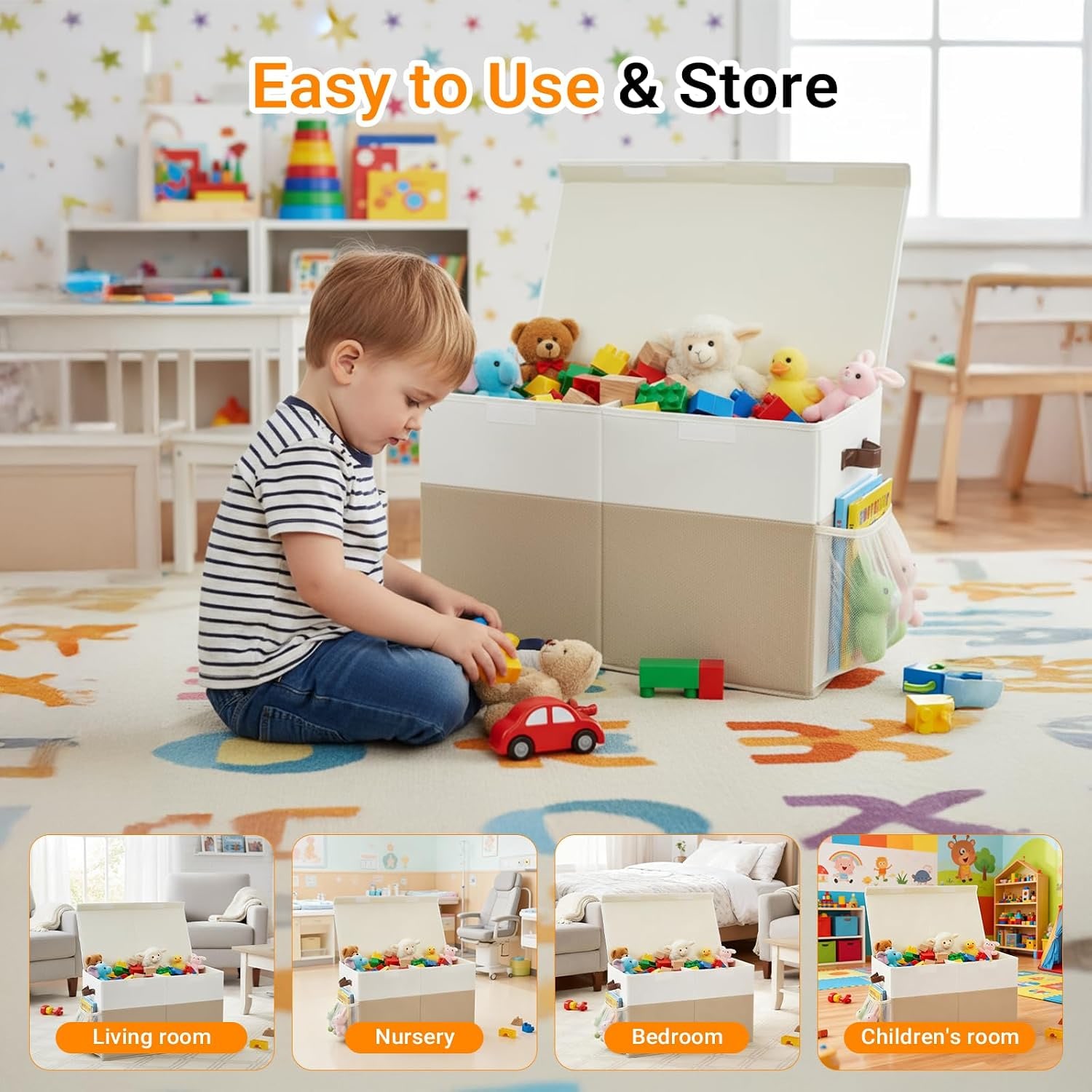
- You want something that looks acceptable in a lounge room, not just a playroom.
It is less of a fit if you need a lockable or weatherproof container, or if you want something you can sit on. The lid is a fabric panel, not a reinforced bench top, and the box is listed as not water resistant. Keep it indoors.
It is also worth saying that a fabric box is not a toy itself. It is storage. Children from around three and up can lift the lid and put their own things away, which is usually the point.
How to choose the right size and how many
Start with the space, not the box. Measure the spot you intend it to live in: the gap beside the couch, the shelf in the wardrobe, the width under the window. Write the numbers down before you shop. Almost every return in this category comes down to someone estimating a shelf depth by eye.
The item dimensions recorded for this box are 42 x 5 x 33 centimetres, and the stated capacity is 85 litres. The thin middle figure reflects the folded form, which tells you something useful about how flat it packs down.
As for how many, here is a rough guide from how people actually use them. One box handles the day-to-day toys of a single child. Two lets you sort by category, soft toys in one and everything else in the other, which is what makes a tidying routine stick. Three is usually a shared bedroom or a household that has decided to store blankets and linen this way as well.
If you are hunting for the best large toy box for a shared room, two matching boxes side by side nearly always beat one enormous one. Children will use their own box. They will not dig through a sibling's pile.
Looking after it
Fabric storage lasts a long time if you treat it sensibly. A few habits make the difference.
Wipe the outside with a damp cloth and a little mild detergent when it needs it, and let it dry fully before you refill it. Do not soak it and do not put it through a washing machine. The internal panels that give the box its shape are not water resistant, and soaking them is how a structured box becomes a floppy one.
Lift the box rather than dragging it. The side handles are there for exactly this, and using both at once keeps the load balanced so the fabric is not pulling on one seam.
If you are putting it away for a season, empty it completely, let it air for a few hours, then fold it flat. Storing a folded box with something still inside is how creases become permanent.
Getting more out of it
A couple of small tricks are worth knowing.
Label the compartments, even loosely. A piece of masking tape with a word on it is enough for a reader, and a small picture works for anyone who is not reading yet. The tidying habit forms much faster when there is a right answer about where something goes.
Put the box where the mess happens, not where you wish the mess happened. If toys end up in the lounge room every evening, the best living room toy storage is the box that lives in the lounge room. Carrying things to a box in another room is the step that gets skipped.
And keep the lid off during the day. A box with the lid on reads as closed, and children treat it as closed. Lid off while the room is in use, lid on at the end of the day, is the rhythm that works.
The short version
This is a large, lidded, folding fabric box with three compartments and handles. Eighty-five litres of room, 1.25 kilograms empty, beige and white, and it packs flat when you do not need it. It will not survive rain and it is not a seat, but for clearing a floor in thirty seconds and keeping what you cleared findable, it does the job well.
Measure your space first. Then decide whether one is enough, or whether you have always really needed two.