
The complete guide
How to Choose a Mahjong Set That Gets Played
The pile of games nobody opens
Most households have a shelf of games that never come down. The box is big, the setup takes twenty minutes, and somebody always loses a card. Mahjong sits in a different category. The gear is simple, the setup is physical and quick, and the game rewards attention rather than luck alone. Once a group learns it, mahjong tends to get played again and again, often for years.
The barrier is usually the set itself. People put off buying one because they are not sure what they need, how many tiles a real set has, or whether they will be able to read the faces. That is where the frustration sits: not with the game, but with the shopping.
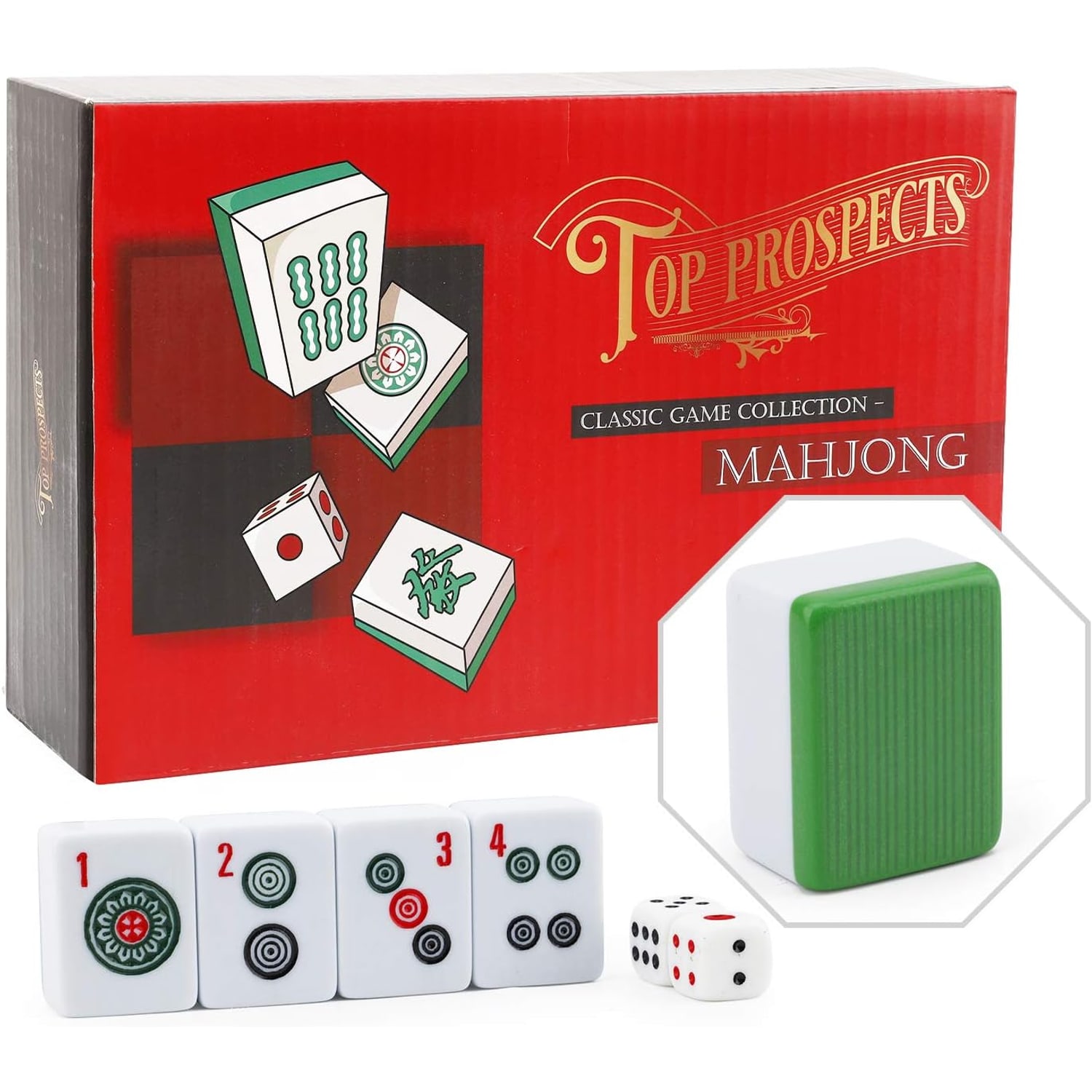
This guide walks through what matters when you choose a mahjong set, using this one as the working example.
What a full set actually contains
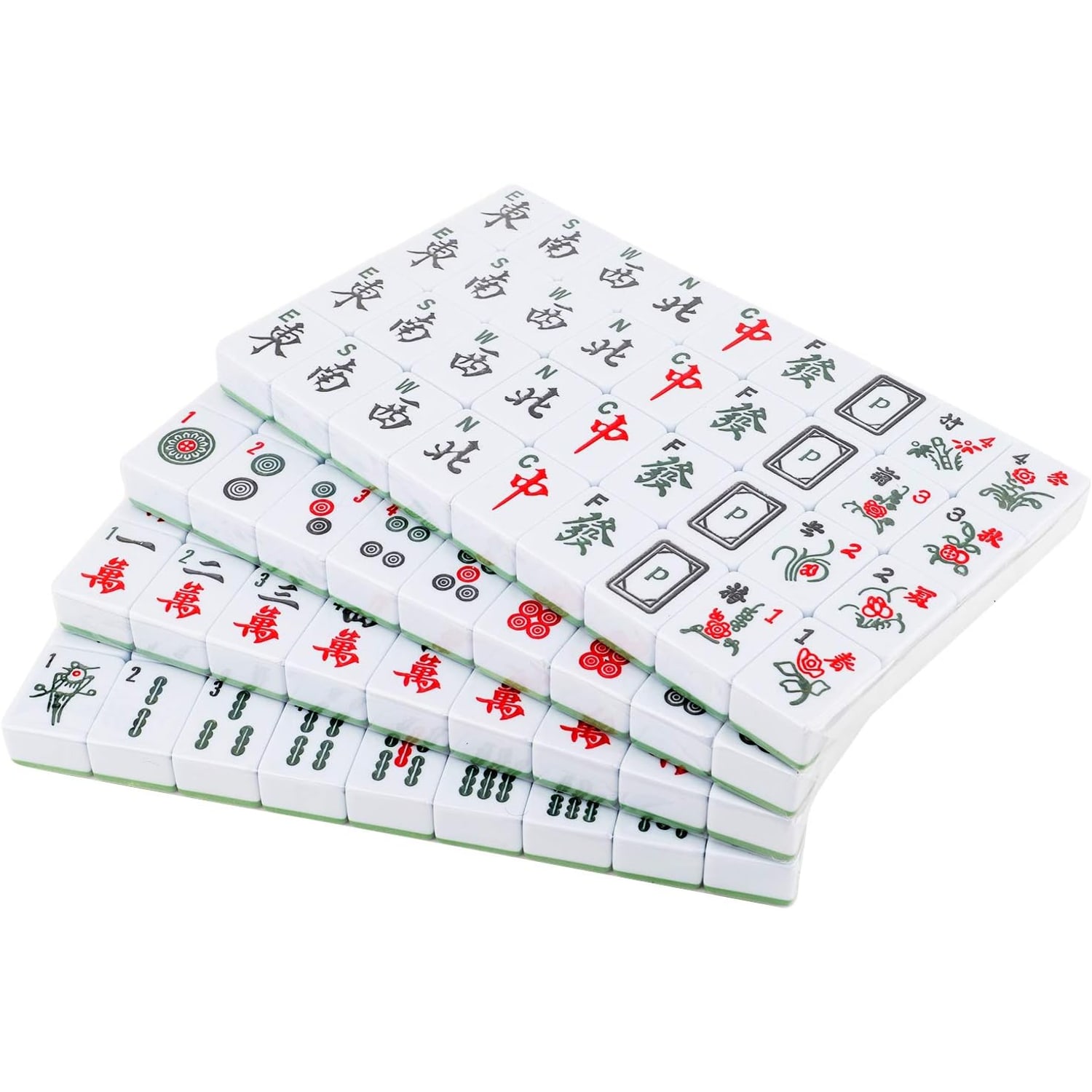
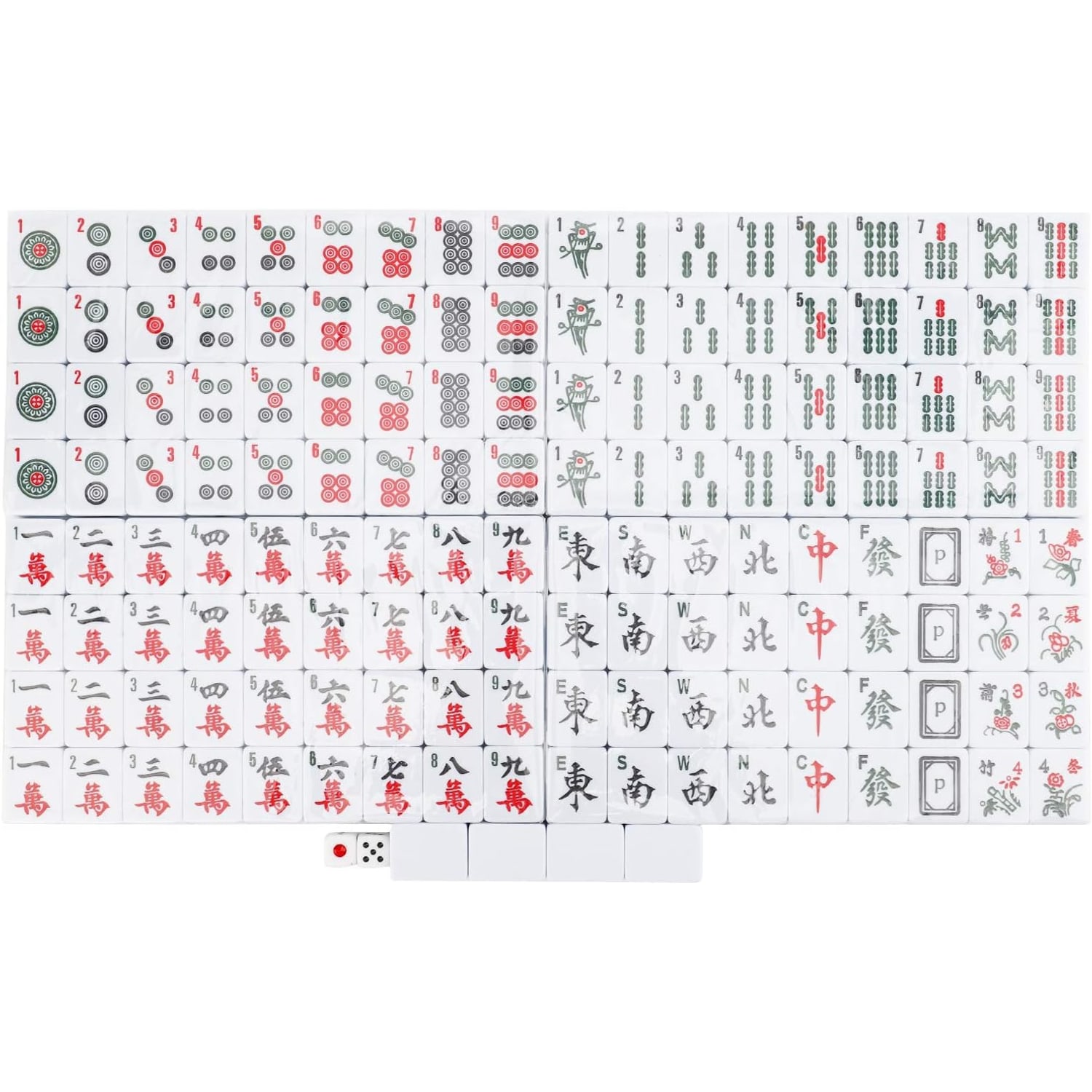
A standard Chinese mahjong set has 144 tiles. That number comes up again and again because it covers the three suits, the honour tiles, and the bonus tiles that most Chinese rule sets use. A set with fewer tiles is either a different regional variation or an incomplete set, and either way it will cause confusion the first time someone tries to follow a rulebook.
This set has the full 144. That is the single most useful thing to check before you buy anything else, because it determines which versions of the game you can actually play.
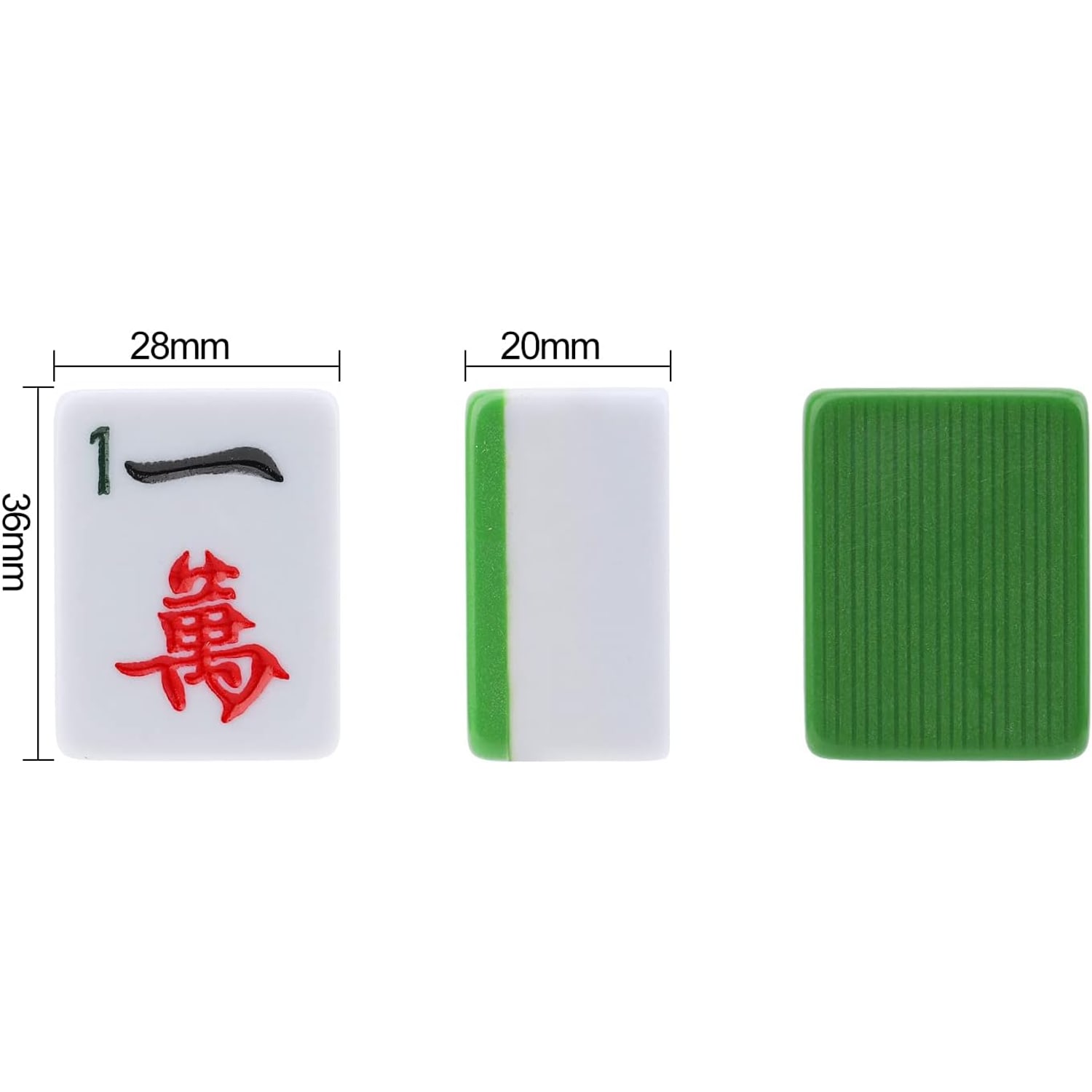
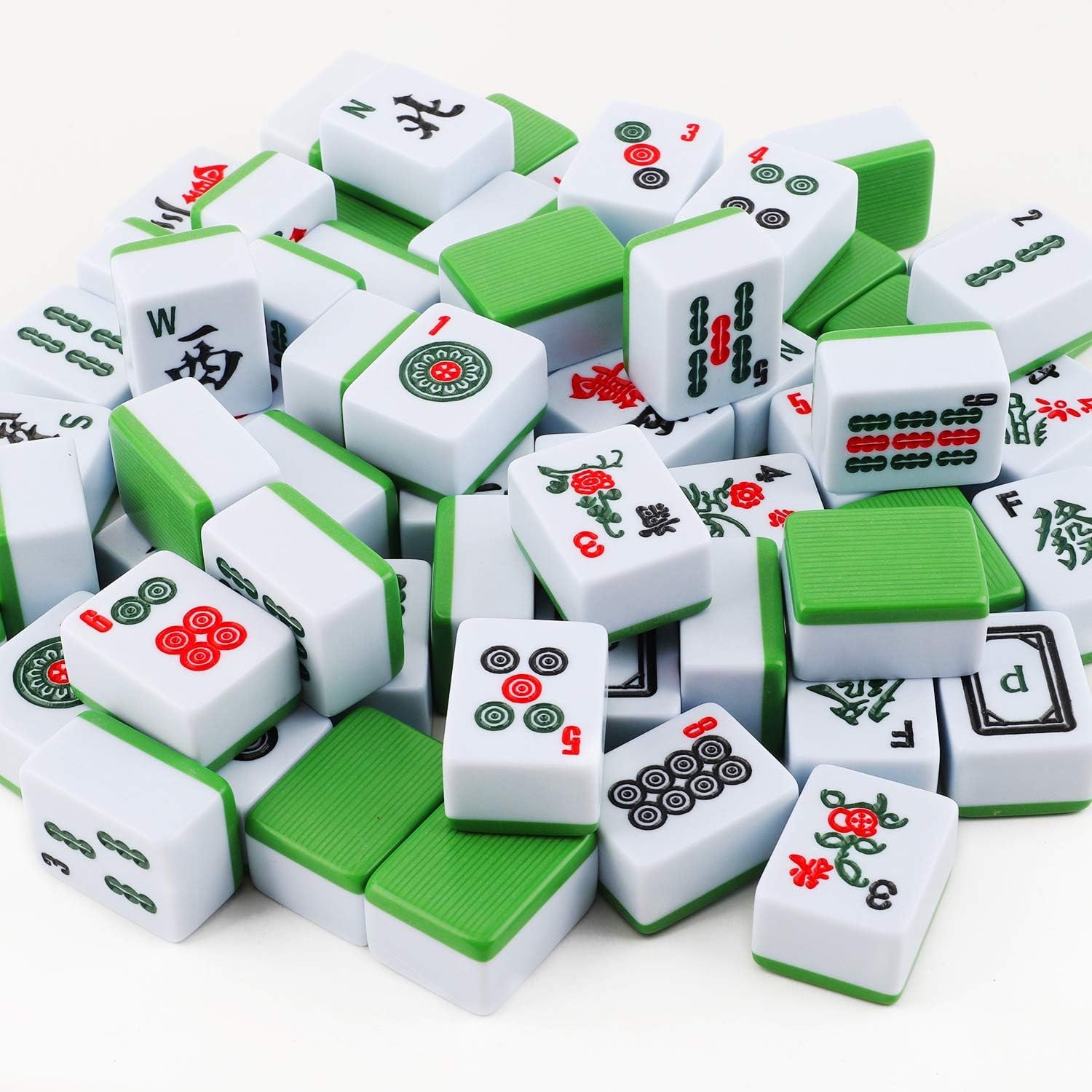
The tiles here are resin. Material matters more than people expect. A light, hollow tile slides around, feels cheap under the fingers and does not stack well when you are building a wall. Resin has density. It sits where you put it, and it makes the sound that experienced players associate with the game. If you have played on a borrowed set and wondered why your own felt wrong, material is usually the answer.
Why carved faces beat printed ones
The numbers and Chinese characters on these tiles are carved into the surface. There are two practical reasons this matters.
The first is wear. Surface printing can rub away at the edges after a few hundred games, particularly on the tiles that get handled most. Carving sits below the face, so normal play does not erase it.
The second is reading speed. A carved mark catches the light differently from the flat face around it, which makes it easier to scan a row of tiles quickly. Across a table, at the end of a long evening, that difference adds up. Anyone shopping for the best large print mahjong tiles is really shopping for this quality: faces you can read without leaning in.
For learners, there is a third benefit. Having both a number and a Chinese character on the same tile gives you a bridge. You read the number first, learn the character by association, and after a few sessions you stop needing the number at all. That is what makes something the best mahjong set for beginners, rather than a set with simplified faces that teaches you nothing transferable.
Who this suits
Four players is the standard mahjong table, and this set is built for four. If you have a regular group of four, you have the core requirement covered.
It also suits households where a few generations play together. Mahjong does not reward fast reflexes. It rewards noticing what other people discard and keeping track of what has already been played. A teenager and a grandparent can sit at the same table and compete properly, which is rarer in games than it should be.
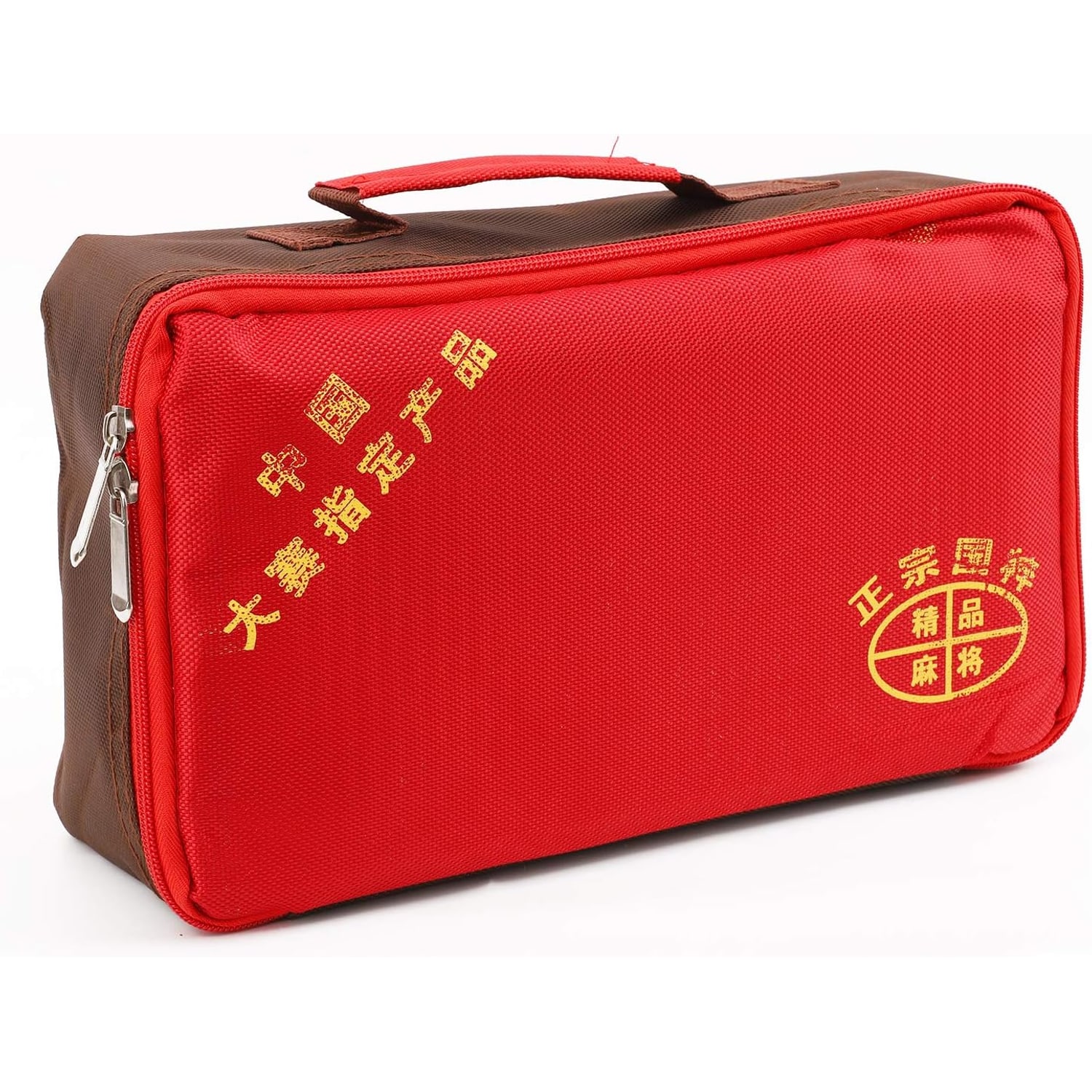
Travellers get good value from it too. The packed size of 29 x 19 x 10 cm and the bag container mean the whole thing goes in a weekender. For anyone looking for the best portable tile game to take to a holiday rental or a caravan, the compact bag is the deciding feature. There is nothing to charge and nothing that stops working when the wifi drops out.
This set contains small parts and is not for children under 3. It is recommended for ages 3 and up.
How to choose between sets
When you compare mahjong sets, these are the points worth weighing.
Tile count. Confirm 144 if you want the Chinese game. Other counts belong to other variations and you will want to know which one before you buy.
Material and weight. Resin, acrylic and bone-and-bamboo all behave differently. Resin is the practical middle ground: heavy enough to feel right, tough enough to survive being tipped out of a bag for the hundredth time, and not so precious that you worry about it. This is what most people mean when they search for the best resin mahjong tiles.
Face markings. Carved beats printed for durability and readability. Decide whether you want numbers alongside the Chinese characters, which is the easier path if your group is learning.
Storage. A bag is light and flexible, which is what you want if the set moves around. A hard case protects better if the set lives in a car boot or gets posted. This one uses a bag.
Table size. Four players and 144 tiles need a reasonable amount of flat surface. A standard dining table is fine. A small coffee table is tight once the wall goes up.
Setting up your first game
Clear the table. If you have a felt cloth, a table runner or even a folded sheet, put it down. It muffles the clacking and stops the tiles sliding into each other when you shuffle. It also protects a timber table from the constant small knocks of play.
Tip the tiles out face down and shuffle them with both hands in a circular motion. That part is oddly satisfying and it is a genuine part of the game, not just preparation. Then each player builds their section of the wall.
Pick a rule set before you start, not halfway through. Chinese rules, Hong Kong rules and other regional variations use the same tiles but score differently, and an argument about scoring in the middle of a hand kills the mood fast. Agree on one version, play three or four hands, and the rest sorts itself out.
Looking after the tiles
Care is straightforward. Wipe the tiles with a soft, slightly damp cloth when they need it and dry them before they go back in the bag. Skip soaking, solvents and anything abrasive, since those are the things that dull a resin surface.
Store the bag somewhere dry and out of direct sun. Heat and damp are the two things that shorten the life of any tile set.
The habit worth building is counting the tiles back in at the end of a session. A 144-tile set with 143 tiles is a problem you discover at the worst possible moment, usually with guests waiting. Thirty seconds of counting saves that.
The short version
If you want a game that four people can learn in an evening and keep playing for years, mahjong is a strong choice, and the set you buy makes a real difference to whether it stays on the table.
This one covers the practical bases. Full 144-tile Chinese count, so it works with standard rules. Resin tiles with carved numbers and Chinese characters, so they read clearly and hold up to handling. A bag that packs down to 29 x 19 x 10 cm, so it travels. Nothing to assemble, nothing to charge.
Brand, weight and country of origin are not specified, and we have left those blank rather than guess. What is confirmed is the tile count, the material, the player count and the packed size, which is most of what you need to decide. Ages 3 and up, and not suitable for children under 3 because of the small parts.