
The complete guide
How to Choose a Cotton Rope Toy Basket That Actually Gets Used
The problem with toy storage is not storage
Most homes have plenty of places to put toys. Cupboards, under-bed drawers, a shelf in the hallway, a crate in the garage. What they do not have is somewhere obvious enough that a child uses it without being asked twice.
That is the real test. A storage solution that needs sorting, lids, labels and a parent standing over it does not get used at six o'clock on a Tuesday when everyone is tired. An open basket in the corner of the room does, because the instruction is a single step. Pick it up, put it in.
This is why the humble woven basket keeps winning. There is almost nothing to it. One opening, soft sides, handles, done. The skill is in picking one that lasts longer than a few months and does not look like an eyesore in a room you also live in.
What makes a rope basket hold up
The thing that separates a good rope basket from a disappointing one is wall thickness. Thin, loosely coiled rope collapses in on itself the moment the basket is empty, and once it has folded over a few times it never fully recovers. You end up with a limp fabric bag that someone has to prop against a wall.
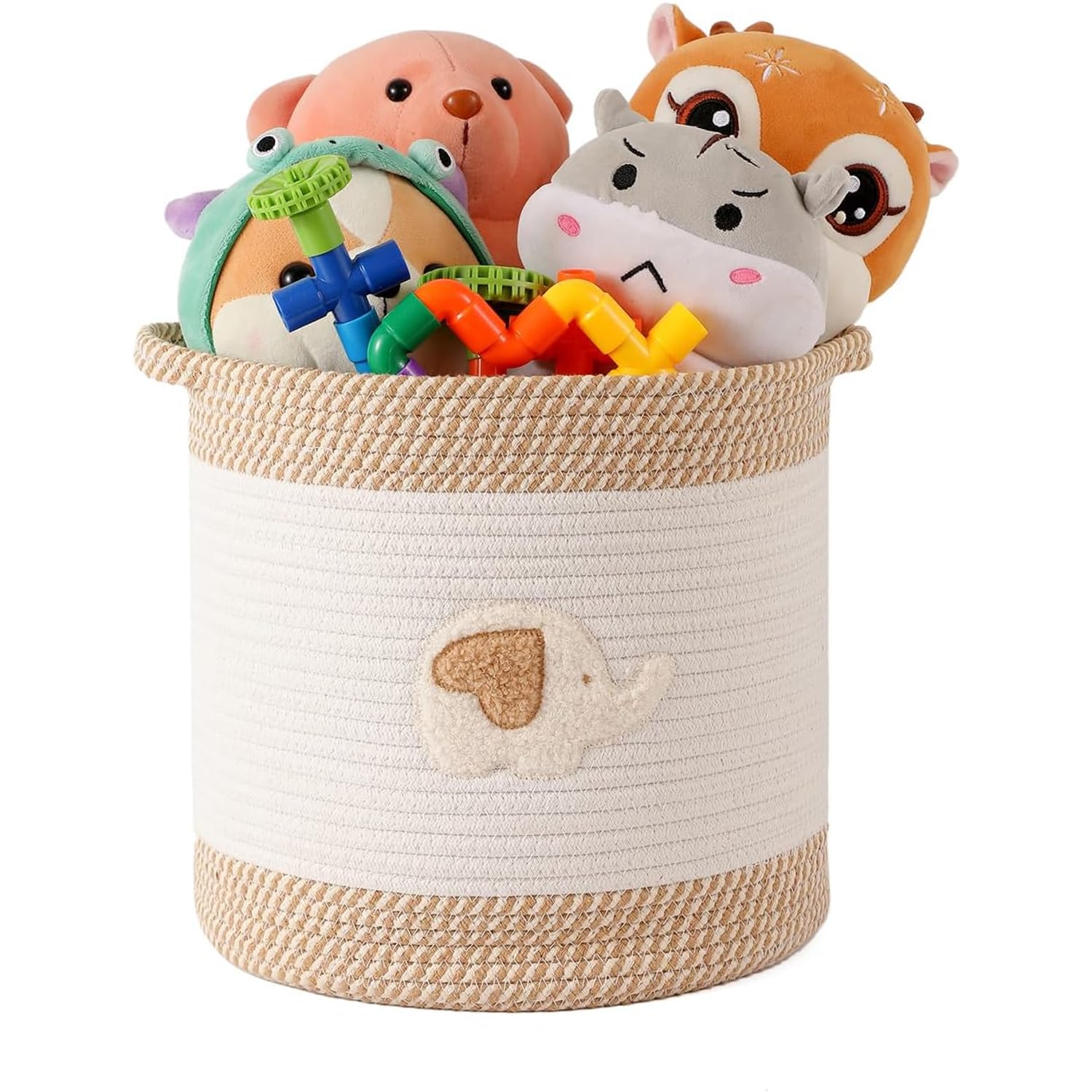
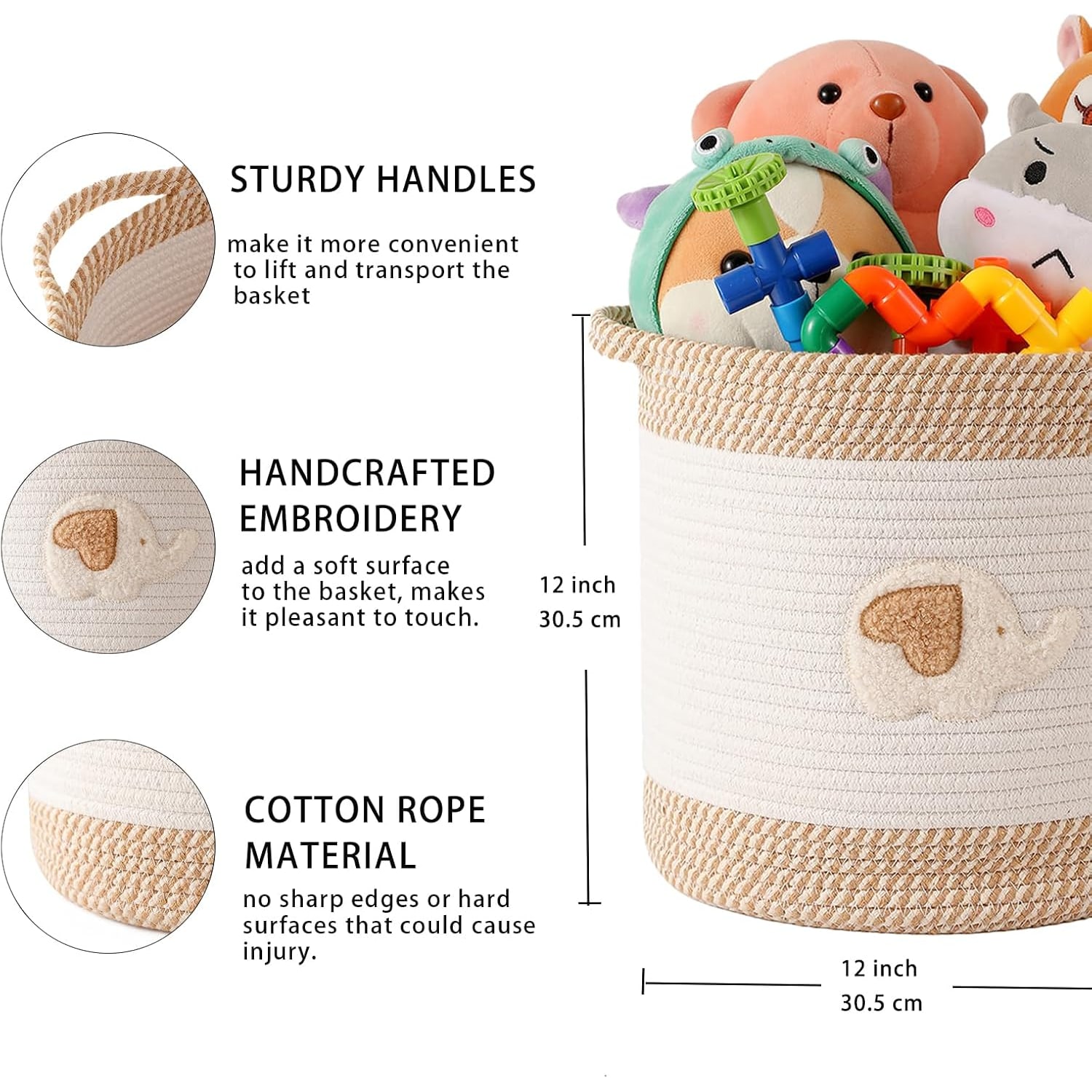
This basket is built with thick coiled cotton blend rope, and it stands upright with nothing inside. That is worth paying attention to, because an empty basket is the normal state for maybe half the day. If it looks like a crumpled heap when the toys are out, the room looks messy even when it is tidy.
The second thing to look at is the base. A rope basket with a properly stitched flat base will sit square on the floor and take weight without bowing. A rounded or poorly joined base rocks slightly and sags in the middle as soon as you load books into it.
Third is the handles. Side handles need to be worked into the body of the basket rather than tacked on, because all the weight transfers through those two points. These are built into the rope wall, which is the right approach.
Why rope rather than plastic or wood
Each material trades something off, so it is worth being honest about them.
Hard plastic tubs are the easiest to clean. If someone tips a cup of juice into one, you rinse it out and carry on. They stack well and they are cheap. The downside is noise and hard edges. Plastic bins clatter when toys go in, they knock paint off skirting boards, and the corners are unforgiving if a child runs into one.
Wooden crates look good and last forever, but they are heavy, and a child cannot move a loaded one. They also mark floors.
Rope sits in the middle. It is quiet, it is soft against walls and furniture, it does not mark timber, and it is light enough for a child to shift. The compromise is cleaning. Rope is not waterproof, so spills need a damp cloth and some patience rather than a rinse under the tap. For dry toys, books and linen, that trade is usually worth making.
Size and where it will live
This basket is a 30.5 cm cube, which is a genuinely useful size rather than a showroom size. Smaller baskets fill up in a day. Much larger ones become a pit where everything sinks to the bottom and nothing is ever found again.
At 30.5 cm you get roughly the volume of a large shoebox stood upright, maybe a bit more. That is enough for a full set of wooden blocks, a decent pile of picture books, or an armful of soft toys. It is also small enough that a child can see what is in it from above without digging.
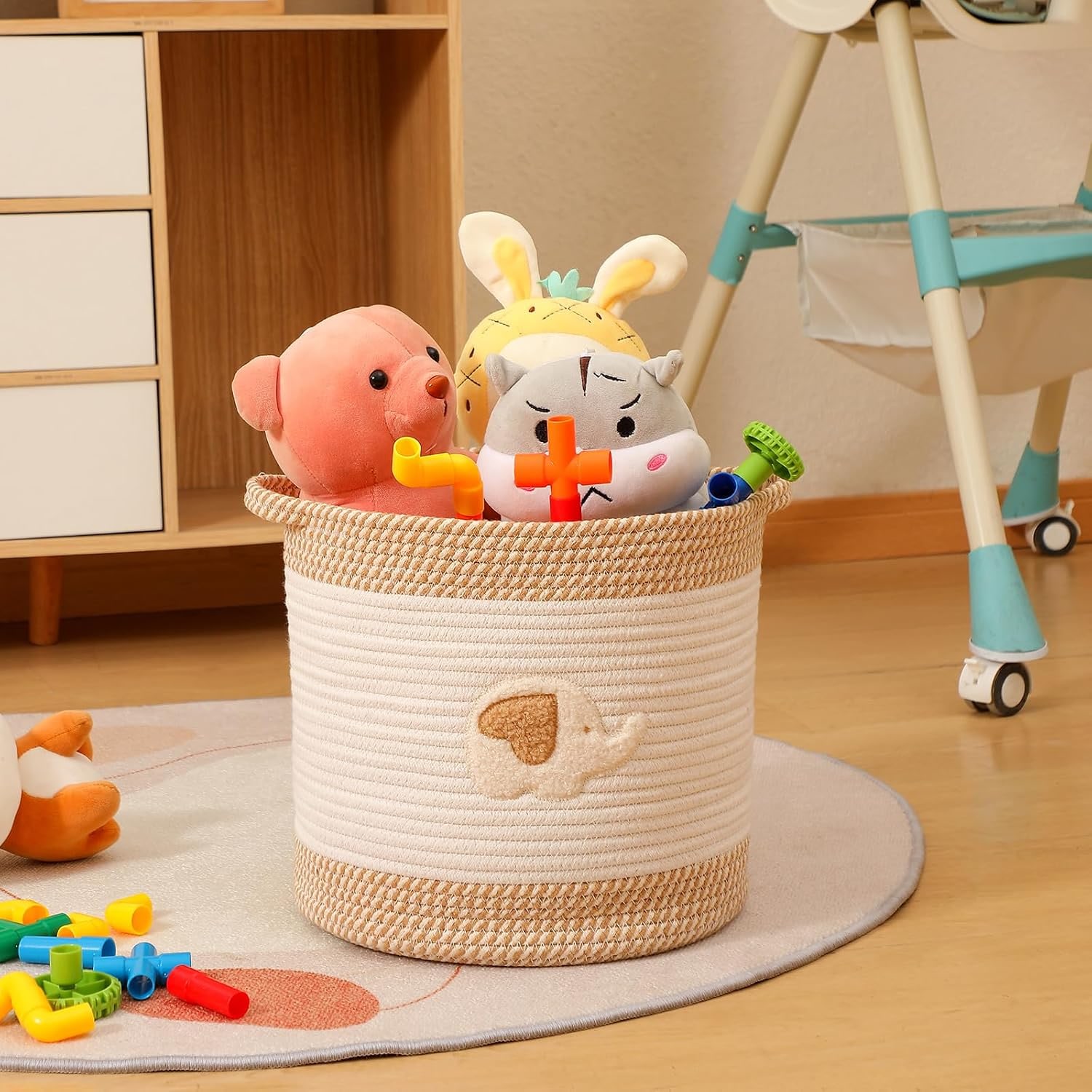
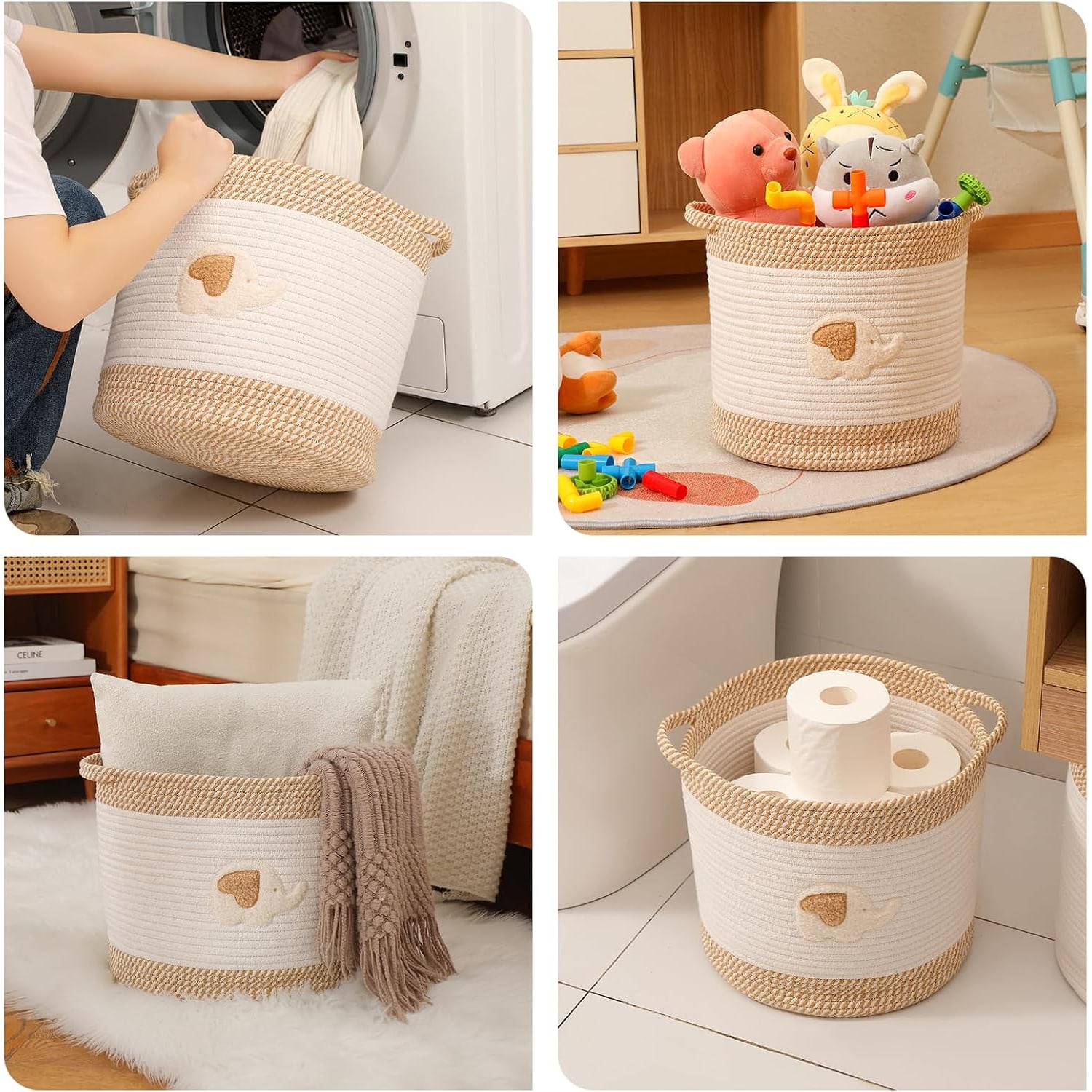
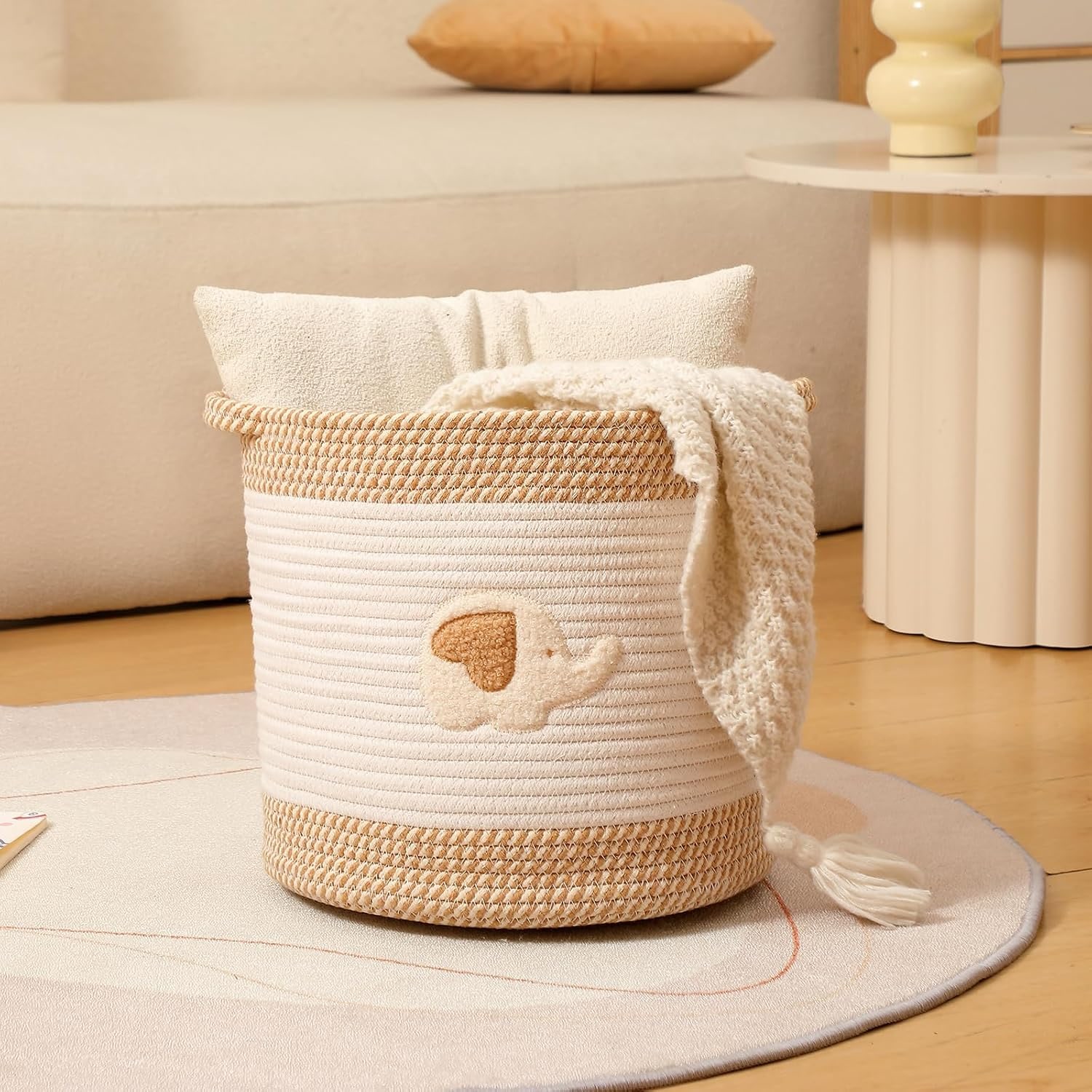
Think about where it will actually sit before you buy. A few spots work well. Beside a reading chair, where it holds books. Under a window in a bedroom, where it catches whatever comes off the floor at the end of the day. On a low shelf unit, assuming the opening is wide enough. In the corner of a lounge, where it doubles as a blanket basket when the children are at school.
If you are planning to slot it into cube shelving, measure the opening first. Many systems are built around a 33 cm internal opening, which gives this basket room to slide in and out, but some are tighter. Five seconds with a tape measure saves a return.
Using more than one
A single basket is a catch-all. Two or three baskets become a system, and that is where the real improvement happens.
The trick is giving each basket one job, and keeping that job narrow enough that a child can decide in a second. Books in this one. Anything with wheels in that one. Soft toys in the third. No sorting required beyond a glance.
Lining baskets up along a wall or inside a shelf unit also makes the room look deliberate rather than accidental. Matching sizes do more for a room than almost any other storage decision.
Looking after it
Cotton rope asks for very little. Spot clean marks with a damp cloth and a small amount of mild detergent, blotting rather than scrubbing so you do not raise the fibres. Let it dry completely in open air before you put anything back in, because trapped damp is the main thing that will spoil a natural fibre basket.
Do not machine wash it and do not put it in a dryer. Both will pull the coiled rope out of shape and the basket will never sit square again.
Keep it away from long hours of direct sun if you care about even colour, and away from consistently damp spots like a bathroom floor. If it gets squashed under something heavy, push the walls back out from the inside with your hands and leave it loaded for a day or two to settle.
That is genuinely all the maintenance it needs. A rope basket treated sensibly will outlast several rounds of toys.
Who it suits
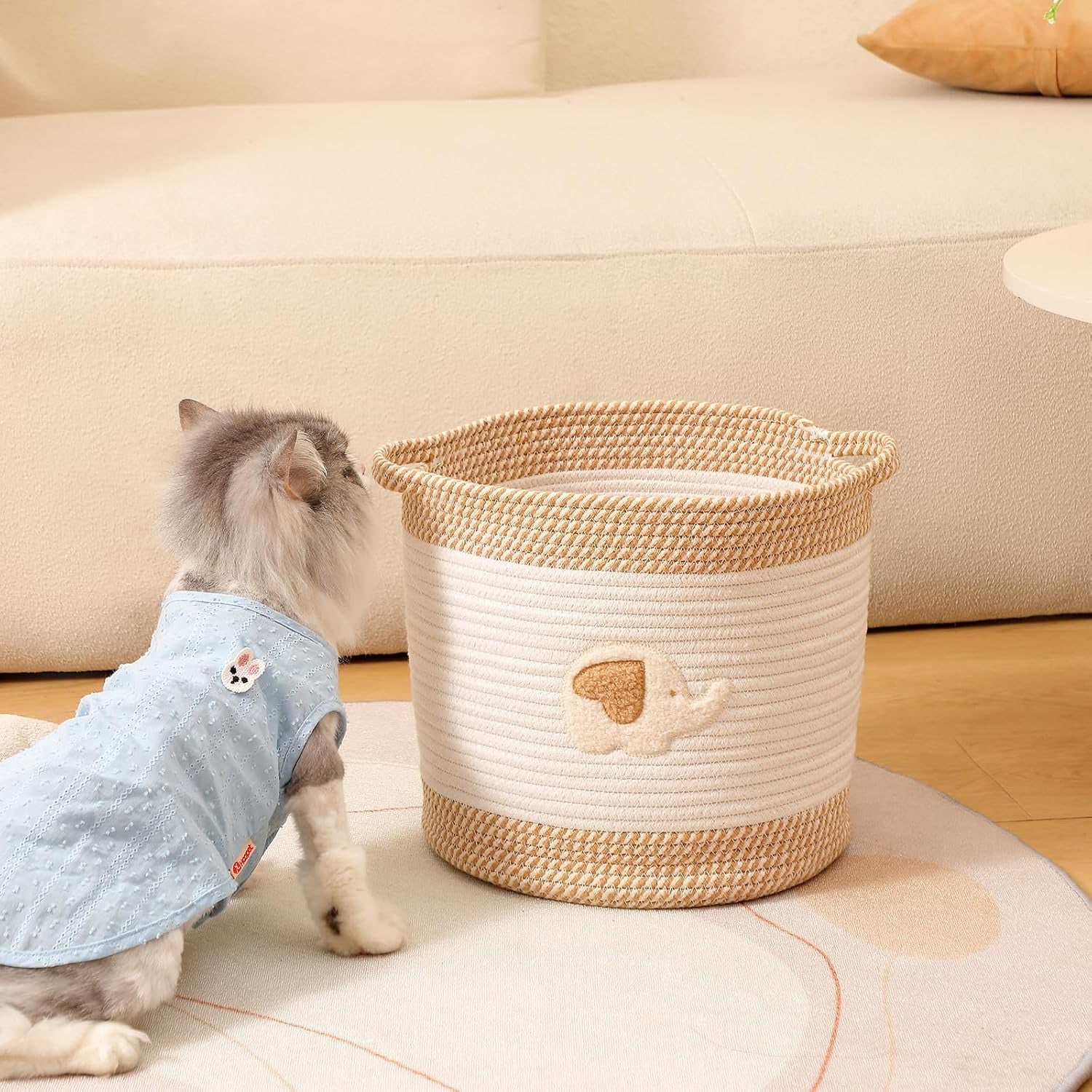
It suits a family that wants the floor clear without buying furniture. It suits a room that is shared between adults and children, because the plain body with one embroidered elephant detail does not scream playroom. It suits a household that moves things around, since the handles and the 0.77 kg empty weight make it genuinely portable.
It suits a child from about three upwards who is old enough to be part of the pack-up routine, because the open top means they can do it themselves without help.
It is less suited to wet areas, outdoor use, or storing anything that leaks. If you want somewhere to throw muddy boots or damp swimmers, buy plastic.
The short version
A toy basket only works if it is easy enough that it gets used. This one is open-topped, light, soft-sided and big enough to be useful without being a black hole. The thick rope keeps it standing when it is empty, the side handles let you move it where the mess is, and the embroidered elephant gives it enough character for a kids room while staying quiet enough for a lounge.
Measure your shelf if it is going on one, keep it dry, spot clean when it needs it, and give it one clear job. Do that and it will be the piece of storage in the house that actually earns its spot.