
The complete guide
How to Choose a Kids Armchair That Actually Gets Used
The problem with grown-up furniture
Watch a small child try to use a normal lounge. They climb, they slide, their feet dangle, and after about four minutes they end up on the floor anyway. Adult seating is built for adult bodies, and a child sitting in it is either perched on the edge or swallowed by the cushions. Neither is comfortable, and neither encourages them to stay put with a book.
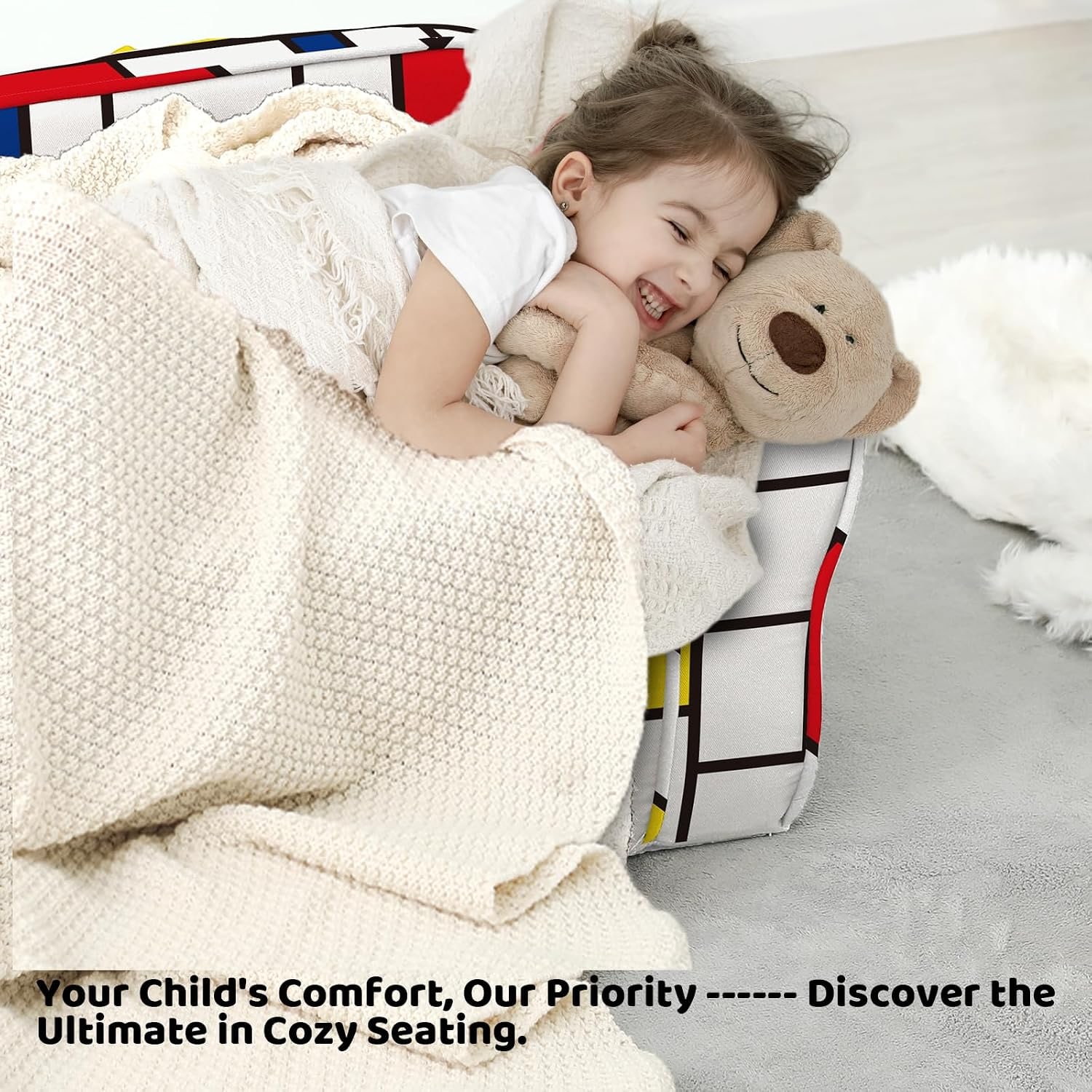
The floor is the usual fallback, and there is nothing wrong with the floor. But a child who has their own chair treats it differently. It becomes their spot. They drag it to where the action is, they claim it, and they sit in it for longer than they ever sit on the carpet. That is really the whole argument for a kids armchair with handle. Not comfort alone, but ownership.
The second problem is mess. Children eat in chairs, spill in chairs, and occasionally decide a chair is a good surface for felt tips. Any seating you buy for a child has to survive that, or you will spend a year resenting it.
How this chair is built
This one keeps things simple. The seat and the fill are both foam, wrapped in a polyester upholstery fabric, sitting on a plastic frame. The listed material type is polyethylene. There is no recline mechanism beyond a single fixed position, no tilt, nothing electric, and nothing that needs charging or servicing.
Foam is the right choice for this size of seat. It gives immediately under a light body, so a child does not have to work to settle into it, and it springs back when they get up. The cushion style is boxed edge, which means the seat holds a defined square shape rather than rounding off into a sag. That matters more than it sounds, because a sagging seat tips a child backwards and makes reading awkward.
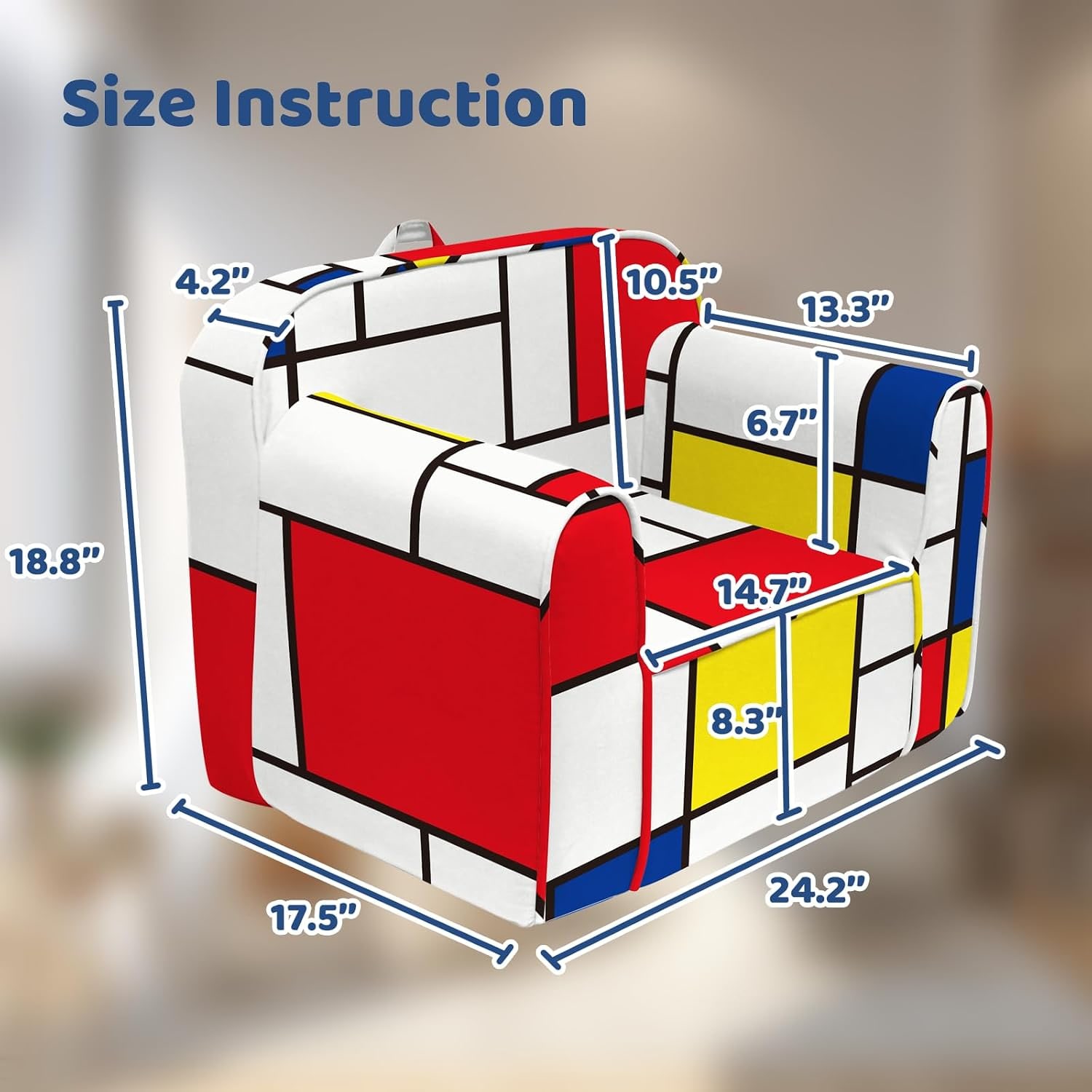
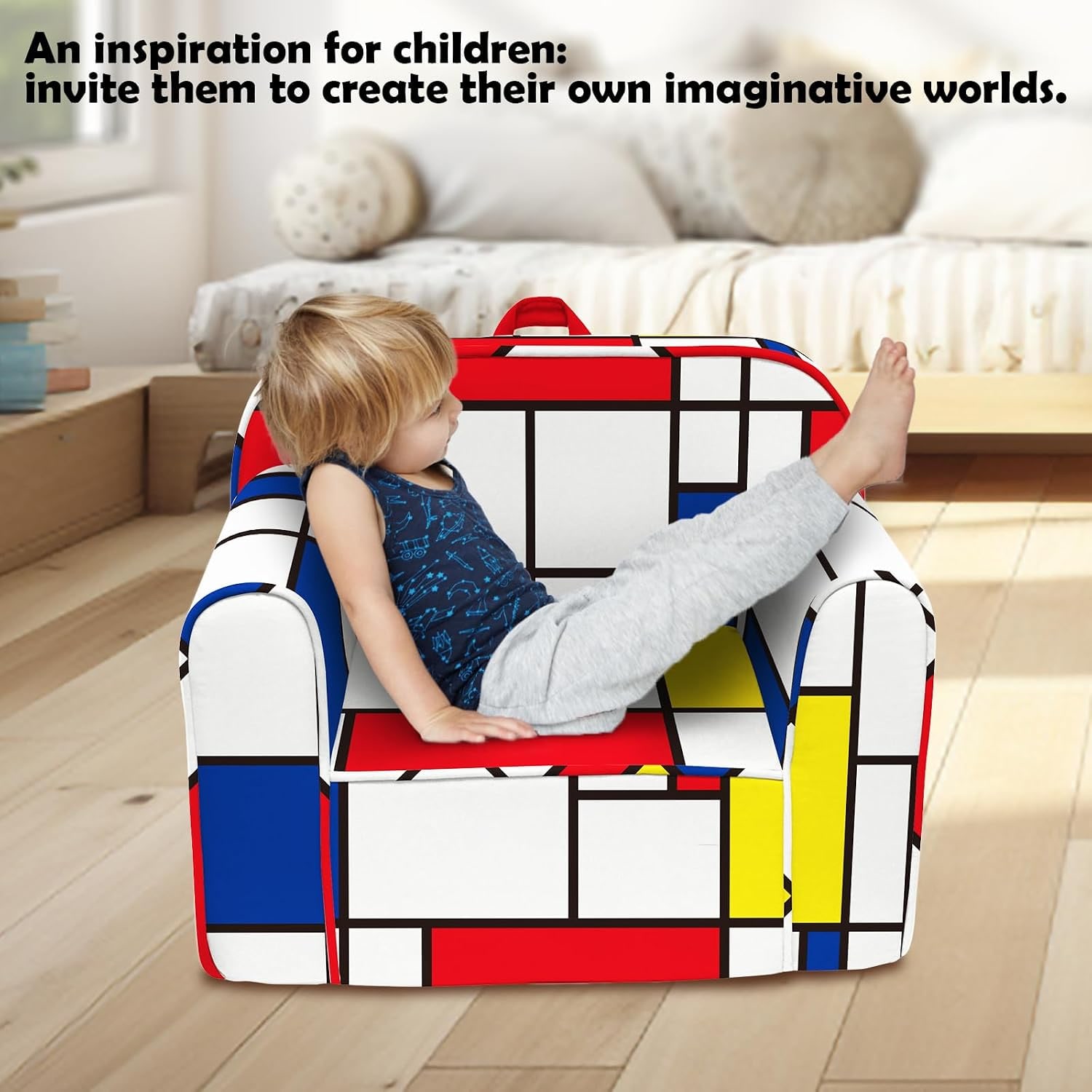
The geometry is low. Seat height is 6 inches and seat depth is 35.6 cm, with a 13 inch backrest width. A child can sit back fully and still have their feet on the floor, which is the position most of them actually want. Flared legs widen the footprint at the base, and the overall centre of gravity sits close to the floor.
Listed dimensions are 33 cm deep by 33 cm wide by 12.7 cm high, with the size also given as 25 x 18 x 18.5 inches. If those two sets of numbers look like they describe different things, that is because the maker records measurements in more than one way. The practical takeaway is that this is a compact kids armchair, not a full-size one, and you should measure your intended corner before ordering.
The handle and the weight
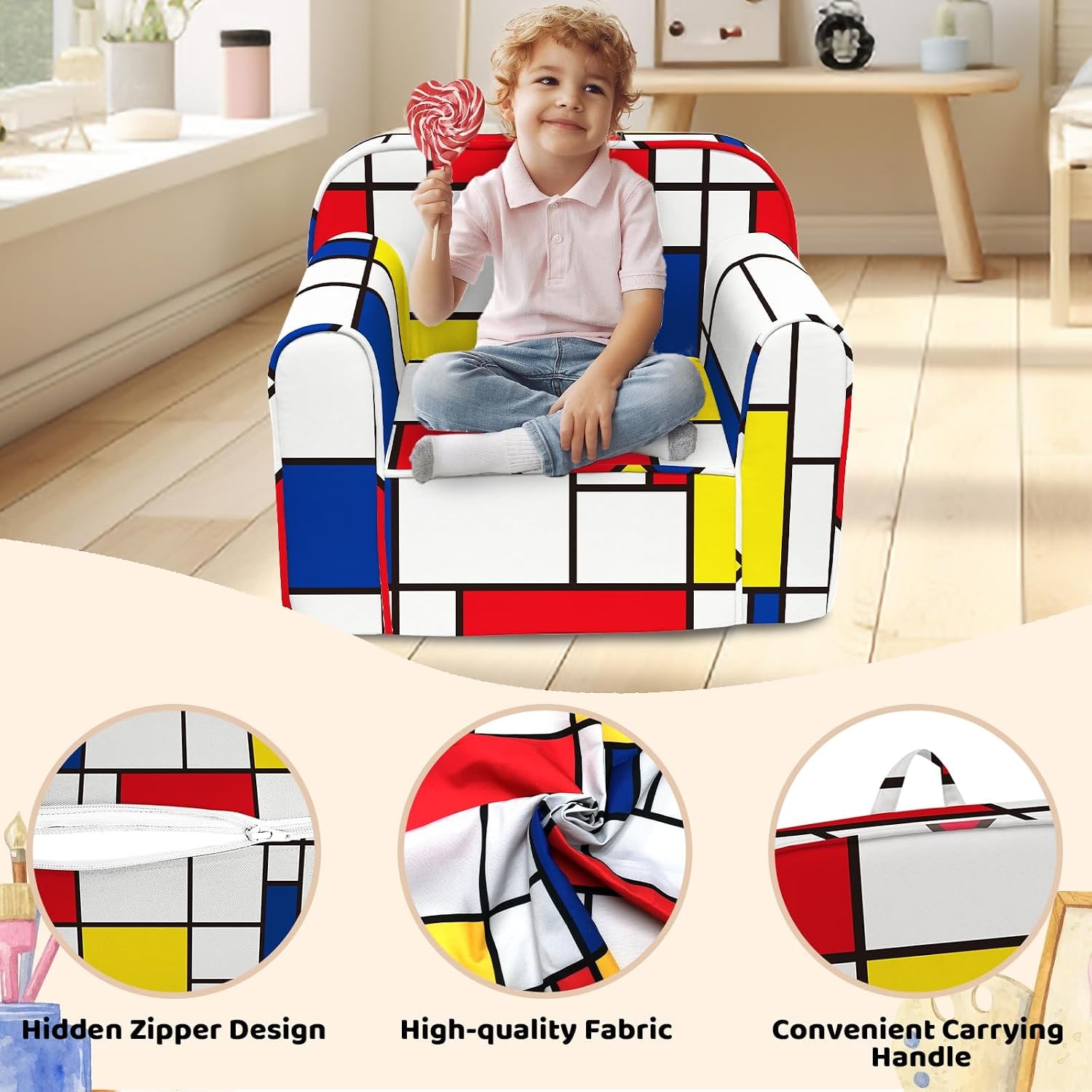
At 3.18 kg, this chair is light. Lighter than most backpacks heading to school. The built-in handle turns that lightness into something a child can use, because a 3 kg object with nothing to grip is still awkward for small hands.
What tends to happen in practice is migration. The chair starts in the lounge room, moves to a bedroom at story time, ends up in front of a window for drawing, and comes back again. Nobody has to carry it for them. For a portable kids chair, that is the whole function working as intended.
It also folds. When you want the floor clear for a train set or a visiting cousin, it goes flat against a wall or into the bottom of a wardrobe. A lot of children's furniture promises to tuck away and then does not. Foldable plus 3.18 kg means it genuinely will.
Keeping it clean
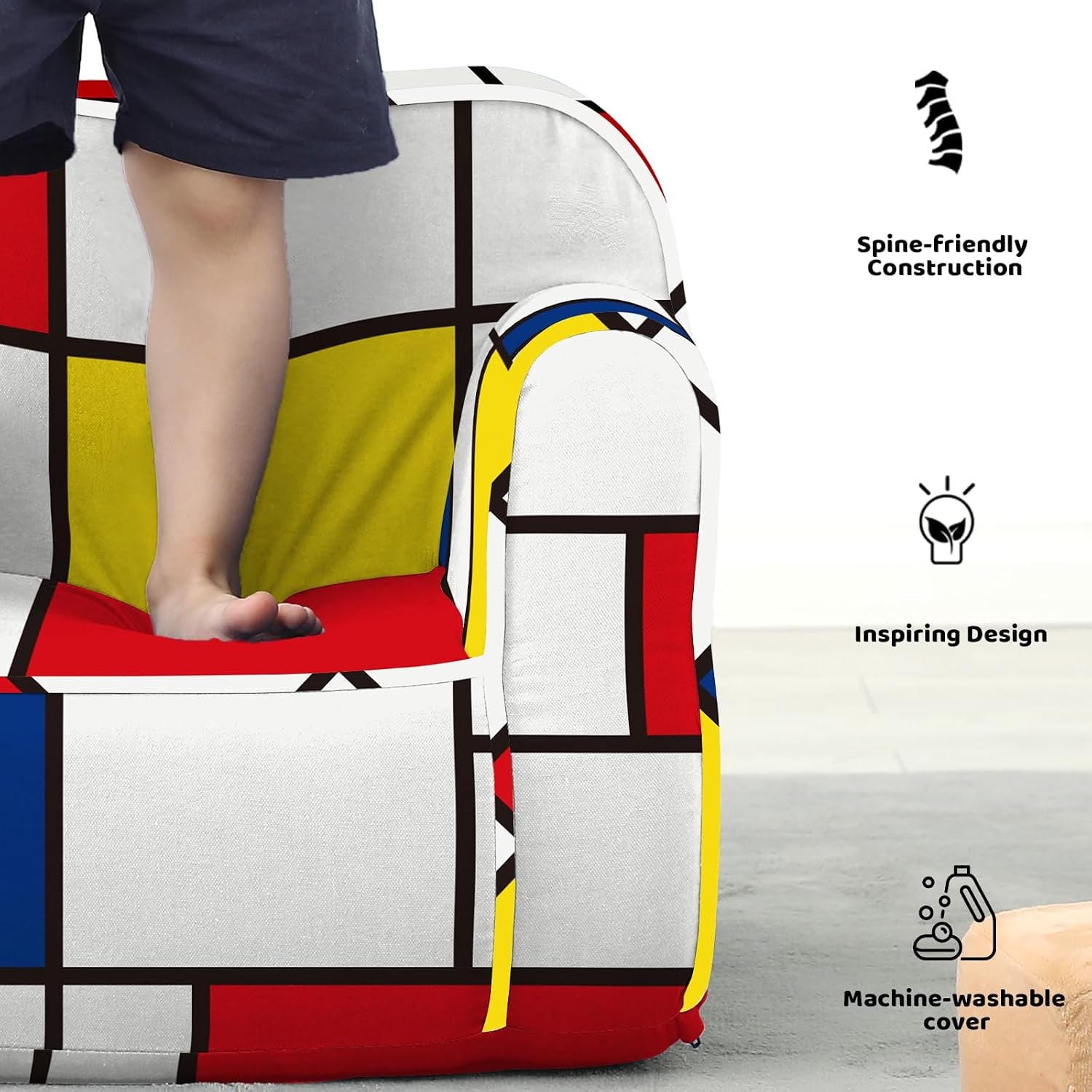
The removable cover is the feature that decides whether this chair is still in use in two years. Spills are not a possibility with children, they are a schedule. Being able to take the fabric off and deal with it separately, rather than attacking a fixed seat with a cloth and hope, changes the maths entirely.
For everyday marks, the maker's care instruction is wipe clean. A damp cloth and a bit of mild detergent handles most crumbs, sticky patches and dust. Let it dry fully before anyone sits on it again, because damp foam holds moisture longer than you expect.
For anything bigger, take the cover off. Check the label on the cover itself for washing symbols before putting it anywhere near a machine, since the stated care guidance is wipe clean rather than machine wash. Hand cleaning and a full air dry is the safe default. Do not iron it, and do not leave it to dry in direct sun, which fades colour over time.
A note on placement. The listing specifies indoor use and recommends hard floors. Foam and polyester do not enjoy damp, so an easy clean kids chair stays easy to clean only if it lives inside.
Who it suits
This is seating for a child, defined by its measurements rather than any claim about who should use it. Check the seat height, seat depth and backrest width against the child you have in mind. Six inches off the floor and 35.6 cm of seat depth suits a smaller frame comfortably. A taller child will find their knees up high and the back too low to lean against properly.
The maximum weight recommendation is 22.68 kg. That is a firm number worth respecting, because foam that is regularly compressed beyond its range loses its bounce and never fully recovers.
Room-wise, it is listed for the living room but works anywhere indoors. A quiet corner with good light makes the best reading nook chair for kids. A spot beside the sofa works if you want them near you. A bedroom corner works if you want the opposite.
Choosing between options
If you are comparing small foam armchairs, three things separate them in daily use.
First, can the cover come off. Fixed-cover chairs look identical in photos and are a completely different experience after the first juice box. This one has a removable cover.
Second, how heavy is it. Anything over about 5 kg stops being something a child can move, which removes half the point. At 3.18 kg this stays on the right side of that line.
Third, how low is the seat. A chair that is too tall leaves feet swinging, which is restless and uncomfortable. Six inches keeps feet grounded.
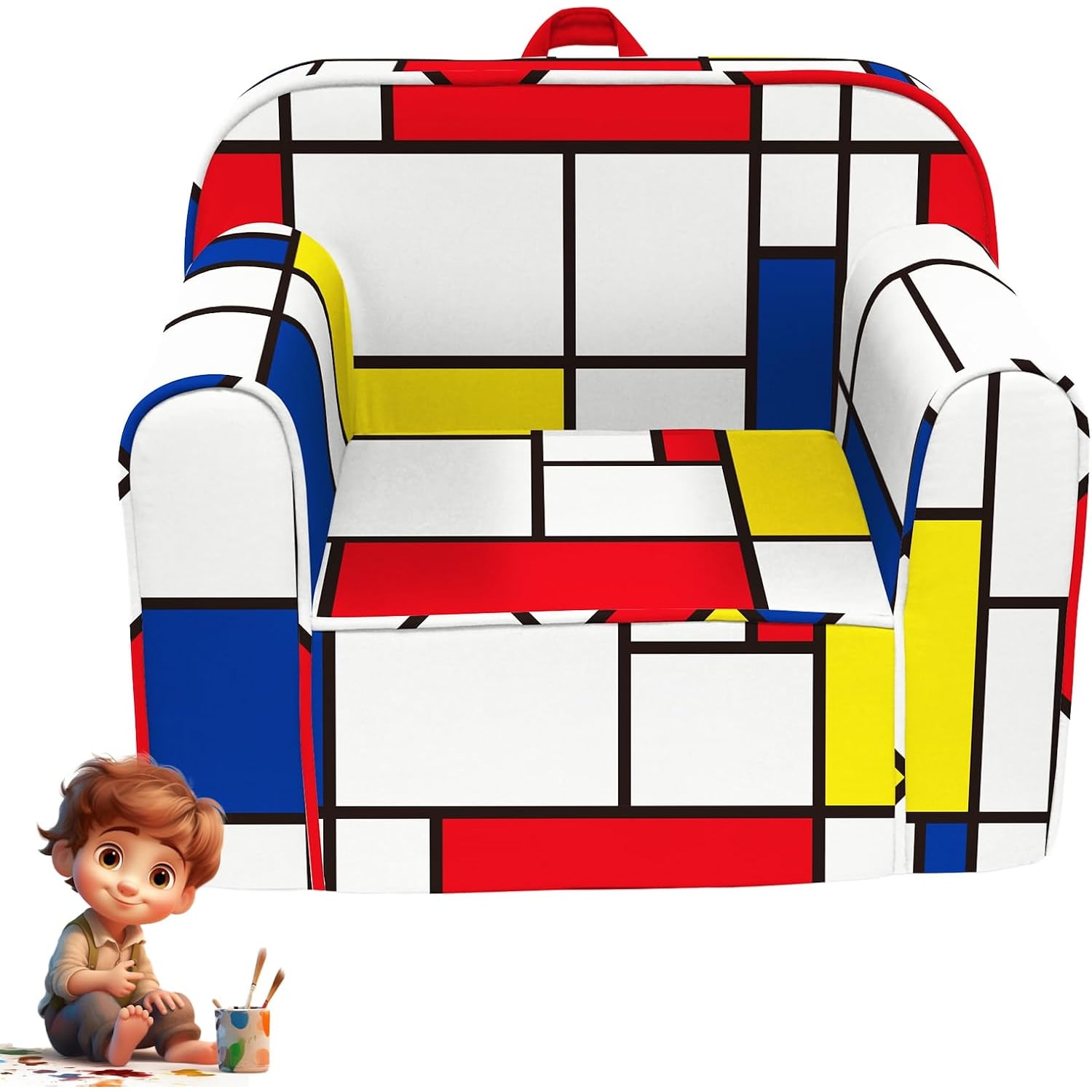
Beyond that, it comes down to looks. This one uses red, blue and yellow blocks with a letter print, under the Mondrian Collection name, with a modern style and an art theme. It is colour-led rather than tied to a character, which tends to survive a bedroom repaint and a change of interests better than anything licensed.
Living with it
There is almost no maintenance. No bolts to retighten, no mechanism to lubricate, no batteries. Wipe it when it needs wiping, pull the cover off when something major happens, and fold it away when you want the floor back.
If the foam picks up a crease from being folded for a while, open it out and let it sit for a day. Foam generally recovers its shape on its own. Press creases out by hand rather than ironing.
Keep it out of long stretches of direct sunlight. Colour fades, and polyester is no exception. A corner with indirect light is kinder to it.
The short version
A small chair gets used when it is light enough to move, low enough to climb into, and easy enough to clean that nobody panics over a spill. This one covers all three. It weighs 3.18 kg, has a handle built in, sits 6 inches off the floor, and the cover lifts off when things get messy.
It needs no assembly, folds flat when you want it gone, and sits steadily on hard floors thanks to a low profile and flared legs. The weight limit is 22.68 kg and it is for indoor use.
Measure your corner against the listed dimensions, check the seat height suits the child, and that is most of the decision made.