
The complete guide
Choosing a Kids BBQ Grill Playset That Actually Gets Played With
The toy that gets abandoned in week two
Most pretend cooking toys fail the same way. A child opens the box, lines up the plastic food, pretends for about ten minutes, and then the whole thing migrates under the bed. The toy did nothing. It just sat there looking like a kitchen.
What keeps a child at a play station is response. They do something, and something happens back. A knob turns and smoke appears. A patty sits on the grate and changes colour. That back-and-forth is the difference between a prop and a game, and it is the main thing worth looking for when you shop for a toy barbecue set.
This guide walks through how these grills work, who they suit, what to measure before you buy, and how to keep one going past the first month.
How a smoking play grill works
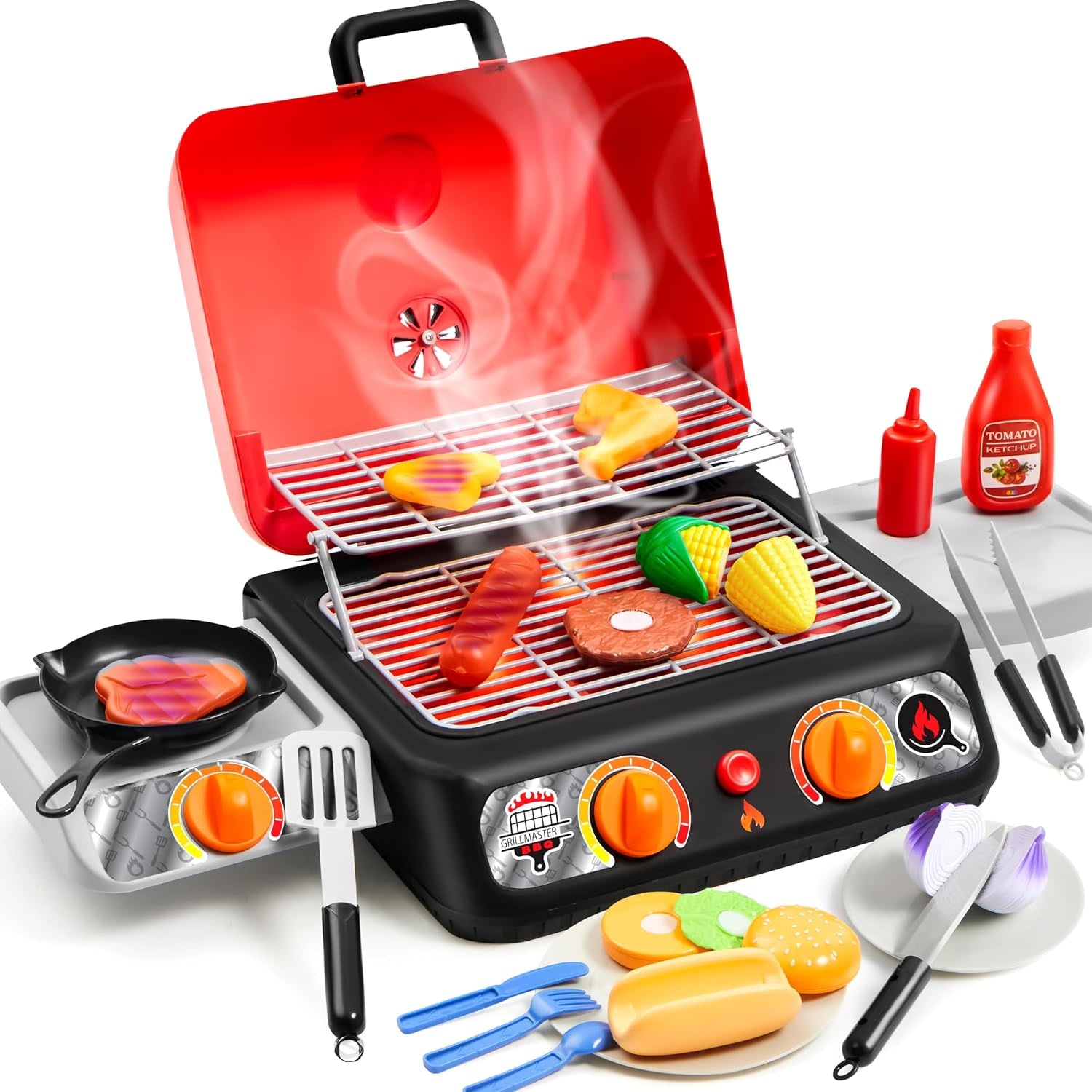
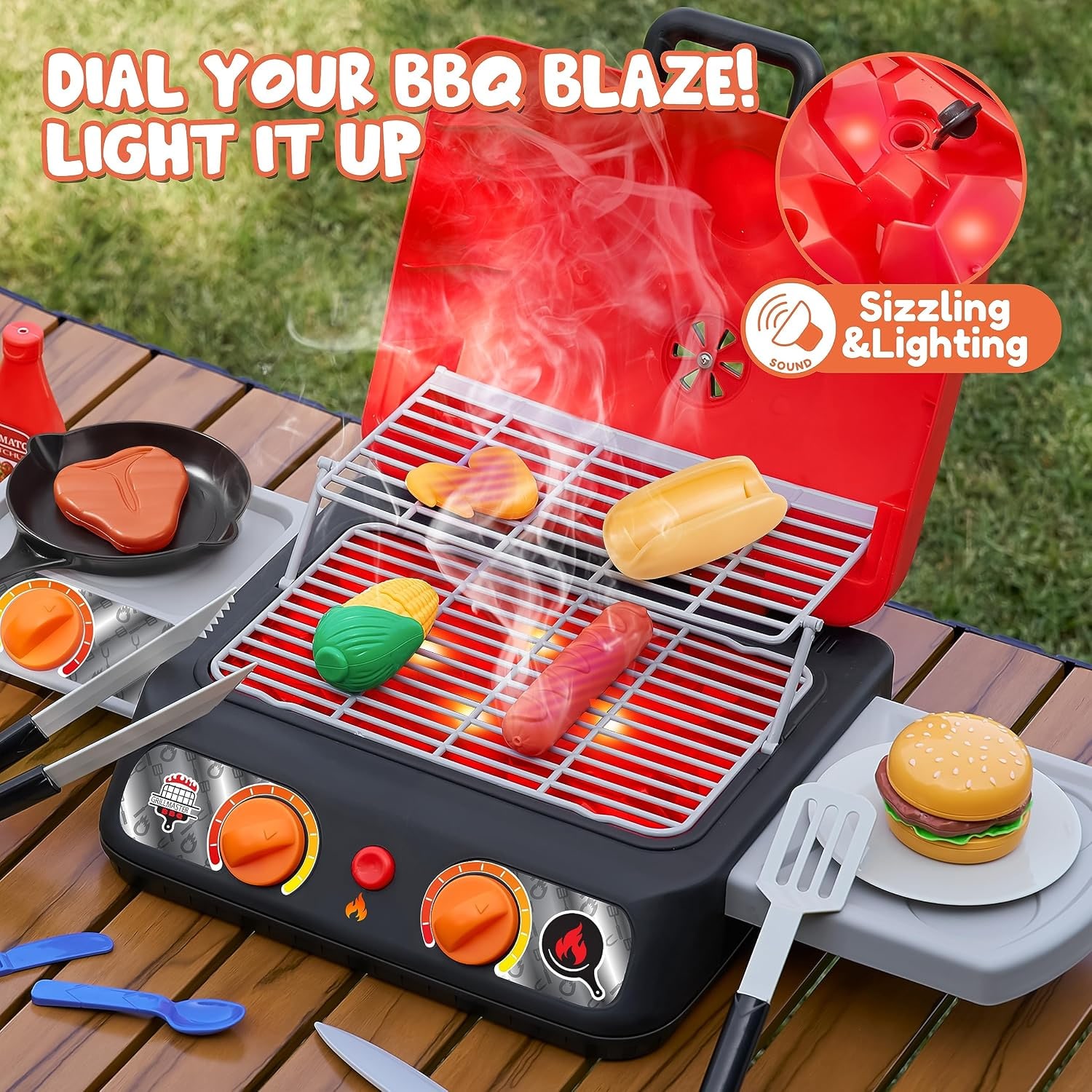
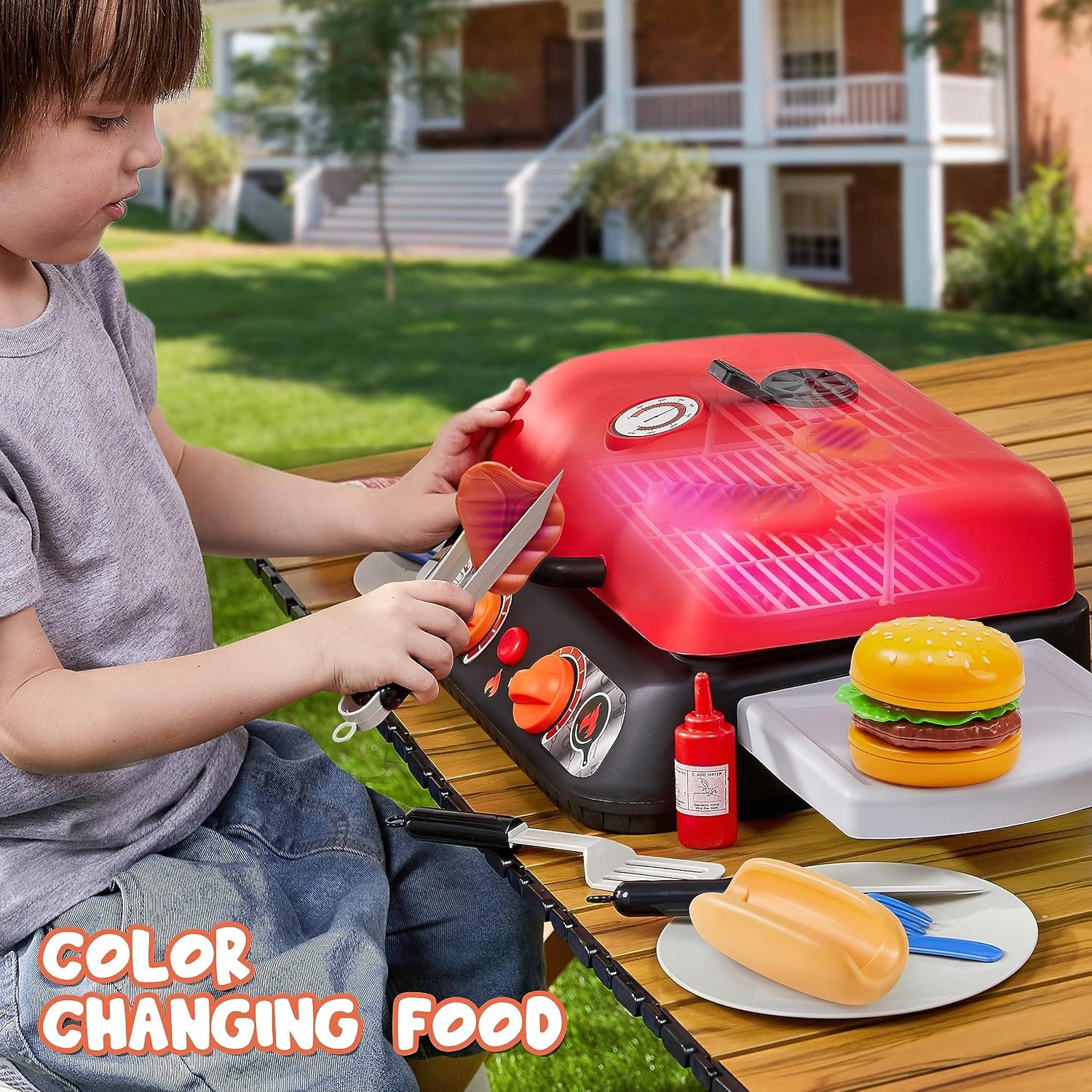
The effect that gets the most attention is the smoke. It is not real smoke and nothing burns. A small reservoir produces a fine steam that drifts up through the grate, giving the look of a grill that has just been fired up. Because it is steam, it is cool to the touch and disappears quickly in the air.
Underneath the cook surface sit LEDs that glow to mimic hot coals. Combined with the sizzling sound effects, the three elements together read convincingly as a working barbecue from a child's point of view.
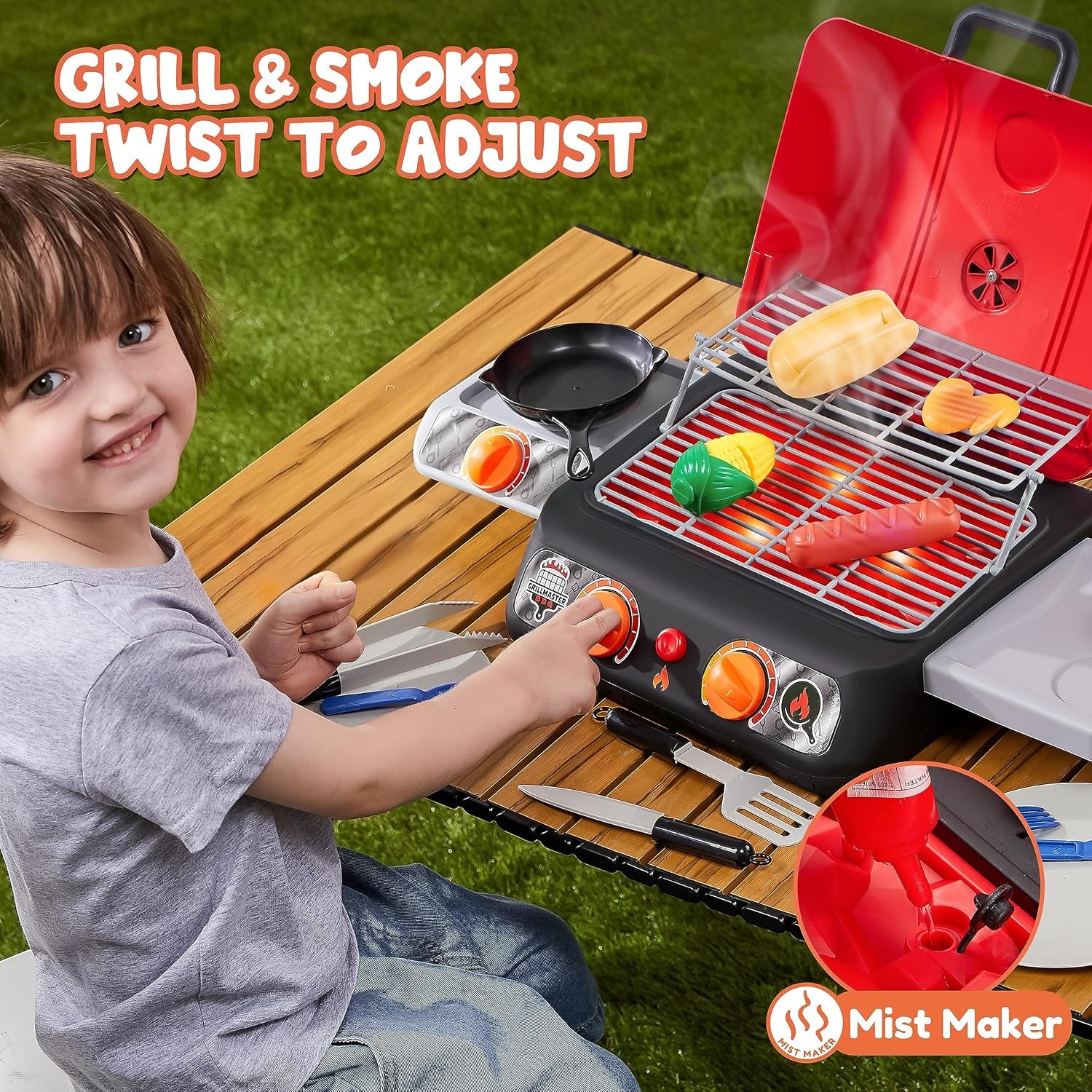
The part that elevates this particular set is the knobs. Rather than one on-off switch, there are functional dials that let a child adjust how much smoke comes out and how bright the lights are. That sounds minor. In practice it changes the play entirely, because the child is now controlling the grill rather than watching it. They turn the smoke right up for drama, dial it down while they plate up, and generally fiddle, which is exactly what children do at a real barbecue when nobody stops them.
Colour-changing food and why it matters
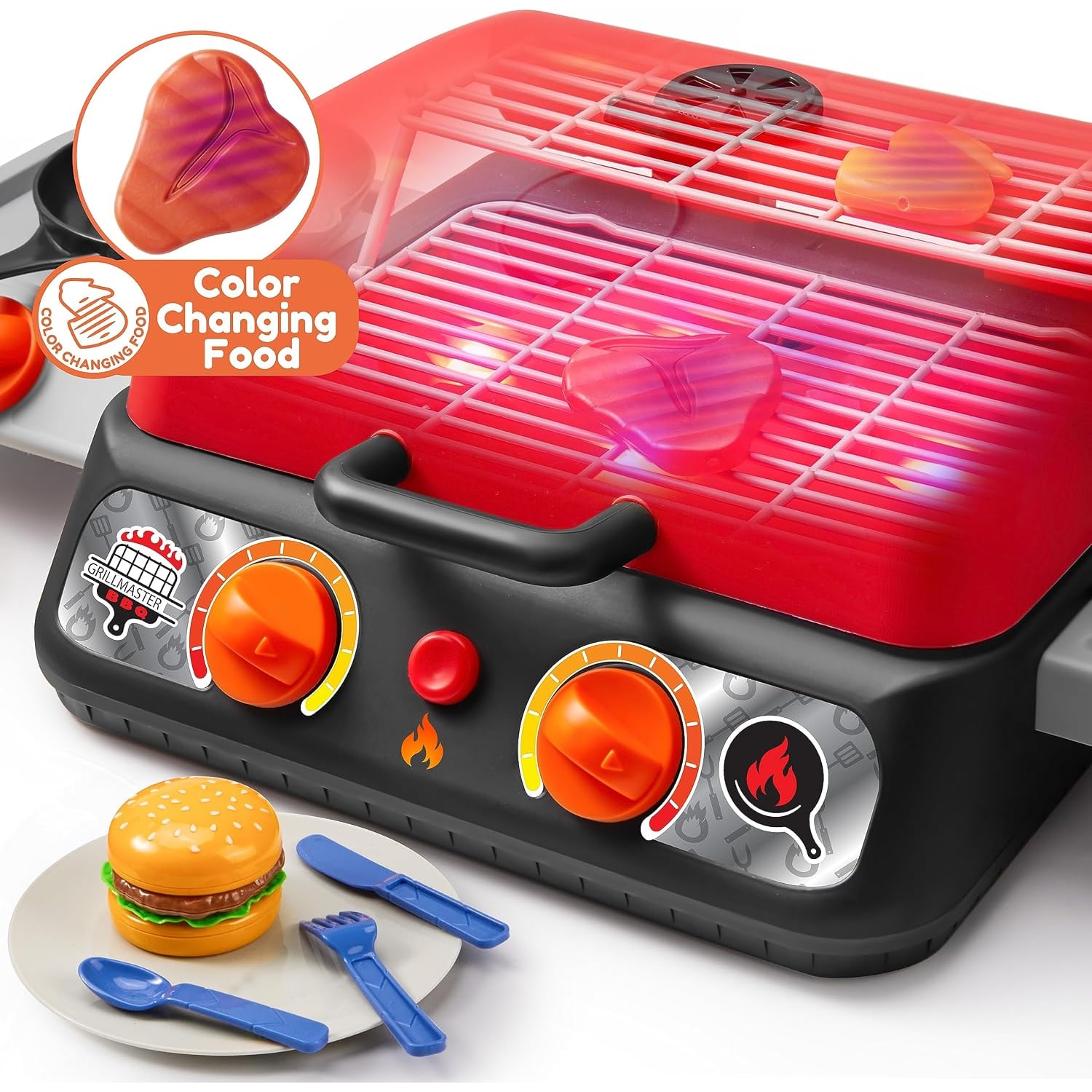
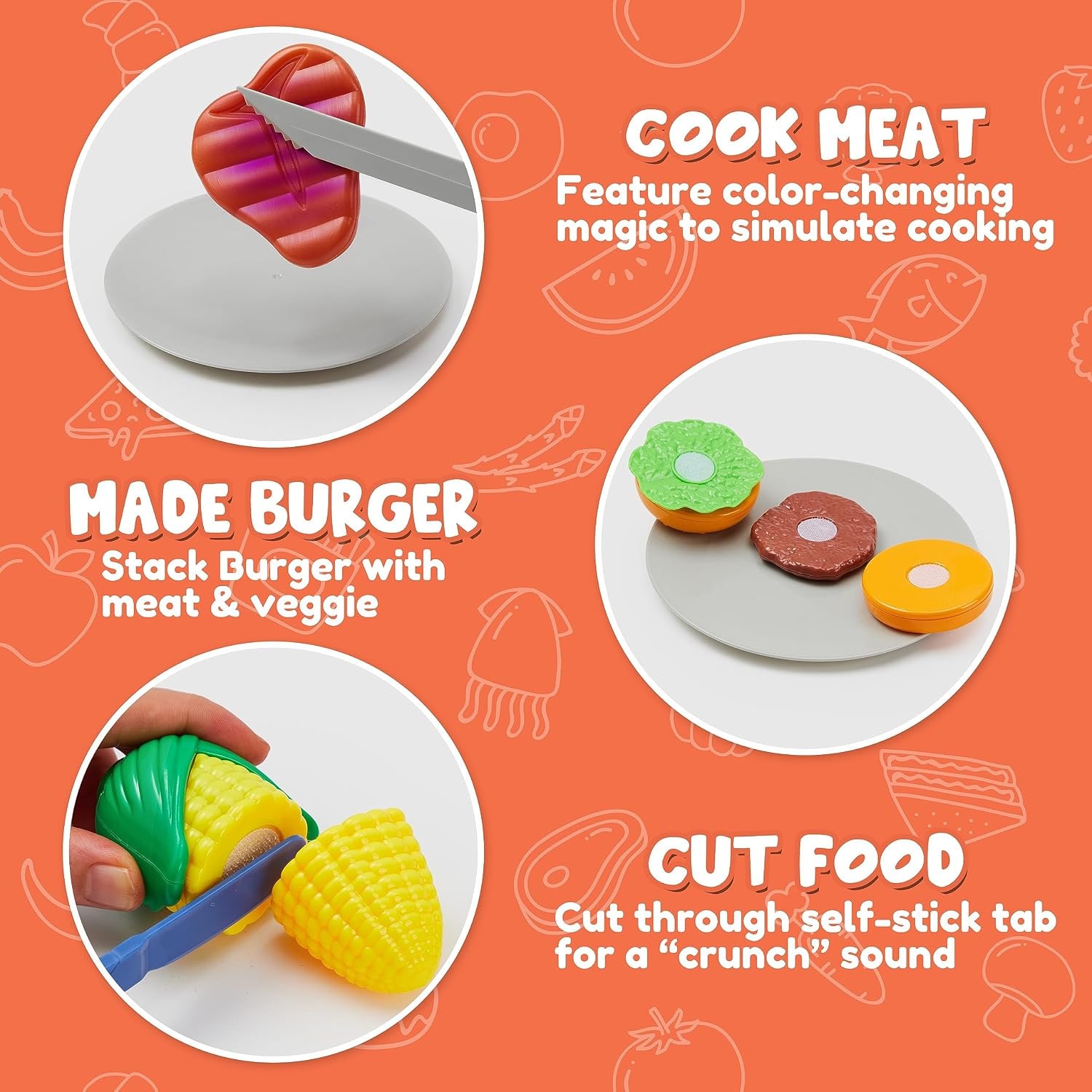
Plastic food is plastic food until it does something. The pieces in this set shift from a raw appearance to a cooked one, and that single feature restructures the whole play session.
Without it, a child puts food on the grill and takes it off again whenever they feel like it. There is no middle. With colour change, there is a wait, a check, and a result. Children start saying things like "not yet" and "that one's done", which is the beginning of actual narrative play rather than object handling.
It also gives a natural reason to serve. Once food is cooked it needs to go somewhere, and the slide-out serving area gives it a destination. You end up with a loop: cook, check, serve, repeat. Loops are what make toys stick.
Who this suits
This set is for ages 3 and up. It contains small parts and is not for children under 3, so if you have a younger sibling crawling around, think about where the food pieces live when play is over.
It suits a child who is already copying adult jobs. If they hover when you cook, drag a chair over to the bench, or ask to stir things, a grill will land well. It also works for a child who likes buttons and switches more than dolls. The knobs give a mechanical satisfaction that a plain play kitchen does not.
For families with two children close in age, the split layout is genuinely useful. The grill handles the cooking and the slide-out tray handles the serving, so there are two jobs. That tends to cut down the usual fight over who gets to hold the good bit.
It is less suited to a child who wants a full kitchen they can stand at. This is a tabletop unit at 30.5 x 27.5 x 18 cm, not a floor-standing play kitchen. If your child specifically wants height and storage, a different product shape is the better answer.
Measuring up before you buy
Three measurements are worth checking against your space.
The footprint is roughly 30.5 cm by 27.5 cm, about the size of a large dinner plate with room around it. Most dining tables, coffee tables and child-height play tables take it without fuss. If you plan to set it up on a small side table, measure first.
The height is 18 cm. Sitting on a standard dining table, the grill surface ends up at a comfortable level for a standing child of about four to seven. On the floor, kneeling works fine for any age in the range.
The weight is 1.57 kg. Light enough that a child of five or six can shift it with two hands, heavy enough that it does not slide across a smooth table when someone presses a knob hard. If you want it to travel between the lounge room and the back deck, that weight is about right.
Indoor, outdoor, or both
The grill is built as an indoor tabletop toy, but a covered deck or patio on a dry day works well and feels fitting. A child grilling outside while the adults grill outside is a good afternoon.
What to avoid is obvious once you think about it. Rain, sprinklers, pool edges and long stretches of direct sun all cause problems, because there are electronics inside and a smoke mechanism that needs to stay in good order. Bring it in when you bring in the cushions.
Keeping it in working order
Cleaning is simple. A soft, damp cloth over the body and the food pieces, then dry everything properly before it goes away. Nothing in this set goes in the dishwasher, the microwave or the oven. Hot water and heat will warp plastic and destroy the electronics, and there is no coming back from that.
Keep water away from the battery compartment and the smoke outlet. If the smoke effect ever seems weaker than it was, check that the outlet is clear of dust before assuming something has broken.
Storage is where most sets get lost, not where they get damaged. The grill itself is easy, it sits on a shelf. The food pieces are the problem. Put them in a lidded box or a zip bag from day one and the set stays complete. Lose the steak and the colour-change trick loses half its charm.
If the grill is going to sit unused for a season, take the batteries out. Leaking cells ruin more toys than rough play ever does.
Getting more play out of it
A few things stretch the life of a set like this.
Give the child a real job description. Ask for a specific order, wait for it, and comment when it arrives. Pretend play runs on someone taking it seriously.
Mix in play food you already have. Generic plastic food sits on the grate fine, even if only the supplied pieces change colour. More ingredients means longer menus.
Add props from the kitchen drawer. A small plate, a tea towel, a paper menu written in crayon. The grill is the engine, but the story grows from what surrounds it.
Move it occasionally. A grill that lives in the same corner becomes furniture. Taking it out to the deck for an afternoon resets the novelty at no cost.
The short version
This is a child-size plastic grill, 30.5 x 27.5 x 18 cm and 1.57 kg, finished in red, with light, smoke and sound effects and working knobs that control the smoke level and the brightness. Colour-changing food pieces give children a clear cooked signal, and the slide-on stove panel plus slide-out serving tray turn it into a two-station setup that suits shared play.
It is for ages 3 and up, contains small parts, and is not for children under 3. It wipes clean with a damp cloth, needs to stay dry, and should have its batteries removed for long storage.
If you have a child who already wants to cook alongside you, this gives them somewhere to do it. Orders ship from Australian warehouses in 3 to 7 working days, and returns are accepted within 14 days of delivery, unused and in the original packaging.