
The complete guide
Choosing a Tabletop Easel with Storage, A Practical Buyer's Guide
The problem with painting at the kitchen table
Most home painting happens in borrowed space. You set up on the dining table, work for an hour, then pack everything away before dinner. The canvas lies flat, which distorts how you see the work. Brushes roll off the edge. The tube of titanium white ends up under a chair. By the third session you have spent more time setting up and clearing away than actually painting, and the habit quietly dies.
A tabletop easel with storage fixes two problems at once. It holds the canvas upright so you are seeing the work the way it will hang, and it keeps the gear you are using in one box that closes. That second part matters more than people expect. The reason most beginners stop is friction, and anything that cuts five minutes off the start of a session makes the next session more likely.
How this kind of easel works
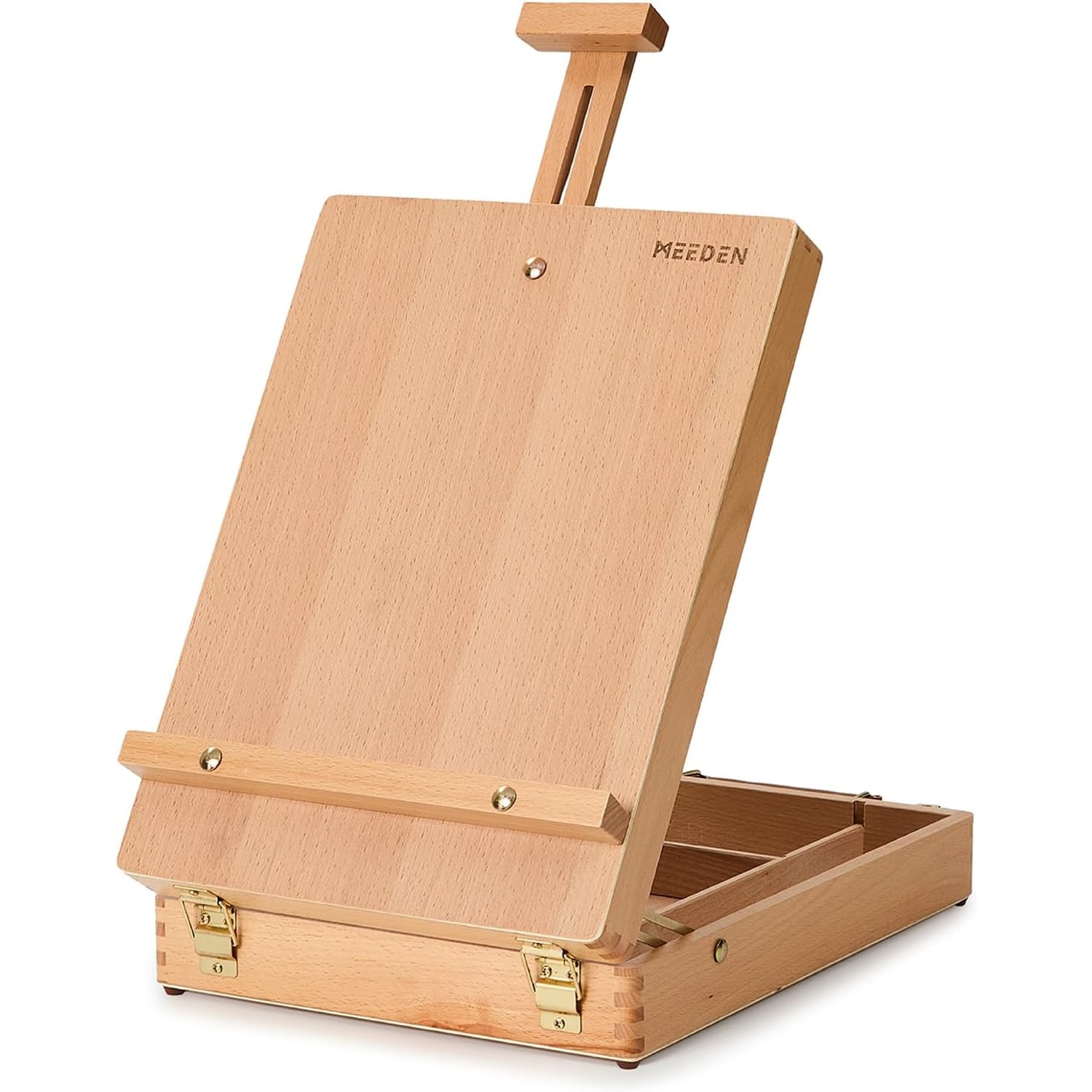
The design is sometimes called a sketch box easel. The body is a shallow timber box. The lid and supports fold up to form a canvas holder, and the interior of the box stays free for supplies. Close it and the whole thing becomes a flat case with a handle.
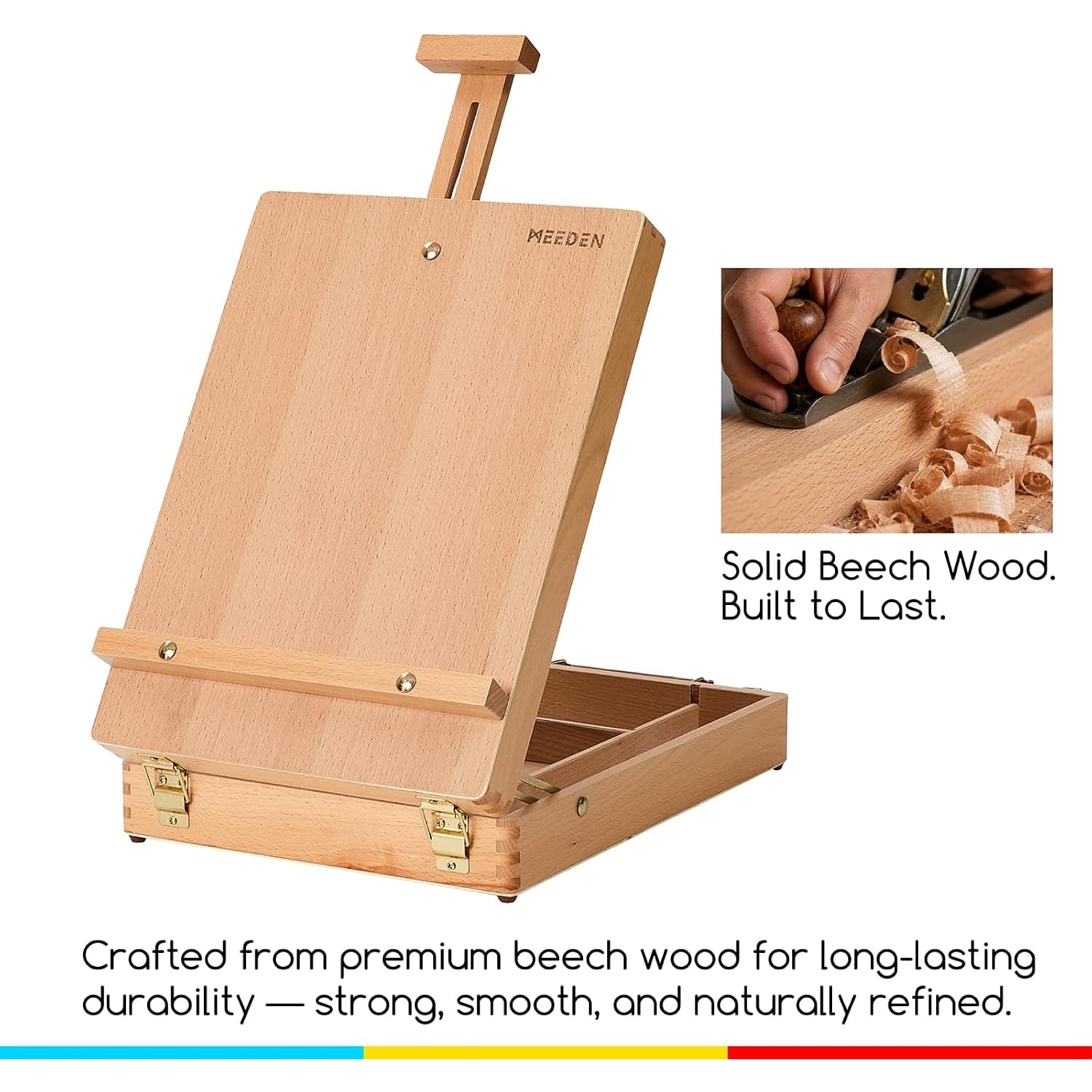
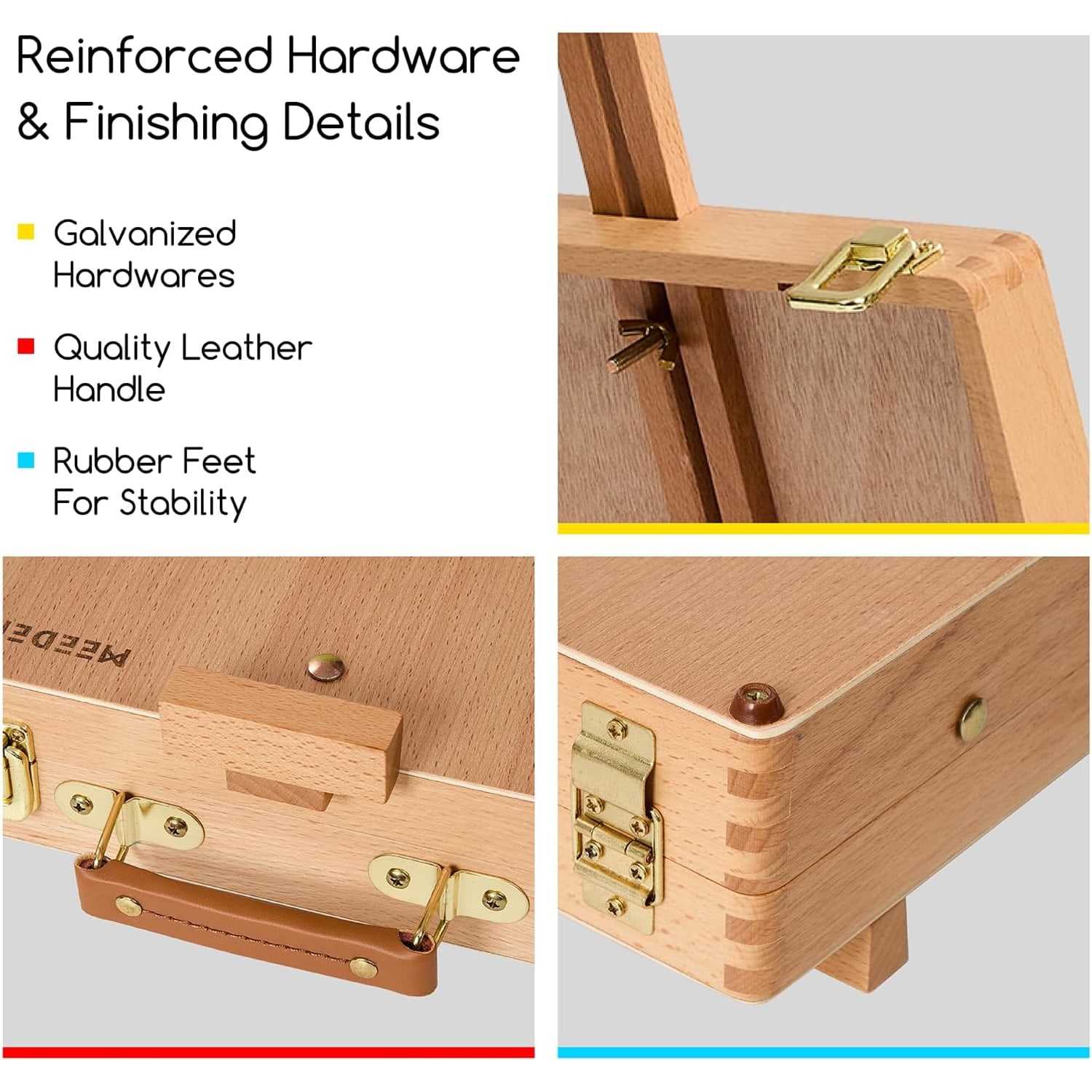
This one is built from beech with brass hardware. Beech is a dense, close-grained hardwood that resists dents and does not flex much. That matters because the canvas holder is only as steady as the frame behind it. The corners use dovetail construction, which is the joint woodworkers reach for when a box needs to survive being picked up by one corner over and over. The finish is a hand-rubbed oil, so you see the grain rather than a thick coating.
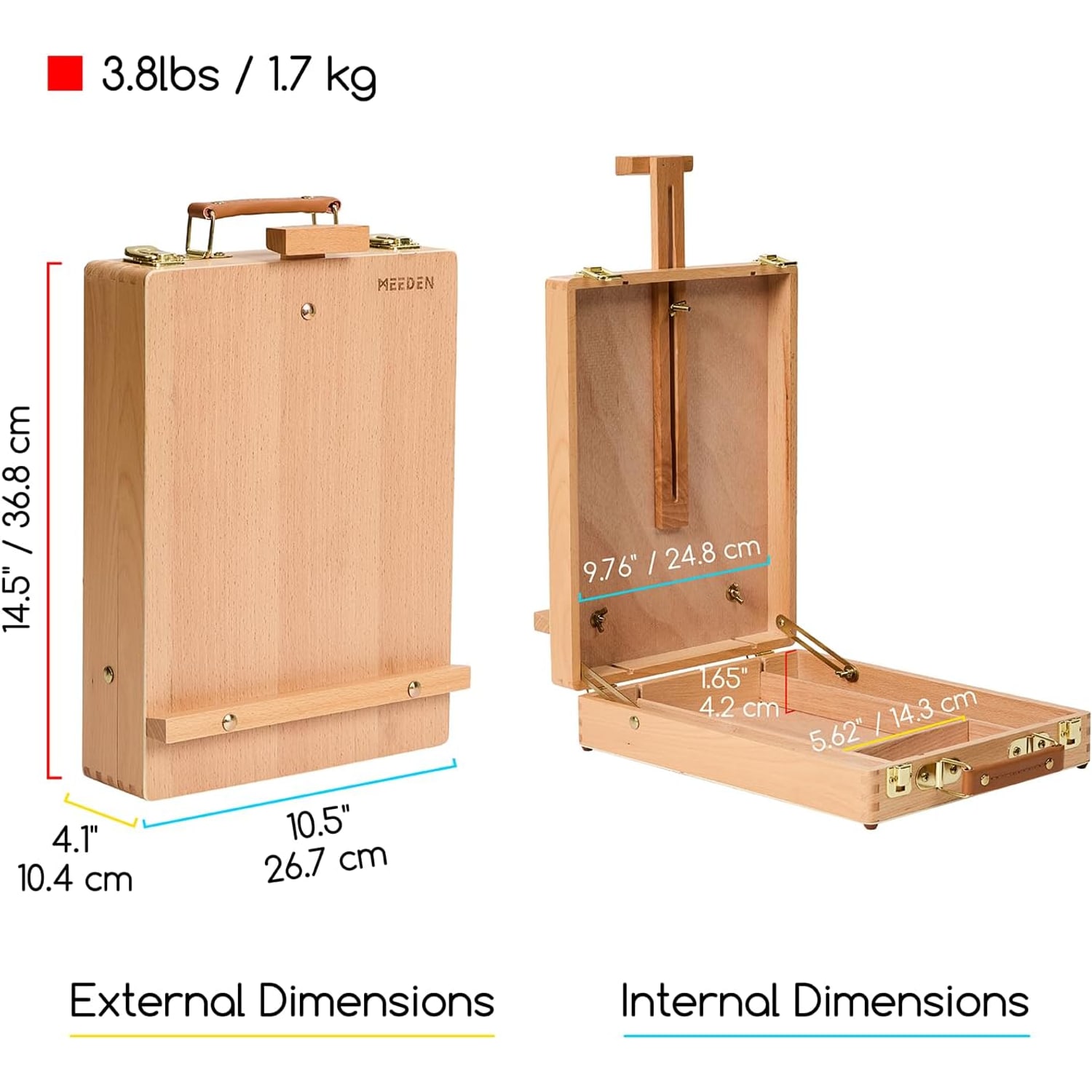
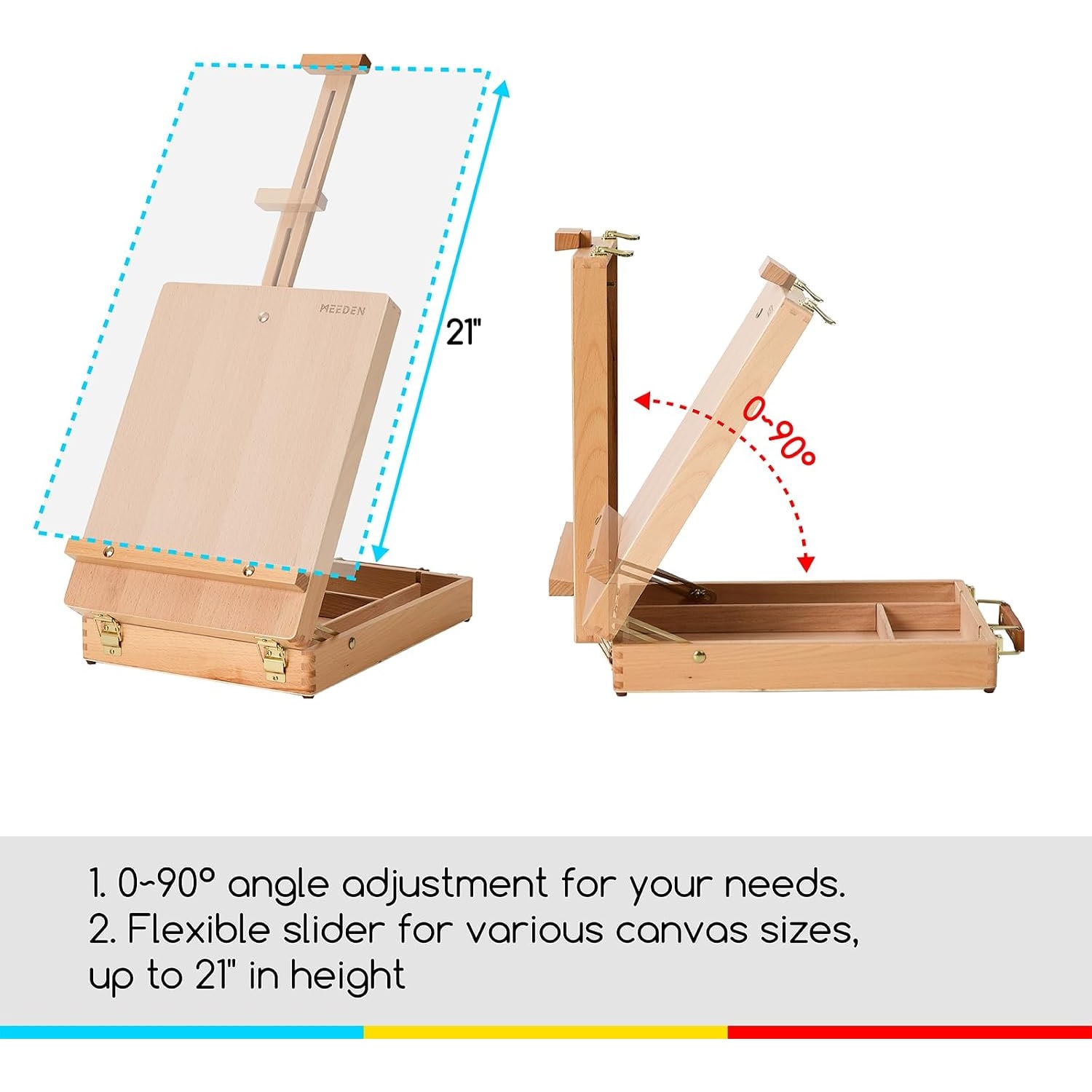
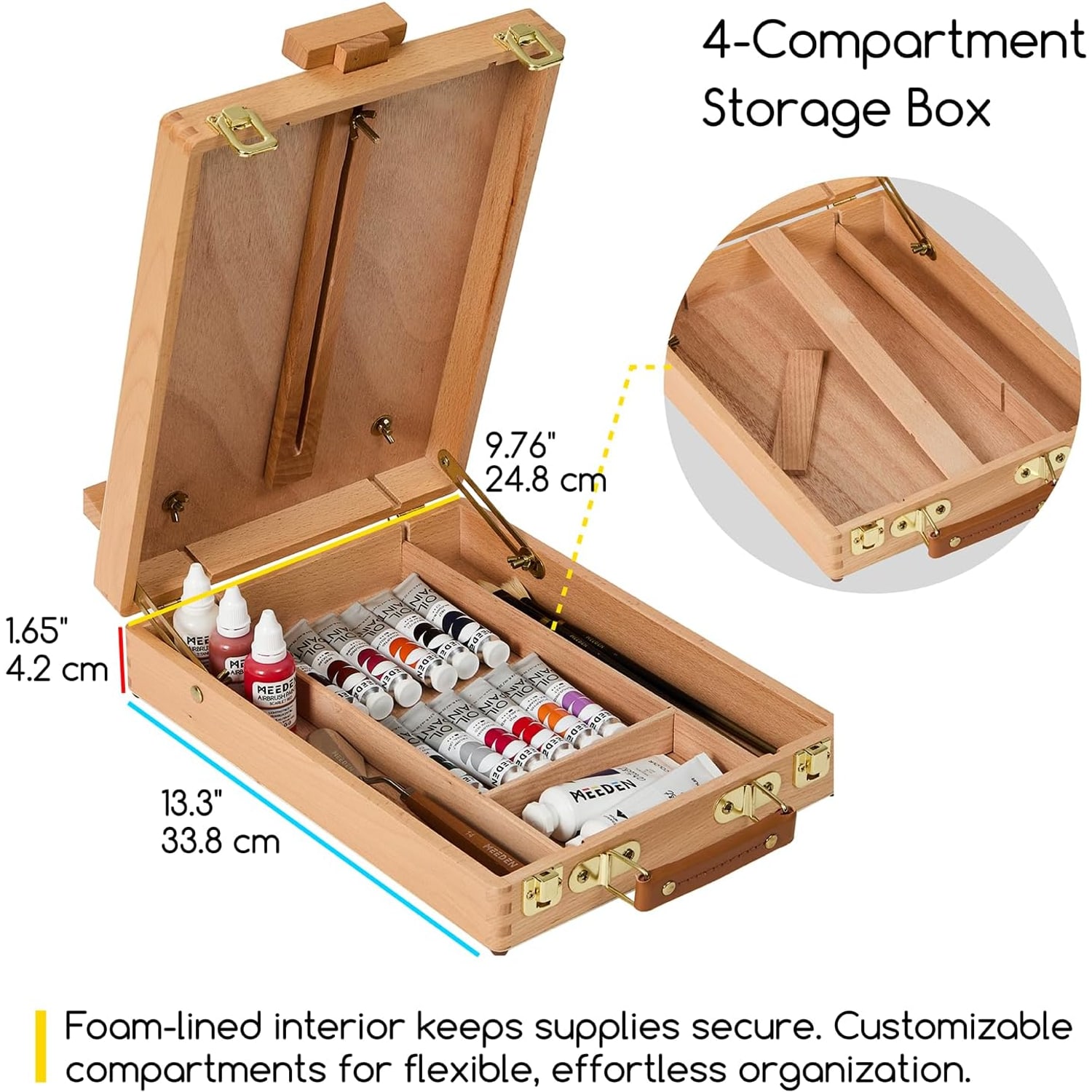
The canvas holder adjusts to vertical or horizontal angles. Lockable side supports hold it in place once set. It takes canvas art up to 53 cm tall, which covers the ready-made canvas sizes most shops stock for home use. Folded, it measures about 10.5 cm deep by 37 cm wide by 27 cm high and weighs 1.46 kg. No assembly is needed.
Who it suits
Home painters without a studio. If you work in a corner of a bedroom or on a shared table, a floor easel is a commitment you probably cannot make. A desktop art easel only needs the footprint of a dinner plate and then goes in a cupboard.
Students. Art courses often ask you to work both in class and at home. Something you can carry on a bus and set up in either place removes a logistics problem. A student art easel like this also doubles as the storage box for your kit.
People who paint outside. Plein air painting lives or dies on how fast you can set up. A leather handle, a 1.46 kg carry weight and a box that already contains your brushes means you can be working within a minute of sitting down.
Anyone buying a first proper easel. There is a real step up from propping a canvas against a stack of books. This is a reasonable place to make that step without spending studio money.
It suits one painter at a time. If two people in the house paint together, buy two. They stack.
How to choose between easel types
Start with your canvas size. If almost everything you paint is under 53 cm tall, a tabletop model is the sensible choice. If you regularly work bigger, you need a floor-standing easel and no amount of clever design will change that.
Then look at where the thing lives between sessions. A floor easel needs a permanent spot. A folding table easel needs a shelf. If you do not have the permanent spot, the folding option is the only one you will actually keep using.
Storage is the third question. Plenty of cheap table easels are just an A-frame with a ledge. They work, and they cost less. What they do not do is solve the scattered-supplies problem. An easel with a storage compartment and removable dividers means your brushes have a home. Over a year of painting, that is the feature you notice.
Material is worth a thought too. A lot of budget easels use lightweight softwood that dents and goes wobbly at the joints. Beech sits in a different class. It costs more to make and it lasts longer, which is the usual trade.
Finally, consider the adjustment range. A fixed-angle ledge is fine for acrylics but awkward for watercolour, where you want a flatter surface so water does not run. An adjustable table easel with a holder that goes from vertical to near-flat covers both.
Setting it up well
Work on a level, solid table. A tablecloth or placemat under the easel reduces grip and lets it creep while you paint, so a bare surface is better. Open the box, raise the canvas support, position your canvas and lock the side supports before you pick up a brush.
Think about the light. If you can, sit with a window to your left if you are right-handed, so your painting hand does not cast a shadow across the work. In the evening, a lamp placed to the side rather than directly behind you avoids glare on wet paint.
Load the storage compartment deliberately. Take out a divider to make a wide bay for a water pot or a bottle of medium, and keep a narrow slot for brushes so they do not roll. Put the things you reach for most on the side of your painting hand. It sounds fussy, but a layout that works becomes automatic after a week.
Looking after beech and brass
Beech with an oil finish wants a dry cloth, not a wet one. Wipe spills straight away and dry the surface. Do not stand a dripping water jar on the timber and do not leave the easel outside overnight in the damp.
Paint on the canvas supports is normal and some painters like the patina. If you want it clean, remove it before it cures using the solvent that matches your paint. Oils come off easily while wet and become a scraping job once dry.
The brass hardware will dull with handling. A soft dry cloth brings it back. Check the fittings every few months and snug anything that has worked loose, which happens with any folding timber object that gets carried around.
Keep it out of long spells of direct sun. Oil-finished timber fades and can dry out if it sits on a sunny windowsill for months.
The short version
This is a beech tabletop easel with a storage compartment, built for people who paint in borrowed space. It holds canvas up to 53 cm tall, adjusts for vertical or horizontal work, locks in position, and folds into a flat box weighing 1.46 kg with a leather handle. Dovetail joints and brass hardware put it above the basic end of the market.
Buy it if your canvases are modest, your space is shared, and you are tired of hunting for your brushes. Look at a floor easel instead if you work large or already have a dedicated corner. For most home and student painters, this is the format that gets used rather than stored.