

The complete guide
Choosing a Kids Workbench and Tool Station That Actually Gets Used
The problem with most pretend tool toys
Plenty of toy tool kits look great in the photo and get about twenty minutes of attention in real life. The reason is usually the same. The tools do nothing. A plastic hammer that cannot drive anything, a spanner that does not fit any bolt, a saw with nothing to cut. A child figures that out quickly, and then the pieces end up in the bottom of a toy box.
What changes the outcome is having something to actually work on. A kids workbench and tool station gives the tools a purpose. There is a surface to use, bolts that really thread, and a drill that turns. The play goes from waving a hammer around to building, undoing and rebuilding, which is a completely different attention span.
The other problem is mess. Loose parts spread. A set with a hundred pieces can take over a room in an afternoon if there is nowhere to put anything. That is why the design of the bench matters as much as the piece count.
How this set works
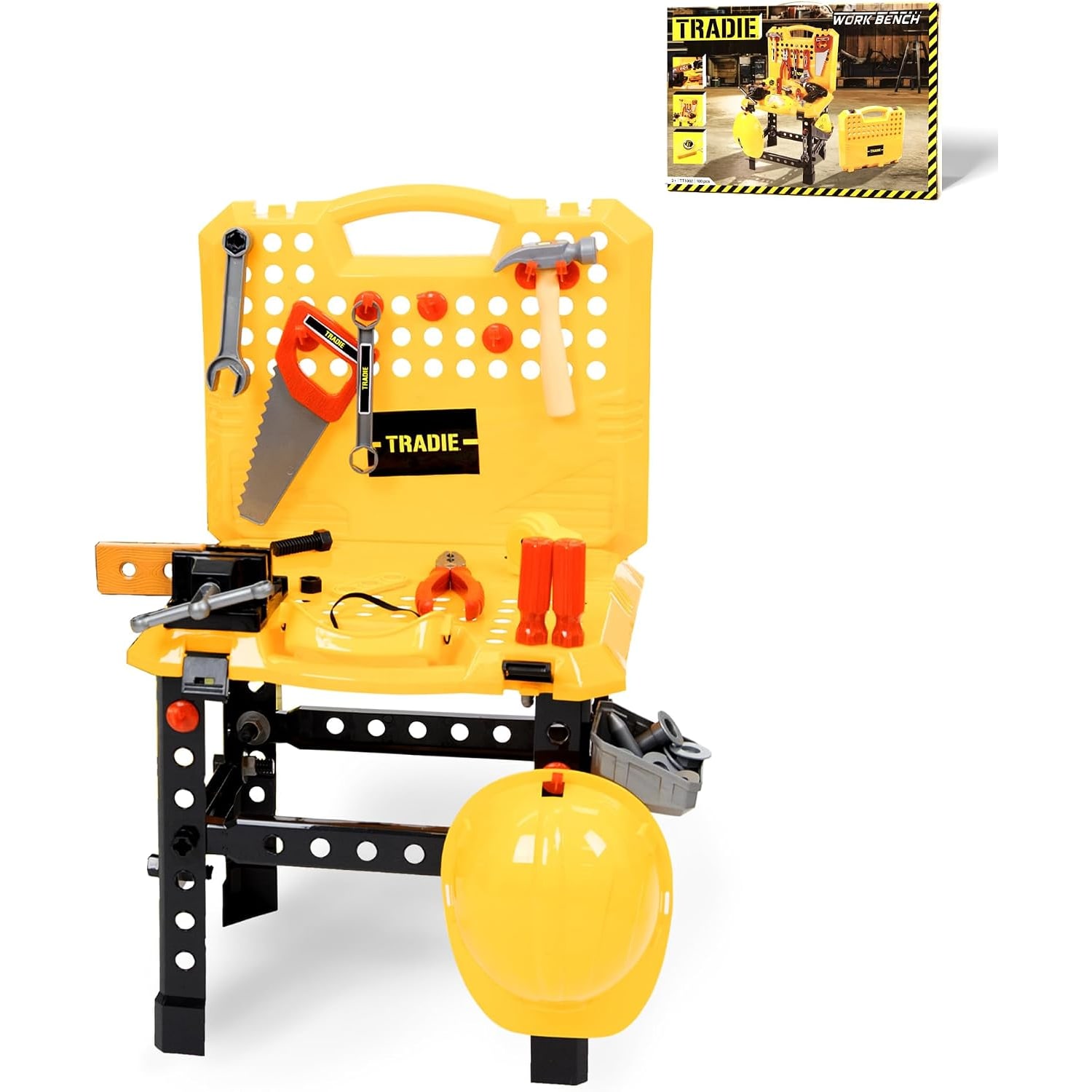
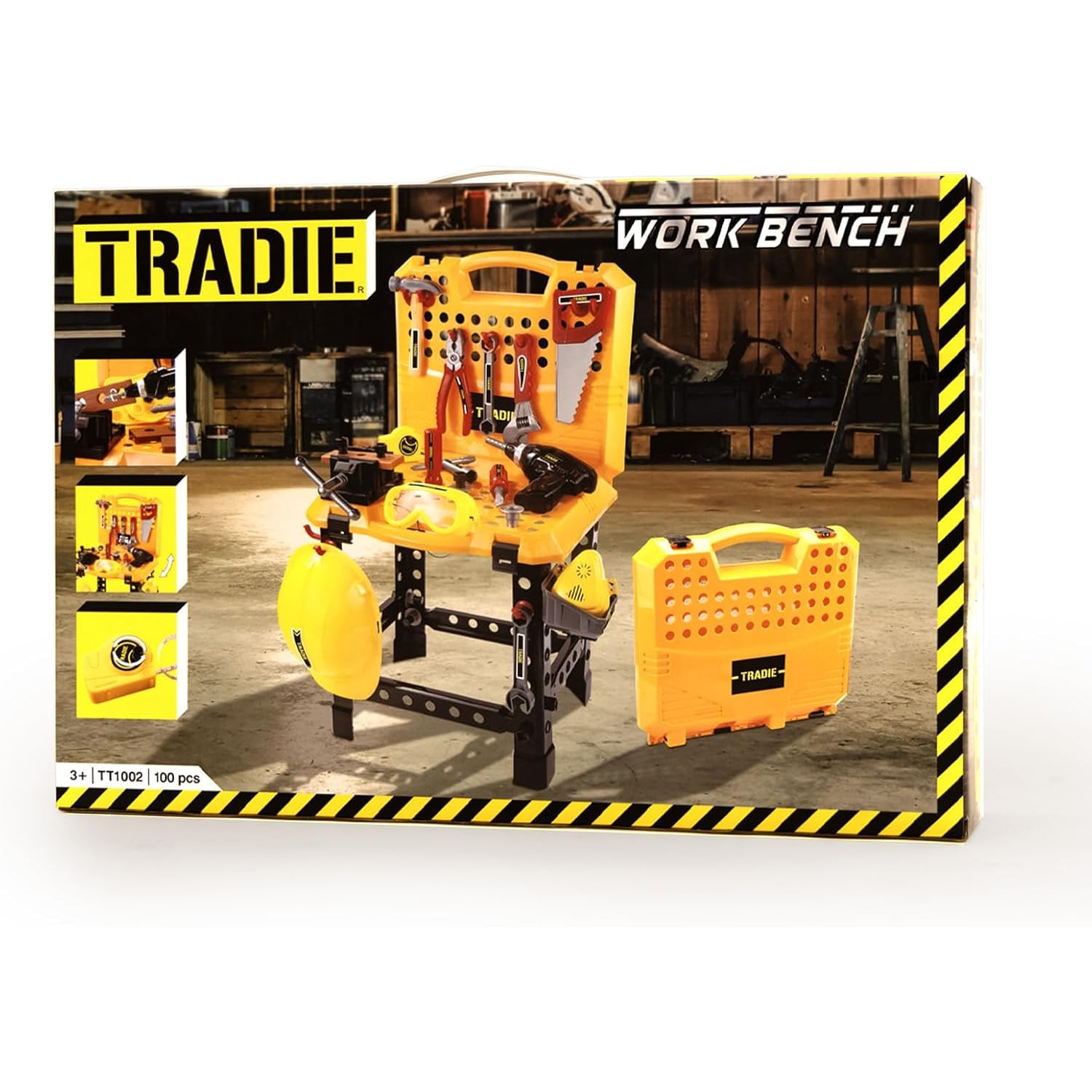
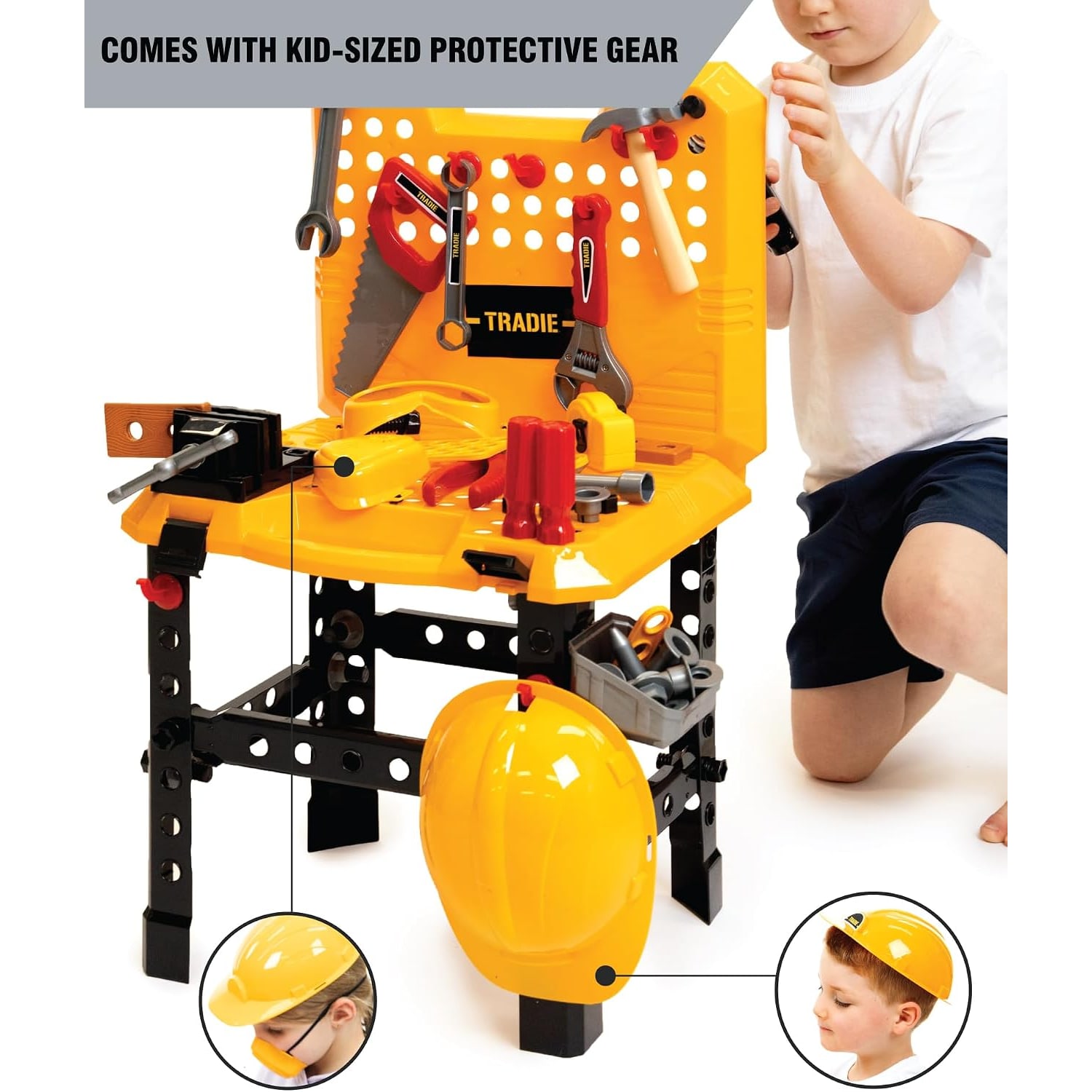
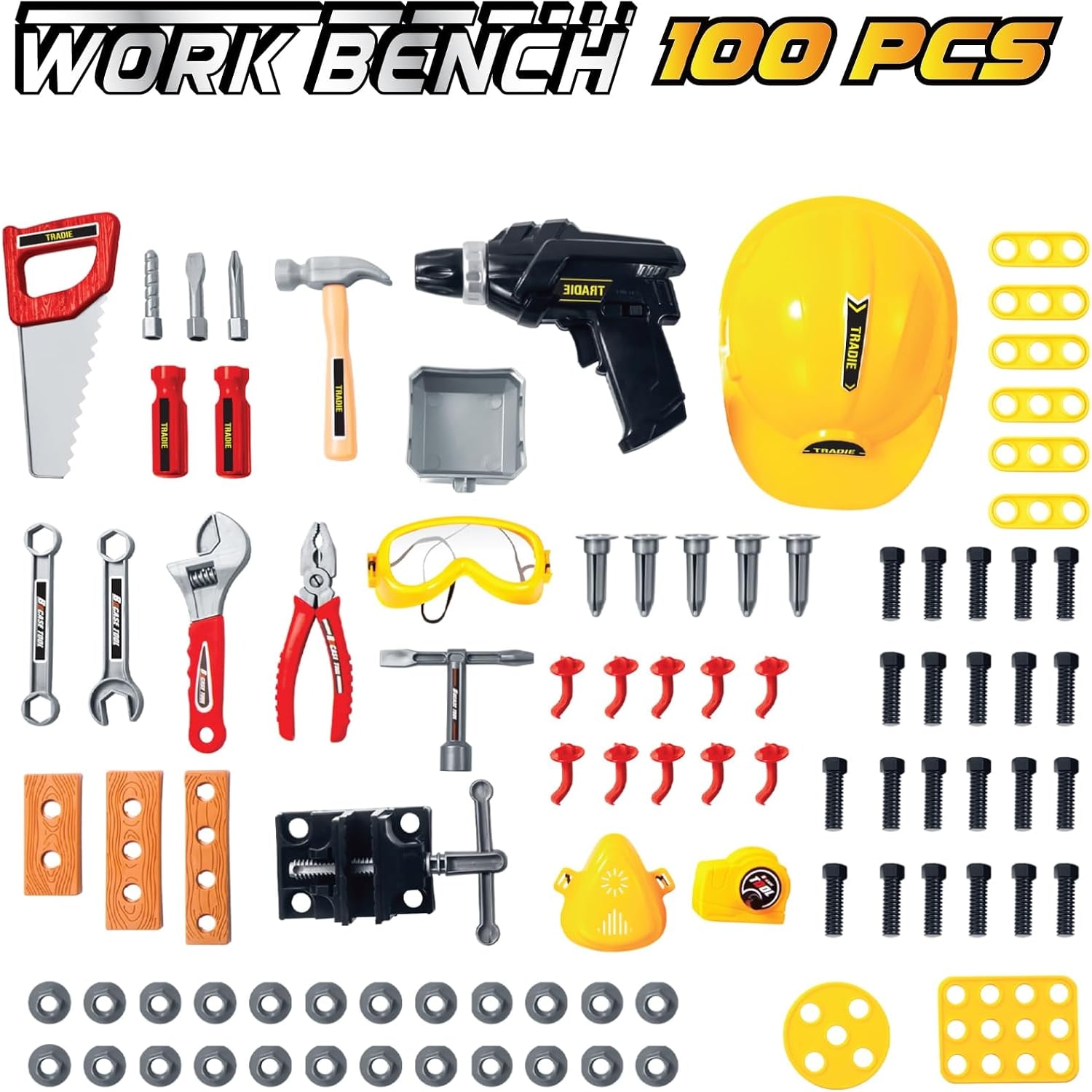
The bench is the base of the whole thing. It is a yellow plastic frame with a flat work surface and hooks built into it for hanging tools. The 100-piece kit that comes with it includes a power drill, a hammer, a spanner and a saw, plus a large run of nuts, bolts and smaller fittings. An instruction manual is in the box.
The drill runs on batteries. Everything else is manual. That mix turns out to be a good balance. Hand-tightening a bolt with a spanner takes a bit of effort and concentration, and when a child loses patience with that, the drill is right there doing the fast version. They tend to switch back and forth without any prompting.
The set needs to be assembled before first use. Put aside a little time and do it before the box goes under the tree or gets handed over, because nobody enjoys building a bench with an impatient three-year-old watching.
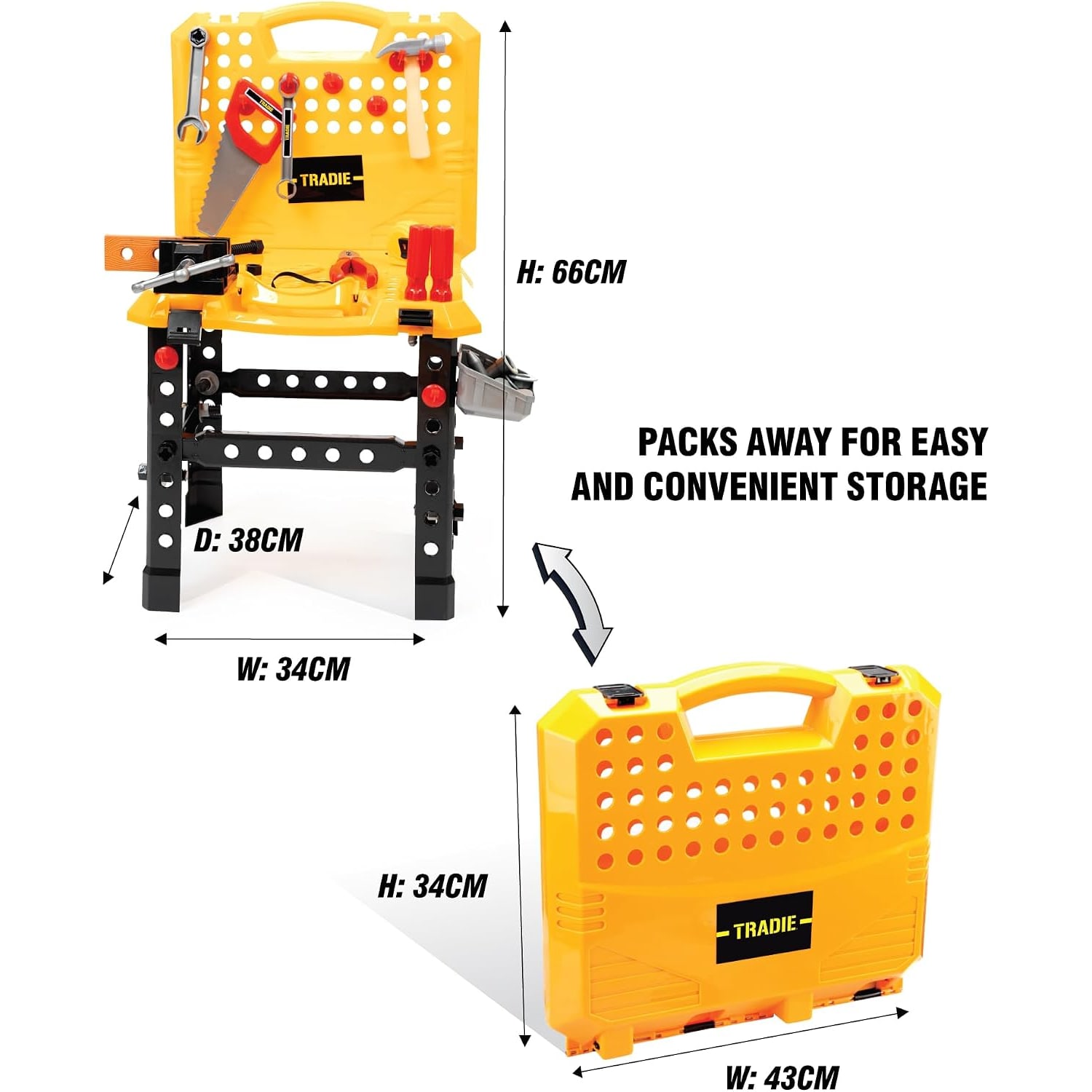
The whole thing then folds down. That is the feature parents end up appreciating most. The set measures 39.5 x 58 x 11.6 cm, which is small enough to slide into a cupboard or stand behind a door. A play area that can disappear before visitors arrive is worth a lot in a small home.
Who it suits
This one is recommended for ages 3 and up, with adult supervision, and it contains small parts so it is not for children under 3. Within that range, it tends to click with a few particular types of child.
The first is the dismantler. If you have a kid who unscrews things, pulls handles off and investigates the back of the remote, a bolt-together set gives that urge somewhere harmless to go. The second is the copier, the child who wants to do what an adult is doing. If there is a shed, a garage or a toolbox in the house, a toy tool bench slots straight into that story.
Then there are children who like a project. Nuts and bolts have no finish line, which sounds like a downside but is actually the strength. A model kit is done once it is built. The best construction role play set is the one that can be taken apart and started over, and this is that kind of toy.
It is also a decent choice for a shared space, because it folds. Two children can use it together, though expect some negotiation over who holds the drill.
What to look at when you compare sets
Piece count against useful pieces. A hundred pieces sounds generous, and here that count covers both the tools and the hardware. When you compare sets, look at whether the extra pieces are actual working fittings or just decoration. Bolts that thread into something are worth more than plastic offcuts.
Storage design. This is the one people skip and then regret. Hooks on the bench mean every tool is visible and has a home, which turns tidying into a thirty-second job. Without them, the tools live on the floor. A folding frame does the same job at the next level up, letting the whole set vanish rather than sitting in a corner all week.
Powered versus manual. A battery-powered drill adds a sense of real mechanical action. It also adds batteries to manage and a bit of noise. Some families want the full manual version for quiet. This set gives you one powered tool and the rest by hand, which is a reasonable middle ground, and you can always leave the batteries out.
Indoor or outdoor. This set is listed for indoor use. That matters because plastic in full Australian sun fades and goes brittle, and small bolts are almost impossible to find in grass. If you want something for the backyard, look for a set specifically made for it.
Height and footprint. Measure before you buy. At 39.5 x 58 x 11.6 cm this is a compact bench, which is the point. Check that there is a clear patch of floor where it can live when it is up, and a gap where it can go when it is folded.
Getting the most out of it
The first session goes better with an adult sitting on the floor nearby. Not directing, just being there and occasionally asking what is being built. Children at this age often need a reason to start, and a simple one works best. Build a seat for a toy. Fix the wobbly leg. Make a bridge.
Keep the loose hardware in a small tub on the bench rather than loose on the surface. Bolts roll. One container saves a lot of crawling around.
Rotate it if interest dips. Folding the bench away for a fortnight and bringing it back out often resets the novelty completely. A toy that is permanently visible becomes furniture.
Finally, let them take things apart. The instinct to tell a child to stop undoing what they just built is strong, but undoing is where most of the learning sits. The point of a bolt-together set is that it never has to stay built.
Looking after it
Plastic is easy. A damp cloth with a little mild detergent handles most of it, and a dry cloth afterwards stops water sitting in the hook mouldings. Do not soak the pieces or run them through the dishwasher, because heat can warp plastic and loosen fittings.
If the set is going away for a few months, take the batteries out of the drill first. Batteries left in storage can leak and ruin the contacts. Give the bench a quick check for loose joints when you set it back up.
Store it somewhere out of prolonged direct sunlight. A cupboard, a wardrobe base or behind a door all work. Keeping it off a wet floor protects the hooks and the folding mechanism.
The short version
A kids workbench and tool station earns its space when the tools do something real and the set has somewhere to live. This one covers both. The 100-piece kit brings a drill, hammer, spanner, saw and a solid pile of nuts and bolts. The bench has hooks for the tools and folds flat at 39.5 x 58 x 11.6 cm, so it can come out for the afternoon and be gone by dinner.
It is plastic, yellow, indoor, and needs assembling out of the box. It is recommended for ages 3 and up with adult supervision, and it has small parts so it is not for children under 3. If you have a child who likes pulling things apart, this gives that instinct a proper workshop. Delivery runs 3 to 7 working days from local warehouses, and returns are open for 14 days from delivery if the set is unused and still in its original packaging.