
The complete guide
How To Choose A Kids Sofa Chair That Gets Used Every Day
The problem with adult furniture in a kid's room
Walk into most children's bedrooms and you will find the same gap. There is a bed. There is usually a desk or a small table. There is a rug, a bookshelf, and a box of things that do not fit anywhere else. What there almost never is, is a chair that a child can actually sit in comfortably.
So they sit on the floor. Or they drag a dining chair in, which is hard and the wrong height. Or they colonise the good armchair in the lounge room and read there, with their shoes on the arm.
A plush kids sofa chair fixes this with very little fuss. It is a seat scaled to a small body, light enough for that body to move on its own, and soft enough that sitting in it for forty minutes with a book is genuinely comfortable. That is the whole job. Everything else is detail.
What makes a children's armchair hold up
The two things that decide whether a kids' chair lasts are the fill and the frame.
Fill first. A lot of cheap children's seating uses low density foam or loose fibre. It feels great in the first week and then goes flat, and once it is flat there is no fixing it. This chair uses high density foam for both the seat material and the fill. Density is a measure of how much foam is packed into a given volume, and higher density means the cell structure can take repeated compression and spring back. It costs more to make, which is why it is worth checking for.
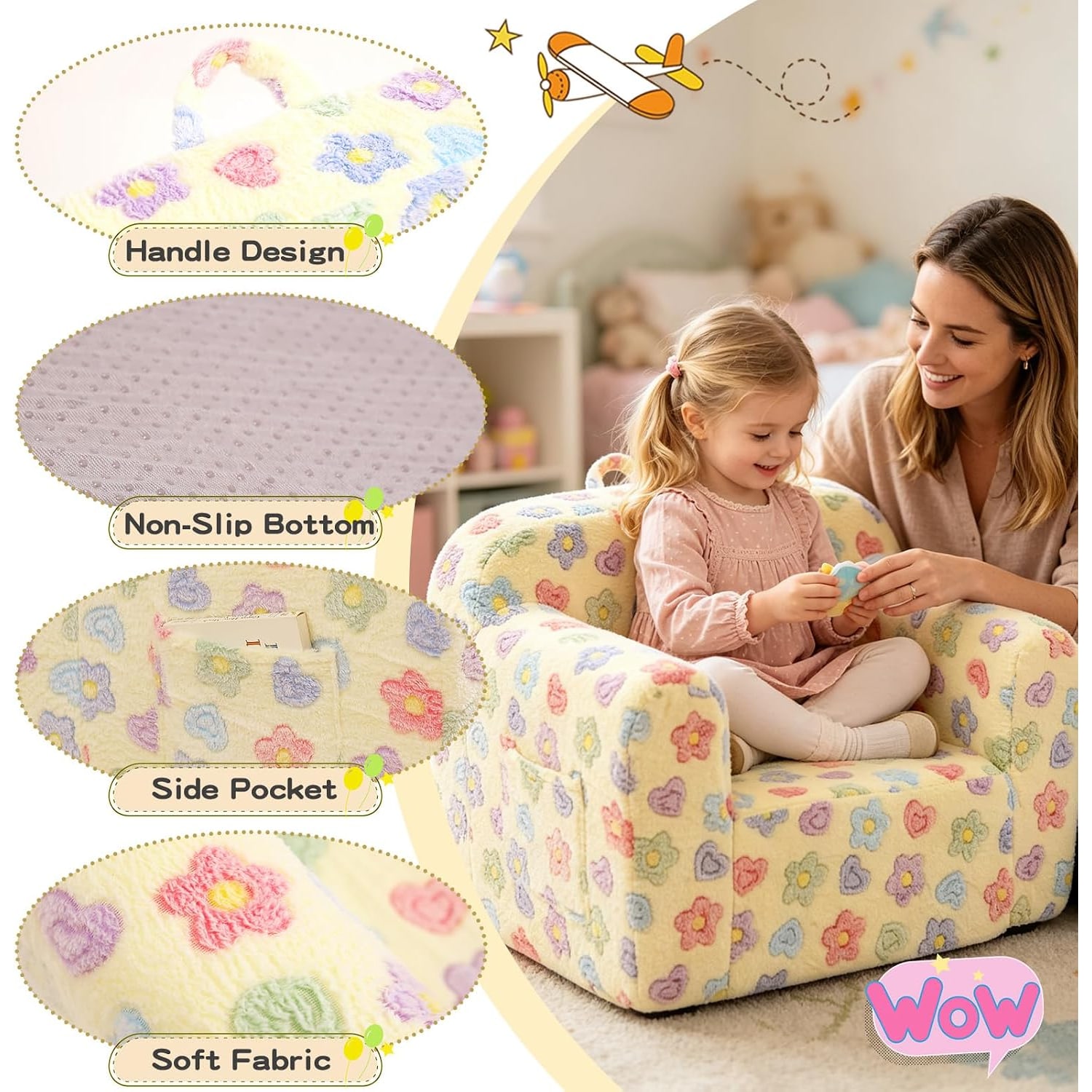
Frame second. Soft seating without any internal structure collapses sideways. You see it in bean-style chairs that end up as a sad puddle in the corner. This one has a wooden frame, which is what holds the arms upright and keeps the back at a proper angle when a child leans into one side. The arms themselves are rounded rather than boxy, and that matters more than it sounds. Children do not sit square. They lean, they drape a leg over, they lie across the thing sideways with a book propped against an arm. A rounded arm is comfortable to lean a shoulder or a knee against.
The cushion is a boxed edge shape, which means it keeps a defined square profile at the front rather than rolling over and sagging. It looks tidier and it holds its form longer.
The size question
Measurements for kids' furniture are easy to get wrong because the photos always show them in a big empty room.
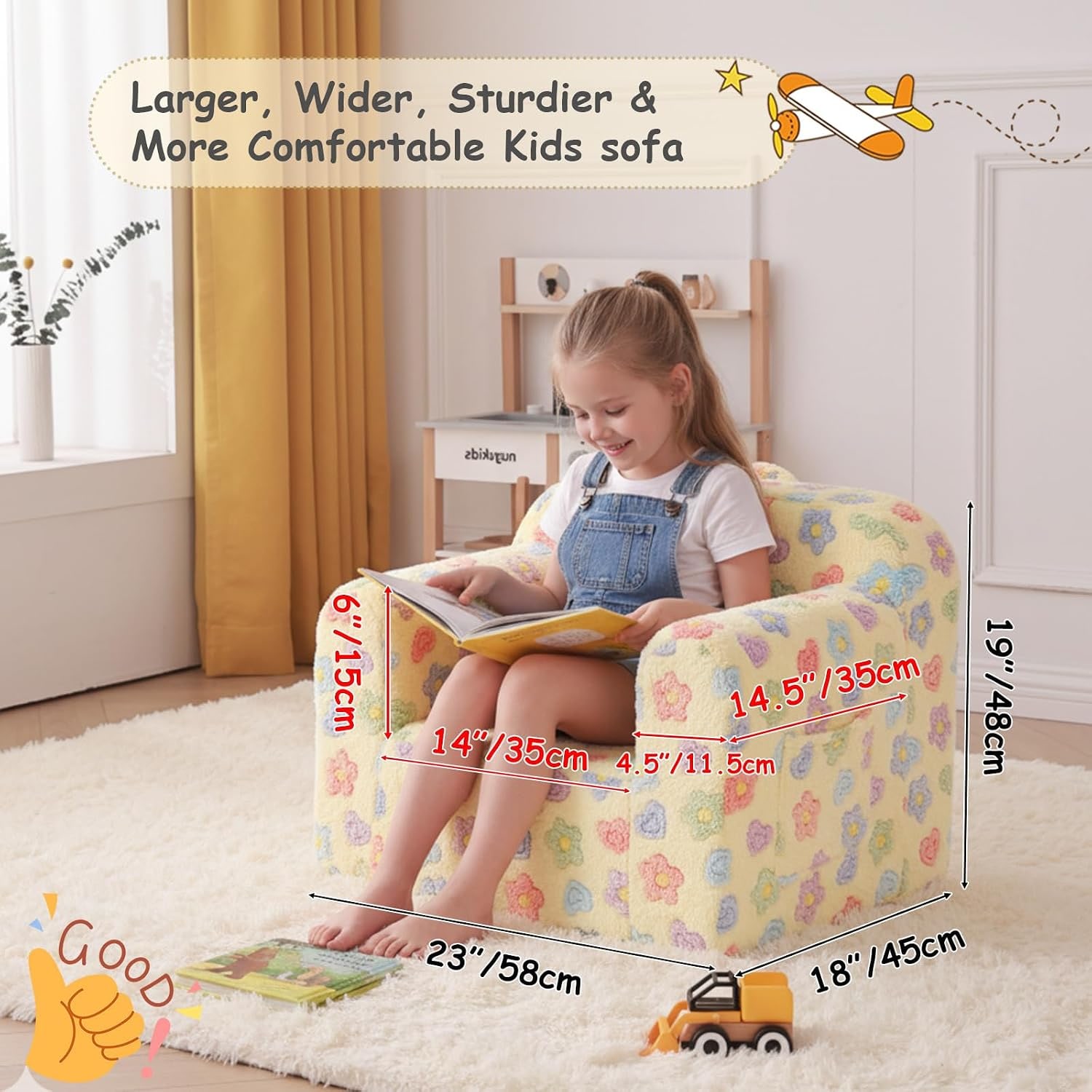
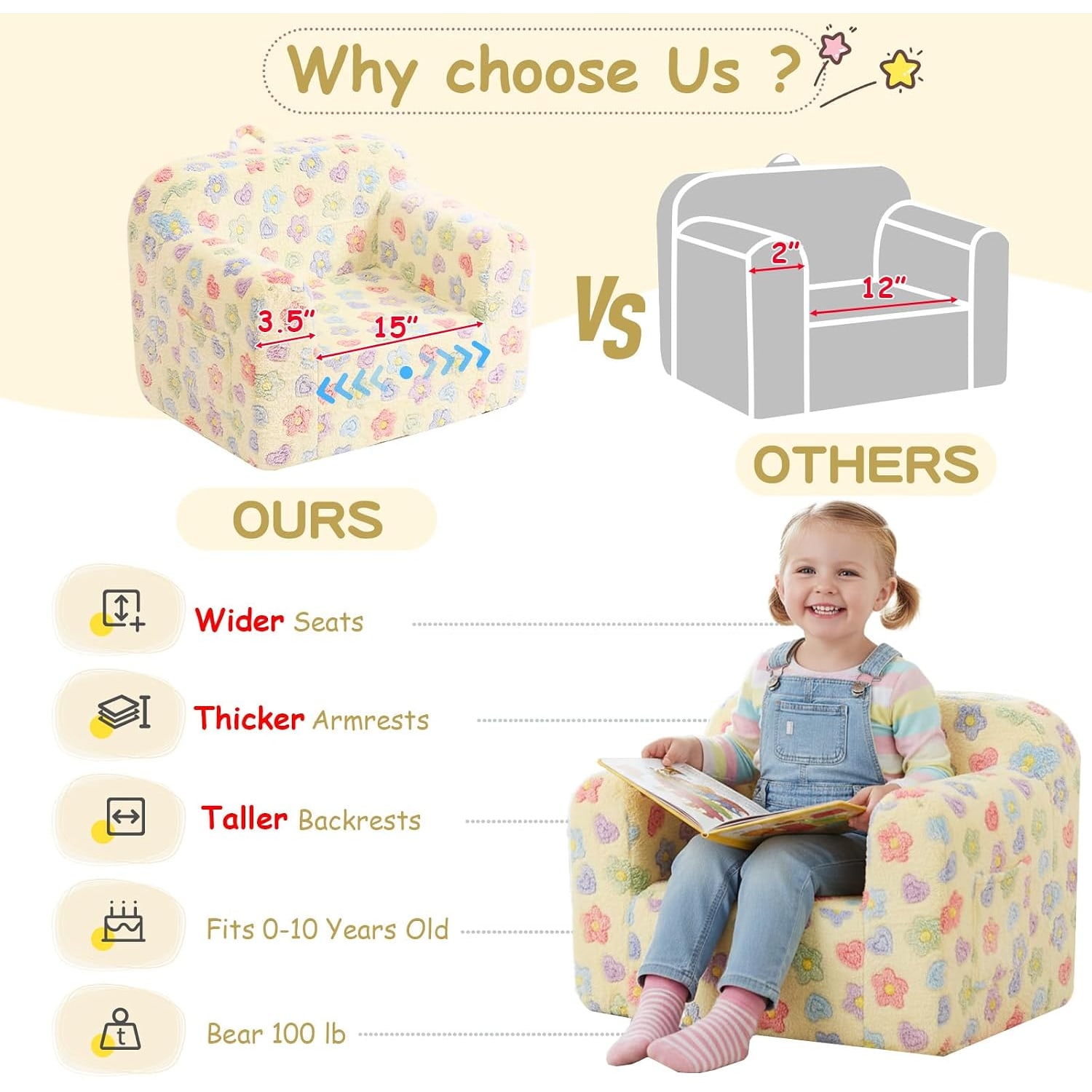
Here are the real numbers. The chair is 45.7 cm deep, 63.5 cm wide and 52.1 cm high. The seat depth is 36.8 cm and the seat height is listed at 20.5 inches. In imperial, the overall footprint is 18 inches deep by 25 inches wide.
That 63.5 cm width is the figure to pay attention to. It is wide enough for one child to sit cross-legged or turn sideways, which is how most reading actually happens. It is not wide enough for two, and trying to make it a two-seater will be uncomfortable and will put uneven load on the frame.
The practical way to check fit is to put tape on the floor. Mark out a 45.7 by 63.5 cm rectangle where you want the chair to go, then stand back. Leave another 30 cm or so in front for legs and feet. If you are tucking it beside a bed or under a window, check the 52.1 cm height against the sill or the bedside table so the chair does not block anything.
The maximum weight recommendation is 58.97 kg, which gives it a long useful life as a child grows.
Why 2.5 kg changes how it gets used
This is the quiet advantage and it is easy to skip past on a spec sheet.
The chair weighs 2.5 kg. A seven year old can pick it up by one arm and walk it into another room. That sounds minor until you watch how children actually live in a house. The good light moves across the day. The interesting conversation is in the kitchen. The television is in the lounge. A heavy chair stays where an adult put it and gets used for an hour a week. A light chair follows the child around and gets used constantly.
It is also easier for you. Vacuuming under it, shifting it to mop, moving it out of the way when friends come over, carting it to the car for a trip to grandparents. All of that is a two-finger job instead of a two-person job.
Dealing with the vacuum pack
The chair arrives vacuum packed, which keeps the shipping box small and the handling easy. It also means the foam has been squashed flat for days or weeks, so what comes out of the bag will not look like the product photo.
Do not panic and do not assume you have been sent the wrong thing. Cut it out of the plastic, sit it in the room, and leave it alone. High density foam recovers as air works back into the cell structure, and it generally takes three or four days to reach full loft. If you want to speed things along, a clothing steamer run lightly over the cover relaxes the creases in the fabric and helps the whole piece look finished faster.
One practical note. If you think you might return it, keep the original packaging. Once the foam has fully expanded, getting it back into the bag it came in is not realistic.
Keeping it clean
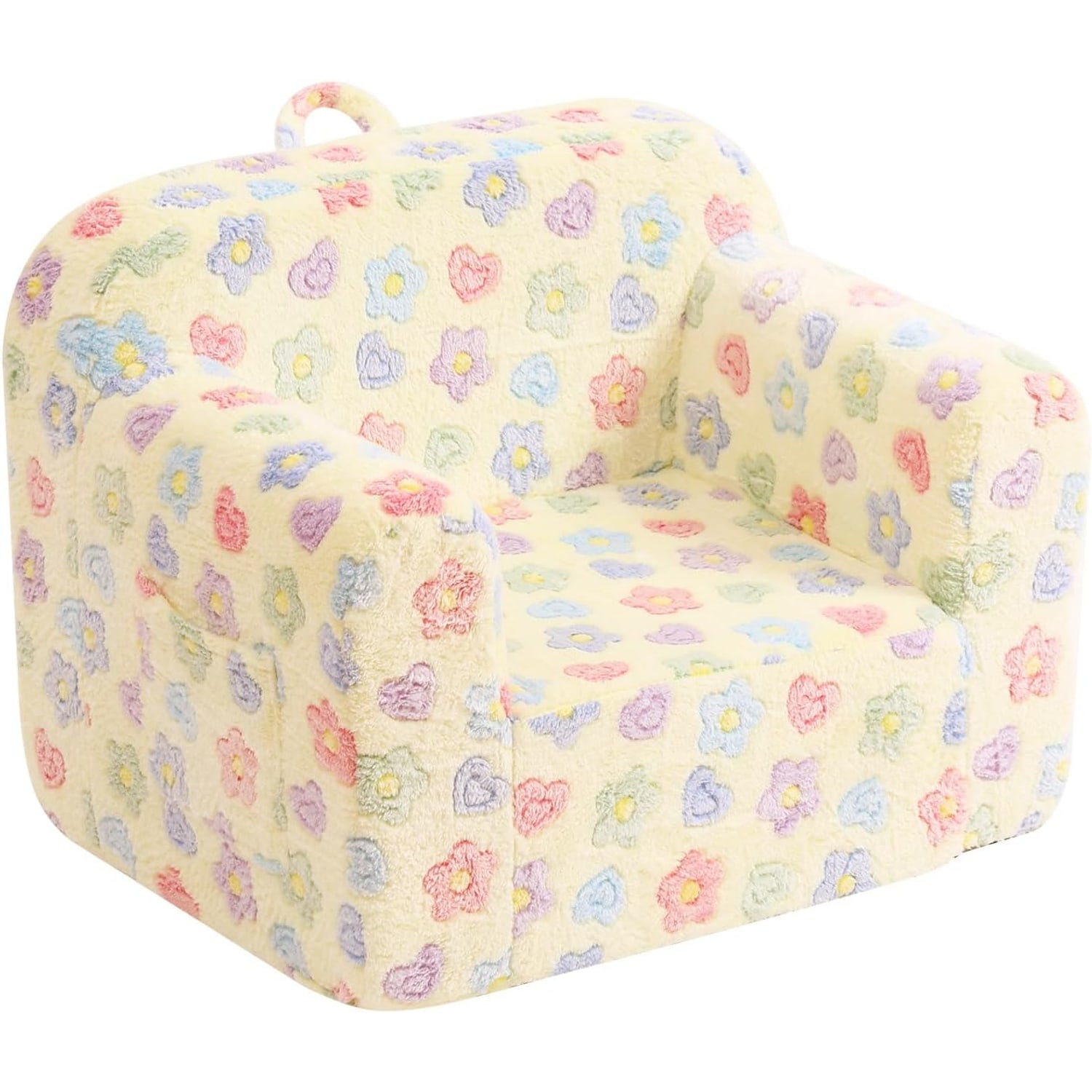
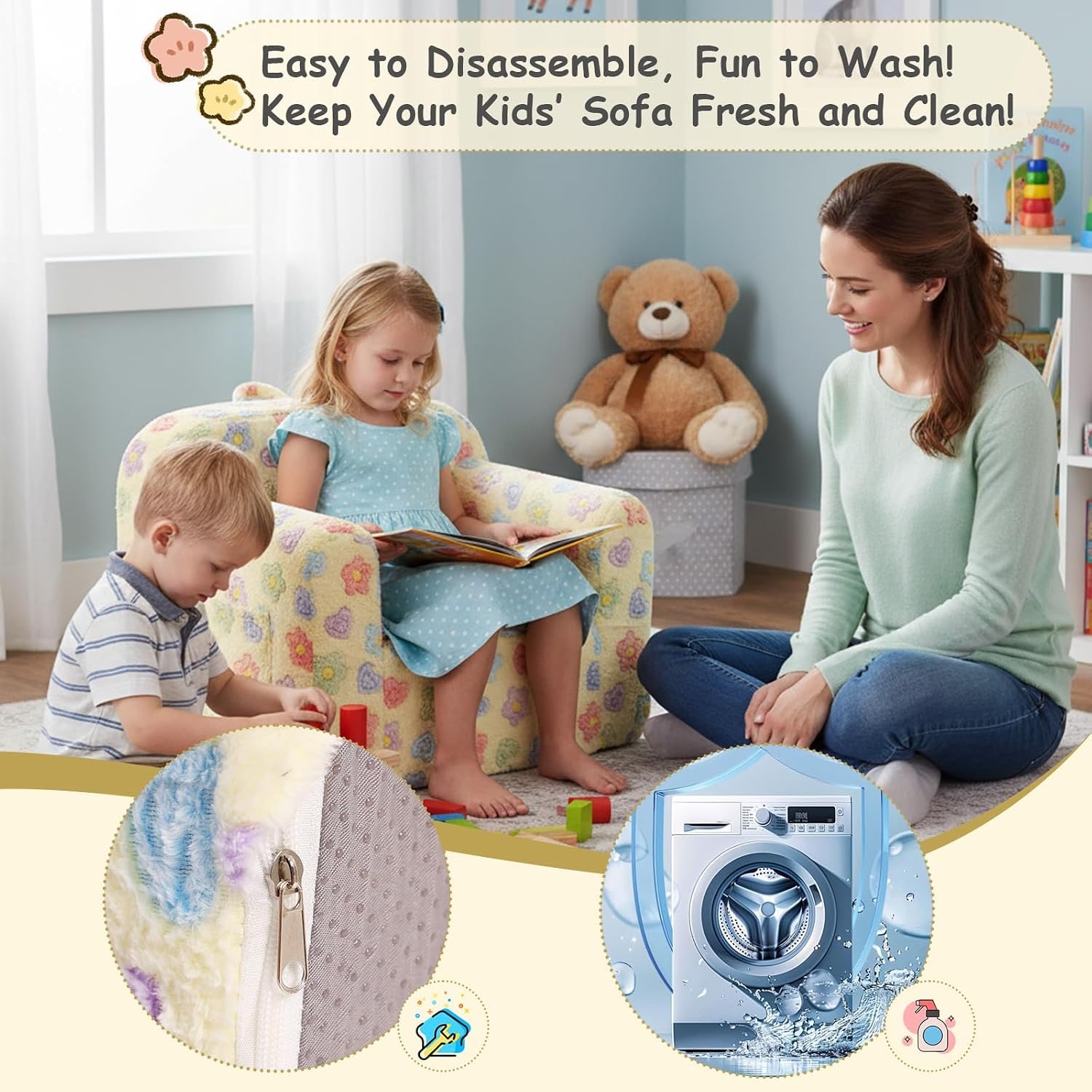
The cover is polyester in a white floral print, and it is removable and washable. Polyester is the sensible choice here because it takes a wash, it dries fast, and it does not hold onto stains the way some natural fibres do.
The maker's care instruction is wipe clean, and that is what you will do most of the time. Keep a cloth and some mild detergent handy. When something spills, blot it straight away rather than rubbing, because rubbing drives liquid down into the foam where it takes much longer to dry. A damp wipe and some air will handle juice, crumbs and most craft disasters.
For a proper reset, take the cover off and wash it. Let it dry fully before putting it back on, since damp foam in a closed cover is how smells start.
Two other habits worth building. Run the vacuum over the surface every so often to lift dust out of the fabric pile. And keep the chair out of a spot that gets hard direct sun all afternoon, because a white fabric with a print will fade unevenly if one side cops all the light. Turning it around occasionally handles this.
Who it suits and who it does not
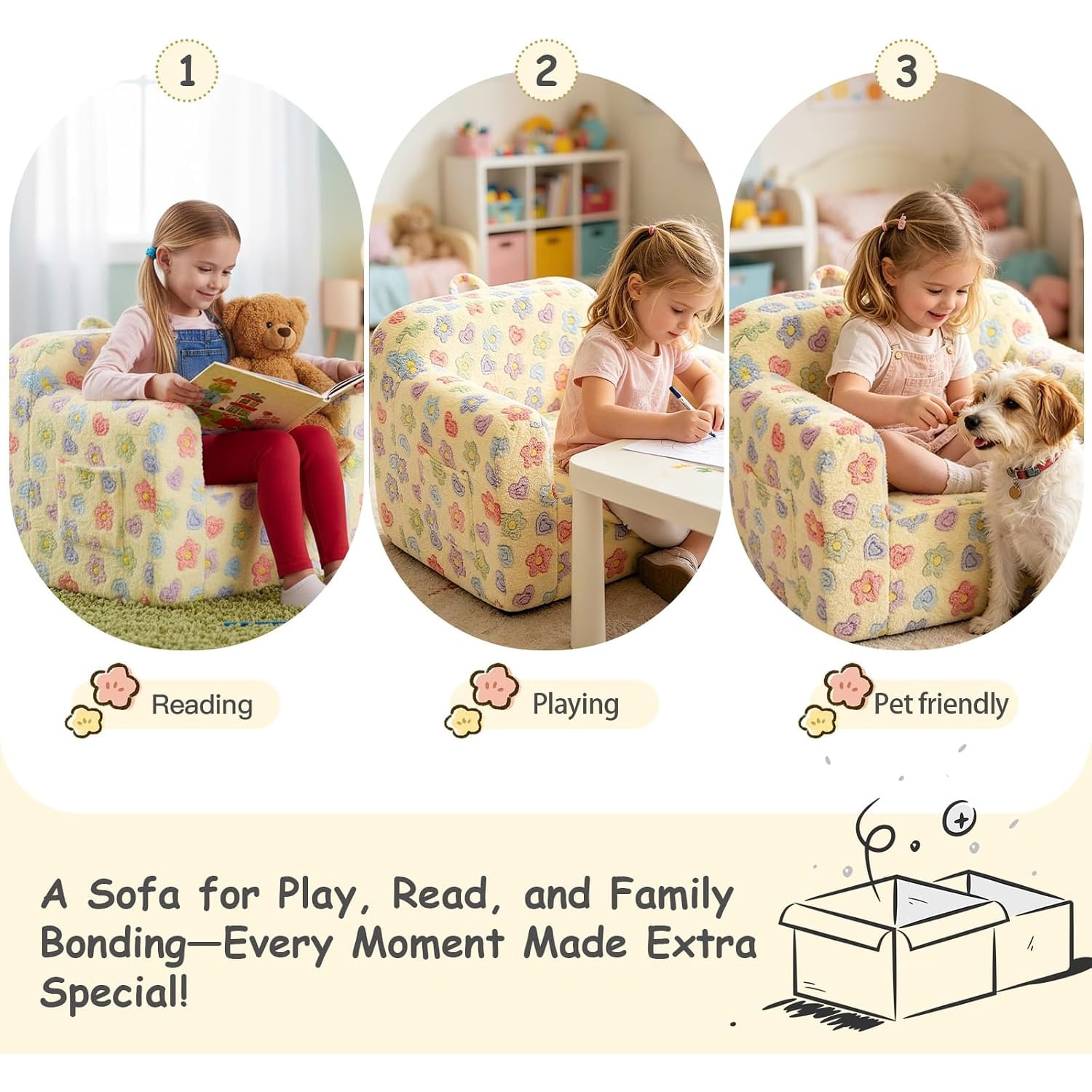
It suits a child who reads, who watches things, who plays on the floor and wants somewhere to retreat to, or who simply wants a piece of furniture that is theirs. It suits small rooms, because at 63.5 cm wide it does not dominate. It suits parents who do not want to build anything, since no assembly is required.
It does not suit outdoor use. It is listed for indoor only, and foam and rain are a bad combination. It does not fold out into a bed, since it is not extendable. It does not recline, since it has a single fixed position. And it is not a two-seater.
It sits happily on hard floors and on carpet. On very smooth timber or tile it may slide a bit when a child drops into it, which a small rug underneath solves.
The short version
You are buying a 2.5 kg, no-assembly, single-seat chair that is 45.7 by 63.5 by 52.1 cm, built from high density foam on a wooden frame, wrapped in a washable white floral polyester cover. It arrives compressed and takes a few days to reach full shape. It handles up to 58.97 kg. It lives indoors, on carpet or hard floor, and it goes wherever the child carries it.
Get the tape out, mark the floor, and check the width against your space. If 63.5 cm fits, the rest takes care of itself.