
The complete guide
How to Choose a Toy Storage Box with Lid That Actually Gets Used
The real problem is not the toys
Walk into any kids' room at six in the evening and you will see the same thing. Blocks near the door, soft toys on the bed, a couple of books face down on the rug. It looks like a toy problem. It is usually a storage problem.
Toys end up on the floor when putting them away takes too many steps. If the lid has a latch, if the box lives on a high shelf, if everything has to be sorted into the right bin first, the tidy-up gets skipped. The fix is boring and effective. One big container, one wide opening, a lid that comes off in a second, and somewhere obvious to keep it.
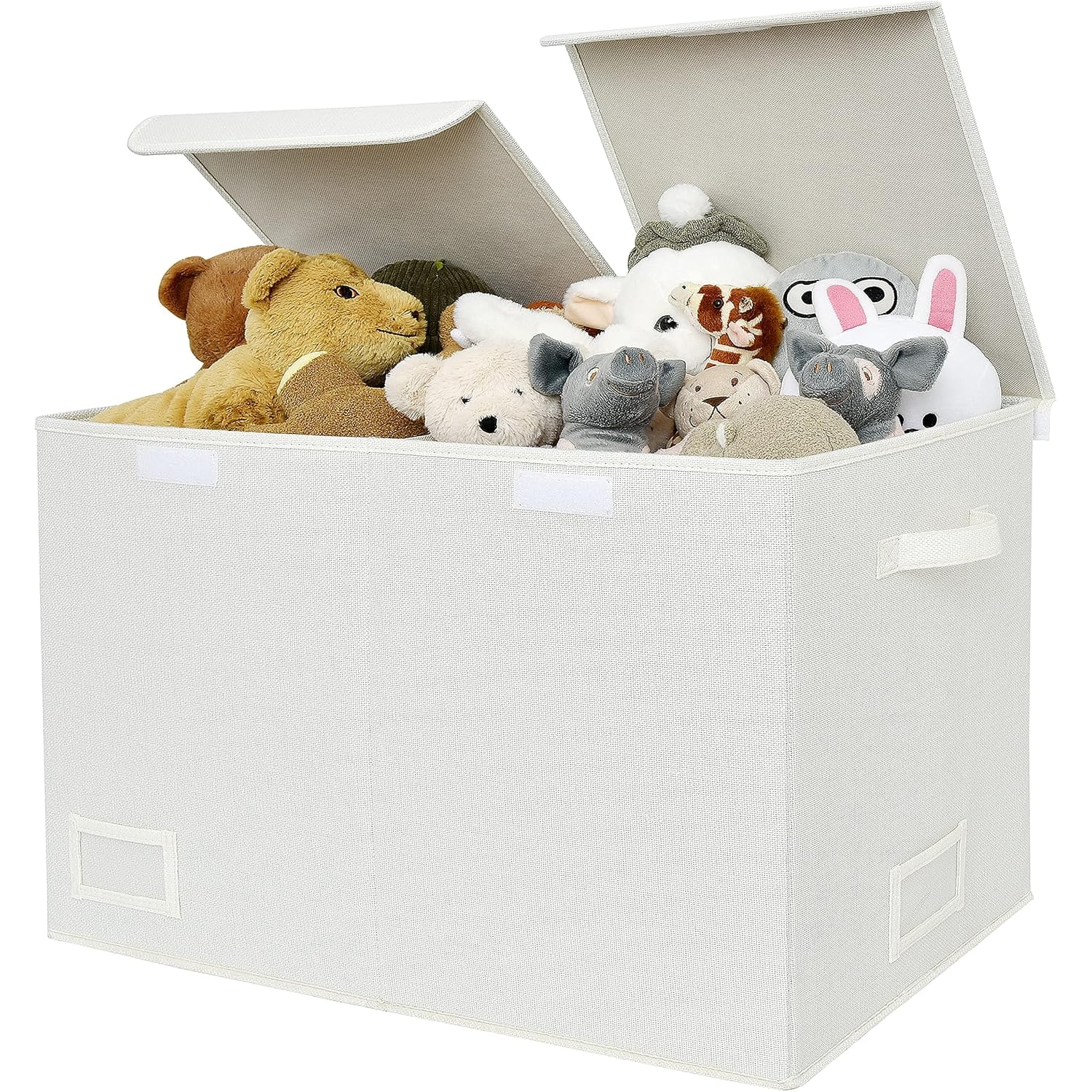
That is the whole thinking behind a large toy box like this one. It holds 80 litres, the lid lifts straight off, and the opening runs the full 62.5 cm length so nothing has to be threaded in at an angle.
How this box works
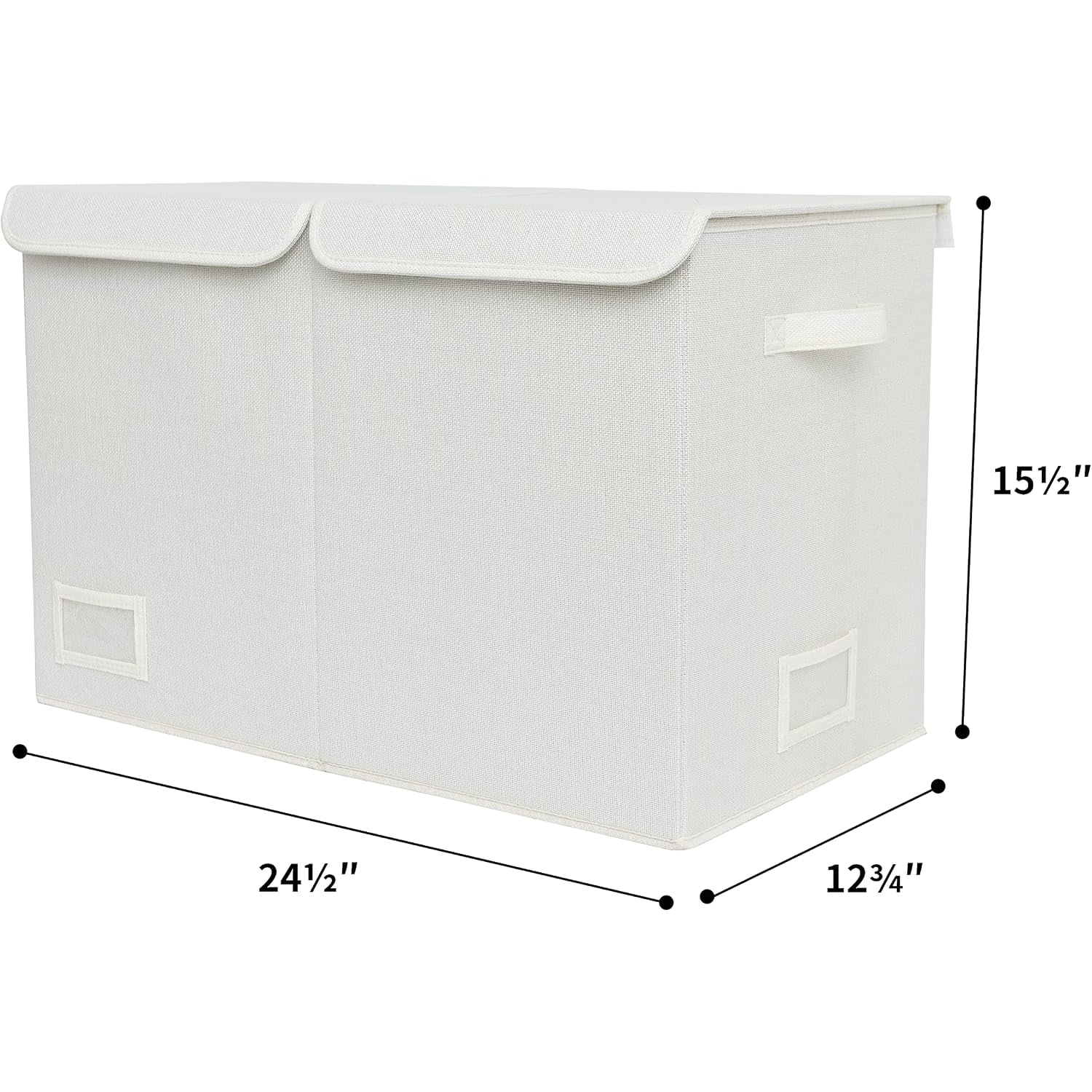
The shape is a plain rectangle, 62.5 cm long, 32.5 cm wide and 39.5 cm tall. Narrow enough to sit flat against a wall, long enough to take items lying down, deep enough that a pile of soft toys genuinely disappears instead of heaping over the rim.
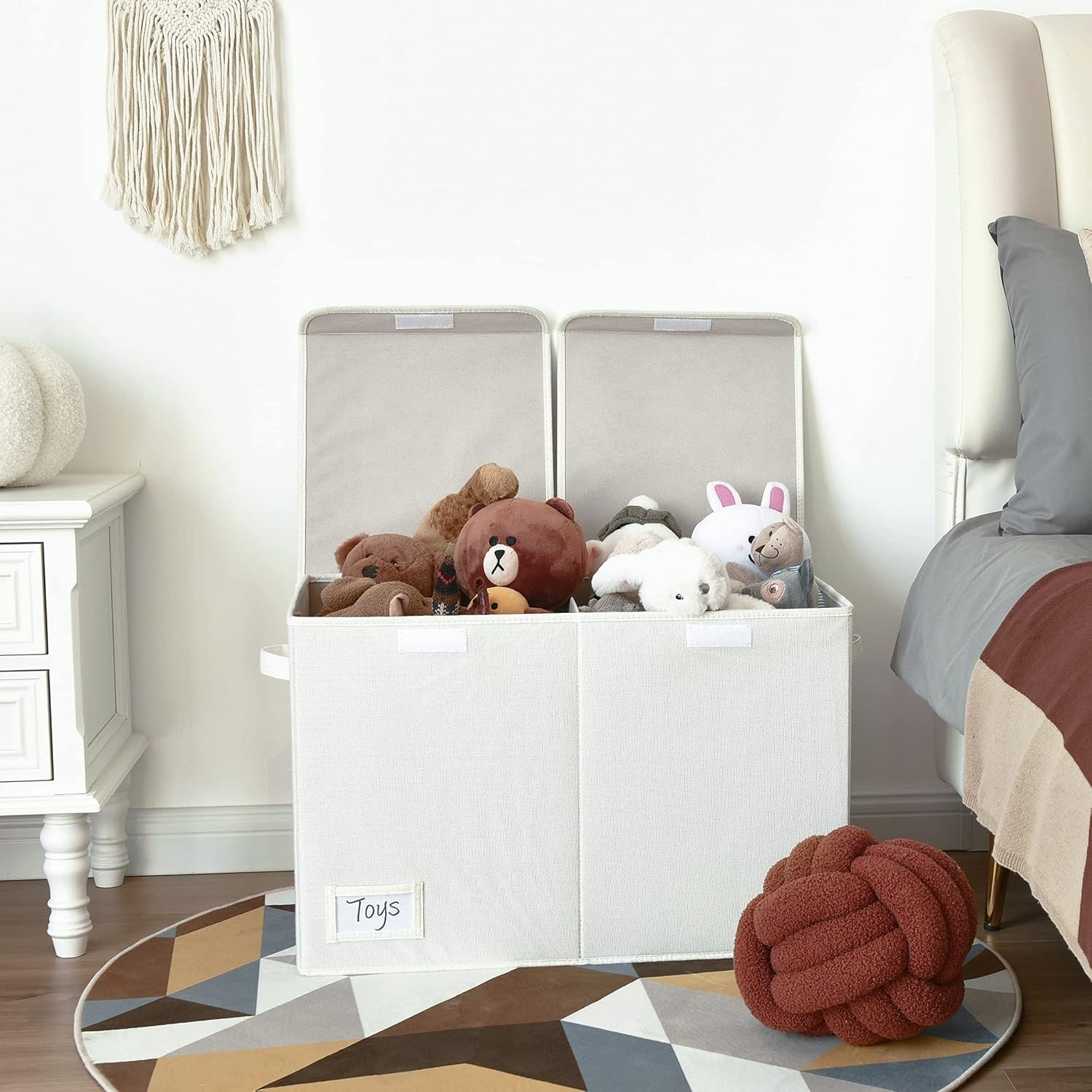
The lid is a flip top that lifts clean off. There is no hinge to snap and no catch to line up. A child lifts it, drops the toys in, and puts it back. That matters more than it sounds. Lids with clips get left off, and a box with no lid is just a visible pile in a different shape.
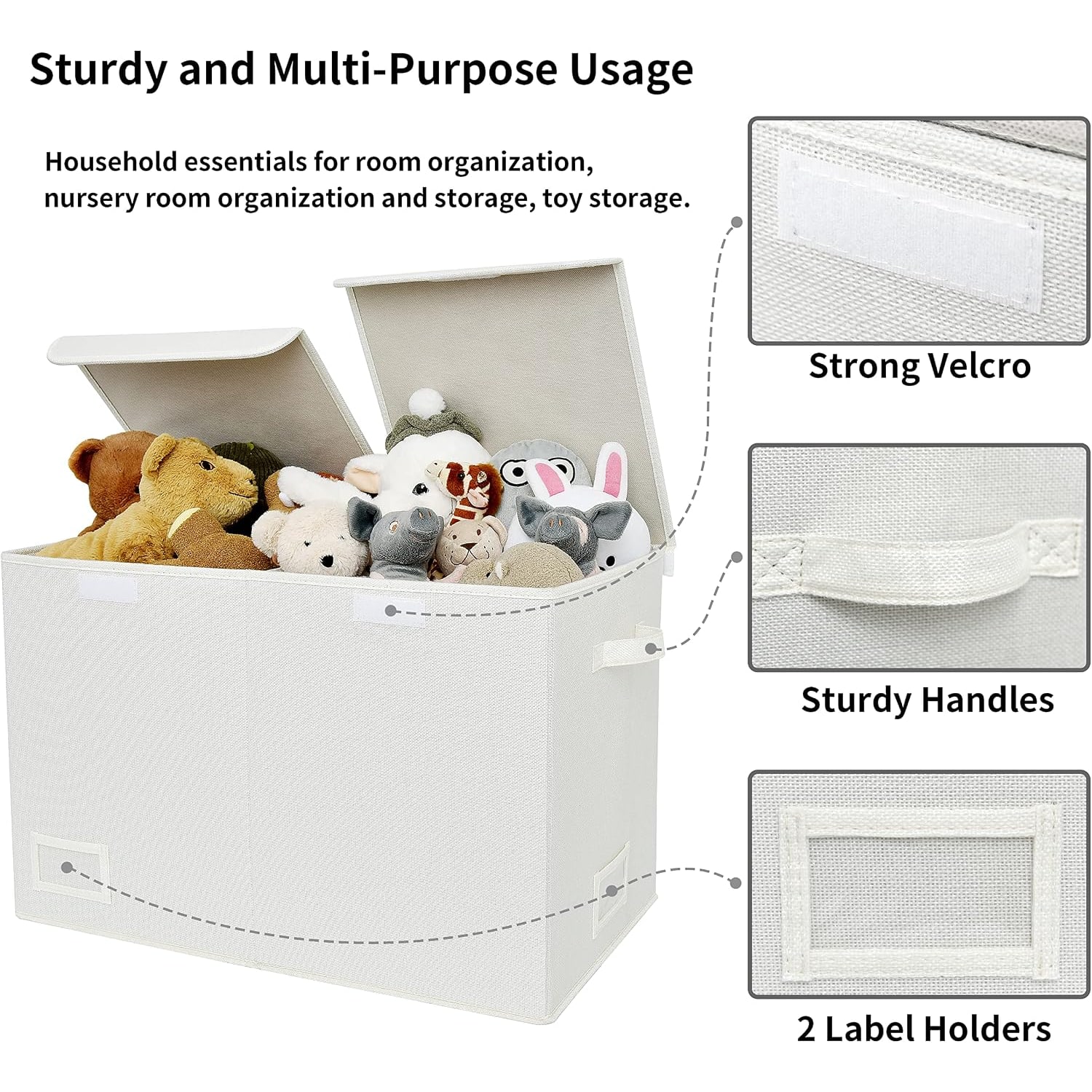
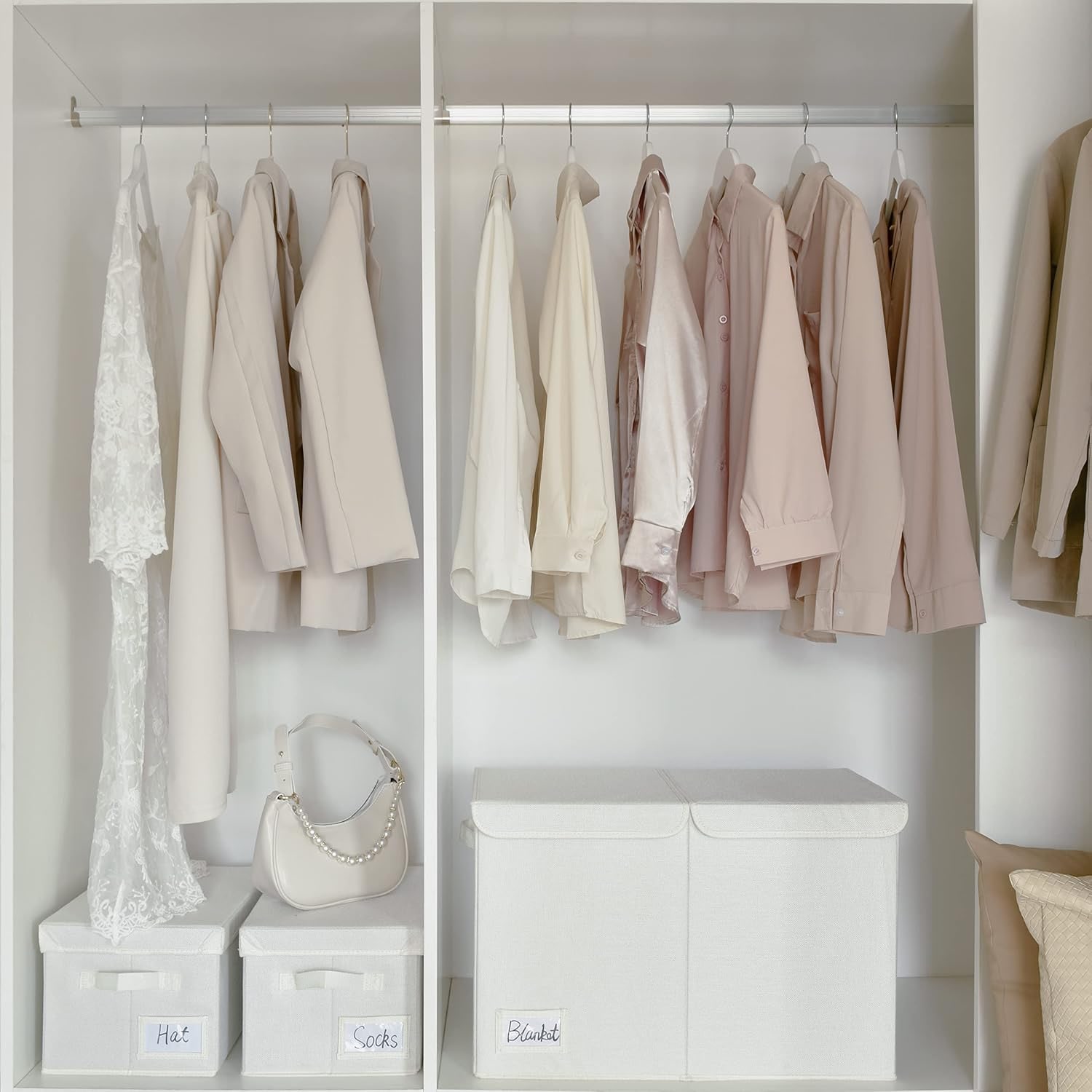
Inside, a removable divider splits the space into two compartments. Keep it in and you have two sorting bays. Pull it out and you have one open 80 litre bay for bulkier things. Two label holders on the front let you mark each side, which stops the usual game of opening every box to find the one thing you want.
The body is fabric with two reinforced handles. At 1.4 kg empty the box barely registers, so what you carry is the contents. When it is empty, it folds flat.
Who it suits
This box earns its place in a few situations.
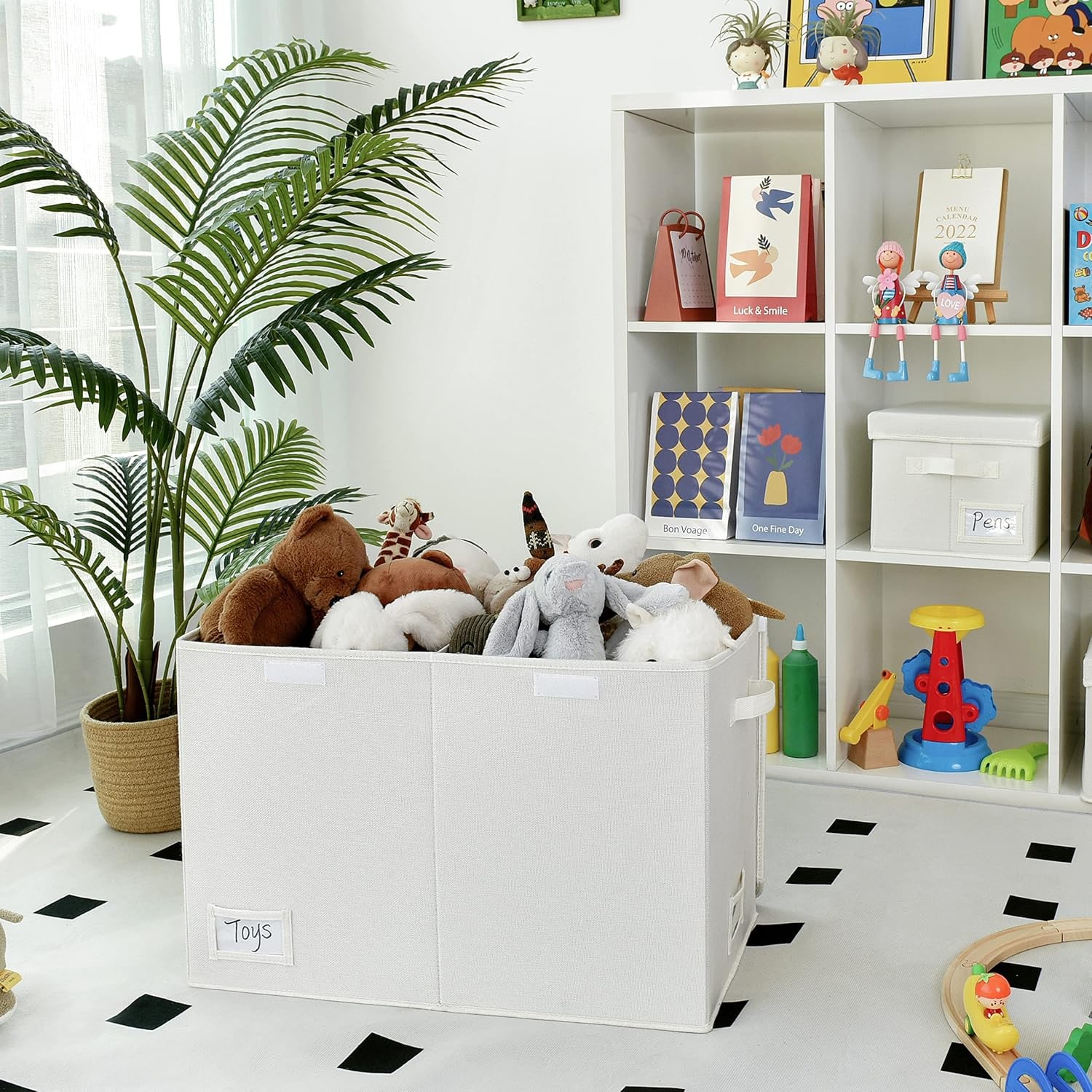
If you have one child with a growing collection and no dedicated toy furniture, a single large capacity storage box does most of the work a toy chest would, for less money and less floor space. If you have a playroom shared by siblings, two or three matching boxes with labels beat one giant bin, because kids can find their own things without emptying the lot.
It also works beyond toys. The specifications list arts and crafts as a recommended use, and the same dimensions suit spare bedding, seasonal clothes, or the pile of board games that never fit the shelf properly. The divider makes it flexible rather than single-purpose.
Where it is less suited is anywhere damp. It is not water resistant, so a laundry, a bathroom, a garage with a leaky corner or a covered outdoor area are all bad choices. Keep it indoors and dry.
How to choose the right size and shape
Start with the space, not the stuff. Measure the gap where the box will live, then add clearance above it for lifting the lid. A box crammed under a low shelf cannot be opened properly, and a box that cannot be opened properly stops being used.
Next, think about height. At 39.5 cm this box is tall enough to hold a lot, but a very young child will be reaching down into it. If that bothers you, keep it on the floor rather than raised, so the rim sits lower relative to them.
Then think about weight when full. Fabric boxes are light empty but 80 litres of books is heavy. If the box needs to move between rooms regularly, store the heavy things in it and the light things elsewhere, or spread the load across two boxes. The reinforced handles help, but physics still applies.
Finally, consider how many you need. One box tidies a corner. Two or three boxes with labels create a system, and a system is what actually keeps a room tidy over months rather than days.
Fabric or rigid plastic
This comes up a lot, so it is worth being straight about it.
A rigid plastic box wins on three counts. It stacks safely, it wipes clean after a juice incident, and it keeps its shape no matter how badly you load it. If your storage has to go up a wall in a tower, buy rigid.
A fabric box like this one wins on different counts. It is lighter, it is quieter when the lid goes on and off, it looks softer in a bedroom, and it folds flat when you do not need it. The white pearl finish and minimalist style sit back in a room instead of looking like garage shelving.
Neither is better overall. Pick for the job. Many homes end up with both, rigid boxes in the cupboard and fabric boxes out in the open.
Setting it up so it stays used
A few things make the difference between a box that works and a box that becomes a lid-less laundry basket within a month.
Put it where the mess happens. If toys always end up by the window, the box goes by the window, not neatly in a cupboard across the room.
Use the labels. Even a child who cannot read yet will recognise a picture or a colour. Label the two compartments separately if you are using the divider.
Do not over-sort. Two categories per box is plenty. The moment a tidy-up requires six decisions, it stops happening.
Leave a bit of headroom. A box filled past the rim cannot take its lid, and a lid that will not sit gets left on the floor.
Care and keeping it looking good
Cleaning is simple. Wipe the fabric with a damp cloth and a little mild detergent, then let it dry completely before you refill it. Do not soak it, do not put it through a washing machine, and do not tumble dry it. Fabric that is put away damp will smell, and nothing you store in it afterwards will smell much better.
If something spills inside, empty the box and deal with it straight away. Because it is not water resistant, moisture has nowhere to go but into the fabric.
When you are not using it, empty it and fold it flat. Stored flat behind a wardrobe or under a bed, it takes up almost nothing and comes back out in good shape.
Check the handles now and then if the box gets carried often. Reinforced stitching lasts, but any handle will wear faster if it is routinely used to drag a very heavy load across carpet. Lift rather than drag where you can.
The short version
If your main problem is toys on the floor and no obvious place to put them, this is a sensible answer. Eighty litres, a lift-off lid, two compartments you can turn into one, handles that make it portable, and a fold-flat body for when you do not need it.
Check your measurements against 62.5 x 32.5 x 39.5 cm, remember to leave room above for the lid, and keep it somewhere dry. Delivery is from Australian warehouses in 3 to 7 working days, and returns are open for 14 days from delivery if the box is unused and in its original packaging.
Buy one if you want a corner tidied. Buy two or three with labels if you want a room that stays tidy.