
The complete guide
How to Choose a Chinese Mahjong Set
The problem with most mahjong sets
Plenty of people buy a mahjong set, play twice, and then leave it in a cupboard. Usually it is not the game's fault. It is the set. Tiles too small to read comfortably, a flimsy box that bursts the first time it is carried anywhere, a printed face that scuffs after a month, or a mix of pieces that turns out to be wrong for the rules your family actually plays.
Mahjong is a tactile game. You hold the tiles, you turn them, you stack them into walls. If they feel cheap, the whole evening feels cheap. If you cannot read a tile from the other side of the table without leaning in, play slows down and somebody gets frustrated. Getting the set right matters more than it does with, say, a pack of cards.
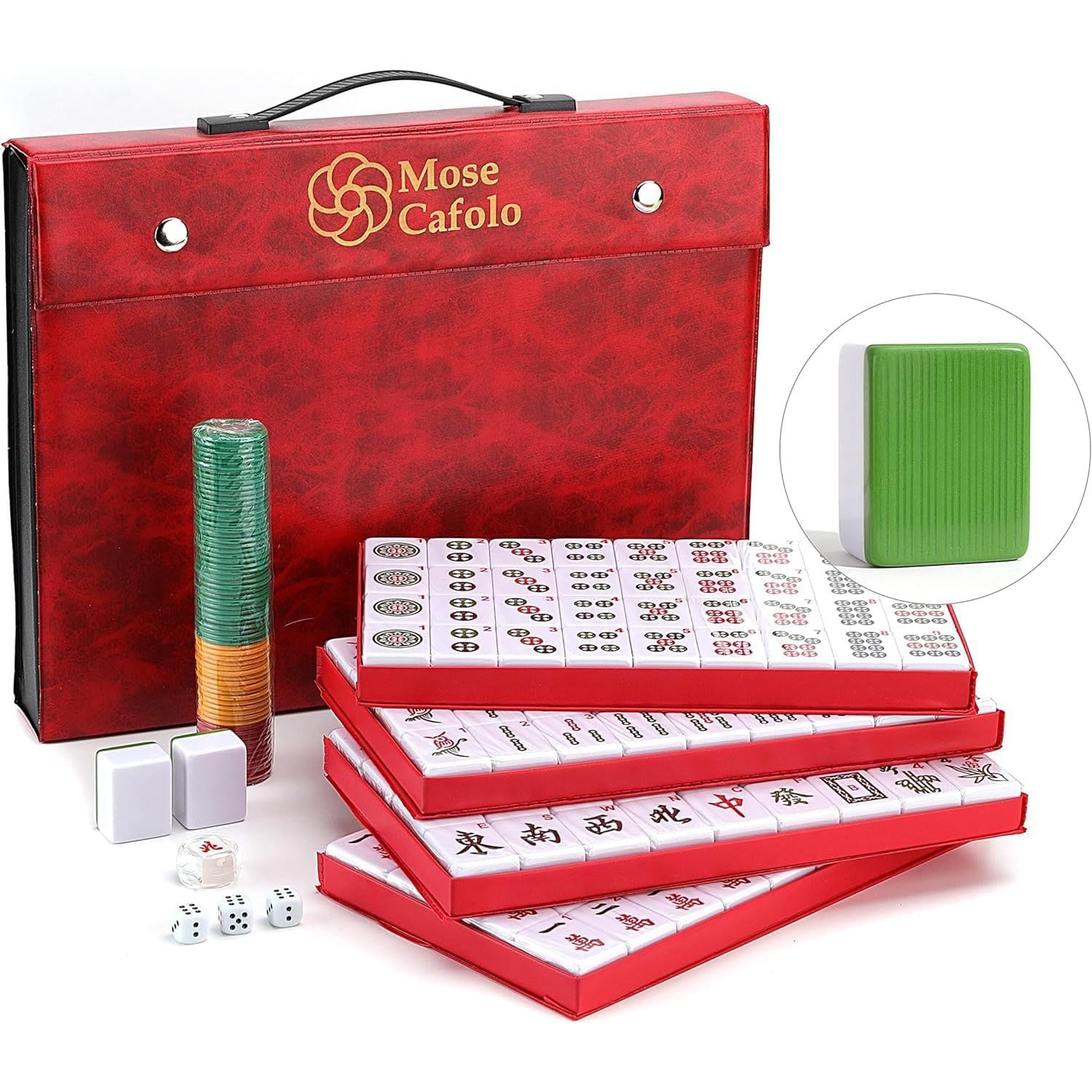
This guide walks through what to look at before you buy, with this particular 144 tile mahjong set as the example.
What a complete Chinese set contains
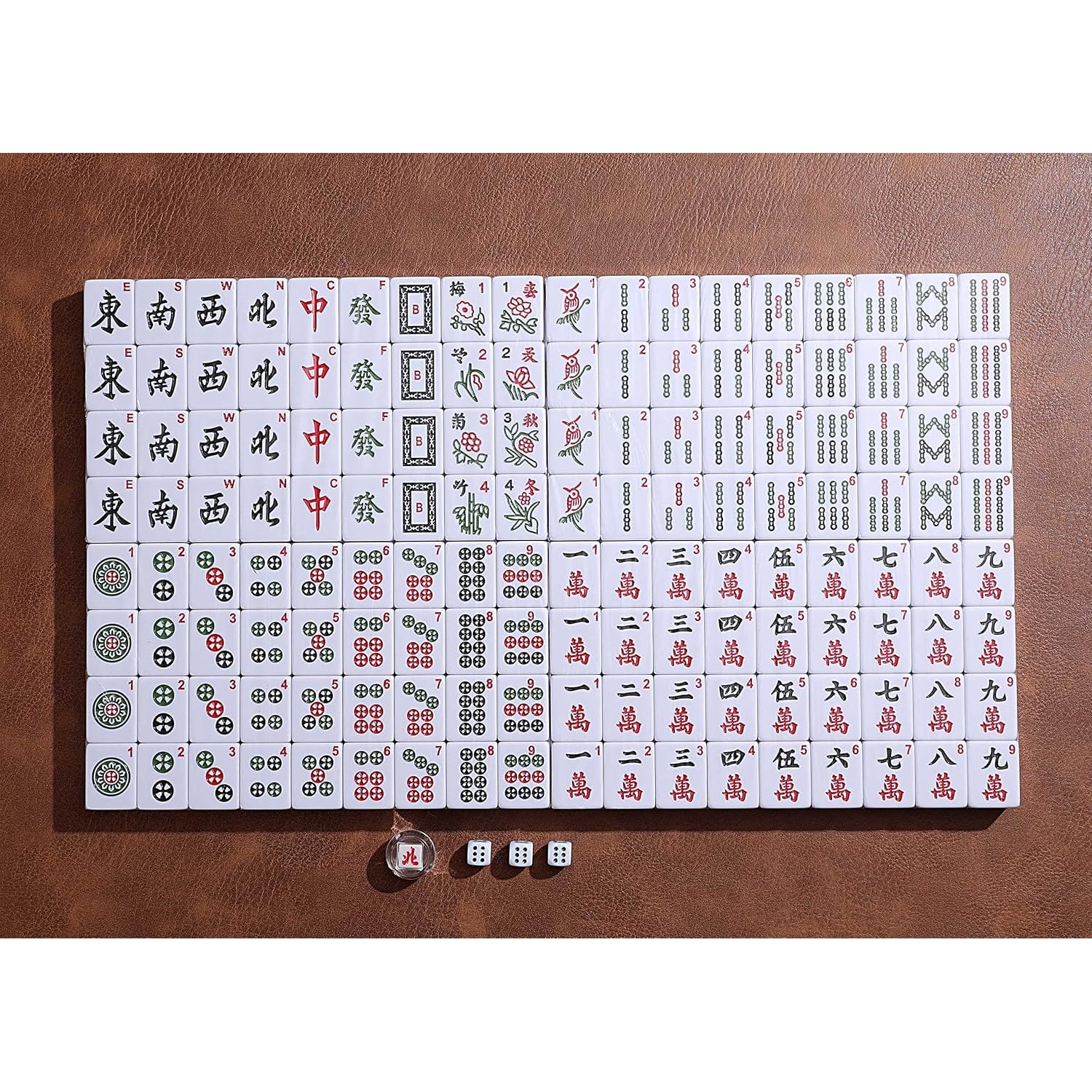
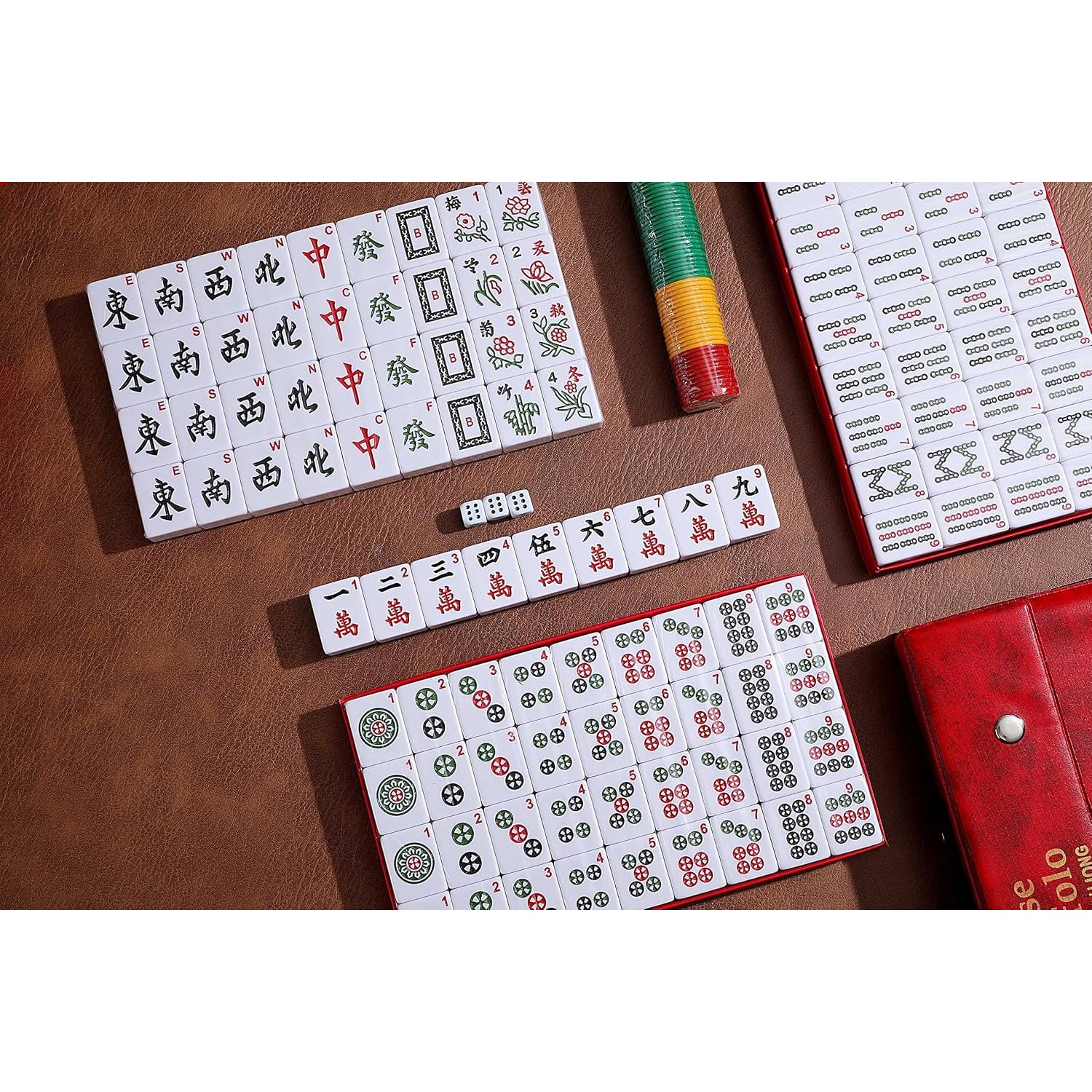
The number to remember is 144. A full Chinese set breaks down into 36 Circles, 36 Bamboos and 36 Characters, which are the three suits, each numbered one through nine in four copies. Then there are the honour tiles, 12 Dragons in red, green and white, and 16 Winds for north, east, south and west. Finally come 8 Flowers and Seasons, which score bonuses rather than forming part of a hand.
This set has all of that, plus 2 spare tiles. The spares are quietly one of the most useful things in the box. Mahjong tiles get dropped, kicked under sofas and occasionally carried off by a pet. Without spares, one missing tile makes the set unplayable. With them, you carry on.
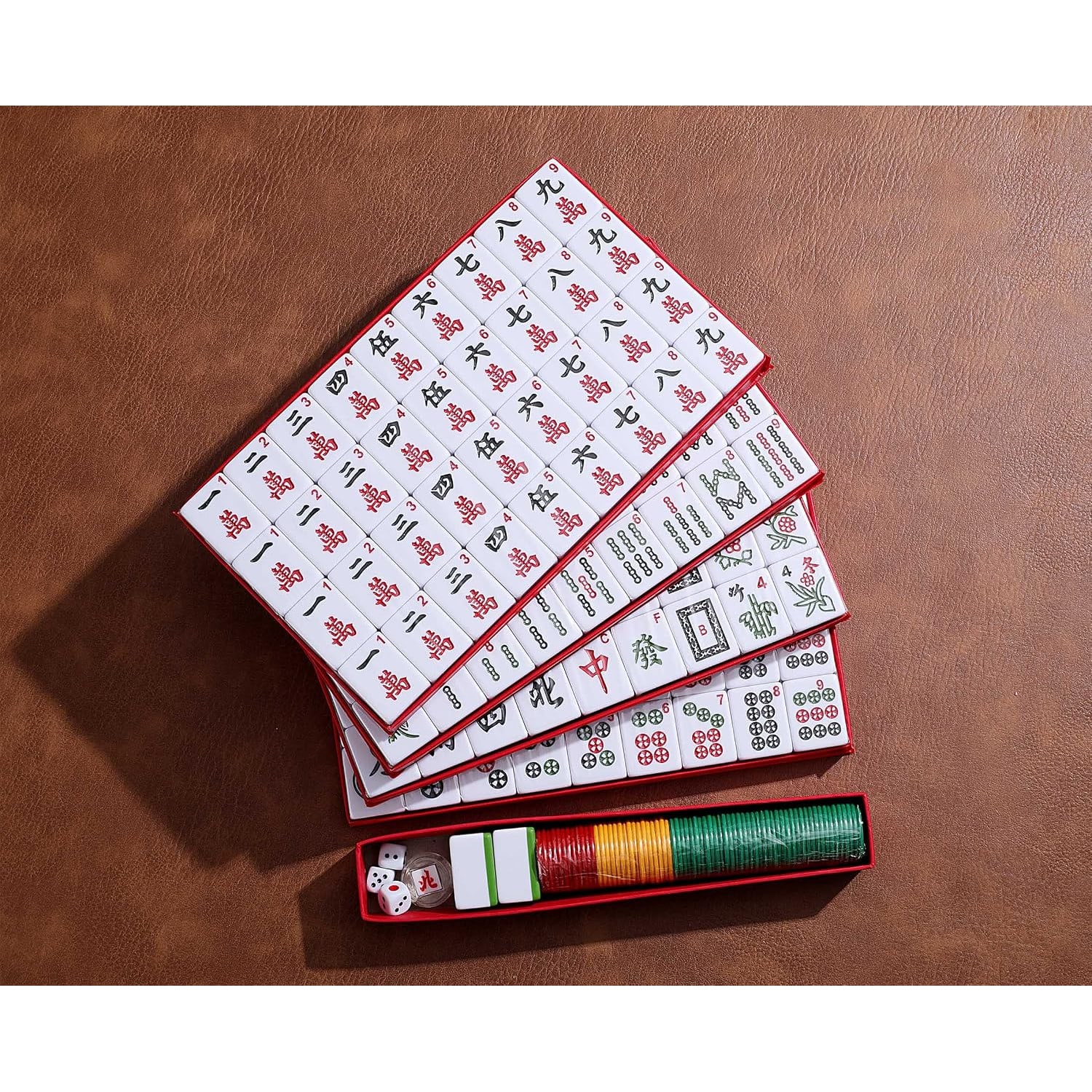
Alongside the tiles you get 3 dice for deciding where to break the wall, a bettor and wind indicator to track the dealer and the prevailing wind, and a set of coloured chips for scoring. English instructions are included for the order of play.
Chinese rules, not American
This is the single most important thing to check before you order any set, and it catches people out regularly.
There is no one global mahjong. Chinese rules, Hong Kong scoring, Japanese Riichi, Taiwanese sixteen-tile and American mahjong all share tiles and a basic shape but diverge sharply in the details. The American version uses Joker tiles and a yearly card of valid hands, and players nearly always use racks to hold their tiles.
This set is for Chinese rules. It has no jokers, no racks and no pusher. If your group learned the game from a relative in Hong Kong or from the standard Chinese rules, that is exactly what you want and the absence of jokers is correct. If you learned from an American mahjong league card, this is the wrong set and you will be short several pieces. Ask before you buy if you are gifting it.
Why tile size and material change the game
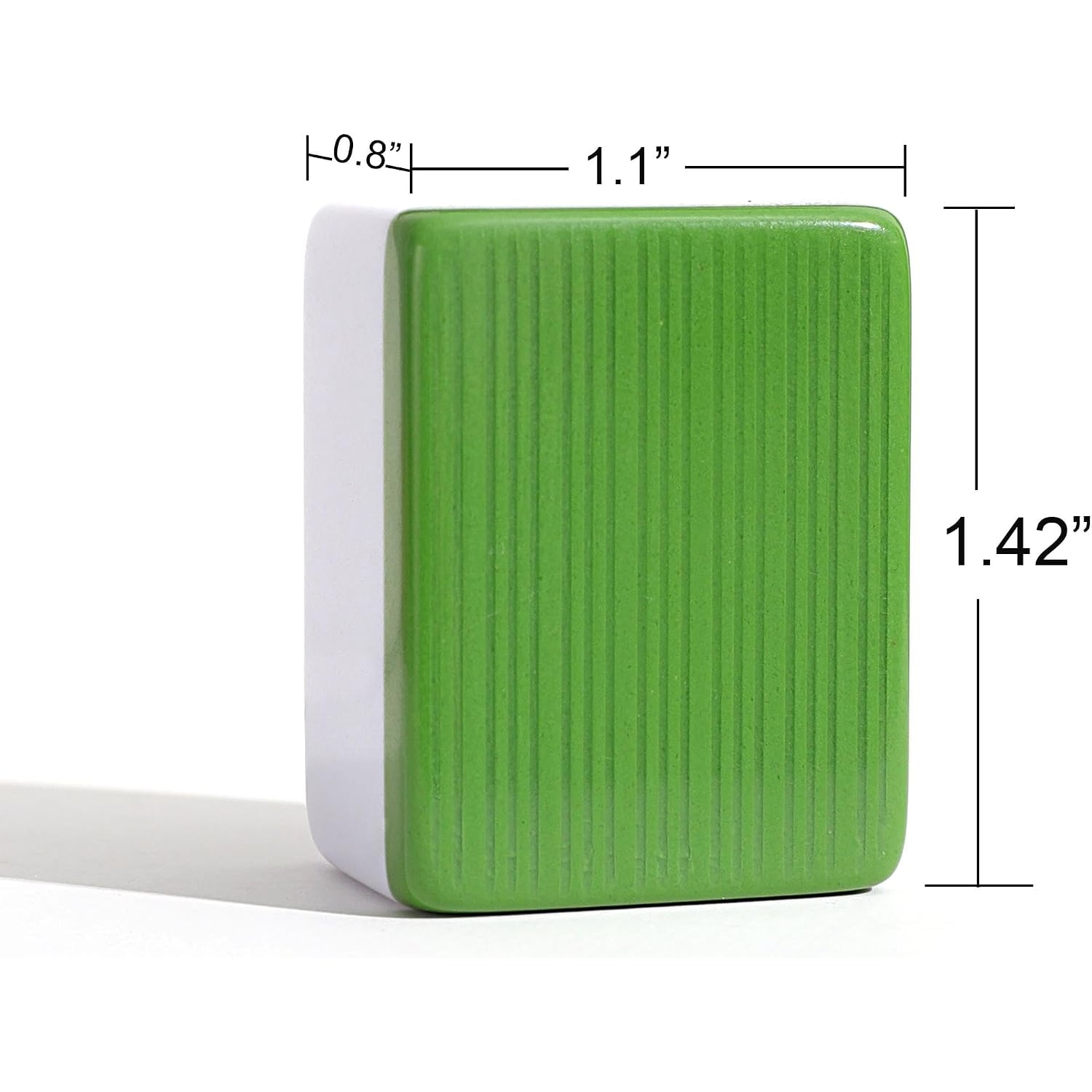
Tile size sounds like a small detail until you play with a set that gets it wrong. Small tiles are fiddly to stand upright, harder to shuffle in a group and genuinely difficult to read in dim light. Larger tiles sit more steadily, turn more easily in the hand and read clearly from across a table.
This set uses tiles described as larger than standard, in the size players who take the game seriously tend to prefer. That is one of the main reasons it is pitched as a professional set rather than a casual one.
Material matters just as much. The tiles here are melamine, a dense plastic that takes engraving well and feels solid when it clicks down on the table. That sound and weight are part of why mahjong is satisfying to play. Lighter plastics tend to rattle rather than click.
Engraving is the other half of it. The numerals and characters on these tiles are cut into the surface rather than printed over the top. Printed faces look fine on day one and start to wear at the edges after repeated handling. Engraved faces keep their definition. Combined with both Arabic numerals and Chinese characters on every tile, that means a group where some read the script and some do not can all keep up. For a mixed-ability table, that is a real advantage, and it is why this works as a best mahjong set with english instructions for players starting out.
Who it suits
A set like this fits a few different households well.
If you already play regularly and have been making do with a travel set, the step up in tile size and feel is noticeable from the first hand. If you are learning, the dual markings and the printed order of play remove a lot of early confusion. If you host, having everything in one closed case means setup takes a minute rather than ten.
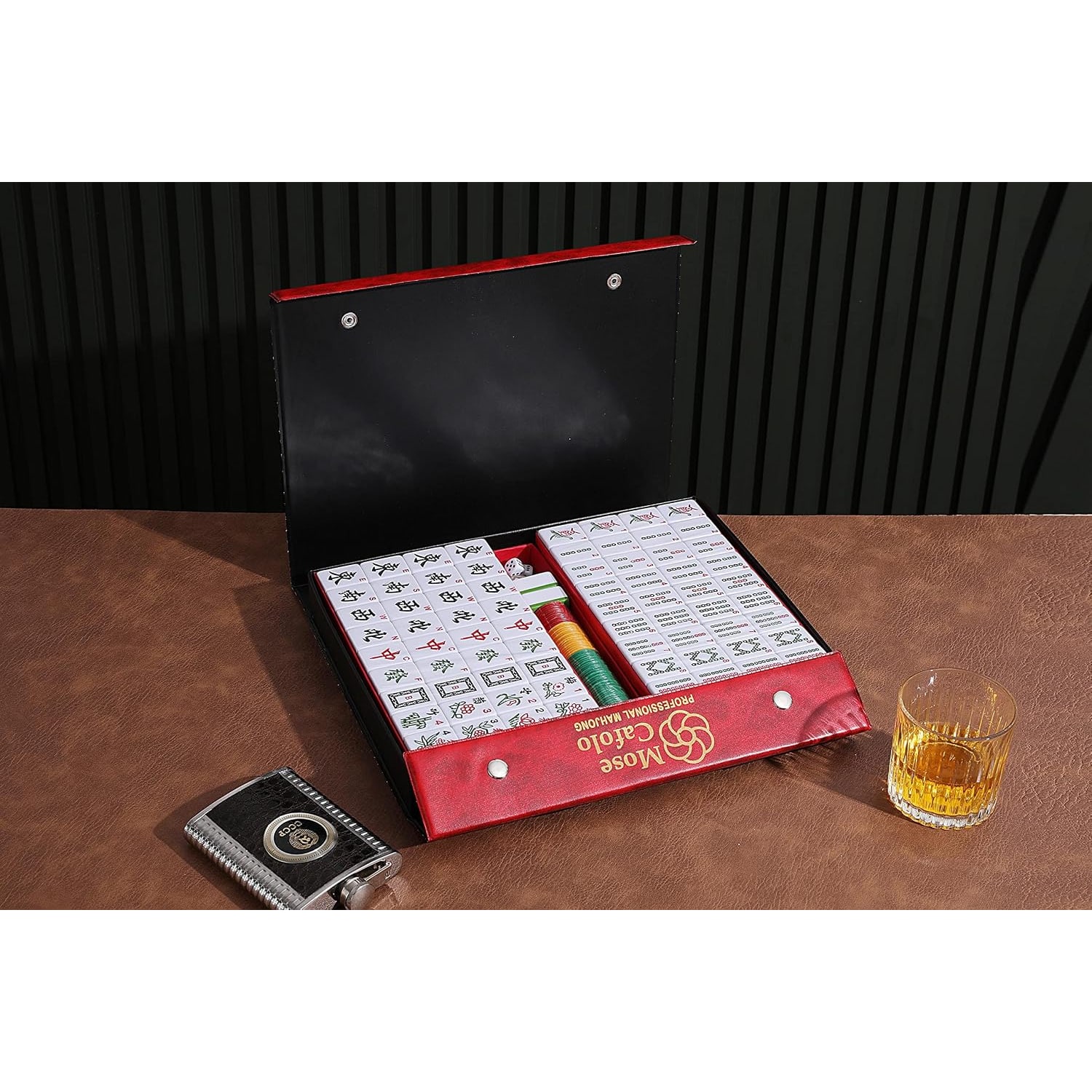
It also suits people who play away from home. The trays hold the tiles in order and the case closes over the top, so the set can travel to a friend's place or go away for a weekend without tiles ending up loose in a bag. At 5.44 kg it is not something you would carry for an hour, but it moves easily by car.
Who it does not suit: anyone who needs jokers and racks, and anyone looking for a pocket-sized game. The pack measures 35.6 x 33 x 7.6 cm, which is a proper board-game footprint rather than a slim travel pouch.
A note on children
The set contains small parts and is not for children under 3. For older children, mahjong is one of the better classic tile games to play as a family, because the basic mechanic of collecting sets and a pair is easy to grasp. Scoring is where it gets complex, and most families start with simple scoring and add the detail later. An adult explaining hands for the first few rounds makes a big difference.
Setting up for the first time
Open the case and lay the trays out so everyone can reach. Flip all the tiles face down and shuffle them with your hands flat on the table, which is part of the ritual and genuinely mixes them better than any neat method.
Each player then builds a wall in front of them. Roll the dice to decide where to break it, deal out the hands and set the wind indicator for the dealer. If you are working from the instructions, keep them beside the table for the first game and you will rarely need them after that.
Agree your scoring and chip values before the first hand, not during it. This is where most new groups stall. Pick a simple system, write it down, and refine it once everyone is comfortable.
Looking after it
Mahjong sets last for decades when they are treated reasonably. Wipe the tiles with a soft, slightly damp cloth and dry them before putting them away. Skip solvents and scouring pads, which can dull the faces.
Store the set in its case rather than loose in a drawer, and keep it out of long stretches of direct sunlight and away from radiators. Count tiles back into the trays at the end of each session. It takes thirty seconds and it is how you avoid discovering a missing tile three months later when guests are already sitting down.
The short version
This is a complete Chinese set, 144 tiles plus 2 spares, with dice, a wind indicator and chips, all stored in trays inside a red carry case. The tiles are melamine, engraved with both Arabic numerals and Chinese characters, and sized larger than average so they are easy to read and handle. It plays four and follows Chinese rules only, with no jokers, racks or pusher.
If that matches how your group plays, it is a set you can use for years. If your table needs jokers, look elsewhere. Check that one point and the rest takes care of itself.