

The complete guide
Choosing a Four in a Row Game, A Practical Buyer's Guide
The problem with most games in the cupboard
Open the games cupboard in almost any house and you will find the same thing. Big boxes. Half the pieces missing. A rulebook nobody has read since 2016. Games that need four people, forty minutes of setup and a table you have cleared specially.
Meanwhile the actual gaps in a day are small. Twenty minutes before dinner. A ferry crossing. A kid who has finished their homework and is now orbiting the kitchen. Those gaps need a game that opens fast, explains itself in one sentence and finishes before anyone loses interest.
That is the slot a four in a row game fills. Two players, one grid, drop a disc, get four in a line. You can teach it in thirty seconds and still be learning new tricks after a hundred rounds.
How the game actually works
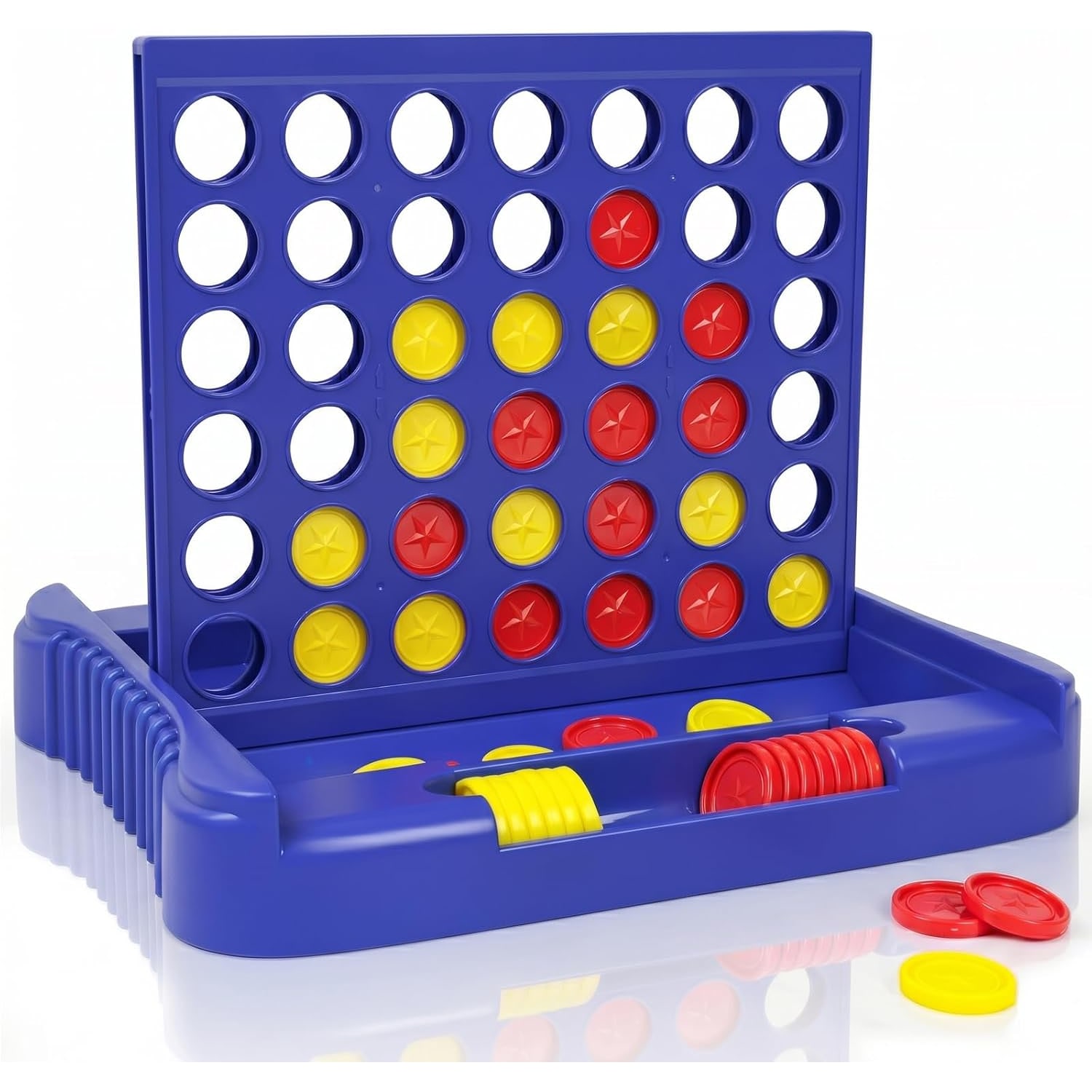
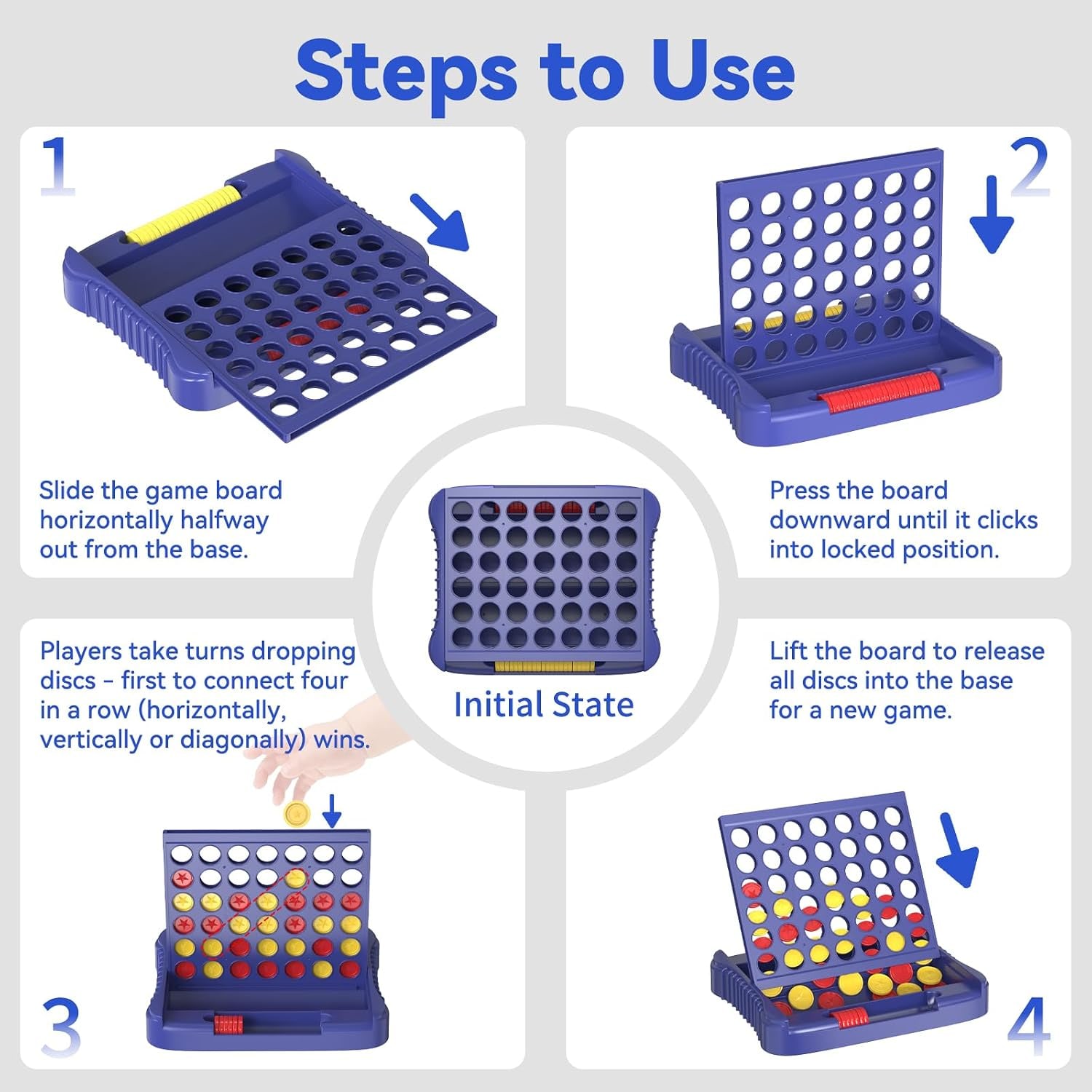
The grid stands upright with open columns running down through it. Each player has their own colour of disc. On your turn you pick a column and drop a disc in the top. It falls to the lowest free space in that column. That falling part is the whole game, really. You do not get to place a disc wherever you like, you can only control which column it goes into, and gravity decides the rest.
You win by forming an unbroken line of four of your own discs. Across, down, or on a diagonal. The diagonals are where most beginners get caught, because they are the hardest to spot while you are busy watching the obvious horizontal threats.
This set includes one grid with a tray, 42 discs and 6 spare discs. The tray matters. It means clearing the board between rounds takes a moment rather than a minute of fishing pieces out of slots, and rematches happen because nobody loses momentum.
If neither player manages four in a row and the grid fills up, it is a draw. Between two players who both know what they are doing, draws come up reasonably often, which tells you something about how balanced the format is.
Who it suits
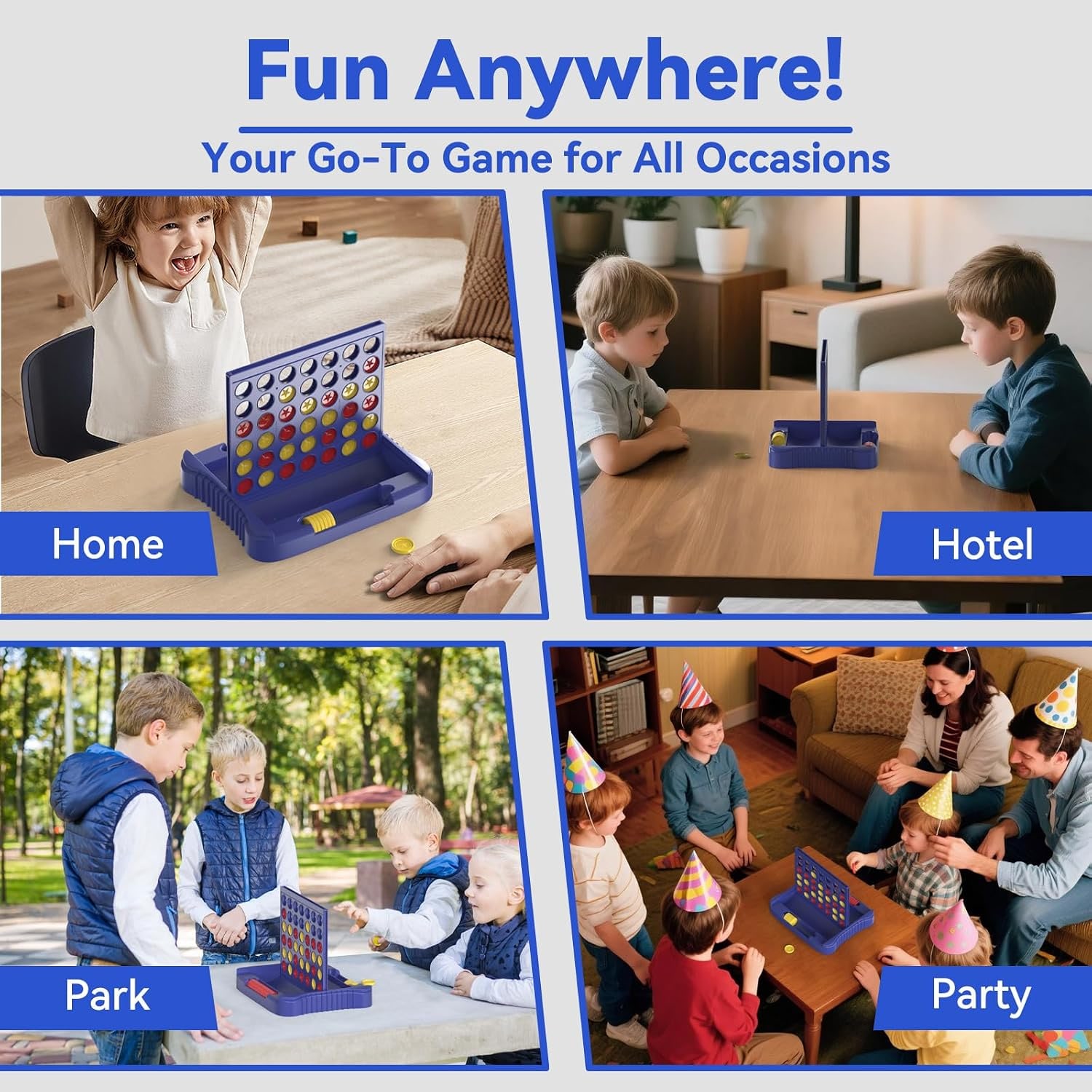
The honest answer is almost anyone who can sit still for five minutes. This store sells for ages 3 and up, and the discs are small parts, so it is not for children under 3.
Younger players usually start by trying to make their own line and ignoring what the other person is doing. That phase lasts a few games. Then something clicks and they start blocking, and the game becomes genuinely competitive. Watching that switch happen is one of the better things about keeping a set like this around.
For adults, it is a different experience. Two people who both understand column control and double threats will play slowly and carefully. There is a reason it holds up as a best strategy game for kids and adults alike, the rules do not change, the depth just reveals itself gradually.
It also suits situations where you need something quiet and self-contained. Hospital waiting rooms. Long flights. A caravan where the people in the next bay are already asleep. No batteries, no sound effects, no screen glare.
Size, weight and portability
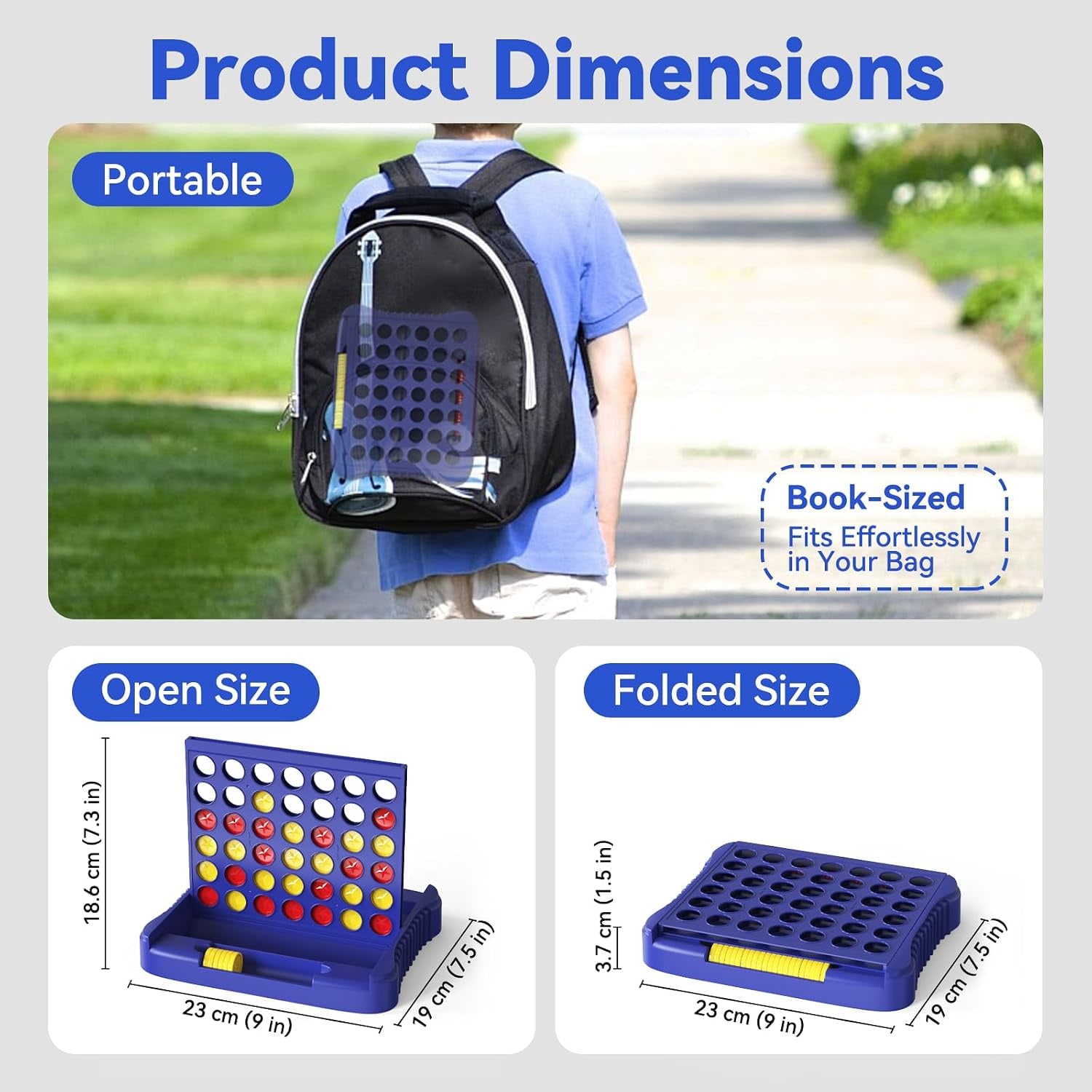
The folded unit measures 22.9 x 17.8 x 3.5 cm and weighs 265 g. Those numbers are worth thinking about properly rather than skimming past.
22.9 cm long means it fits across most tray tables and small side tables. 3.5 cm deep means it does not take up a whole shelf. 265 g means you can throw it in a bag for a day out and forget it is there until you need it.
Compare that to a boxed board game, which is usually three or four times the footprint and tends to come apart in transit. The all-in-one folding design here keeps the discs in the tray rather than loose in a bag, which is the single biggest reason travel games survive or do not.
If portability is your main reason for buying, this ticks the boxes that matter. People looking for the best travel board game usually end up prioritising exactly these things, fold-away storage, light weight and no loose bits.
What to look for when comparing sets
Not all four in a row games are built the same. A few things are worth checking.
Disc count. You need 42 to fill a standard grid. This set has 42 plus 6 spares. Sets that ship with exactly 42 and nothing extra become unplayable the first time one goes missing.
Storage design. A game that folds and holds its own pieces is a game that gets played. A game with a separate bag of discs is a game that ends up in three different places.
Build. The grid and discs here are plastic, which handles repeated drops and wipes clean. Cardboard versions are lighter but do not last through hundreds of rounds.
Setup. No assembly required means it is playable the moment it comes out of the box. That sounds minor until you are trying to get a game going with a bored eight year old.
Player count. This is a two player game. If you specifically want something for a group of five, this is not it, though a winner-stays-on ladder works fine as a workaround.
Getting better at it
There is more strategy here than the simple rules suggest, and a few ideas make a big difference quickly.
Control the middle. Discs in the centre columns can form part of more possible lines than discs at the edges, so early centre play gives you more options later.
Watch the diagonals. Most people see horizontal and vertical threats easily and miss diagonal ones completely. Scan the board on an angle before each move.
Think about what your drop enables. Every disc you place creates a new landing spot above it. If placing a disc hands your opponent a winning square directly above, that move is a mistake even if it looked clever.
Set up two threats at once. If you can create a position where you have two separate ways to make four, your opponent can only block one of them.
None of this needs to be taught formally. Players figure it out through losing, which is the fun part.
Looking after it
Plastic is forgiving but not indestructible. Wipe the grid and discs with a slightly damp cloth when they get sticky, then dry them before folding the unit away. Skip hot water, strong cleaners and the dishwasher, all of which can mark or warp plastic.
Keep it out of direct sun and out of a hot car boot for extended periods. Heat is what eventually distorts plastic grids and makes discs stick in the columns.
The most useful habit is simply counting the discs back into the tray after each session. 42 in play, 6 in reserve. If the count is short, you know to look under the couch before the pieces get lost for good.
The short version
A four in a row game earns its place because it is small, fast and genuinely good. This set gives you a folding grid with a tray, 42 discs and 6 spares, in a package measuring 22.9 x 17.8 x 3.5 cm and weighing 265 g. Nothing to assemble, nothing to charge.
It works for two players of almost any age, from first-time players still learning to block through to adults playing a careful best of seven. It travels well, stores flat and survives being played over and over.
If you want one game that fits in a bag and always gets used, this is a sensible one to own.