
The complete guide
Choosing a Kids Fold Out Sofa That Actually Gets Used
The floor problem
Watch where children actually sit and it is almost never on the furniture you bought. They end up on the floor with a cushion wedged behind them, or sideways across an armchair built for someone twice their size, or sprawled at an angle that makes your own back ache just looking at it.
Adult seating does not fit them. The seat is too deep, so their legs stick straight out. The back is too far away to lean on. The arms are at shoulder height. So they slide off and sit on the rug instead, and the rug is cold and hard and has no back on it.
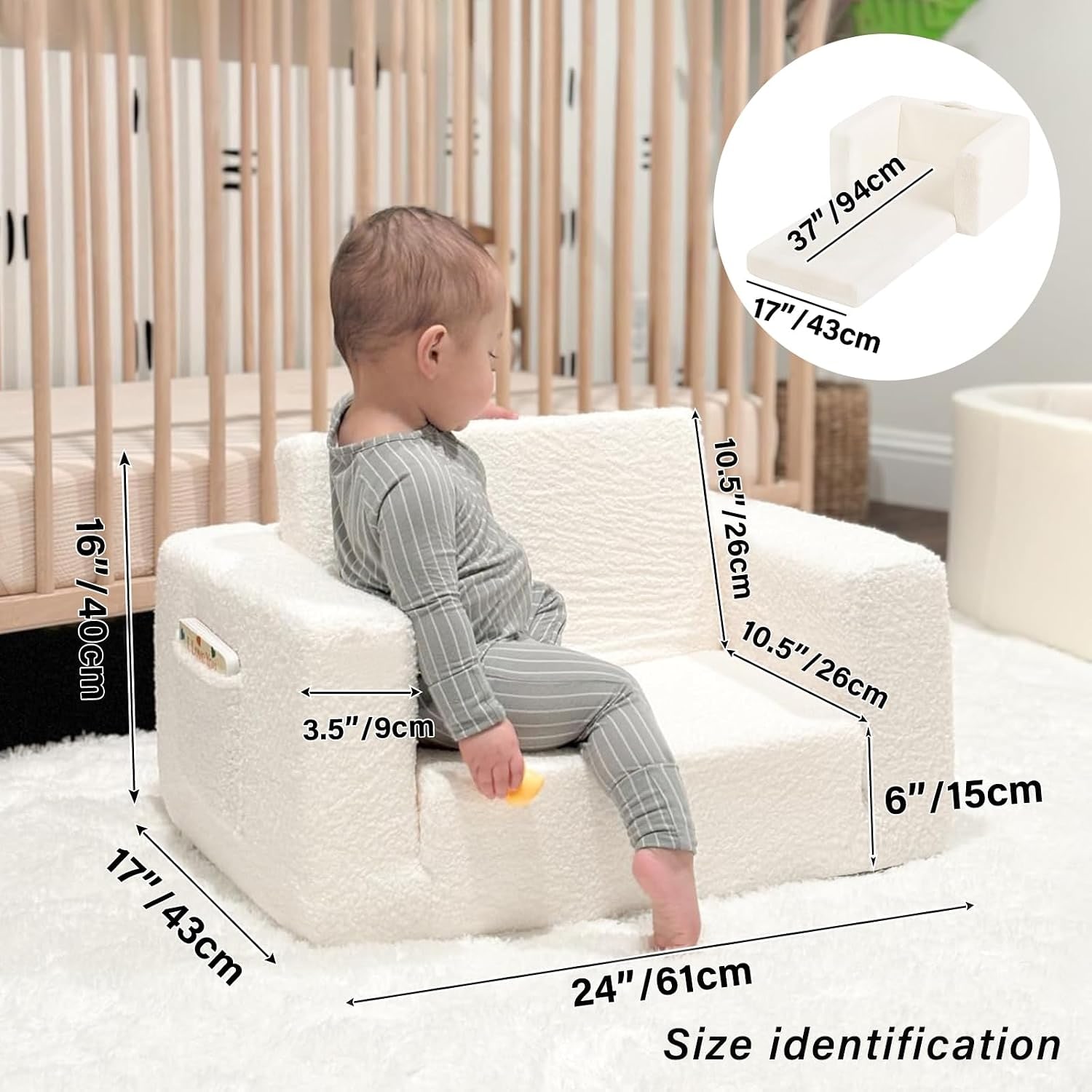
A kids fold out sofa fixes this by being the right size in the first place. This one is 61 cm deep, 43 cm wide and 40 cm high, with a seat depth of 43.2 cm. Those numbers mean a child can sit back properly, reach the armrests and put their feet down. Nothing clever is going on. It just fits.
What the two positions are for
The fold is what separates this from a plain kids couch chair. There are two reclining positions.
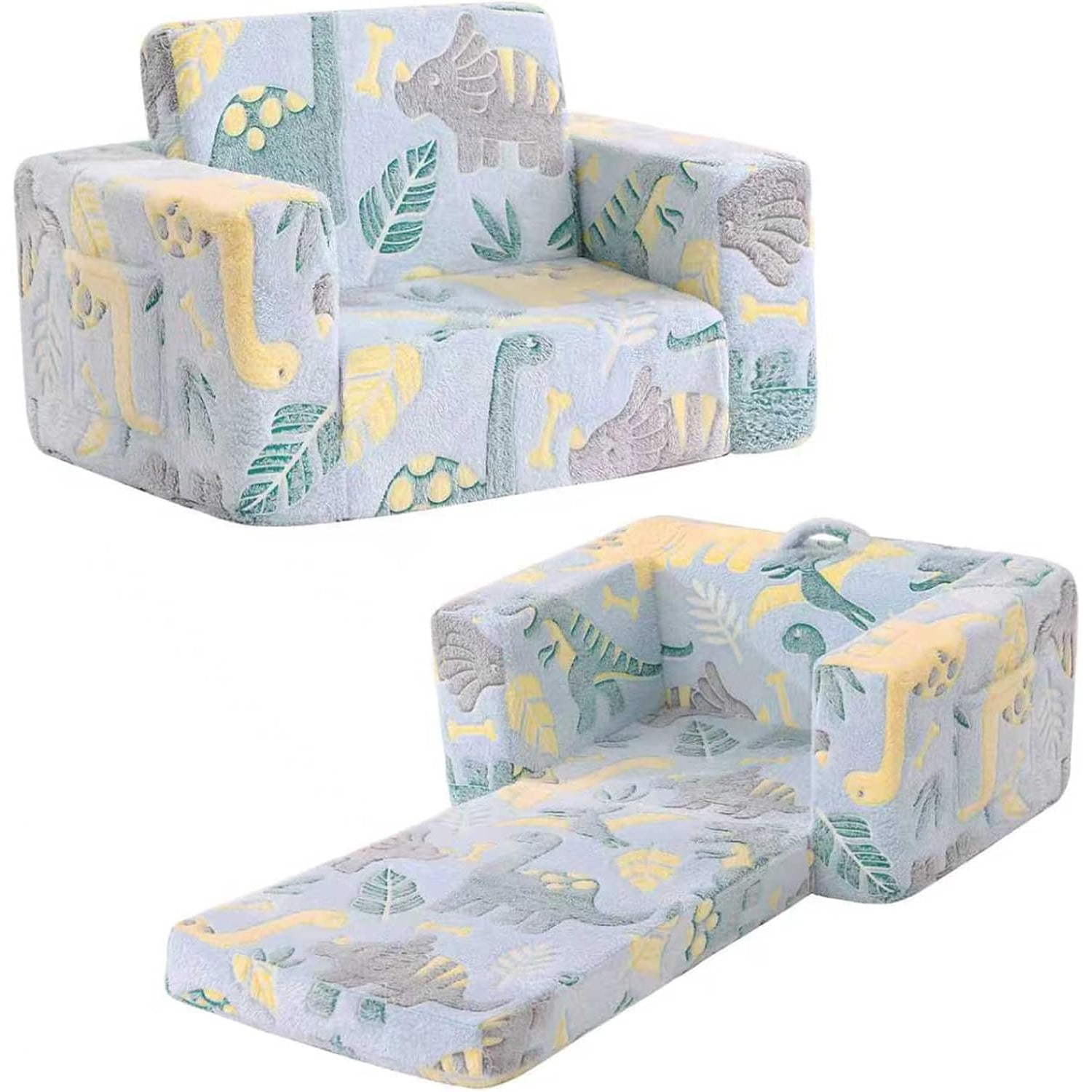
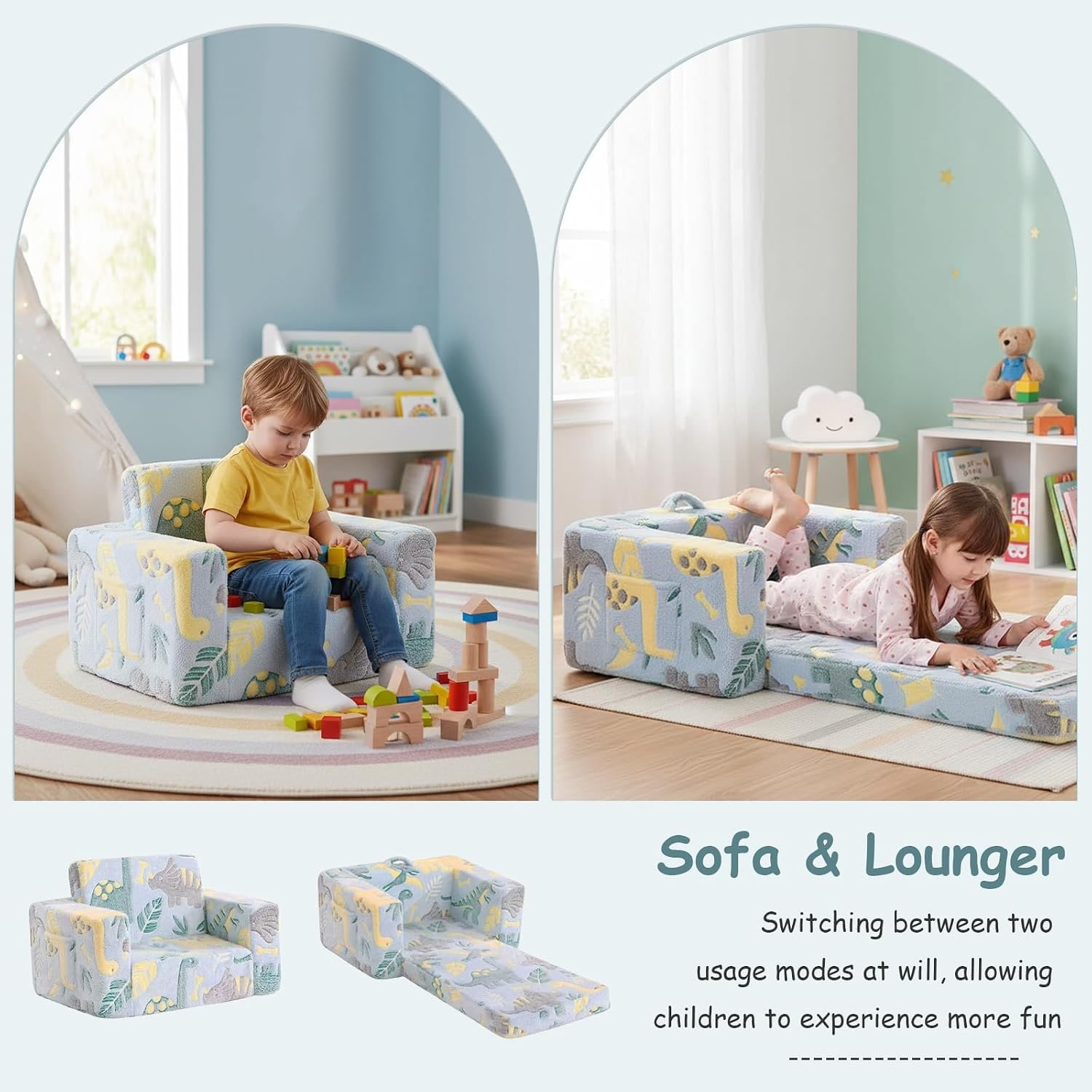
Upright, it is a small padded armchair. Tight back, padded arms, boxed edge cushion, flared legs. It holds its shape when leaned on, which is what makes it useful for reading at a low table or sitting through a chapter book.
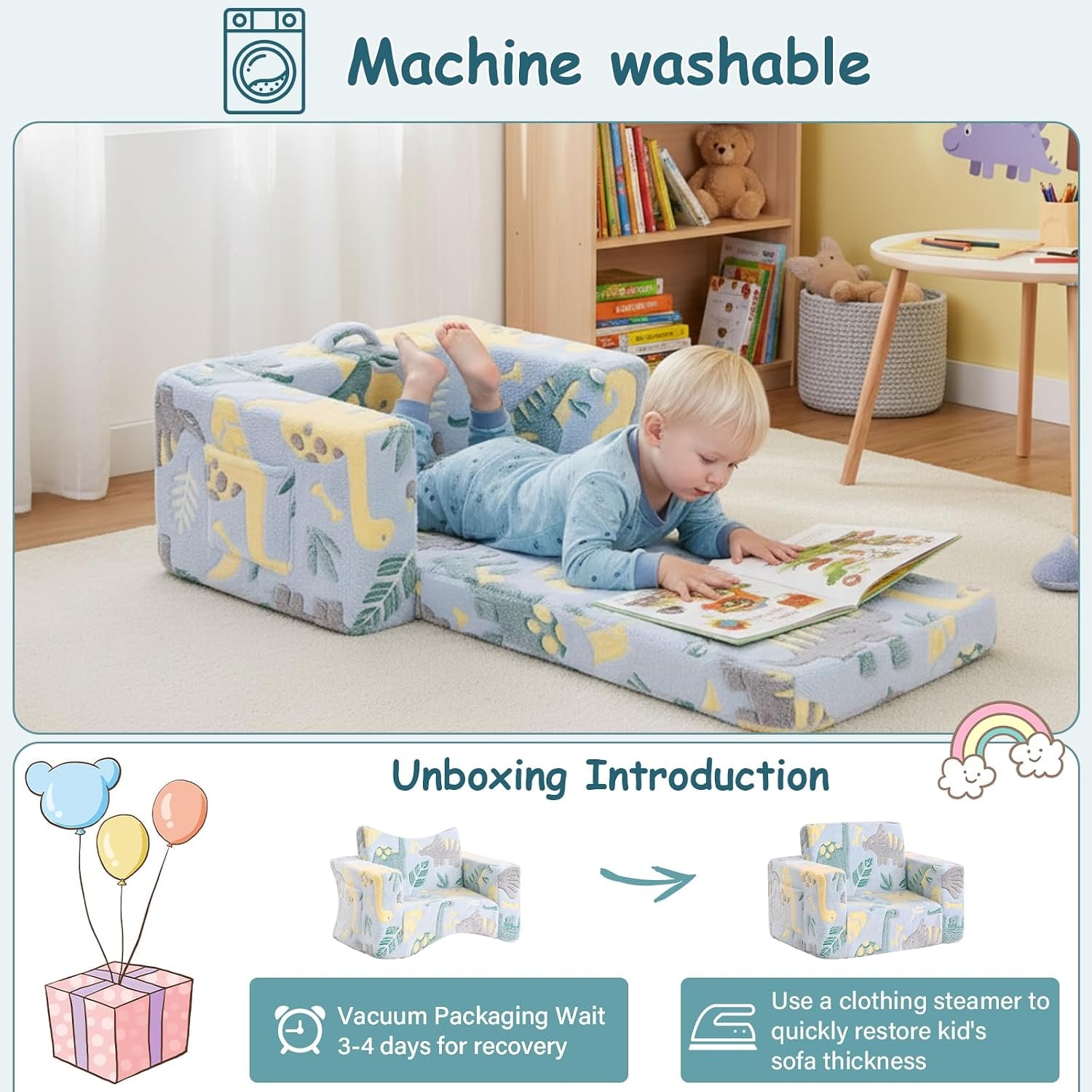
Folded out, the seat extends forward into a flat lounger. This is the position kids pick for screen time, building something on the floor, or just lying down. It gives them a soft surface that is not the carpet and not your sofa.
Children swap between the two themselves. That matters more than it sounds. A piece of furniture that needs an adult to reconfigure it tends to stay in one position forever.
What is inside it
Two things determine whether a foam kids chair survives a year of use. The fill and the frame.
The fill here is high density foam. Density is the thing to care about. Low density foam feels soft in the shop and then compresses into a pancake within weeks, because a child jumping onto a seat applies a surprising amount of force. High density foam pushes back and recovers.
The frame is metal with a powder coated finish. That gives the upright position its rigidity. Without a frame, a foldable children's chair is really just a shaped foam block, and foam blocks sag at the edges once the structure gives up. The metal keeps the geometry.
The outer is polyester. It is not a luxury fabric and it is not pretending to be. What it does well is resist marking, wipe clean and survive the washing machine, and those are the qualities that count in a room where food appears without warning.
The removable cover is the feature that matters most
Everything else on the spec sheet is nice. The removable cover is the one you will be grateful for.
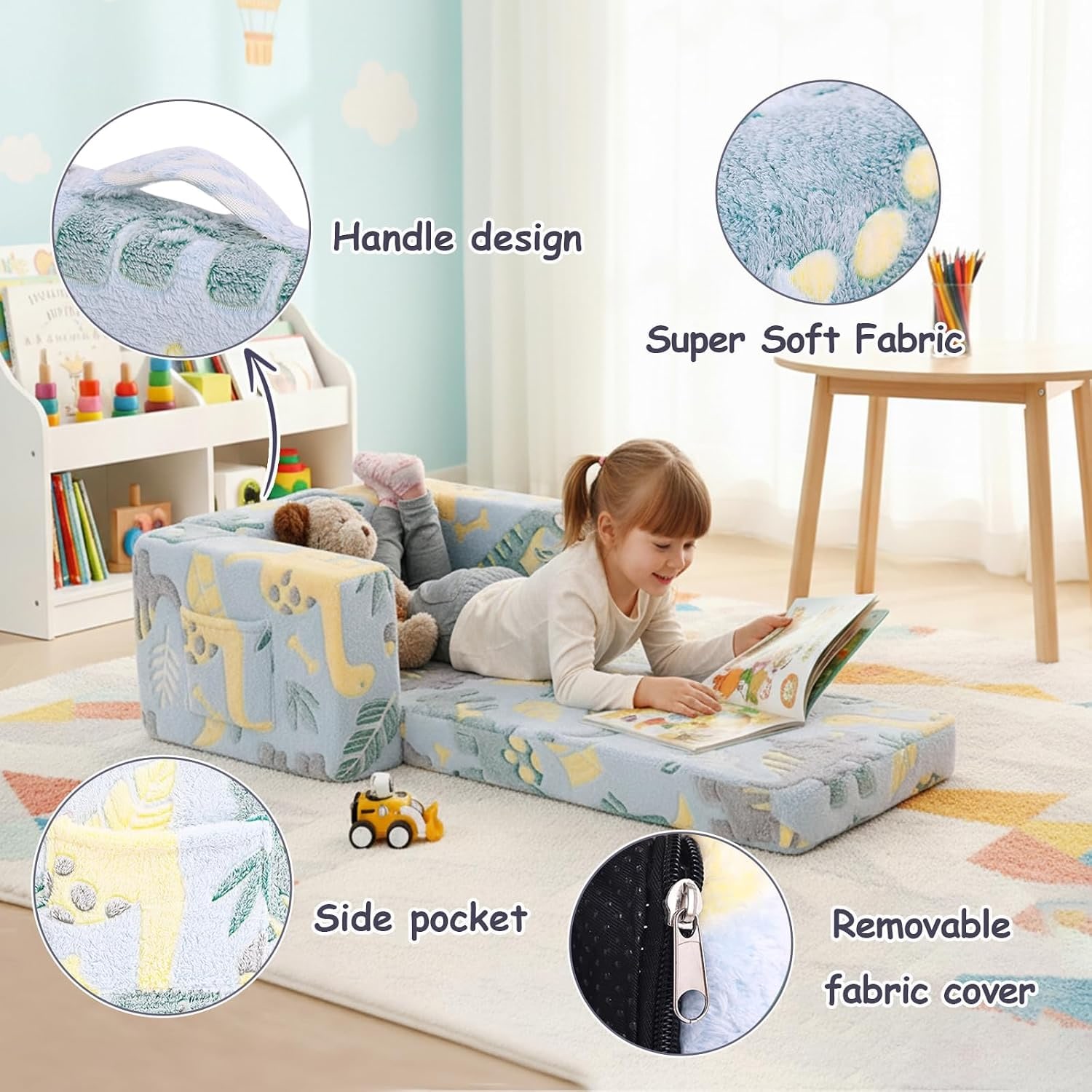
The whole cover comes off the foam core. The maker lists hand wash and machine wash. That means a chocolate handprint, a nosebleed, a dropped bowl of pasta, all of it becomes a wash cycle rather than a permanent feature of your child's bedroom.
Wash it alone, in cool water, with no bleach and no fabric softener. Softener coats the fibres and over time makes the fabric feel waxy. Air dry it flat and out of direct sun. Direct sun fades printed fabric faster than anything else. Then refit it once it is properly dry, because trapping damp against foam is how you get a smell you cannot get rid of.
Weight, handles and where it ends up
The sofa weighs 907 g and has a carry handle. Both numbers are doing the same job: letting a child move it without help.
This changes how the thing gets used. A heavy chair lives in one corner and only gets sat on when a child happens to be in that corner. A light one with a handle follows them. Bedroom in the morning, living room in the afternoon, back to the bedroom at night. More use out of the same purchase.
The base is non-slip and the maker recommends hard floors. On tiles, timber or vinyl, that grip stops the sofa sliding backwards when a child throws themselves into it. On carpet the grip matters less, since the pile does the work, though a very deep pile can make the flat position feel slightly soft underneath. A low pile rug is the easiest surface of all.
Who it suits
This is a single seat, 43 cm wide. One child at a time. Two will squeeze in for a photo and then start elbowing each other.
It works best in a bedroom corner, a playroom, or a study area beside a low desk. The maker lists bedroom, living room and study room, and recommends it for reading and gaming. Indoor only. Polyester and foam do not enjoy damp air or sunlight through a window all afternoon.
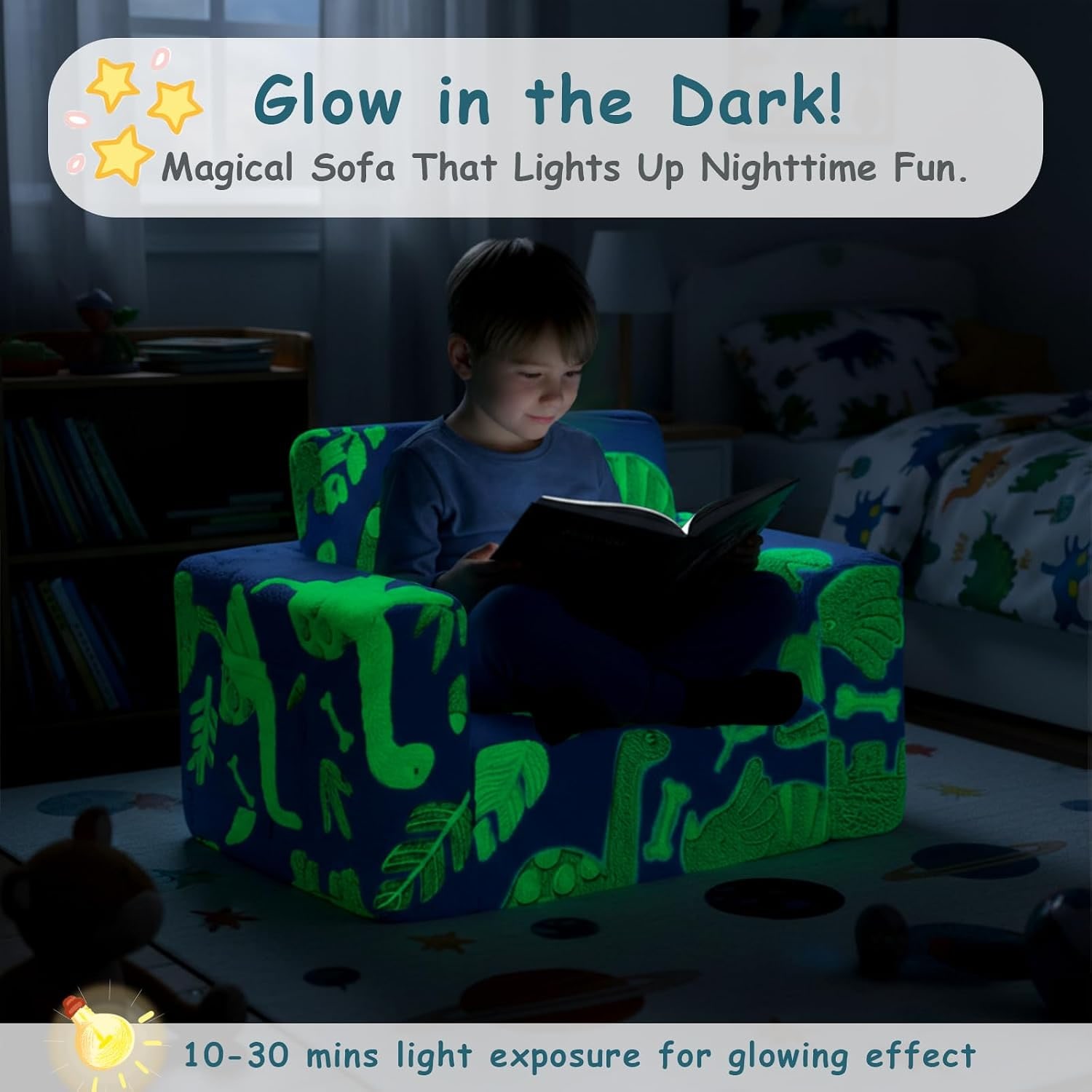
The green dinosaur print is cartoon styled animal print. It reads as a children's piece, which is either exactly what you want or something to think about if the sofa will sit in a shared living room. If it is going in a playroom, the pattern is part of the appeal.
Choosing the right size for your space
Before ordering, do two measurements.
First, the footprint. The folded chair needs 61 cm by 43 cm of floor. That is a small square, but corners fill up faster than people expect once a bookshelf and a toy box are already there.
Second, the clearance in front. When the seat folds out, the item measures 59.9 x 43.2 x 43.2 cm in the open position. You want enough clear floor ahead of it that the lounger can open without hitting a bed frame or a wall.
Then check the child. Seat height is 17 inches and seat depth is 43.2 cm. A child whose feet dangle a long way off the ground will not use the upright position much, because dangling legs get uncomfortable quickly.
The first few days
Foam furniture is compressed to ship. When the box opens, the sofa will look thinner and more creased than the photographs. This is normal and it is not a fault.
Unfold it, leave it out, and give it three to four days. The foam expands on its own as air works back into the cells. If you want to speed things up, a clothing steamer over the fabric does two jobs at once, relaxing the creases and helping the loft return. Do not iron it directly.
It arrives assembled, with a user manual in the box, so there is no construction phase. Unpack, unfold, wait.
Looking after it long term
Vacuum the cover occasionally with a brush attachment. Dust and crumbs work into the weave and make light fabric look grey over time.
Deal with spills while they are still wet. Blot, do not rub. Rubbing pushes liquid deeper and spreads the stain outward.
Rotate how the sofa is used if you can. A seat that is always sat on from the same angle compresses unevenly. Flipping between the upright and flat positions regularly spreads that out, which happens naturally in most households anyway.
Keep it away from radiators and out of long hours of direct sun. Heat dries out foam and sun fades print.
The short version
A kids fold out sofa earns its space by being child sized, light enough to move and washable. This one covers all three. High density foam on a metal frame handles the daily impact, the polyester cover comes off for the machine, and at 907 g with a carry handle it goes wherever the child goes.
The two positions mean it works for reading and for lying down, which covers most of what kids actually do with a quiet half hour. The side pocket keeps the book off the floor. The non-slip base keeps the sofa where it was put.
Measure your corner, check the seat depth against your child, and give the foam a few days to come back to full thickness after it arrives. After that, it mostly looks after itself.