
The complete guide
How to Choose a Dry Erase Kids Table and Chairs Set
The problem with most small tables
You buy a little table. It fits beautifully for a year. Then one day you look over and your child's knees are jammed under the top, their shoulders are hunched, and the whole thing looks like doll furniture. Off to the garage it goes.
That is the quiet cost of fixed-height children's furniture. It is not that the table breaks. It is that children do not stay the same size, and a table built for one height has exactly one good year in it.
The second problem is paper. If drawing is a daily thing in your house, you know the stack. Butcher's paper, scrap, the back of envelopes, offcuts from the printer. Half of it ends up on the floor and the other half ends up in the bin within the week.
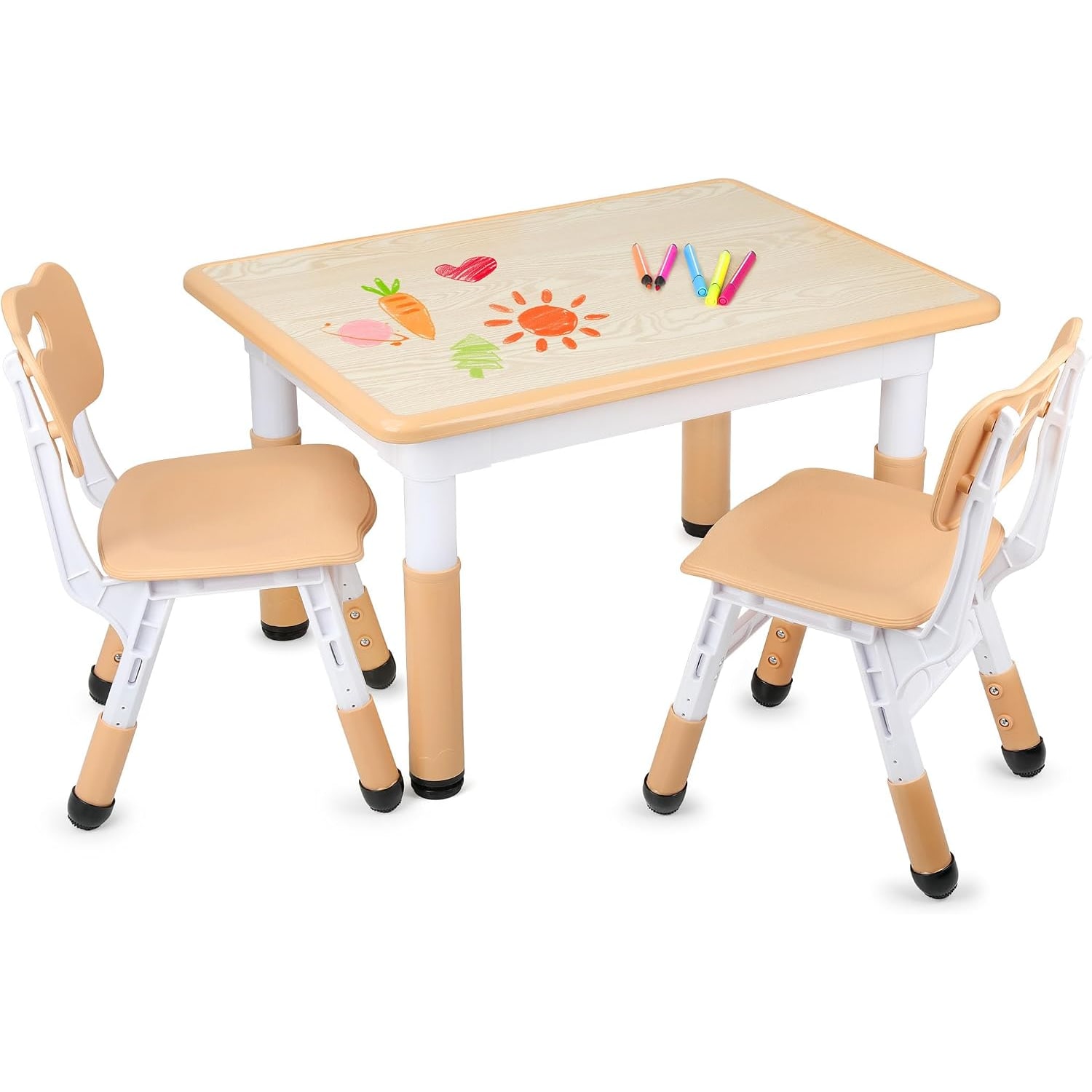
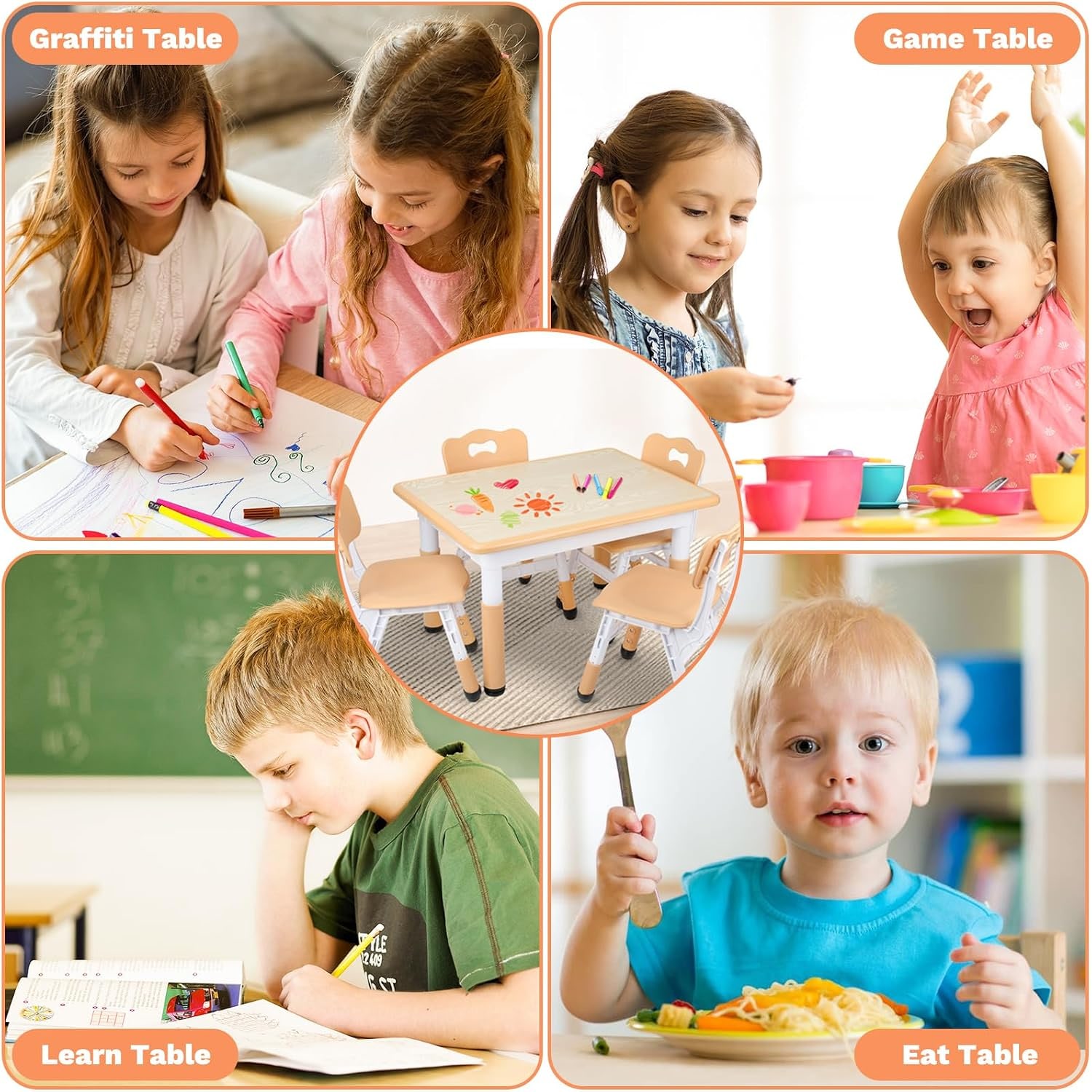
A dry erase kids table and chairs set with adjustable legs tackles both problems at once. The table top is the paper, and the legs move when the child does.
How the adjustment works
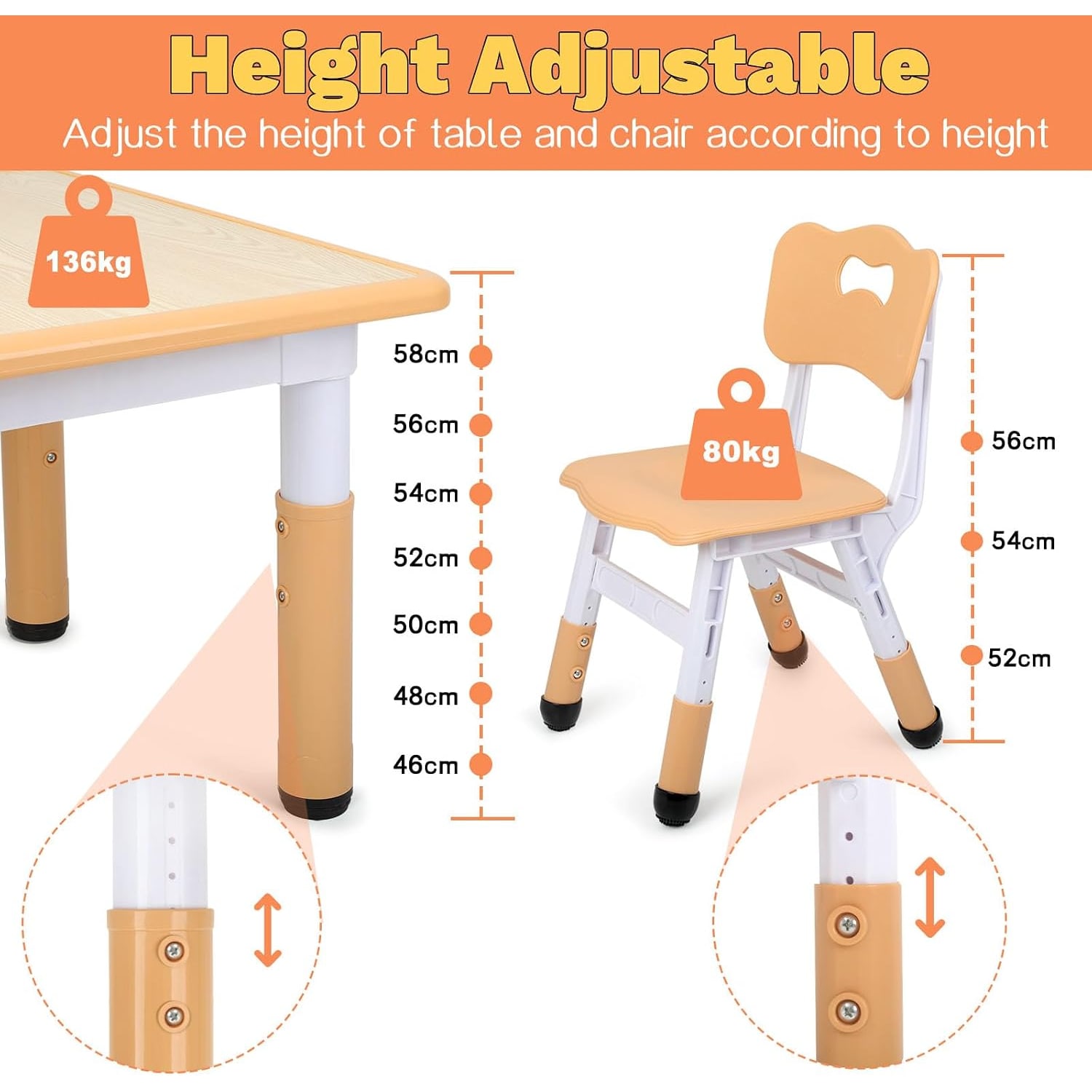
This set gives you seven table heights between 46 cm and 58 cm. That is a 12 cm span, which sounds modest until you think about what 12 cm of child growth looks like. It covers a lot of years.
The chairs adjust too, across three settings from 52 cm to 56 cm. Having both move matters. If only the table adjusted, you would raise the top and leave your child reaching up at it. Matching the pair keeps the working position sensible.
The way to set it is simple. Sit your child on the chair with their feet flat and their back against the seat back. Their forearms should rest on the table with the elbows roughly level with the top, not rising up to meet it and not dropping away below it. Pick the chair setting first, then the table setting that matches.
Adjust every leg to the same notch. It sounds obvious, but a table set one notch out on a single leg will rock, and a rocking table is maddening during careful colouring.
The dry-erase top
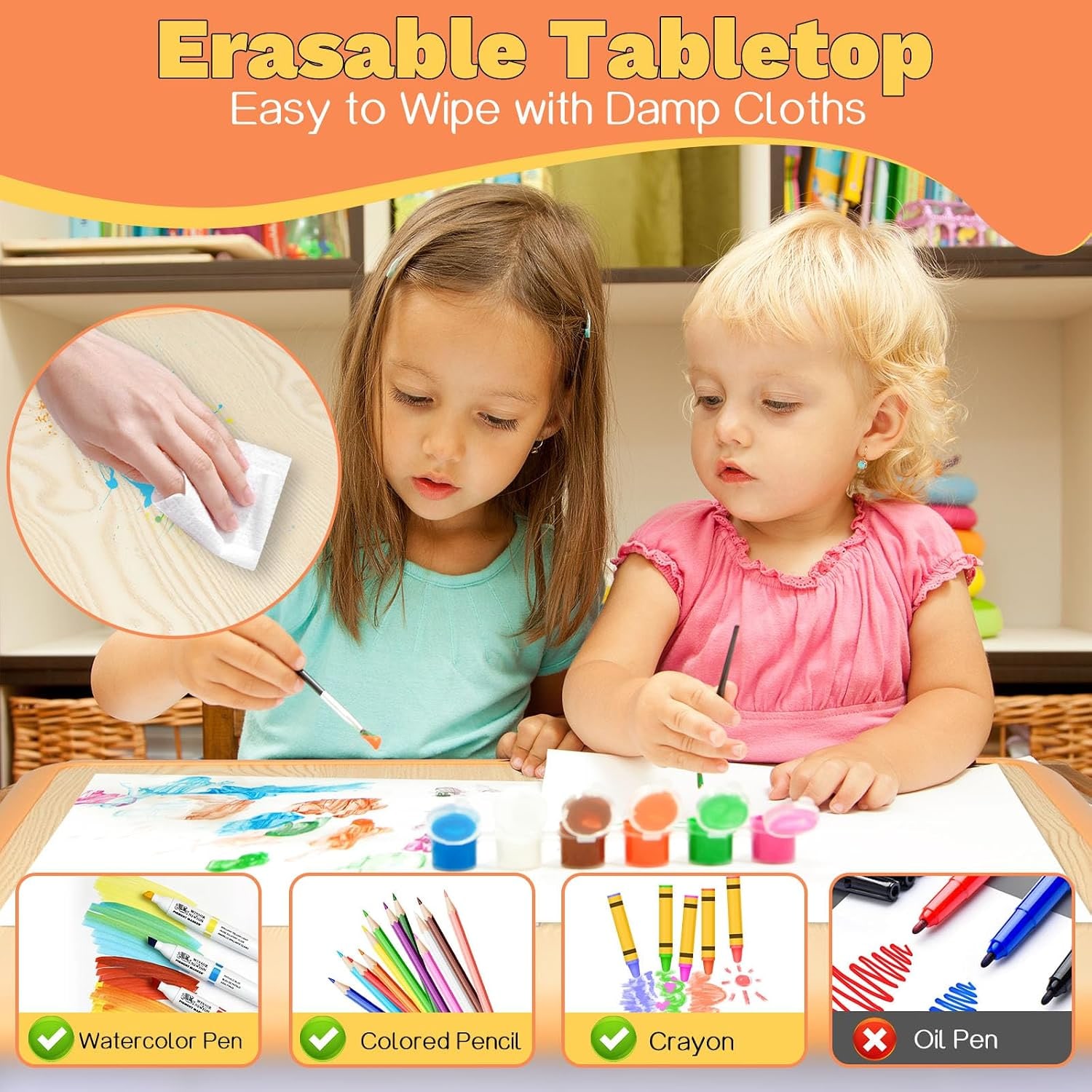
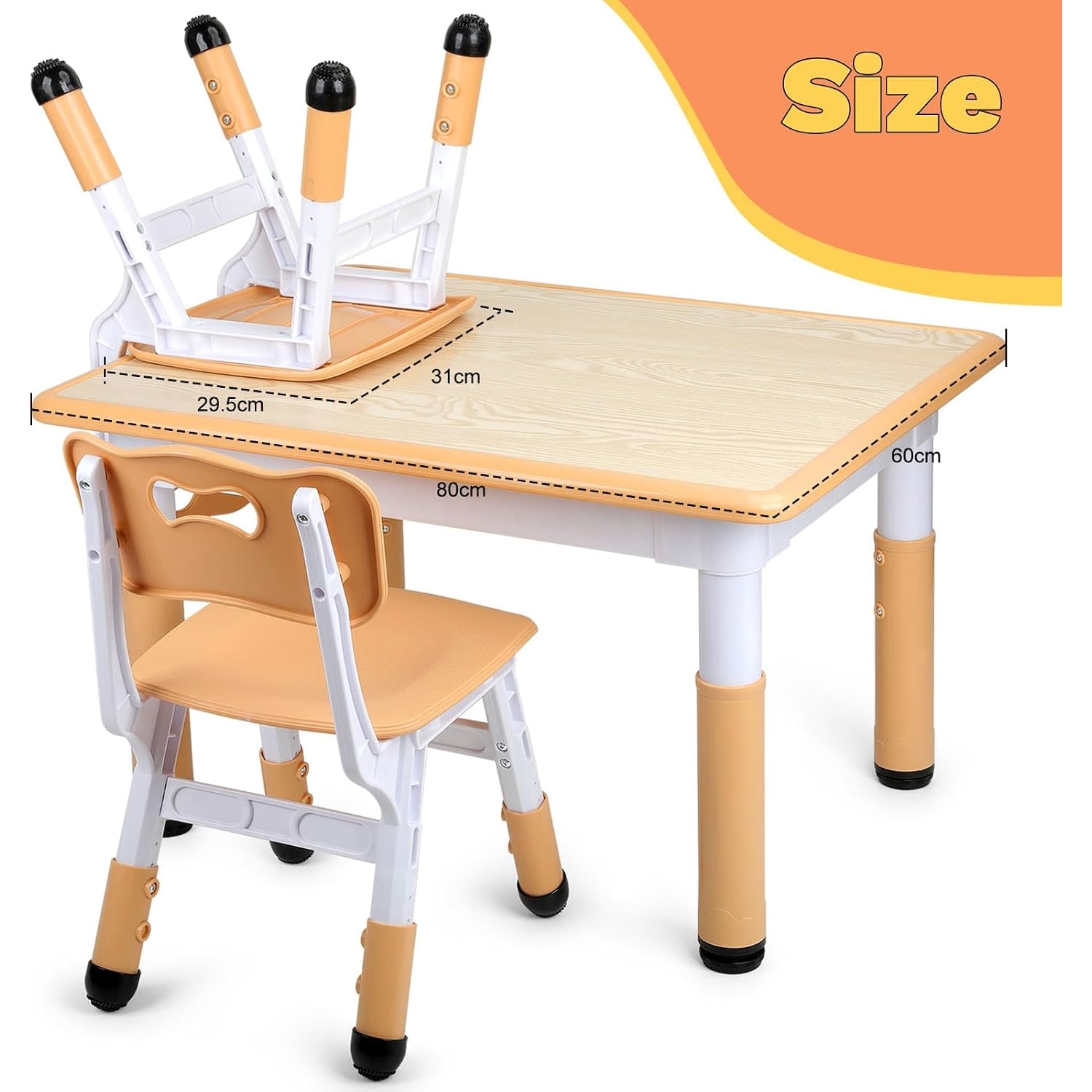
The desktop is a graffiti dry-erase surface, which simply means the whole 80 x 60 cm area accepts whiteboard marker and releases it again.
In practice this changes how a table gets used. Children draw bigger when they are not confined to an A4 sheet. A road layout can run the full length of the table and cars can drive on it. A spelling list can be written out, tested, wiped and rewritten four times in ten minutes. Two children can each claim half.
Cleaning is quick. A dry cloth takes most of it. Anything that has sat too long comes up with a cloth dampened in water. The one habit worth teaching early is to keep permanent markers in a different drawer, because they do not belong on a dry-erase surface.
Stick to proper whiteboard markers and test any new brand in a corner before letting a child loose with a full set. Marker formulations vary and some erase more willingly than others.
Size and who it suits
At 80 cm by 60 cm, this is a genuine two-child table rather than a single workstation. Two chairs come in the box, and there is room for both children to have their own stretch of surface without constant border disputes.
The weight ratings are generous. The table takes 136 kg, each chair 80 kg. In real terms that means you can sit down on a chair to help with a tricky bit of craft, and the table will not complain about a heavy box of building blocks landing on it.
The chairs have reinforced crossbars, which is the detail that stops child-sized seating from feeling wobbly. Small chairs fail at the joints long before they fail at the seat, and crossbars take the lateral strain that comes from a child swinging their legs or leaning sideways.
Every edge and corner is rounded rather than squared. Nobody designs around the hope that children will move carefully, so the edges are shaped for the reality.
The whole set weighs 11.9 kg, which is the figure that decides whether a table stays put or gets used. One adult can carry it from the playroom to the kitchen for an afternoon of baking prep, or out onto a covered deck on a nice day. It is not so light it slides around in use, and not so heavy that moving it becomes a job.
Where to put it
A children's drawing table works best where you already are. The playroom is the obvious answer, but a kids art table shoved in a room nobody visits tends to gather dust. A corner of the living room, the end of a kitchen, or a bedroom alcove often gets more use.
Allow about 1.4 m by 1.2 m of clear floor so chairs can be pulled out and pushed in. If space is tight, push one long side against a wall and seat both children on the open side. They lose the face-to-face arrangement but keep the full working depth.
Think about light. A drawing desk for children should have decent light falling across the surface rather than from directly behind the child, which casts shadow across their hands.
Living with it day to day
The care routine is short. Wipe the top and the chairs with a damp cloth, and dry off any standing water rather than letting it sit. Skip the scourers and the harsh solvents, especially on the drawing surface, because abrasives dull a dry-erase finish permanently.
Every month or so, run a hand over the height fittings and the chair crossbars and tighten anything that has loosened. Children apply forces to furniture that adults never do. A set that is checked occasionally stays solid for years.
One tip that saves grief: keep the fittings bag and the assembly instructions somewhere findable. When you raise the height in eighteen months you will want them.
Assembly
Assembly is required. It is a straightforward job, not a weekend project. Lay the parts out, group the fittings, and build on carpet or a blanket so you do not scratch the top.
Tighten everything hand-tight first, get the frame square, then go round and tighten properly. Doing it the other way around tends to leave the legs slightly out of true. Once it is up, press down on each corner and check for rock before you let the children at it.
The short version
If you want a kids activity table that is still in use in three years rather than three seasons, adjustability is the feature that matters most. Seven table settings from 46 to 58 cm and three chair settings from 52 to 56 cm give this set a long runway.
The dry-erase desktop is the part children love. It removes the paper bottleneck and turns the table itself into the canvas, then wipes clean for the next idea.
Add the 80 x 60 cm two-seat size, the rounded edges, the reinforced chairs and the wipe-clean finish, and you have a table that covers drawing, homework, craft, games and lunch without needing to be anything else. At 11.9 kg it moves when you need it to.
Measure your child's seated elbow height, check it against the range, and you will get the setting right first time.