
The complete guide
How to Choose Wooden Kids Chairs That Actually Get Used
The problem with the wrong chair
Most kids' seating fails for one of two reasons. Either it is too big, so the child ends up perched on the edge with their feet swinging, or it is too flimsy, so it creaks and slides and gets abandoned within a fortnight.
Both outcomes look the same from the doorway. The chair sits empty while the child kneels on the floor with their paper on the coffee table, or stands at the kitchen bench with their elbows up around their ears.
A chair that fits does something quiet and useful. It keeps a child in one place long enough to finish the drawing, eat the sandwich or get to the end of the chapter. That is the whole job. Everything else is detail.
What this set is
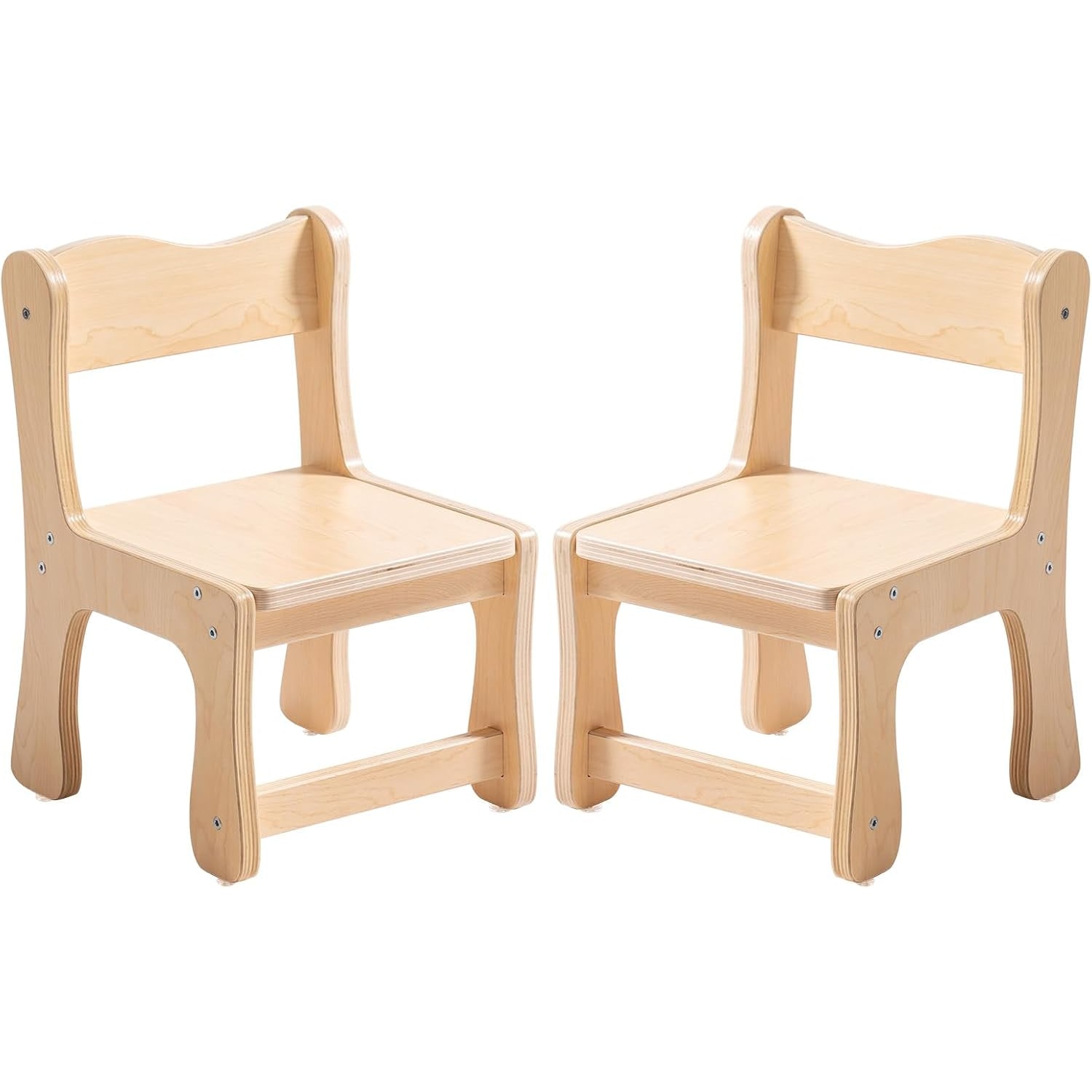
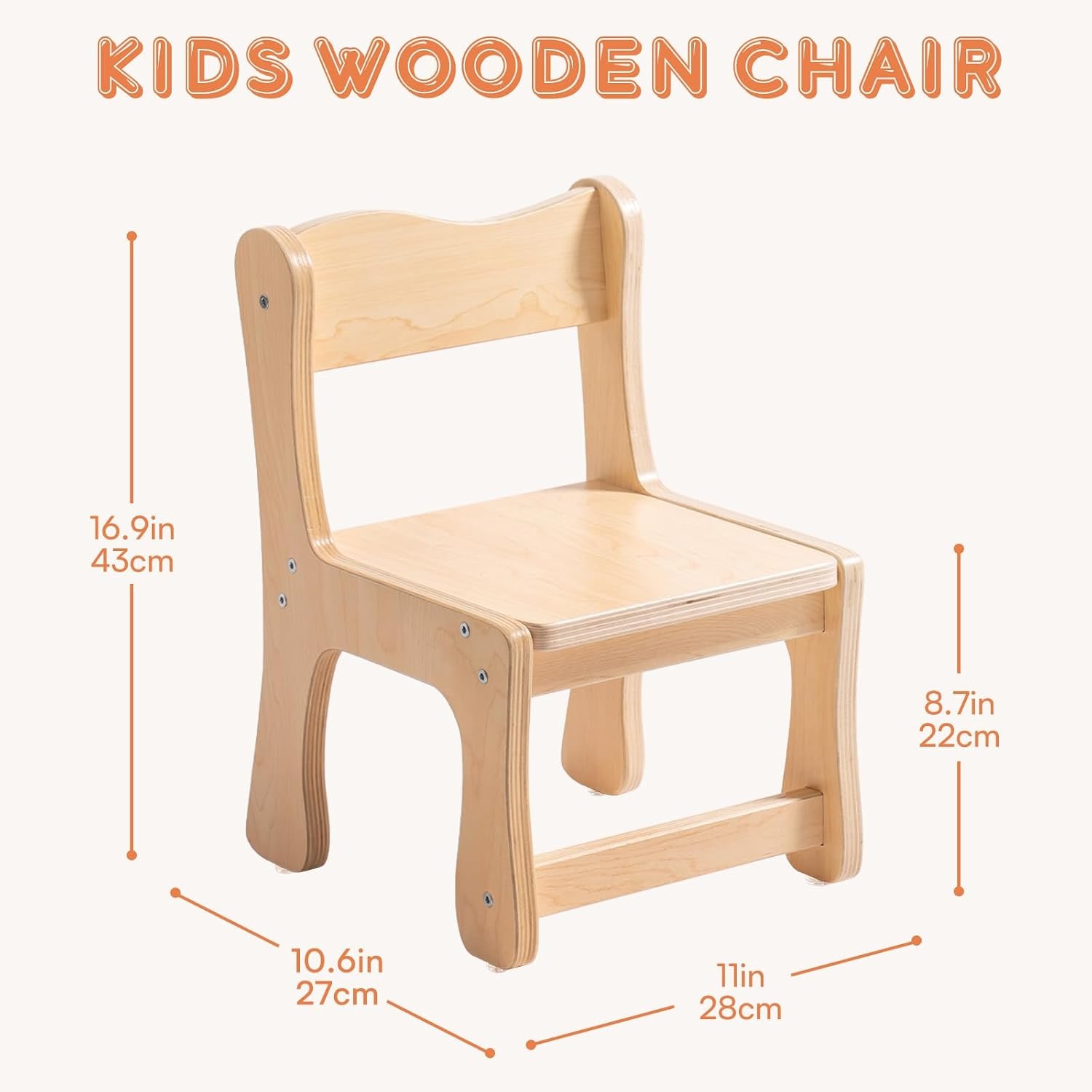
Two wooden chairs, sold as a pair. Each one measures 27 cm deep, 28 cm wide and 43 cm high. That 43 cm figure is the full height including the backrest, which is worth knowing because a lot of people assume it is the seat height and end up disappointed.
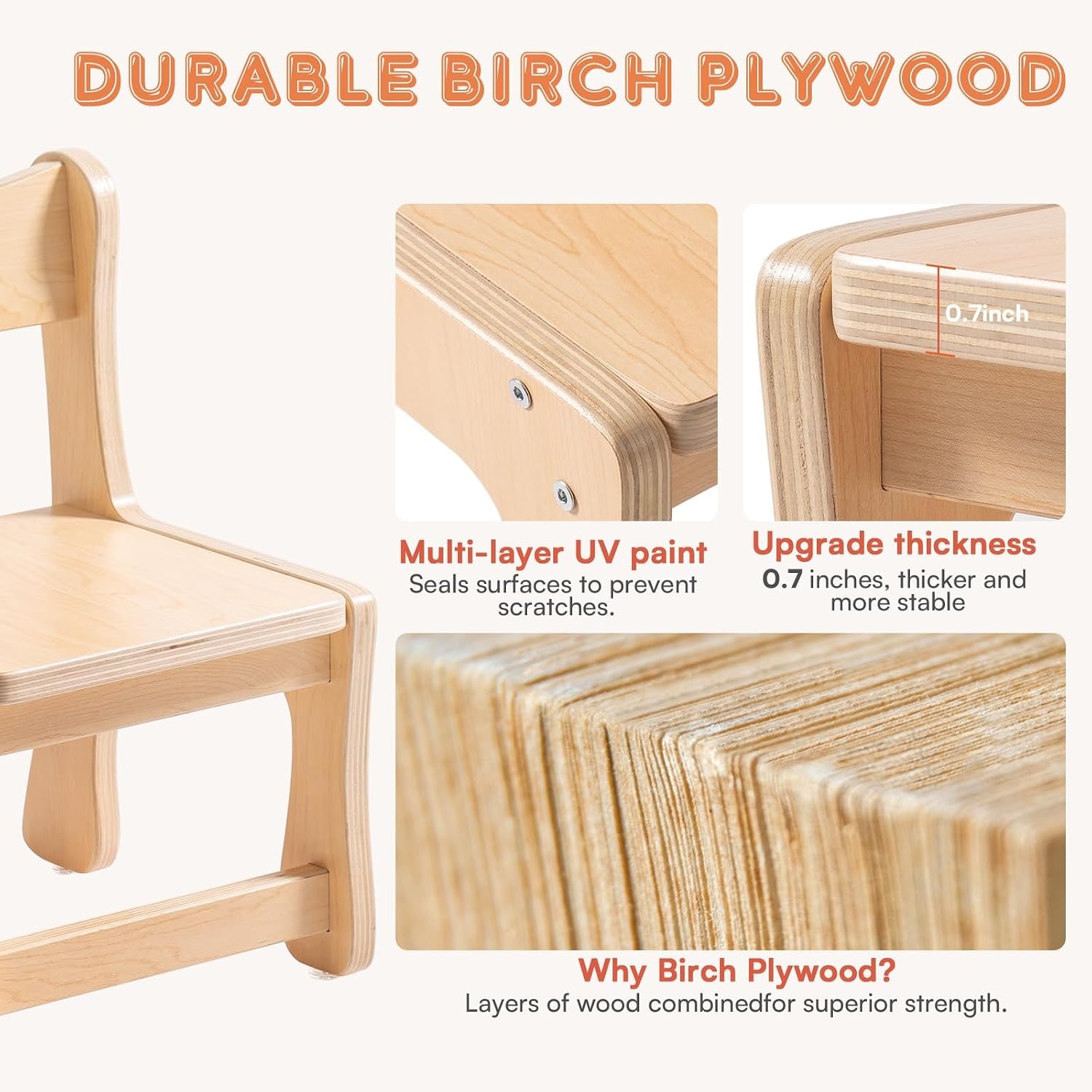
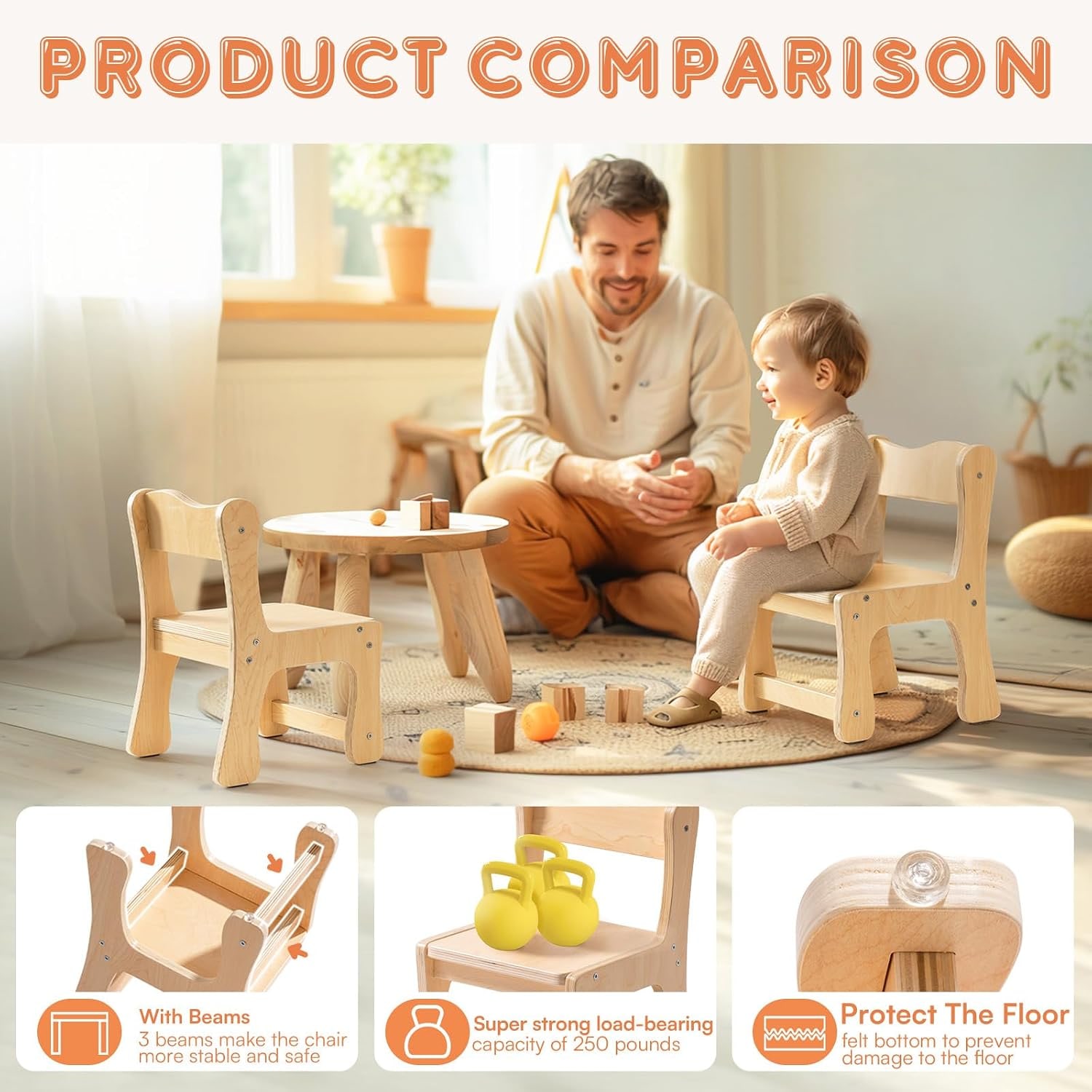
The frame is wood, the seat is wood, and there is a reinforced crossbeam between the legs. The seat is curved rather than flat, and there are no arms. Silicone pads on the base give the legs some grip. The style is plain and contemporary, a solid finish with no pattern.
Assembly is required. Nothing else is included, so if you want a matching table you will be choosing one separately.
Why the crossbeam matters more than the finish
Here is the thing nobody mentions in product photos. The most common failure point in small timber chairs is not the seat or the finish, it is the joint between the legs and the seat frame.
A child does not sit still. They lean back, they rock, they swing their legs, they turn sideways to talk to someone. All of that puts a twisting load on the frame. Without bracing, the joints work loose, the chair starts to rack side to side, and once it wobbles it never really stops.
The crossbeam between the legs is what resists that twist. It spreads the load across the whole frame instead of concentrating it in four glued joints. You will not notice it on day one. You will notice it in year two, when the chair still feels solid.
The same principle is why retightening the fixings every few months is worth doing. Timber moves a little with seasonal humidity. Ten minutes with the hex key twice a year keeps everything snug.
Matching the chair to a table
This is where most orders go wrong, so it is worth being careful.
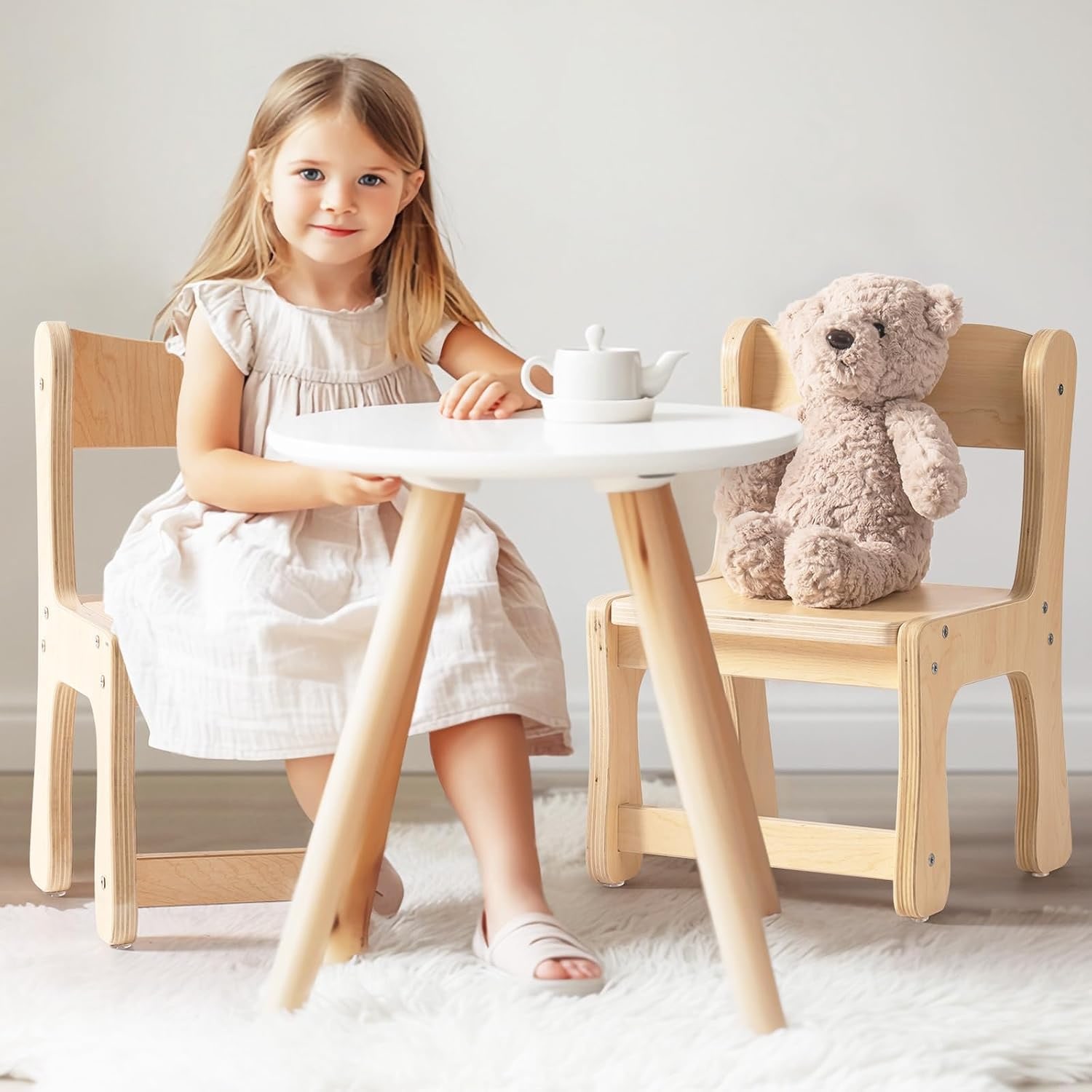
Measure the height of your table from the floor to the underside of the tabletop. Then compare it against the chair. For comfortable use, a child wants their elbows roughly level with the tabletop and their feet able to reach the floor or a footrail.
These chairs are sized for low tables. A standard adult dining table is around 74 cm high, and a 43 cm chair is not the match for it. A typical children's activity or craft table runs much lower, and that is the pairing these are built for.
If you already own the table, measure before you order. If you are buying both, buy the table to suit the chair rather than hoping it works out. The listing also notes an adjustable height feature, and the assembly instructions supplied with the chairs will explain how that is set.
Where they work best
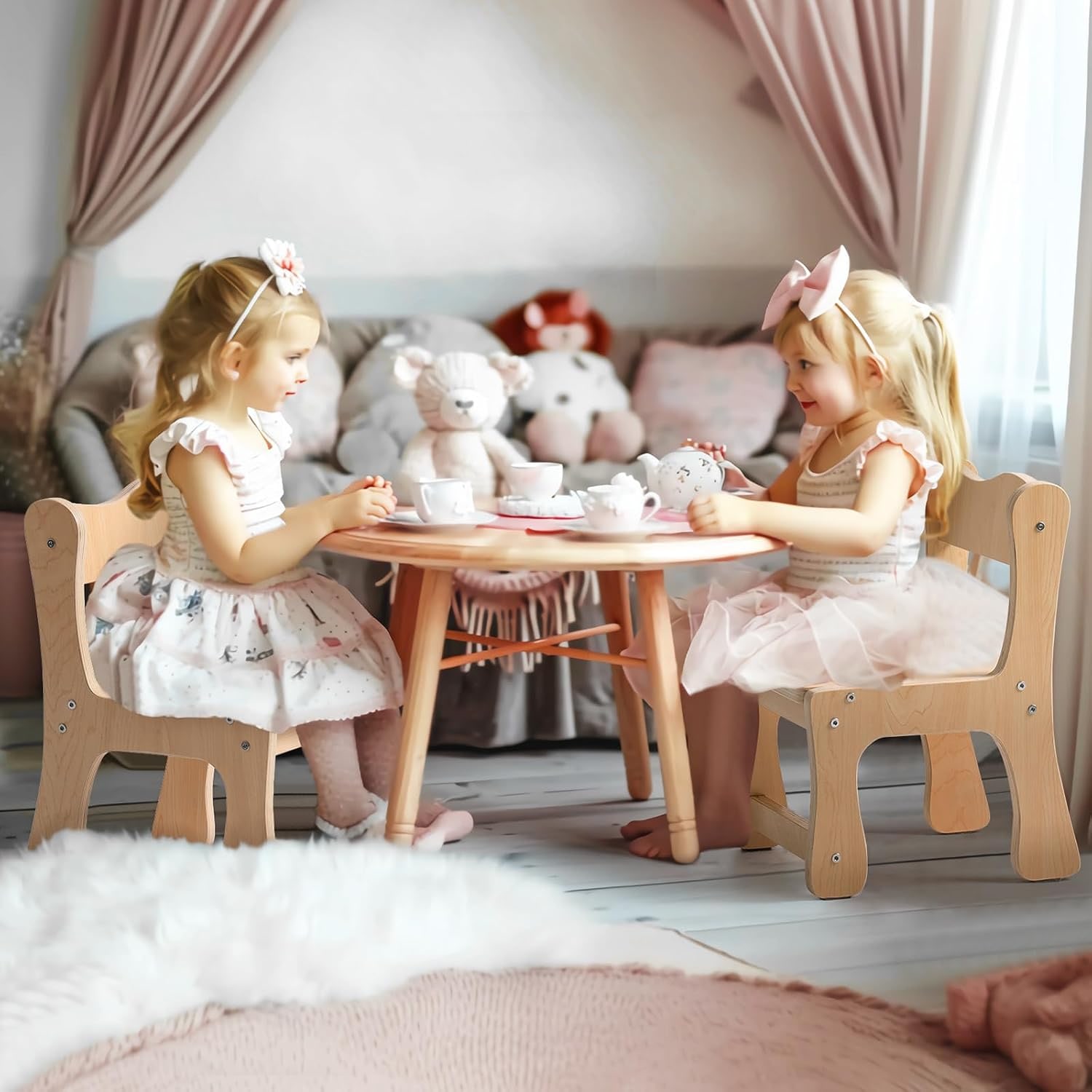
A low table in a playroom is the obvious one. Craft, puzzles, playdough, drawing. The small 27 x 28 cm footprint means two chairs plus a table do not take over a bedroom.
A reading corner is the quieter option, and often the better one. A chair beside a bookshelf, maybe with a lamp, gives a child somewhere that is theirs. Wooden chairs for playroom use tend to get pressed into reading duty anyway.
They also work in a living room, parked beside the sofa so a child has a spot at adult height conversations without climbing on the furniture. The plain contemporary look helps here, because the chair does not shout about being kids' furniture.
What they are not built for is outdoors. The listing specifies indoor use. Timber left on a veranda takes in moisture, the joints swell and shrink, and the finish goes patchy. Keep them inside.
Hard floors, rugs and the sliding problem
Silicone pads on the base do two jobs. They stop the chair skating out from under a child on polished boards or tiles, and they put a soft layer between the timber and your floor finish.
On a rug, sliding is less of an issue but tipping can be, because a soft pile lets one leg sink while the others stay put. A flat-weave rug or a bare floor is generally the steadier choice for a child's seat.
If you have delicate floorboards and you want extra insurance, a thin felt pad over the silicone works. Just make sure you do all four legs on each chair so the chair sits level.
Keeping them looking decent
Timber furniture in a child's room gets everything thrown at it. Yoghurt, texta, glue sticks, the lot.
Wipe with a soft cloth that is barely damp and dry it straight away. Standing water is the enemy of a timber finish. Skip the solvents and the scouring pads, which will dull the surface faster than any amount of normal use.
The finish on these chairs is described as scratch resistant, which helps, but no finish is scratch proof. Sensible habits do more than any coating. Keep them out of direct sun, because strong light fades timber unevenly over a year or two, and keep them away from damp corners.
Buying two instead of one
It sounds obvious, but it is worth saying. A single chair gets used alone. Two chairs get used together.
The moment there is a second seat, a sibling joins in, a friend stays for an afternoon, or a parent crouches down beside the table. A pair also looks better either side of a small table than a single chair pushed to one end.
Since this comes as a 2-pack, the two chairs match exactly, arrive together and were made in the same batch. Buying matching sturdy kids chairs separately later is surprisingly hard once a product line changes.
The short version
Measure your table first. Check the 43 cm total height and the 27 x 28 cm footprint against your actual space, not your estimate of it.
These are plain solid wood chairs with a braced frame, a curved armless seat and silicone feet, supplied as a pair, for indoor use, with assembly required. They suit a low craft table, a reading corner or a bedroom nook.
If they turn out to be wrong for your room, you have 14 days from delivery to return them unused in the original packaging. Keep the box until you are sure.