
The complete guide
Choosing a Kids Pots and Pans Playset That Actually Gets Used
The problem with most toy cookware
Watch a child with a play kitchen for ten minutes and you learn a lot. They open the oven, they turn the dial, they put something in a pan. Then they stop. Nine times out of ten the reason is simple. There is only one pan, and once something is in it, the game has nowhere to go.
Real cooking is a sequence. Water goes in the pot. Something goes in the pan. A spoon stirs. A plate waits on the bench. A child copying that sequence needs enough pieces to carry it through, and a single moulded frying pan will not do it. That is the gap a proper kids pots and pans playset fills.
The other problem is quality. A lot of play kitchen cookware is thin, hollow plastic. It is light, it sounds wrong, and it tips over the moment anything goes in it. Children pick that up quickly. A pan that behaves like a pan gets played with. One that does not ends up at the bottom of the toy box by the end of the month.
What this set includes and why that matters
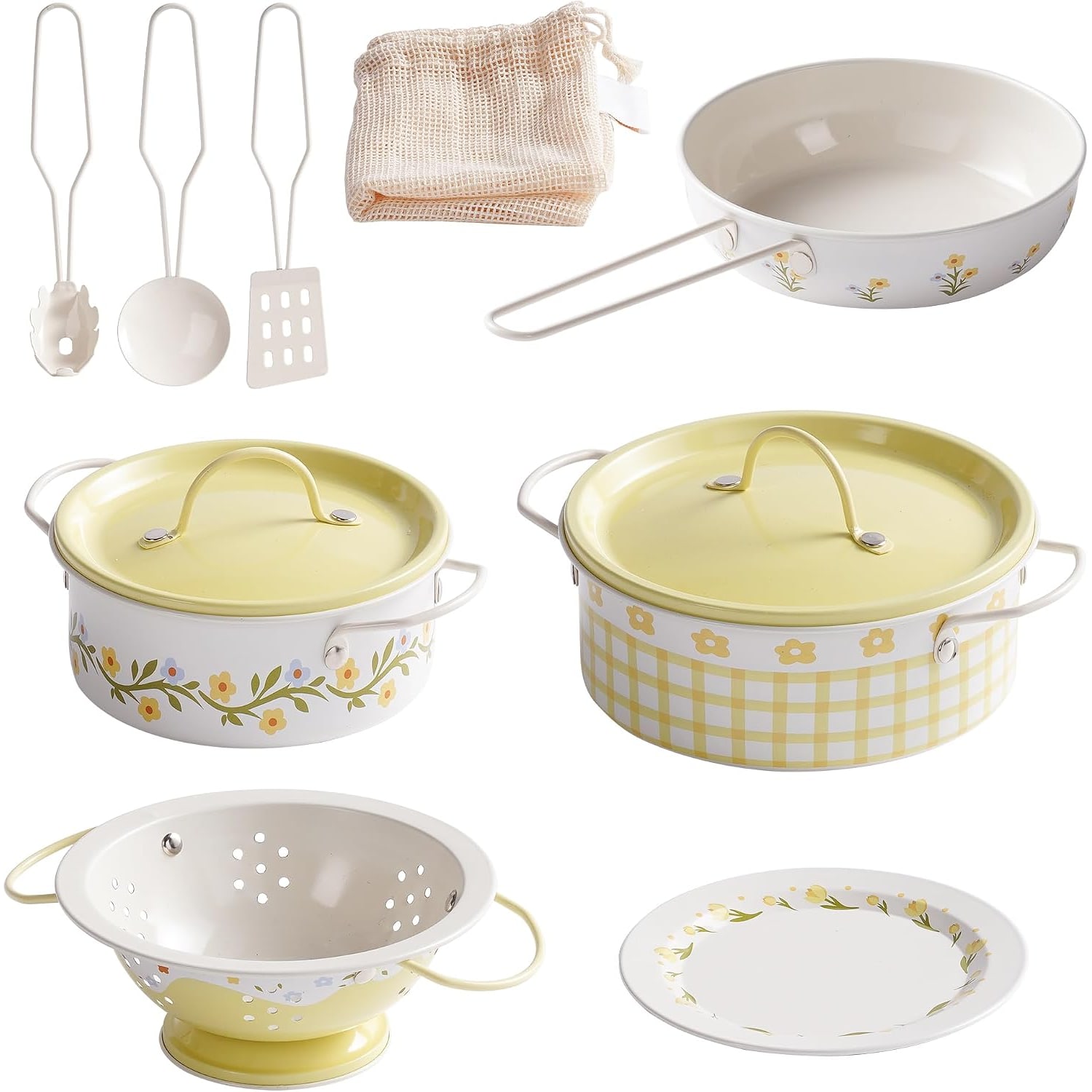
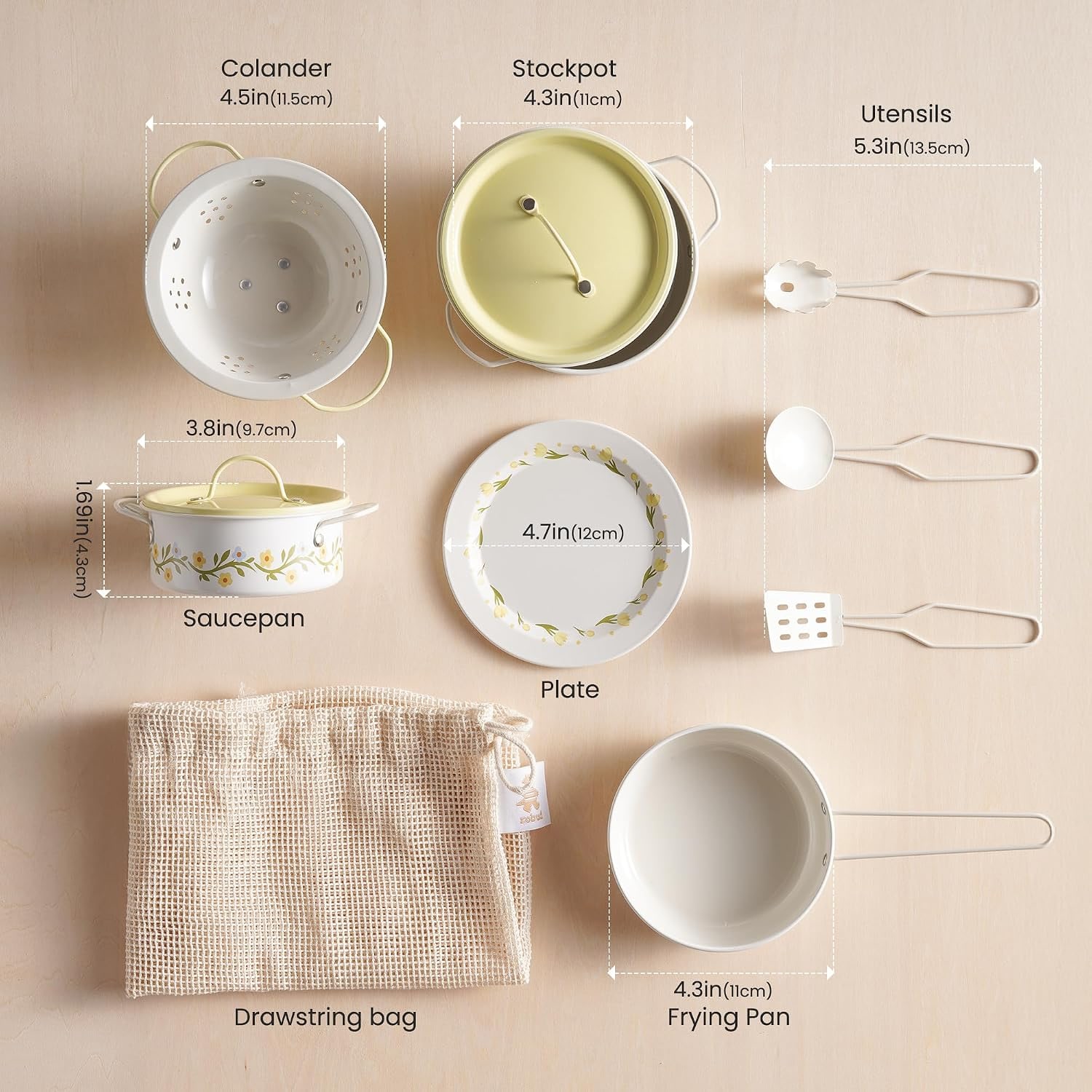
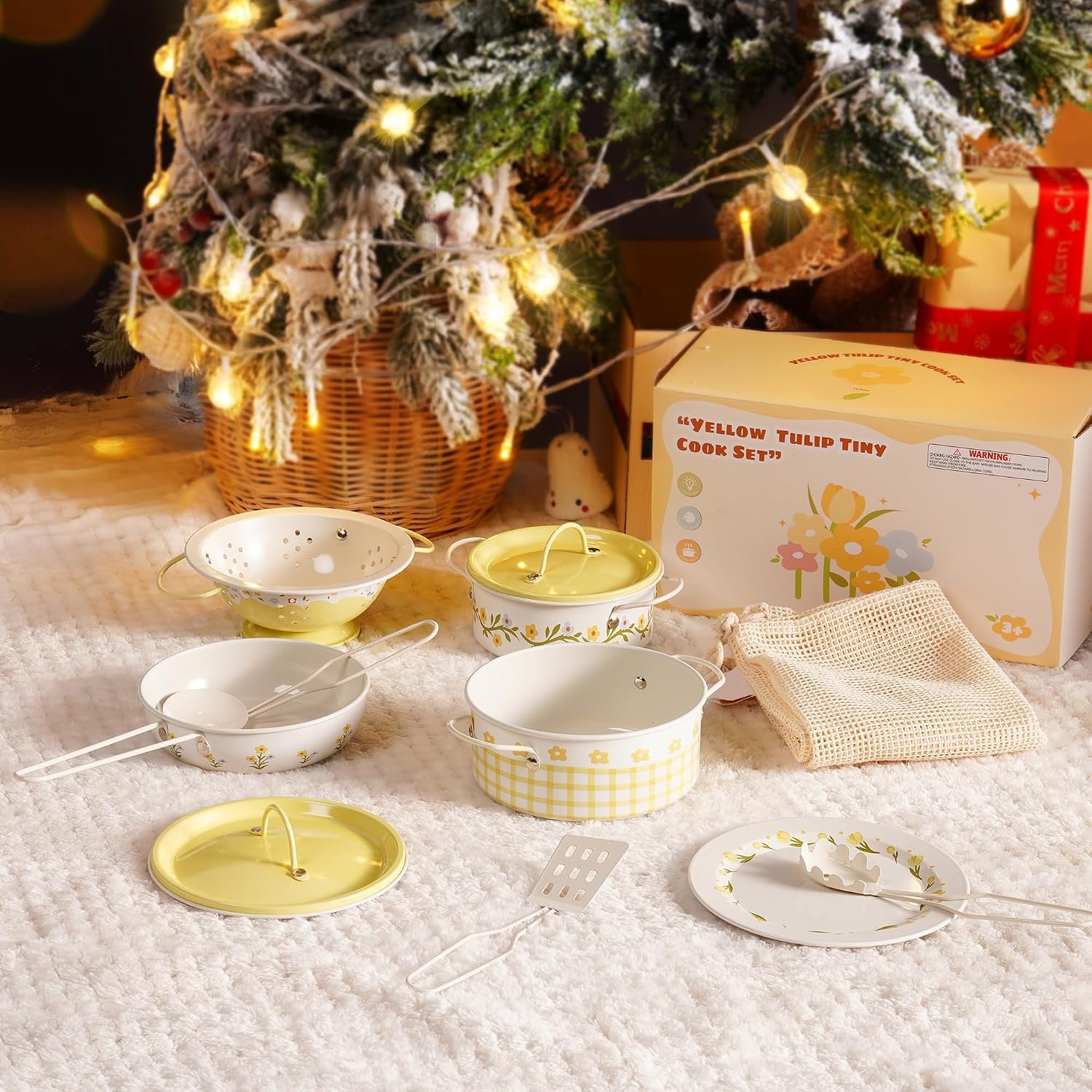
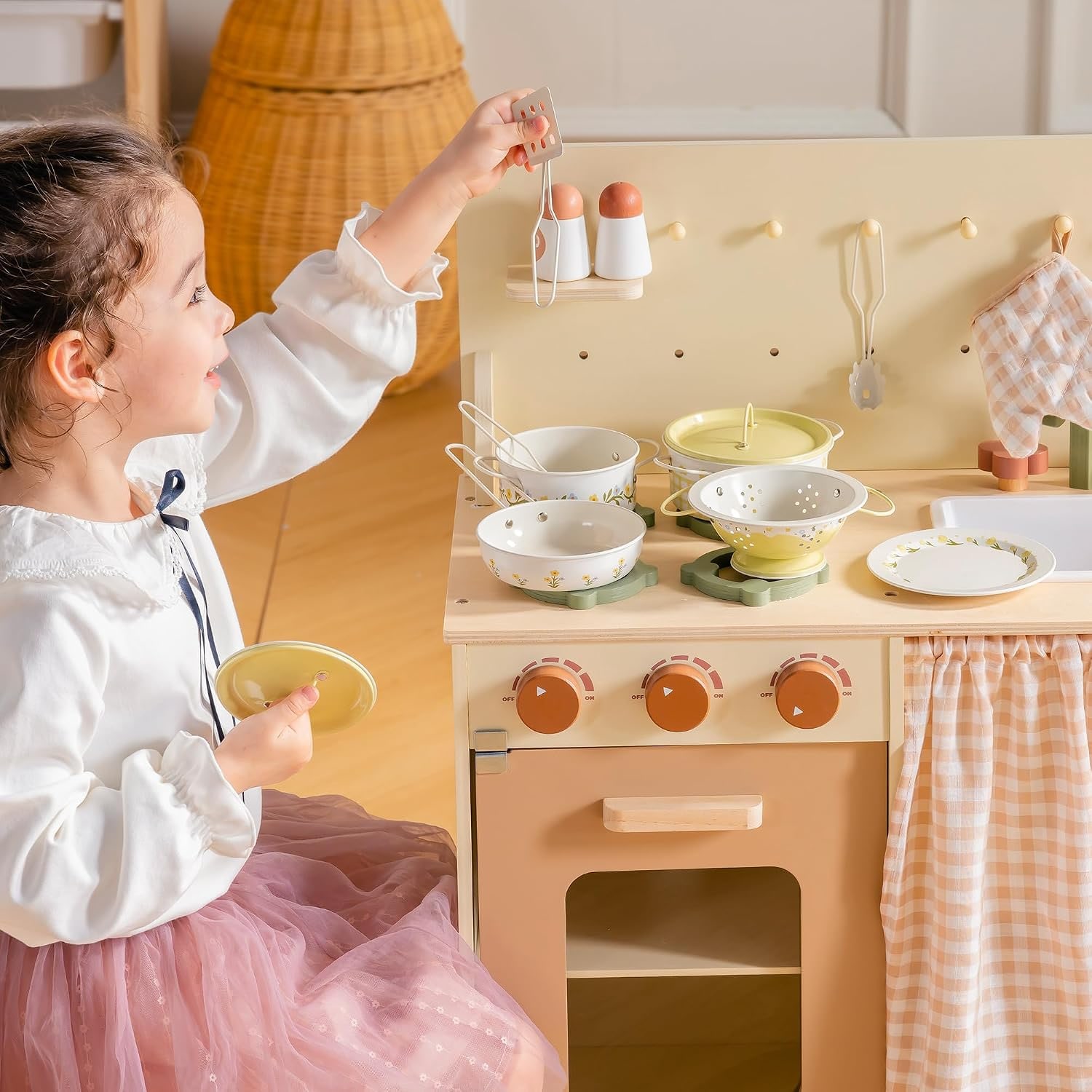
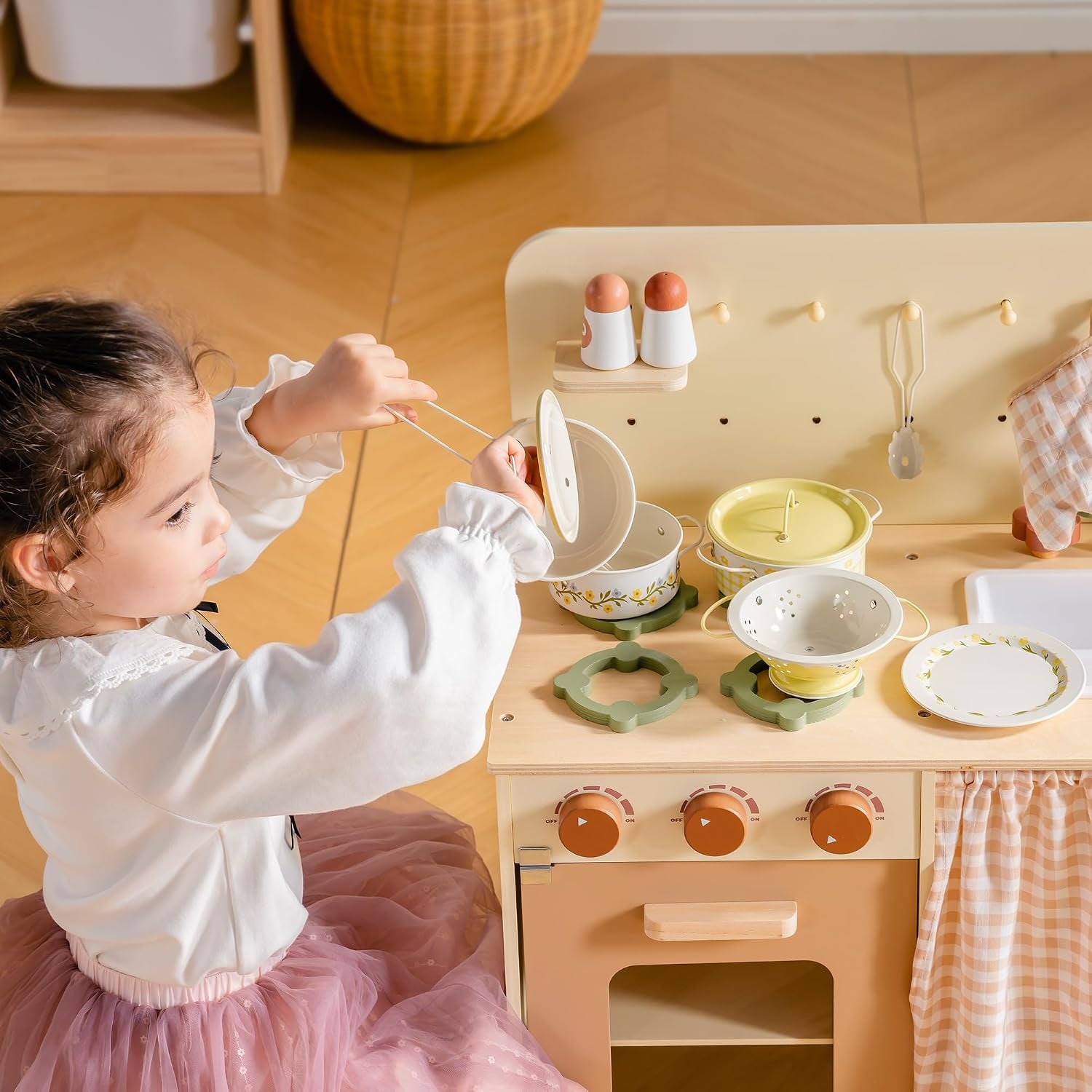
This set has nine pieces. There is a stockpot, a saucepan, a frying pan and a hotpot, which covers four different cooking actions straight away. Add a plate, three cooking utensils and a mini stove and you have a small working kitchen that does not need anything else to get going.
The mini stove is worth calling out. Without it, pretend cooking needs a surface, which usually means a play kitchen unit or the actual floor. With a stove included, the set works anywhere: a bedroom rug, a picnic blanket, the back of the car during a long wait. That portability is the difference between a toy used at one spot in the house and one that travels.
Sizes are small by design. The stockpot runs about 9.4 cm across, the saucepan and frying pan about 10.9 cm, and the hotpot about 11.4 cm. Those measurements are not arbitrary. A pan that size can be lifted one-handed by a young child, carried without wobbling and set down without the handle twisting out of their grip. Go bigger and the pans become two-handed objects, which cuts out half the play.
The case for metal over plastic
The material type here is listed as metal, and it changes the experience. Metal cookware has a small amount of heft. When a child lifts it, their arm registers the weight, which is a different signal to the brain than lifting a hollow shell. It also sounds right. A spoon tapping the side of a metal saucepan makes the exact noise they hear in the family kitchen.
Metal toy pots and pans also sit flat and stay put. A plastic pan slides around on a play hob and tips when a wooden carrot goes in. Something with a bit of weight stays where it is placed, which keeps the pretend meal intact long enough for the child to finish the story they are telling.
There is one practical trade-off. Metal needs to be dried after it gets wet and should not be left outside in the rain. That is a small price for cookware that still looks presentable after a year of use.
Who it suits
The age guidance is 3 and up. The set contains small parts and is not for children under 3, so if there is a younger sibling in the house, plan for where the set gets stored and when it comes out.
It suits a few different situations well. If you already own a play kitchen that came with weak accessories, this is a straight upgrade and the pans will sit on a standard play hob. If you have no kitchen unit and no room for one, the mini stove means you can skip the furniture entirely and still get the play. And if you have two children who argue over a single frying pan, nine pieces goes a long way toward peace.
It also works as play kitchen accessories for a shared space, like a playgroup corner or a grandparent's spare room where the toys live. The bag matters more in those settings, because shared toys lose pieces faster than ones that live in a single bedroom.
How to choose between sets
If you are comparing a few options, a short checklist helps.
Count the actual cooking vessels, not the total piece count. Some sets pad the number with five plastic eggs. Four separate pans and pots, as you get here, is a genuinely useful spread.
Check whether a cooking surface is included. A set with a mini stove plays anywhere. A set without one needs a play kitchen, which is a bigger purchase and a bigger footprint.
Look at the diameters. Anything much over 12 cm starts to get awkward for a three or four year old to handle with one hand.
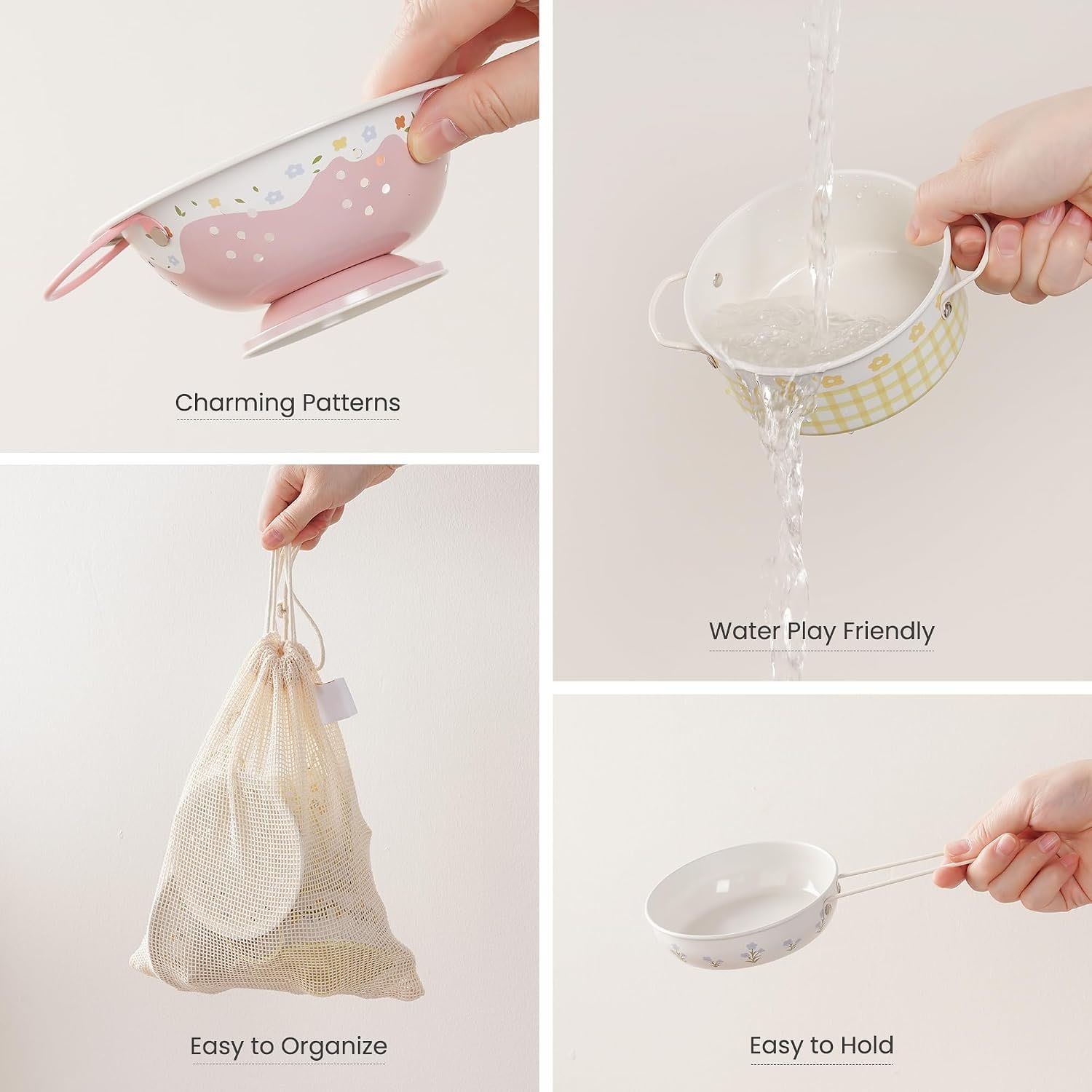
Ask whether there is somewhere to put it all. A drawstring bag sounds like a minor detail until you have spent a Sunday hunting for a toy saucepan lid. Storage is what keeps a set complete, and a complete set keeps getting played with.
Finally, think about what else you own. A toy cookware set pairs naturally with play food, a tea set or a few safe real items such as a dry tea towel, an empty herb jar or a small wooden spoon. The fewer gaps in the pretend kitchen, the longer the game runs.
Looking after it
Care here is simple. Wipe each piece with a soft, damp cloth after messy play and dry it properly before it goes back in the bag. Skip the dishwasher and skip long soaks, since sitting in water is what spoils a metal finish.
Keep the set away from real heat. It is pretend cookware, so it has no business near a hotplate, oven, barbecue or campfire at any point.
Give the pieces a quick look over every so often. If a handle loosens, an edge dents or anything chips, retire that piece. Nesting the smaller pans inside the hotpot before closing the bag saves space and stops the pieces knocking each other around in storage.
If the set gets taken outside for mud kitchen play, bring it in the same day, rinse off the dirt, dry it and put it away. Outdoors is fine. Overnight in the garden is not.
The short version
A good kids pots and pans playset is one with enough pieces to tell a cooking story, cookware light enough for small hands but heavy enough to feel real, a surface to cook on, and a bag to keep it all together. This nine piece set covers all four.
You get a stockpot, saucepan, frying pan and hotpot in sizes between roughly 9.4 cm and 11.4 cm, plus a plate, three utensils, a mini stove and a drawstring bag. The material type is metal and the colour is yellow. It is made for ages 3 and up, and it contains small parts, so it is not for children under 3.
It ships from Australian warehouses in 3 to 7 working days, and returns are open for 14 days from delivery as long as the set is unused and in its original packaging.