
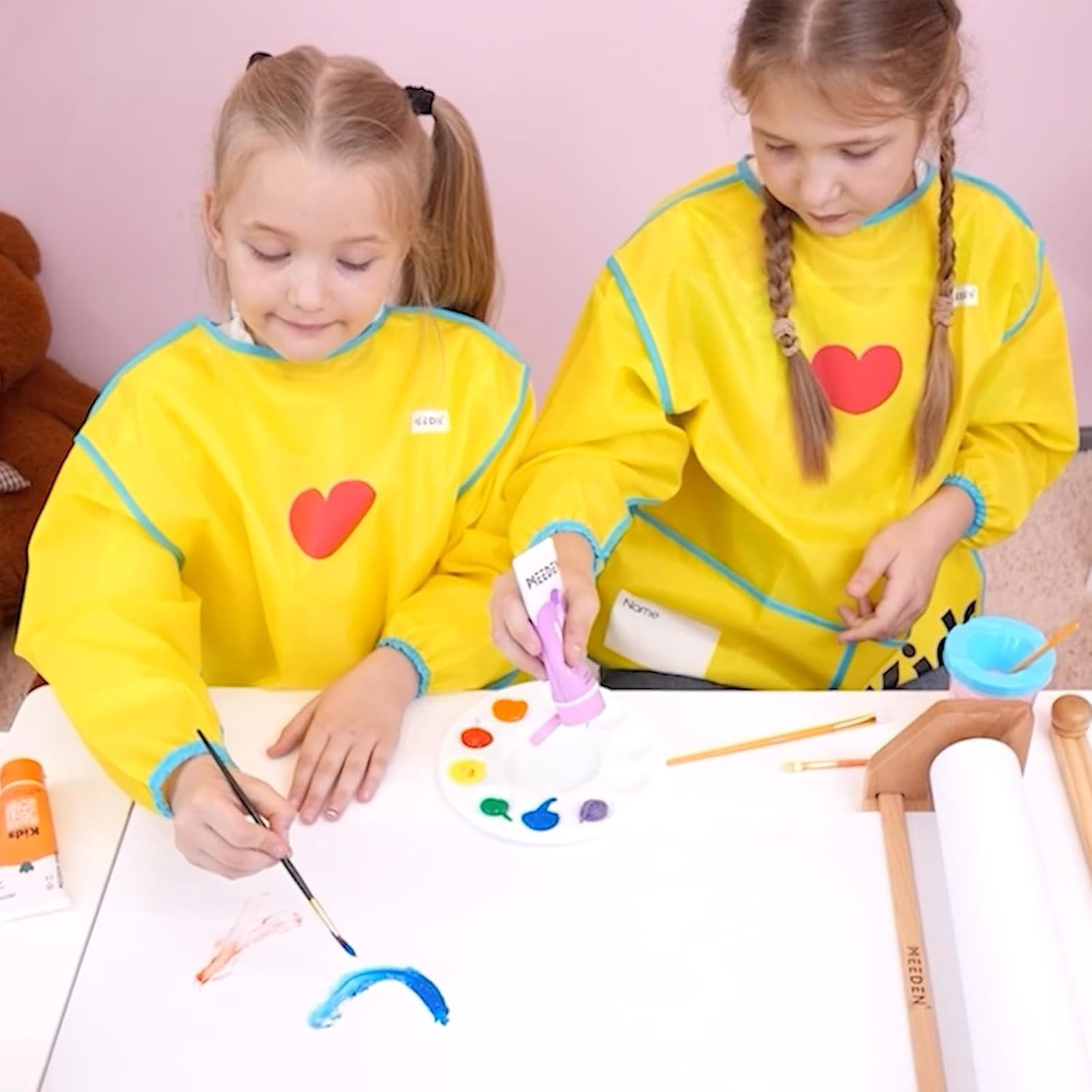
The complete guide
How to Choose a Paper Roll Easel for Kids
The problem a paper roll solves
Ask anyone who draws with kids regularly and you will hear the same complaint. The drawing is going well, then the paper runs out. Someone goes hunting for a sheet. The printer tray is empty, the good pad is in the car, and by the time paper appears the idea has gone cold.
A paper roll easel removes that gap. The paper lives on the table, attached to the thing the child is already using. Pull, tear, keep drawing. It sounds like a small change. In practice it changes how long a child stays at the table, because nothing interrupts them.
The second thing it fixes is size. A standard sheet is a fixed box. A roll is not. A child who wants to draw a train with fourteen carriages can simply pull more paper. Long drawings, maps, timelines, race tracks and murals all become possible without taping sheets together.
How this one works
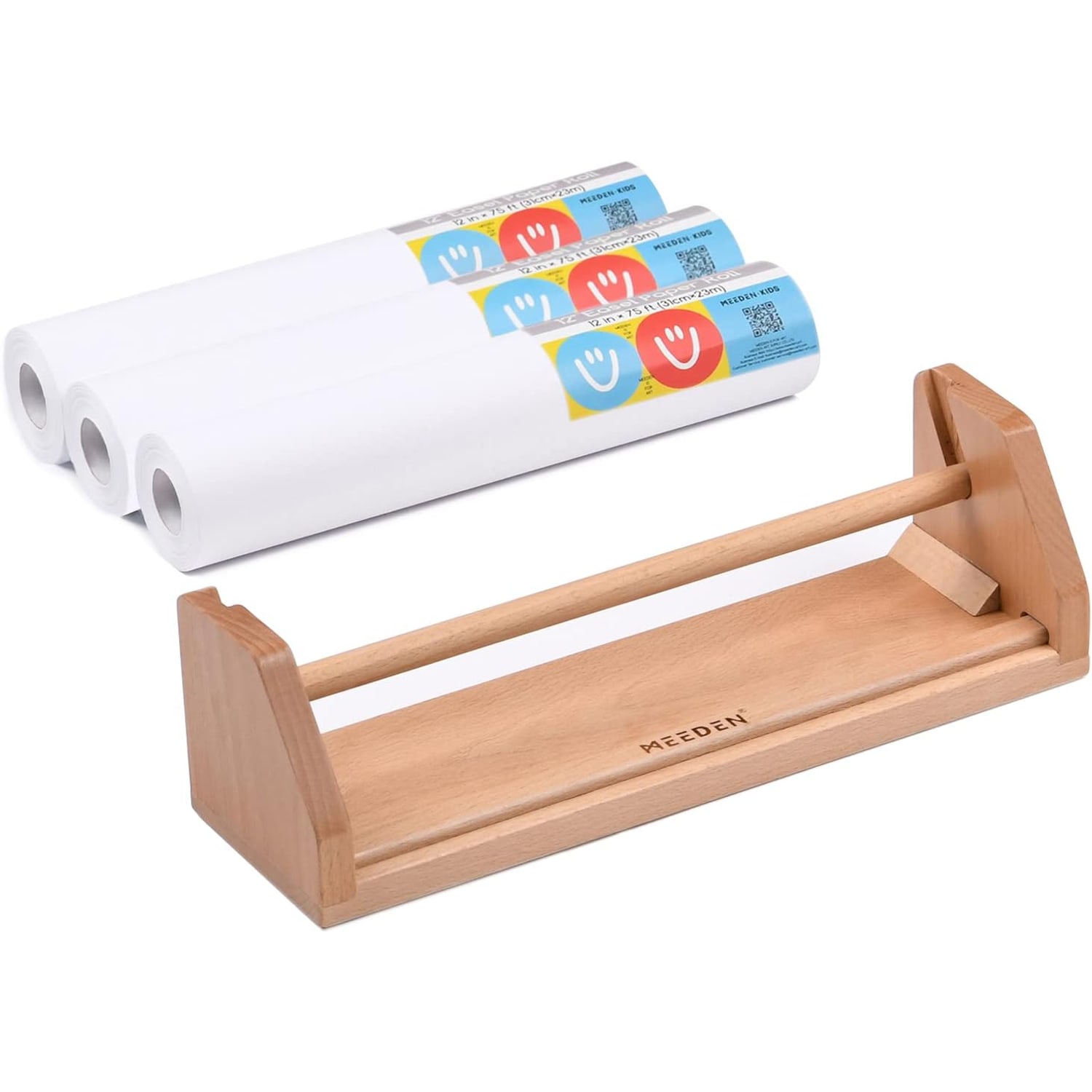
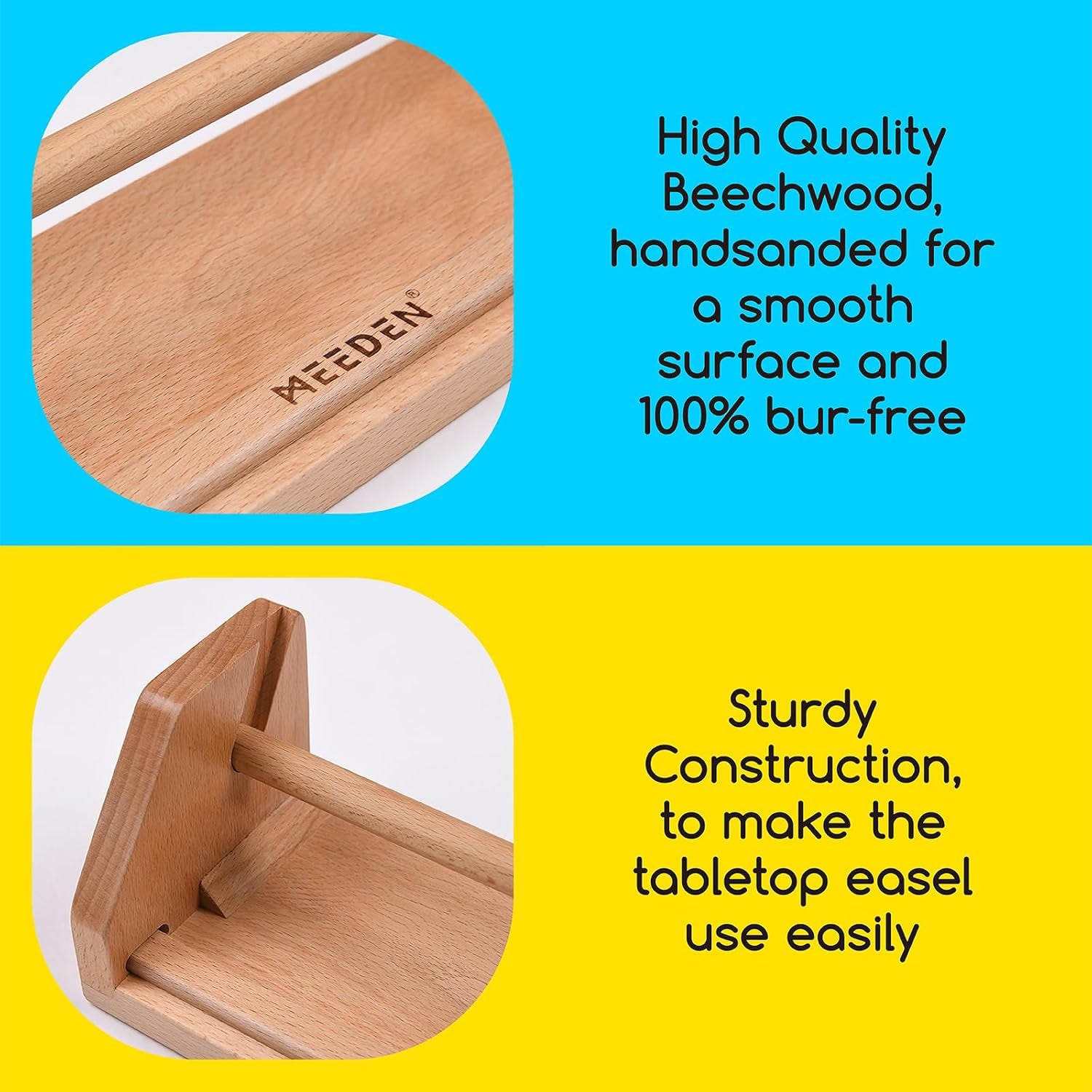
This is a single mast easel, which means one upright support rather than a folding tripod frame. The roll sits on a reinforced central shaft that runs through the paper core. The shaft is the part that does the real work. It keeps the roll centred, lets it spin when paper is pulled, and stops the roll dropping out when a child tugs sideways instead of forward.
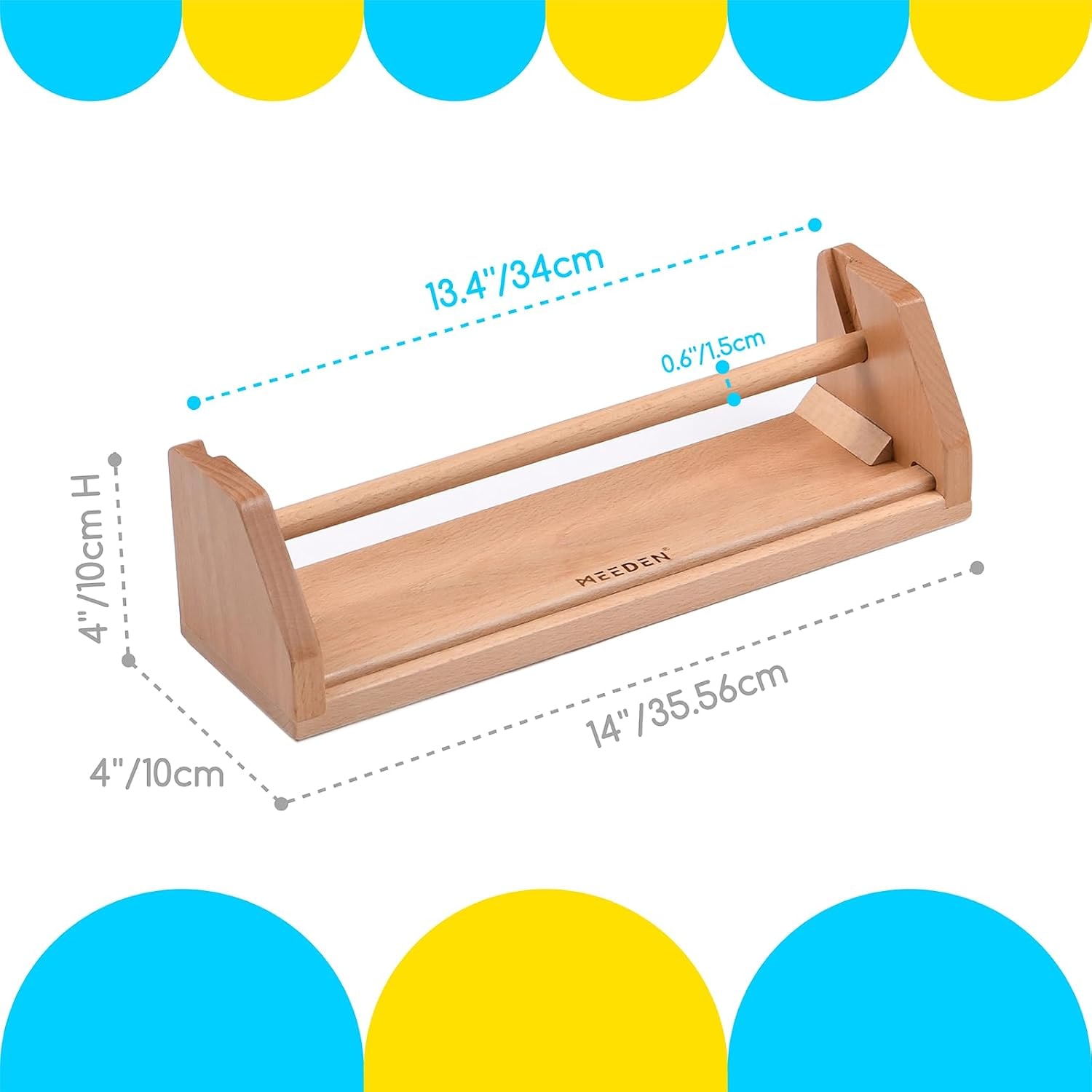
The frame is beech wood with a smooth polished surface and a natural finish. It measures 10.9 cm deep, 35.8 cm wide and 10.2 cm high, and weighs 2.32 kg. Those numbers matter more than they look. The shallow depth means it can sit at the back edge of a table and still leave the front clear for hands and pencils. The weight means it stays where you put it.
There is no assembly. That is worth something if you have ever spent twenty minutes with an allen key while a child watches, losing interest by the minute. You open the box, load a roll, and the easel is working.
Tabletop or floor standing
This is the first real decision when people shop for the best kids drawing easel, and it is mostly a question of space and how your household actually draws.
A floor easel is a piece of furniture. It gives a big vertical drawing surface and suits a dedicated playroom or an art corner that never gets packed away. The trade off is footprint. It takes up a square of floor permanently, and in a small home that square is expensive.
A tabletop unit like this one borrows space instead of claiming it. It sits on a surface you already have, works at the same table where homework and snacks happen, and can be lifted off and put on a shelf when the table is needed for dinner. If your drawing happens at the kitchen table, a tabletop paper roll dispenser is almost always the better fit.
Who it suits
Children from about three upwards, which is the recommended age for this product. At that end, an adult usually helps pull and tear the paper for the first few sessions until the technique clicks. From about five or six, most kids manage it alone.
It also works well in group settings. Classrooms, art rooms, library craft sessions and after school programs all benefit from something that needs no setup and takes up little table space. One of these at the back of a table serves a rotating group all afternoon.
Families with more than one child tend to get good use out of it too. A long pulled section laid flat on the table gives two or three children their own patch to work on, which beats arguing over a single sheet.
And plenty of adults quietly borrow it. Sketching, list making, working out a seating plan, wrapping small gifts. A roll of blank paper on a desk is useful in ways that have nothing to do with kids.
What to check before you buy
Table width. Measure the back edge of the table or bench where it will live. You need 35.8 cm clear, plus a bit of breathing room so it is not jammed against a wall or a toaster.
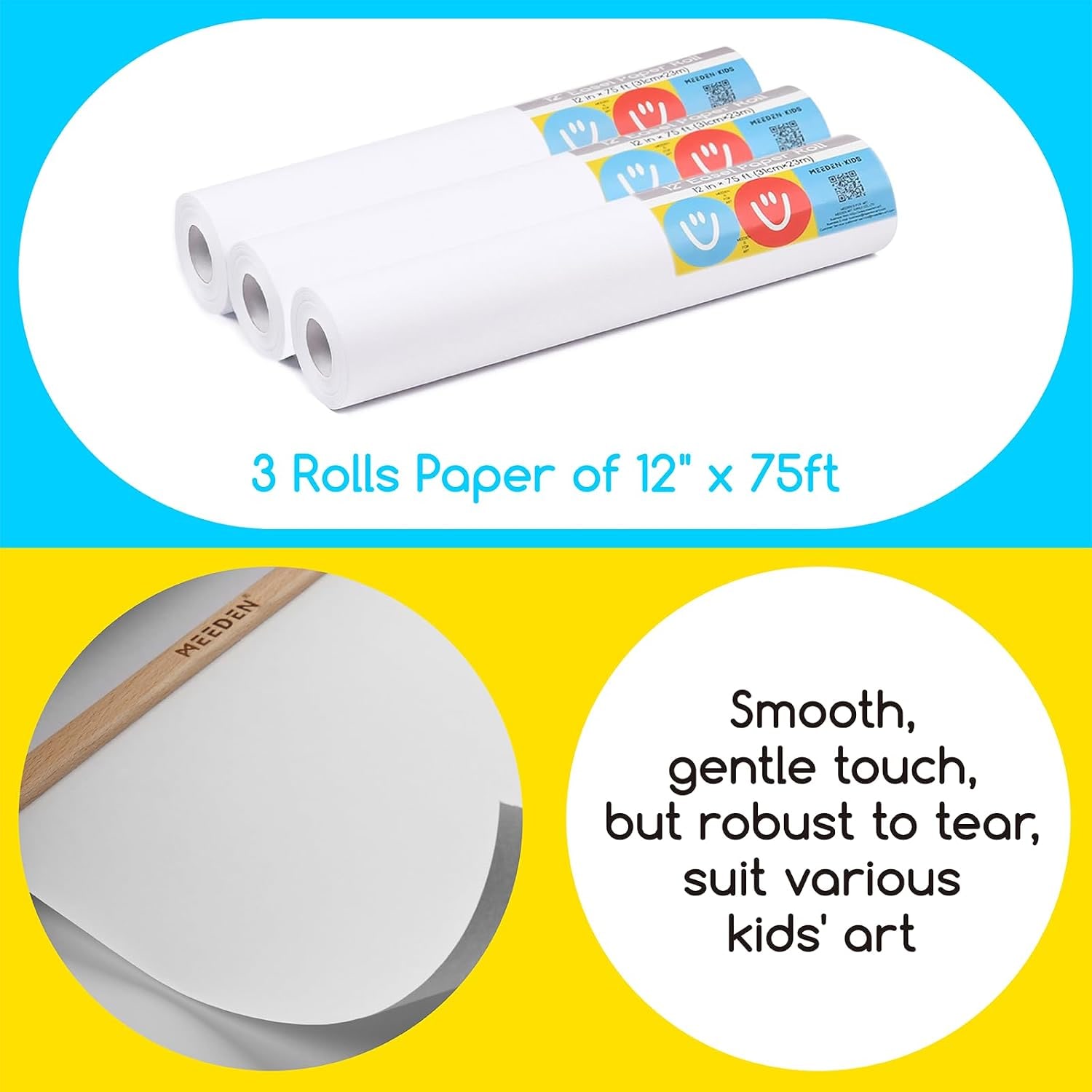
Your paper roll. The exact roll width this unit is sized for is not specified, so if you already own rolls, measure them. Check the width of the paper and the diameter of the cardboard core, since the core has to slide onto the shaft. If you are buying fresh, order a roll at the same time as the easel so you are not waiting.
Where it will be stored. A 2.32 kg wooden unit is easy to move, but it still needs somewhere to go. A shelf, a cupboard or a dedicated corner of the bench all work.
Who is using it. If the main user is three, plan on helping at first. If the main user is eight and draws constantly, expect to be buying refills more often than you thought.
Getting the most from it
A few habits make a roll last much longer and keep the table tidier.
Teach the pull and tear as one motion. Pull the length you want, hold the paper flat against the frame edge, and tear in a single steady movement. Hesitant tearing gives ragged edges and sometimes drags more paper off the roll than needed.
Agree on a length. A child left to their own devices will happily pull a metre to draw one cat. Setting a rough guide, roughly an arm span, keeps the roll going for weeks instead of days.
Use scissors when the drawing matters. If a picture is going on the fridge or in the post to a grandparent, cutting gives a cleaner edge than tearing.
Let the long format be the point. The best wooden art easel for children is the one that gets used in the way only it can. Suggest a street, a river, a story told left to right across a long strip. That is the thing a sketch pad cannot do.
Looking after the wood
Beech is a hard, close grained timber and it holds up well, but it is still wood and it responds to its environment.
Wipe spills and stray marker as soon as you see them. A dry cloth or one that is barely damp is all you need. Dry it straight away rather than leaving moisture sitting on the surface.
Do not soak it, do not run it under a tap, and keep it well away from the dishwasher. Avoid damp cupboards and long stretches of direct sun, both of which can cause timber to move over time.
Store it indoors. If it goes outside for a drawing session on the deck, bring it back in afterwards rather than leaving it to catch the overnight dew.
That is genuinely all the care it needs. No oiling schedule, no special products.
Delivery and returns
Orders ship from Australian warehouses and typically arrive in 3 to 7 working days. Remote postcodes can take a little longer.
Returns are accepted within 14 days of delivery, provided the item is unused and back in its original packaging. If the fit is wrong for your table or the paper you own, it is worth checking those measurements before the easel comes out of the box.
The short version
This is a beech wood tabletop easel with a paper roll holder, model RPP-2041, measuring 35.8 cm wide, 10.9 cm deep and 10.2 cm high, weighing 2.32 kg. It is a single mast design with a reinforced central shaft, it needs no assembly, and it is recommended for ages 3 and up.
Buy it if your drawing happens at a table you already own, if your child goes through paper faster than you can supply it, and if you want long format drawings without taping sheets together. Measure your table and your paper roll first, teach the pull and tear, and keep it dry. That is the whole job.