
The complete guide
Choosing a Kids Shopping Trolley Play Set, A Buyer's Guide
The game children invent anyway
Ask any parent what their child does with the pantry and you will hear the same story. Tins come out. They get lined up on the floor in a careful row. Somebody announces a price, usually a very strange one, and somebody else hands over imaginary money. Nobody taught them this. Shopping is just something children see adults do often enough to copy.
The trouble is that the real pantry is not a great prop. Tins are heavy, glass jars are a bad idea on tiles, and nobody enjoys putting the shelves back together afterwards. A kids shopping trolley play set solves that by giving the game its own kit, so the real kitchen can stay closed.
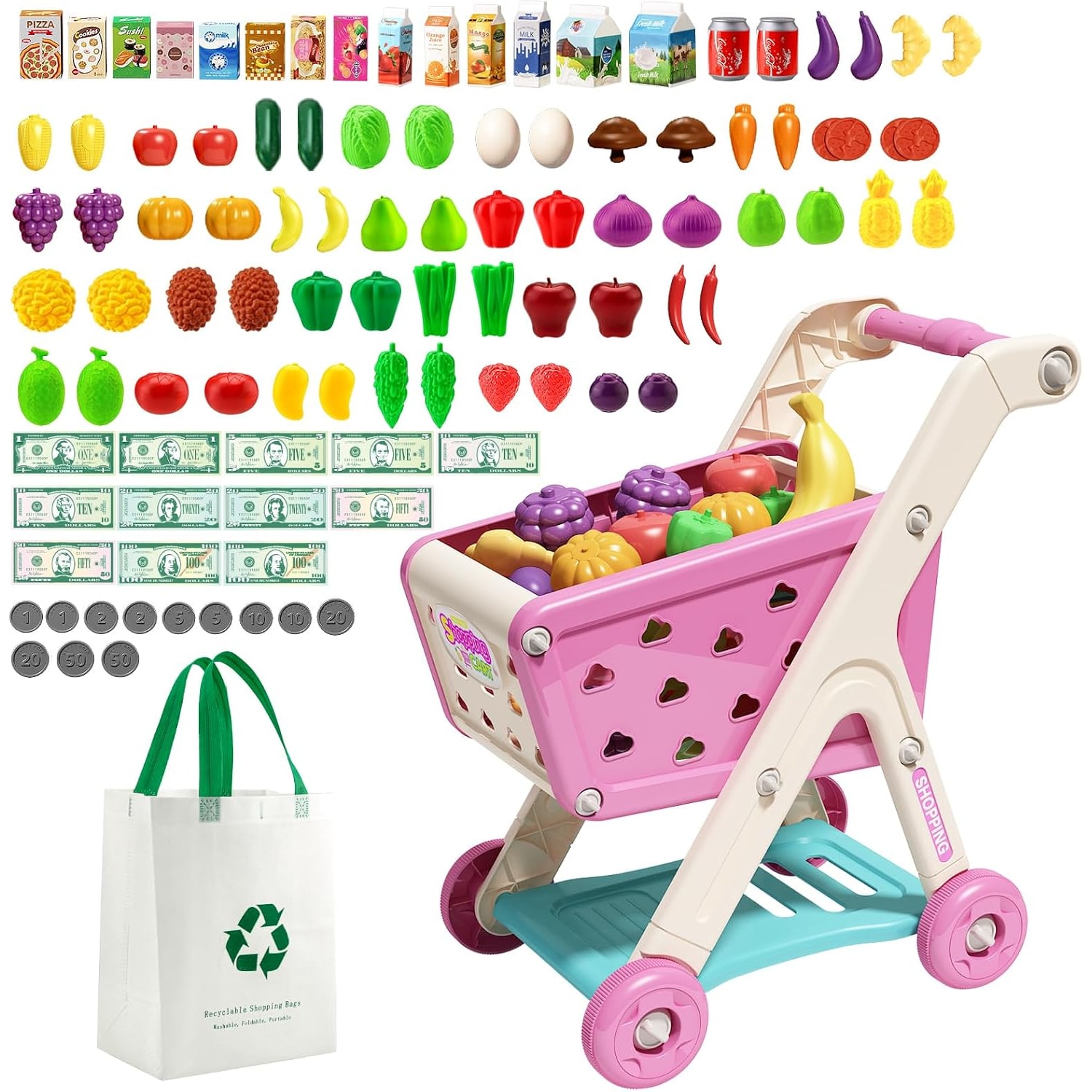
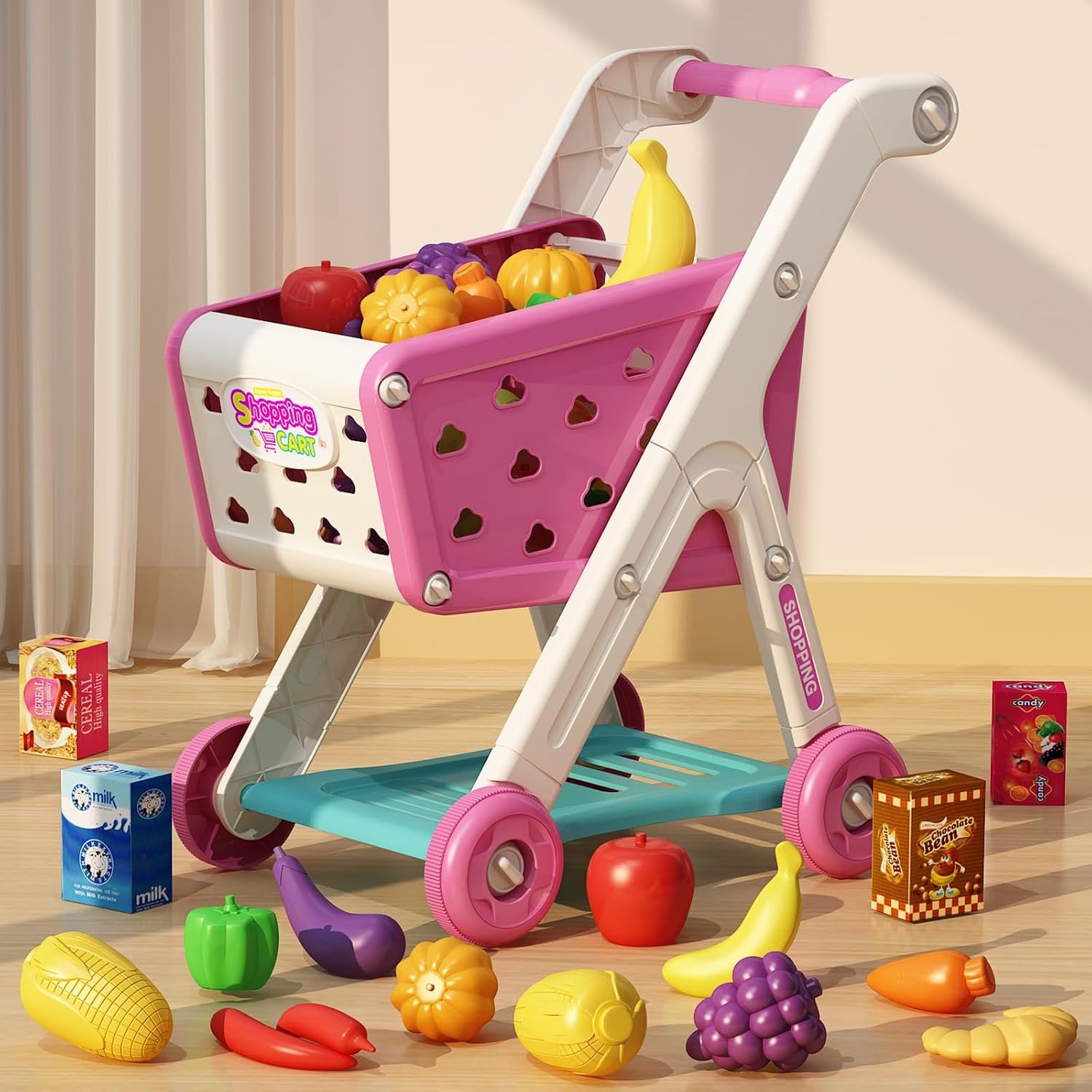
This set is built around that idea. A child-size cart to push, a bag to carry the shopping home in, 60 pieces of fruit and vegetables, and 16 fast food toys. That is 102 pieces, which sounds like a lot until you watch a child tip them all out on the rug and announce the shop is now open.
What you actually get
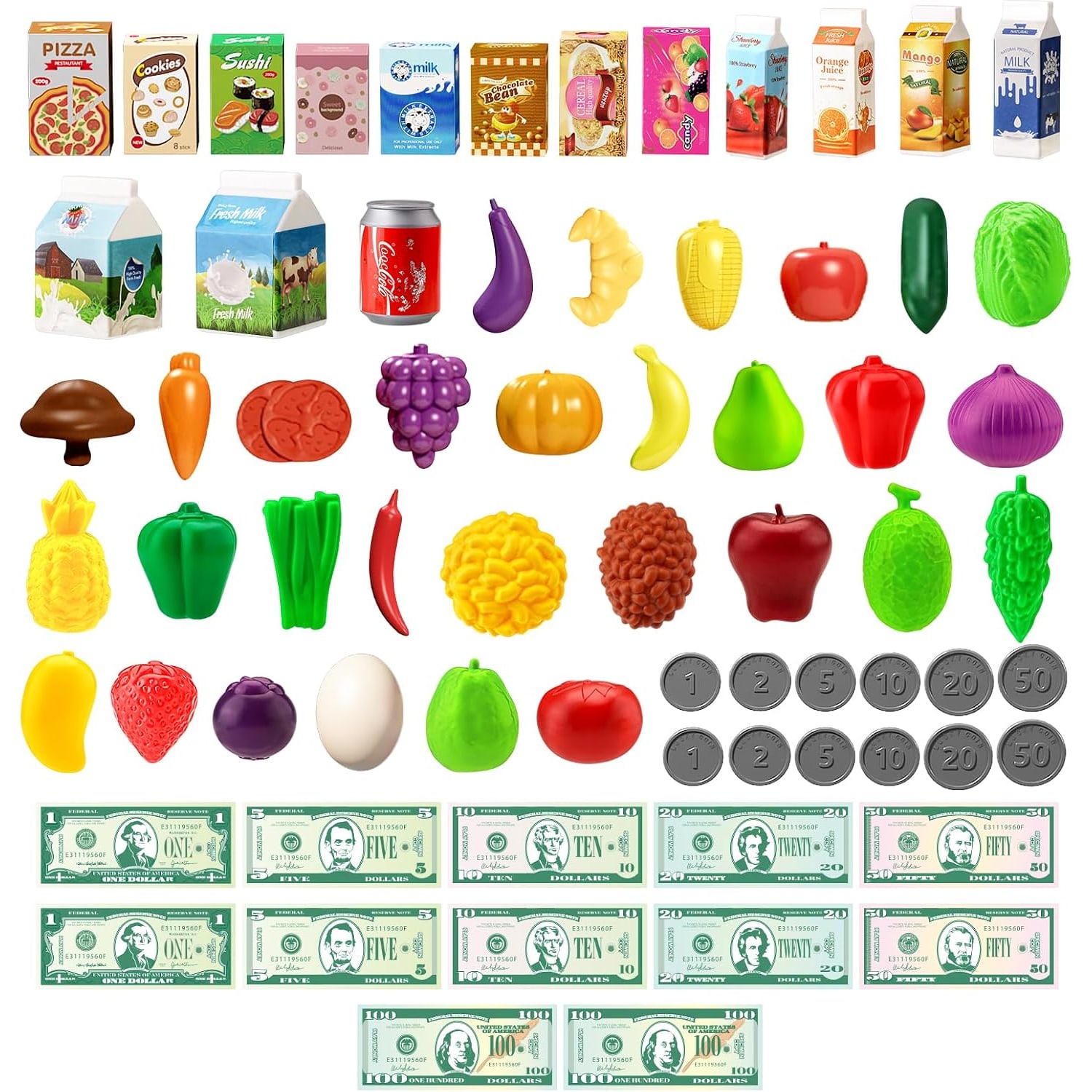
The headline number is the piece count, but it helps to know how it breaks down. The cart and the shopping bag are the big items. The fruit and vegetable pieces are the bulk of the set at 60, which is enough to fill the trolley, stock a pretend shelf and still have leftovers. The 16 fast food toys add a takeaway counter, which is usually the bit older siblings gravitate towards.
Everything is moulded in ABS. That is the same hard plastic used in a lot of durable toys. It holds its shape, it does not go sticky, and a damp cloth takes care of it. The packed set measures 31.8 x 25.4 x 16.5 cm and weighs 1.09 kg, so it is light enough to carry from room to room without much effort.
The colour is rose red, and the theme is listed as kitchen, which tells you where this set naturally lives in the house.
Why the trolley matters more than the food
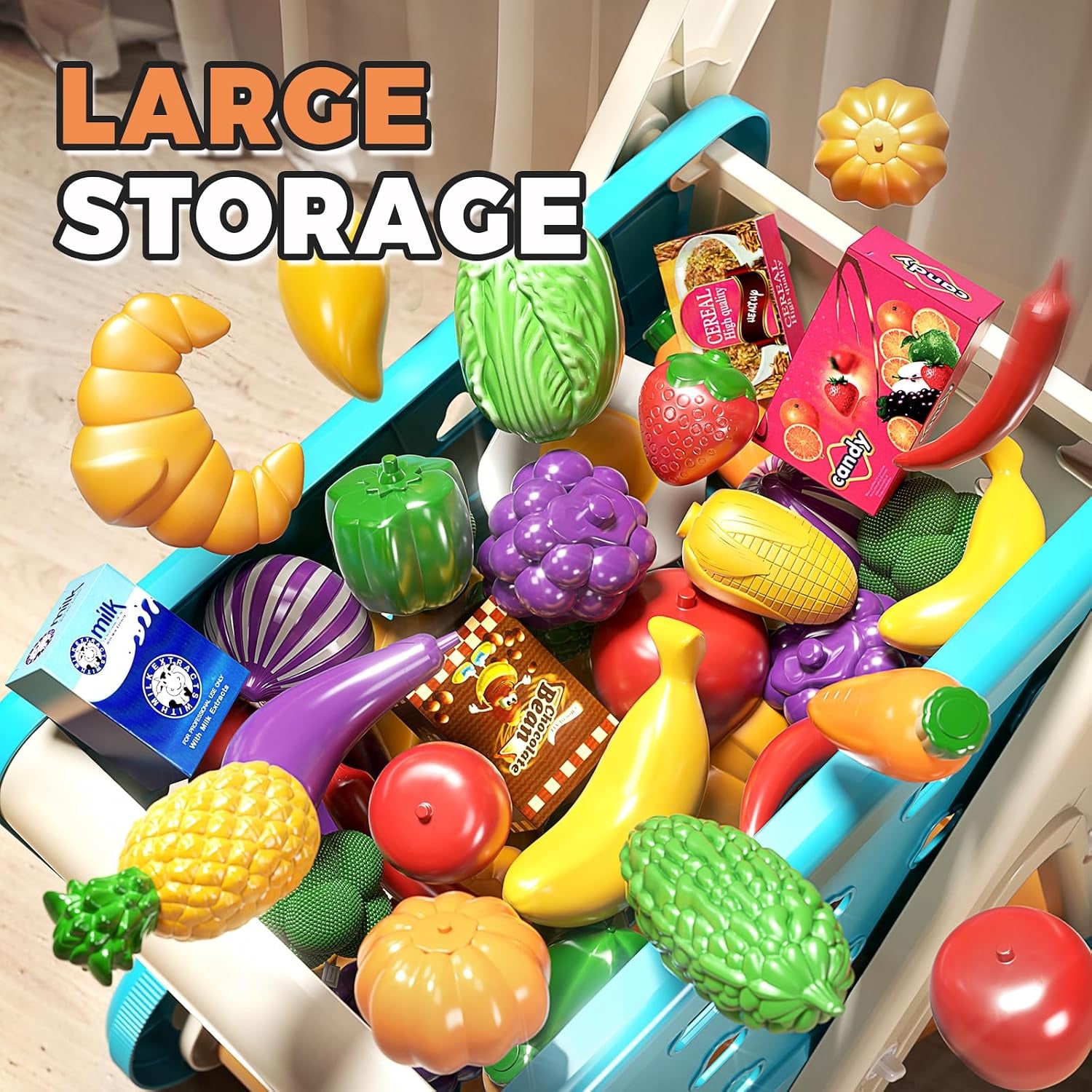
Plenty of play food sets exist. What makes this one different is the cart. A trolley turns a sorting activity into a journey. The child goes somewhere, collects things, pays, and comes home. That structure keeps the game going much longer than a pile of plastic apples on its own.
A child-size cart also means standing up and walking, which changes the energy of the play. Floor play is quiet and still. Trolley play has laps of the hallway in it. If you have a child who struggles to settle into a sitting-down activity, the moving part often makes the difference.
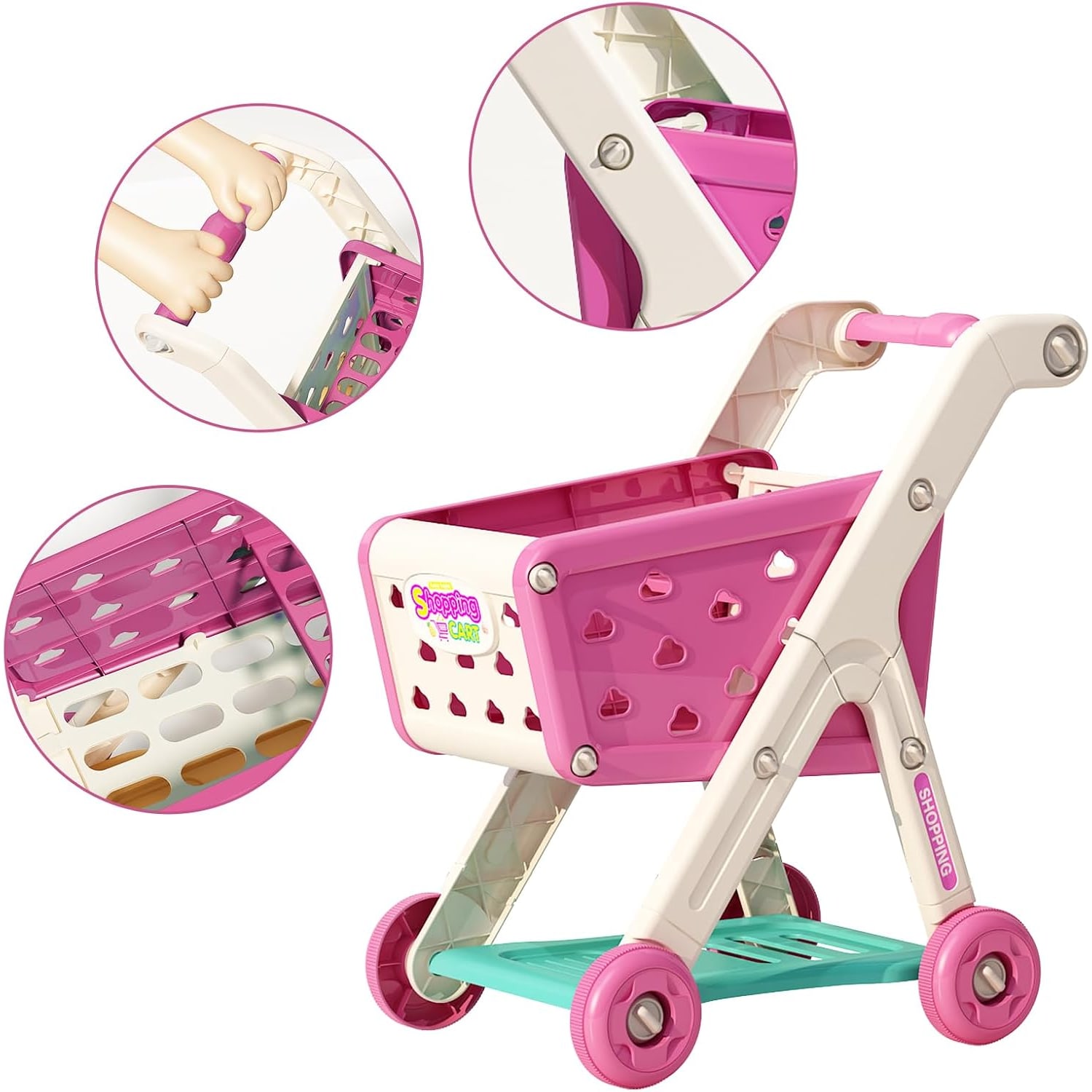
The wheels are round and designed to roll across different surfaces without scratching the floor. In real homes that means timber boards, tiles and low pile rugs all work. Deep shag carpet is harder going, as it is with any wheeled toy. If your lounge room is thick carpet, the game tends to migrate to the kitchen or the hallway, and that is fine.
Who it suits
The recommended age is 3 and up. The set includes small parts, so it is not suitable for children under 3, and that is worth taking seriously if you have a younger sibling crawling around. Keep play to a time and a place where the small pieces can be gathered up afterwards.
At the lower end of the age range, children mostly load and unload. The trolley gets filled, emptied, filled again, and pushed into furniture. That is proper play and it is where the set earns its keep. A little older and the game gets more complex, with prices, lists, receipts and a shopkeeper who takes the job very seriously.
It also works well with more than one child. One runs the shop, one does the shopping, then they swap. The piece count supports that, because there is enough stock for both sides to have something to do. Anyone looking for a shared play set for siblings will find this easier to split than a single-cart set with a dozen pieces.
How to choose between sets like this
A few things are worth comparing when you are looking at a toy shopping cart.
Piece count is the obvious one, but do not stop there. Ask what the pieces are. A set with 100 pieces where 80 of them are identical tokens is less interesting than one with a spread of different fruit, vegetables and takeaway items. Variety is what keeps a pretend shop feeling like a shop.
Cart size matters next. Too small and the child has to crouch, which gets uncomfortable fast. Too large and it will not fit through a doorway with a child behind it. Child-size is the useful middle, and this set is described that way.
Material is the third check. Hard moulded plastic like ABS survives being stood on, which is going to happen. Softer or hollow pieces split at the seams. Look for solid pieces if the toy is going to see daily use.
Finally, think about storage before you buy, not after. A set that comes with a bag has somewhere for the pieces to live. A set that comes in a cardboard box has somewhere for the pieces to live for about four days. The included shopping bag here does double duty as part of the play and as the tidy-up container.
Assembly and the first hour
The cart requires simple assembly. That usually means joining the frame and fitting the wheels, and it is the sort of job best done before the child is watching. Give the connections a firm press and a wiggle to check they are properly seated.
Once it is together, resist the urge to organise the pieces into a beautiful display. Children will tip them out regardless. A better opening move is to give a short shopping list, three items, and send them off to find them. That gives the game a shape, and from there they will take over and invent their own rules within about ten minutes.
Keeping it in one piece
Cleaning is simple. A damp cloth with a little mild detergent handles both the trolley frame and the play pieces, then dry everything before it goes away. Skip the dishwasher, the microwave and boiling water, because heat is what warps plastic and nothing brings a wheel back once it has gone out of round.
Keep the set out of direct sun for long stretches. Sun fades colour and makes plastic brittle over time. Every so often, turn the cart over and pull hair or carpet fluff out of the wheel axles, which is the single most common reason a wheeled toy starts dragging.
For the pieces themselves, make the shopping bag the official home. One rule, one container. Do the sweep before bed and the count stays close to complete for years.
Storage and living with it
The packed dimensions give you a rough sense of the footprint, though the assembled cart takes more floor space than the box. Plan for a corner, a shelf under a play table, or the base of a wardrobe. It weighs just over a kilo, so a child can move it out of the way themselves once they know where it goes.
If space is genuinely tight, the cart can live out as part of the room and the bag of groceries can go on a shelf. Visible toys get played with more often, which is either a feature or a problem depending on your tolerance for a hallway supermarket.
Delivery and returns
Orders ship from Australian warehouses and typically arrive in 3 to 7 working days, with tracking sent once the parcel is on its way. Returns are accepted within 14 days of delivery if the item is unused and in its original packaging, so hang on to the box until everyone has decided they like it.
The short version
This is a 102 piece pretend shopping set built around a child-size trolley, with a bag, 60 fruit and vegetable pieces and 16 fast food toys. It is ABS plastic in rose red, it needs simple assembly, and the wheels are made to roll without scratching floors. Recommended for ages 3 and up, and not for children under 3 because of small parts.
If your child has already started shopping with the pantry tins, this gives them a proper kit for it and gives you your pantry back. That is a fair trade.