
The complete guide
Choosing a Wooden Doll Bunk Bed, A Practical Buyer's Guide
The problem with nowhere to put the doll
Watch a child play with a big doll for ten minutes and you will spot the gap. The doll gets dressed, gets fed, gets walked around the room, and then the game stalls because there is nowhere for the doll to go. A cushion gets drafted in. A laundry basket. A towel folded over a shoe box. It works, sort of, but the story keeps collapsing because the setting keeps collapsing.
A proper doll bed fixes that. It gives the game a home base, and once there is a home base, the play lasts longer and gets more detailed. Bedtime, naps, sick days, sleepovers, moving house, all of it becomes possible because there is a bed to build the story around.
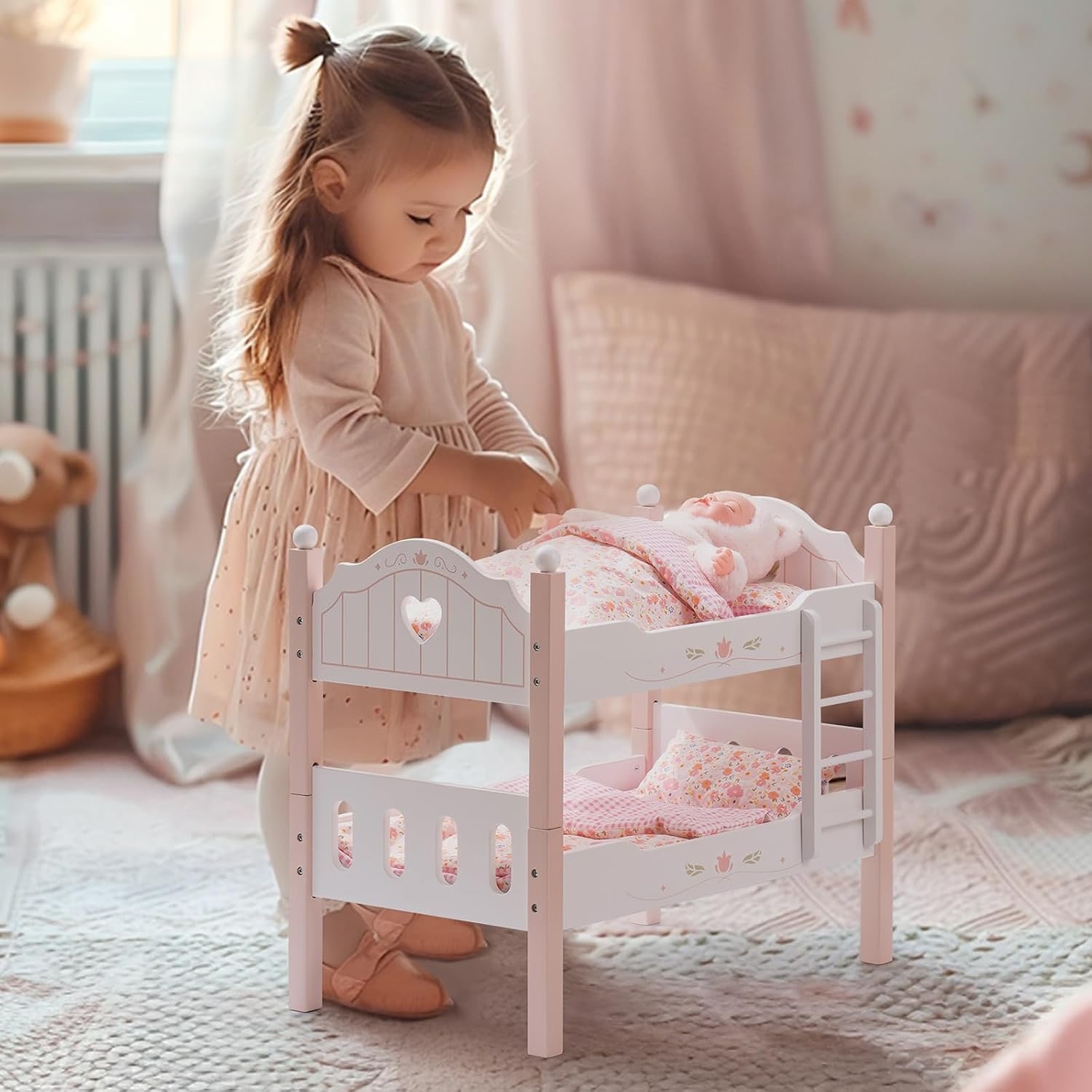
A wooden doll bunk bed does something extra. It gives you two beds instead of one, which opens the door to sibling stories, friend visits and the small dramas that come with deciding who gets the top bunk.
What this one actually is
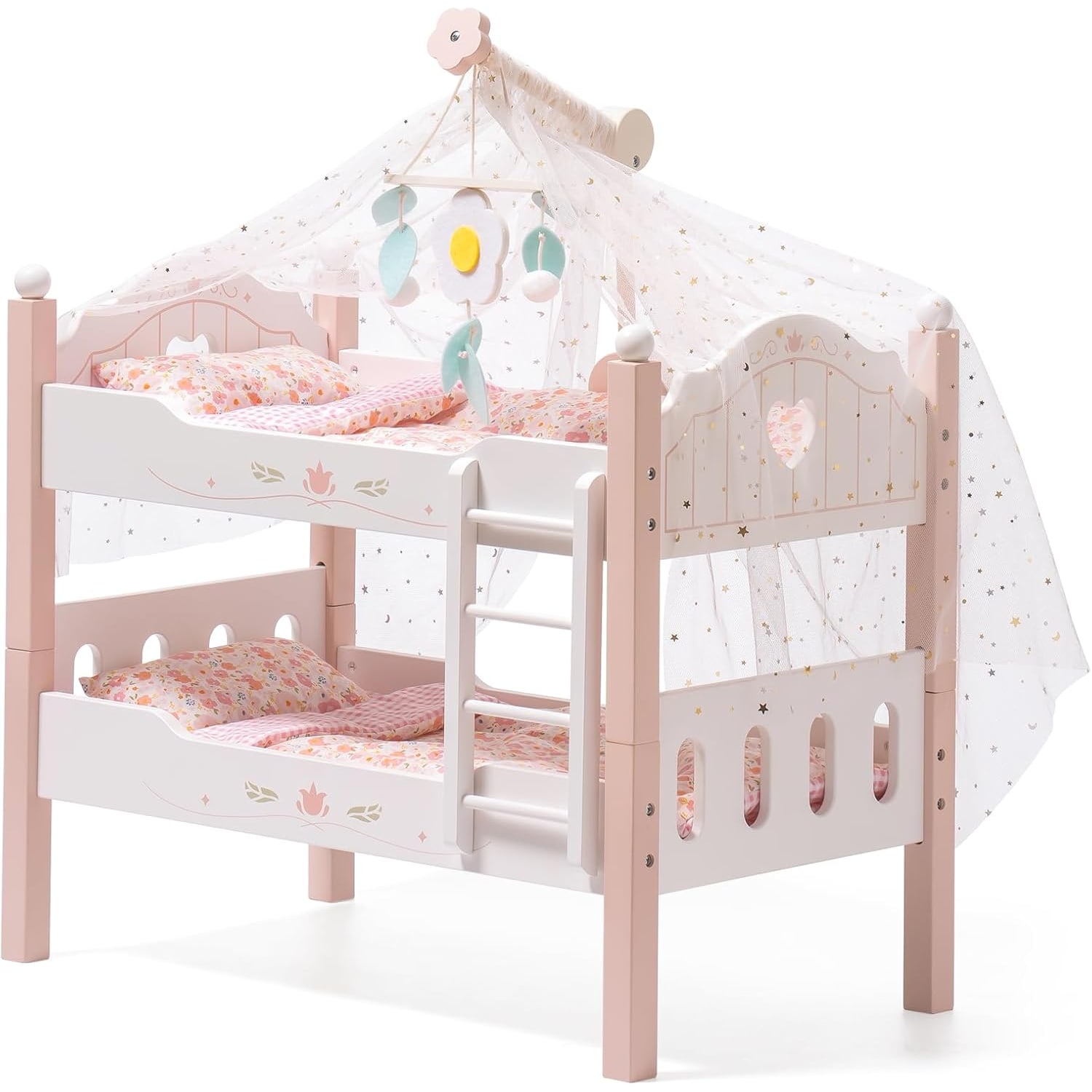
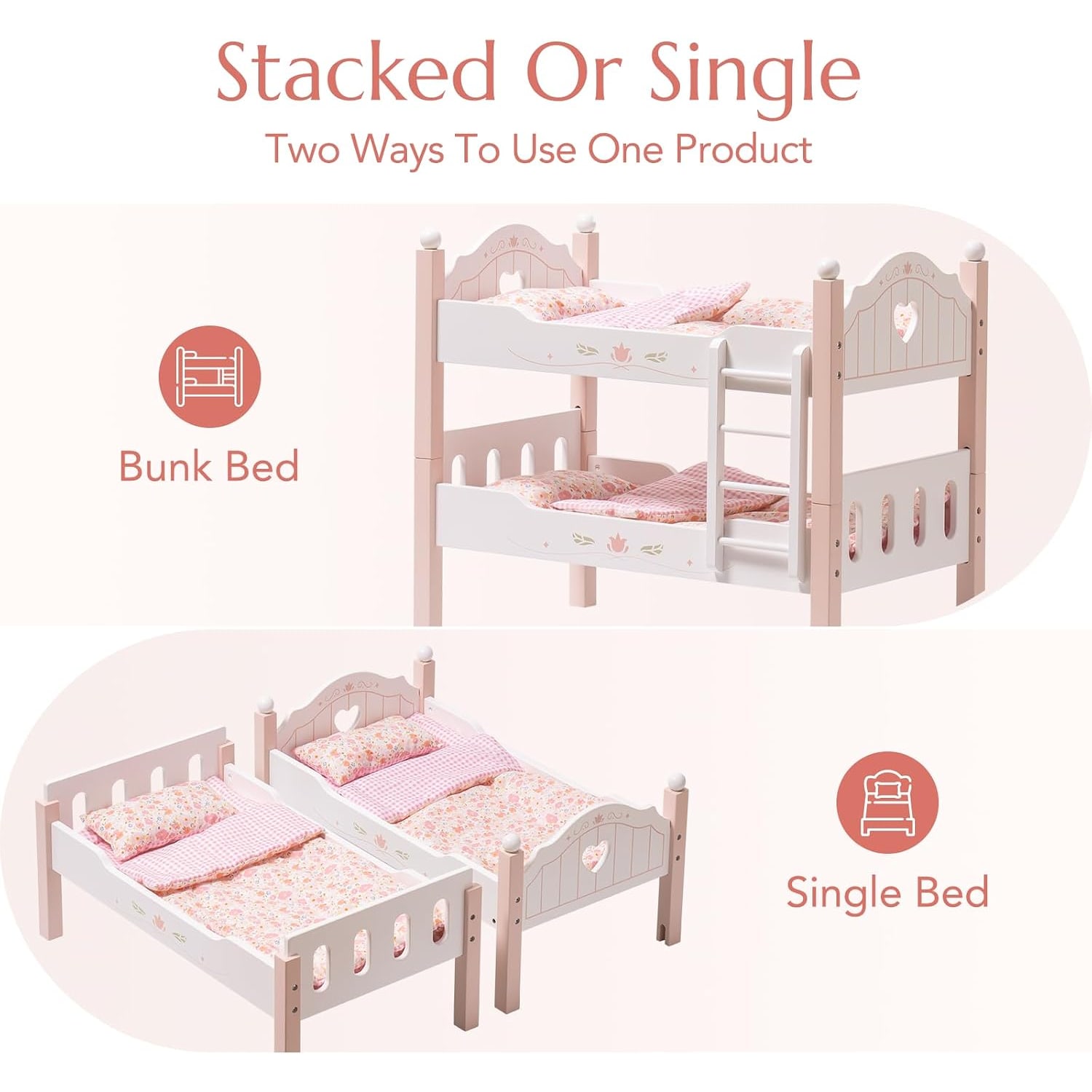
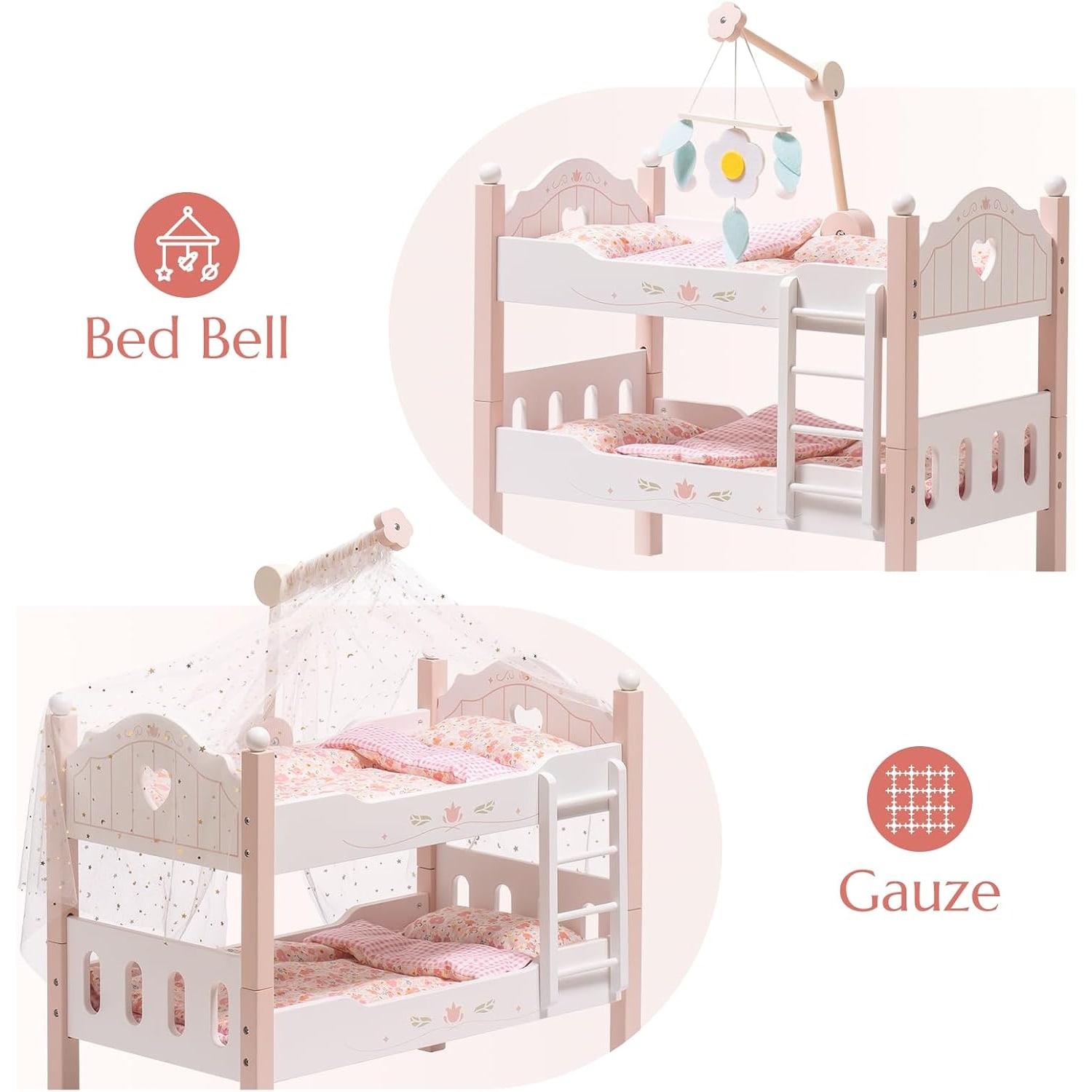
This is a two-in-one set. Stacked, it is a bunk with a ladder at one end. Pulled apart, it is two single beds that can sit side by side or in different corners of the room. Changing between the two layouts takes a couple of minutes and uses the same parts, so nothing gets left over in a drawer.
The frame is wood. That is worth saying plainly, because a lot of doll beds in this size are thin moulded plastic that flexes when you press on it. Timber rails hold their shape under a 50cm doll and survive being dragged across carpet. The finish is pink.
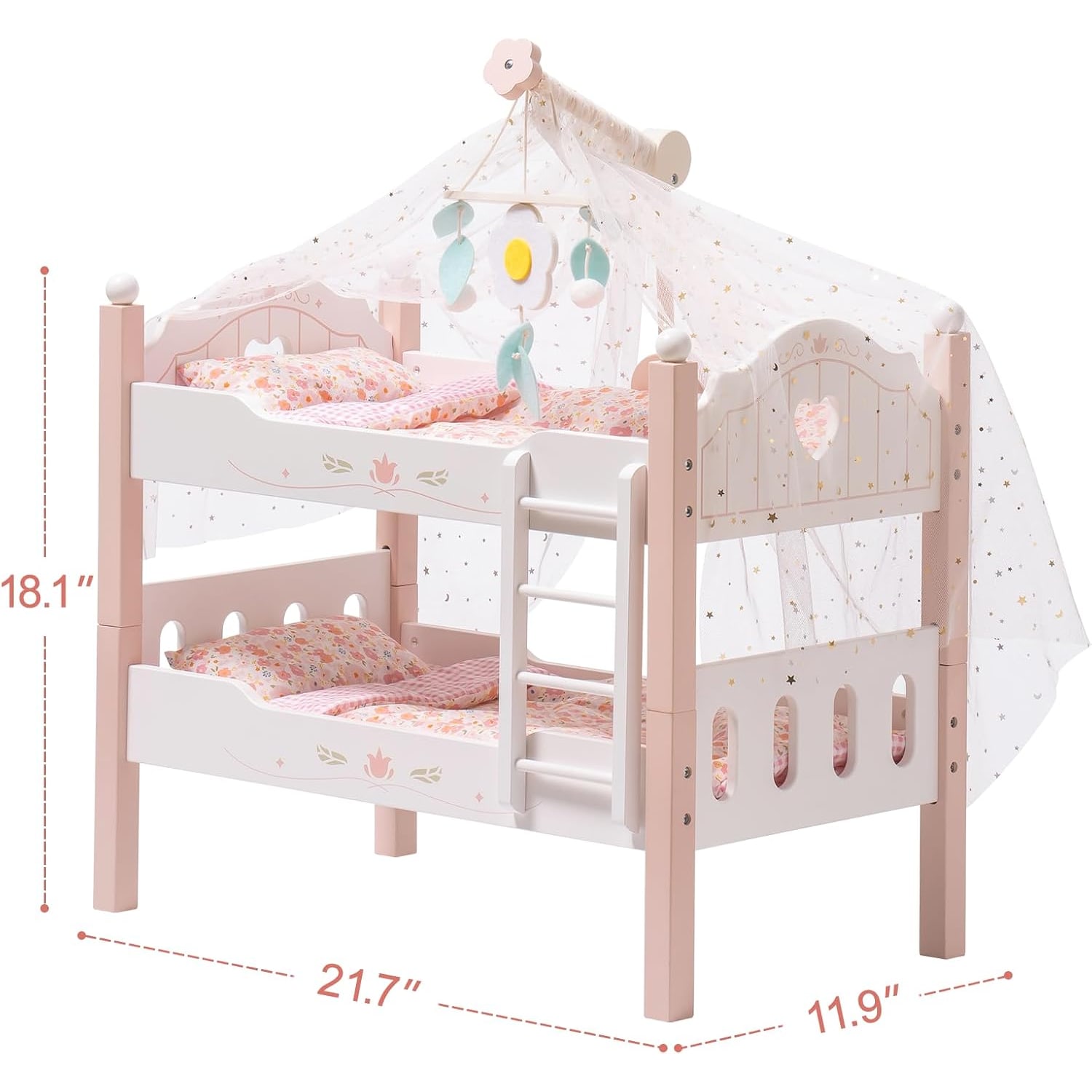
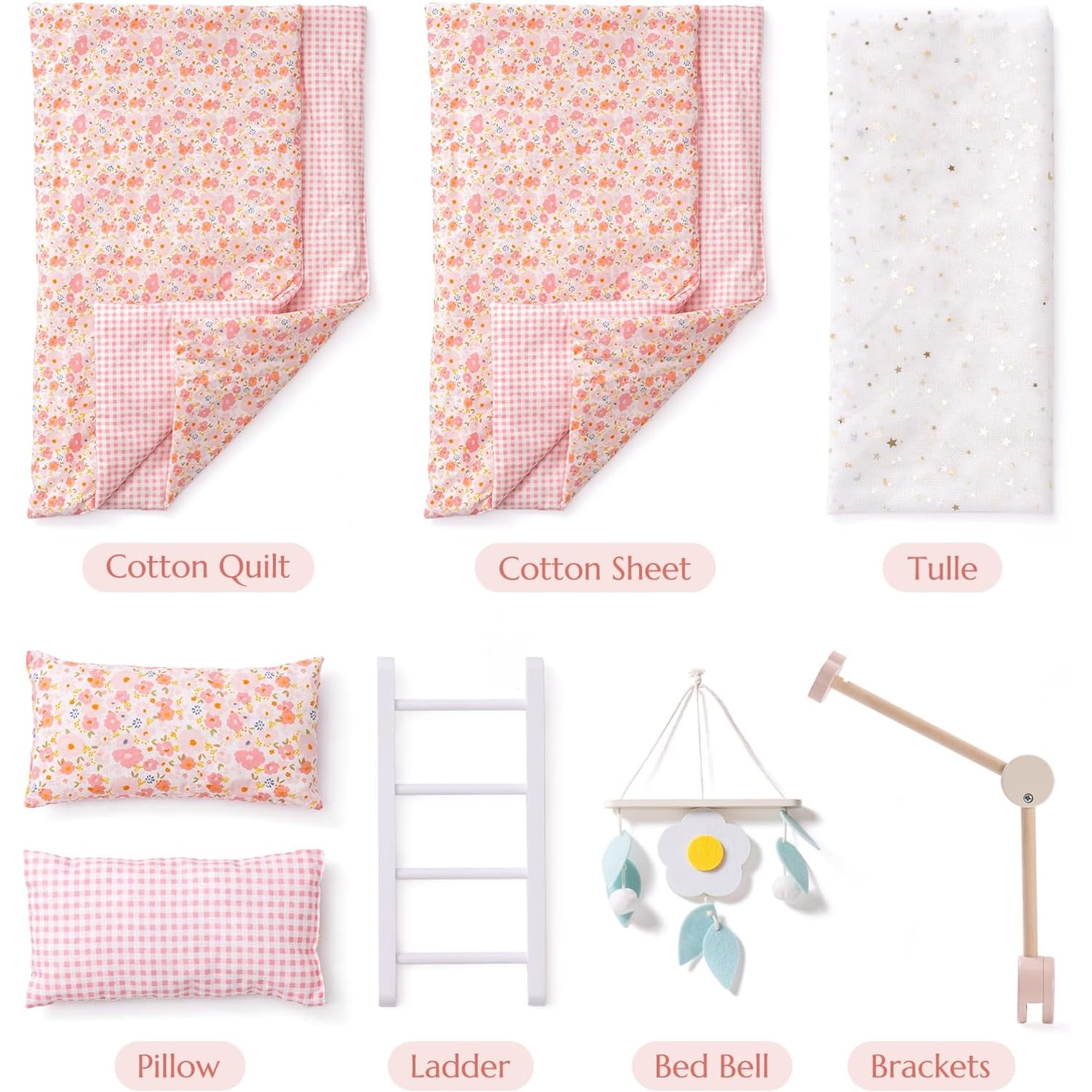
The bedding comes with it. Two pillows, two quilts, two sheets. There is also a bed bell that hangs above the sleeping space and a mesh bed curtain that encloses it. The ladder is removable. Assembled, the bed measures 21.7 x 11.9 x 18.1 inches and weighs about 2.27 kg.
Will your doll fit
This is the question to settle first, because doll sizes vary more than people expect. The bed is described as compatible with most 46cm American-style dolls and as fitting soft dolls up to 50cm.
The easy check is to lay the doll flat on the floor and run a tape measure from the top of the head to the bottom of the foot. If you land at 50cm or under, you are fine. If the doll is longer, or has a very wide moulded body, it may sit on the bed rather than in it, which is still playable but not the same.
Soft-bodied dolls are forgiving because they squash into the space. Hard-bodied dolls with stiff limbs need the full length. If you are buying for a collection with a mix of both, measure the biggest one.
Bunk mode or two singles
Most people set it up as a bunk first, because that is the version on the box and it is the one that looks exciting. The ladder leans against the end, the canopy goes over, and there is a clear top and bottom to argue about.
The two-singles layout gets more use than you might think. It suits a child who plays with two dolls equally and does not want one of them stuck underneath. It also suits a shared bedroom, where each child can have a bed on their own side of the room. And it is the better choice if the bed is going on a low shelf where a stacked bunk would not clear the shelf above.
The nice part is you do not have to choose at purchase. Build it one way, live with it for a month, change it when the mood shifts.
Space and where it will live
At 21.7 inches long, this is a bed that needs real floor or shelf space. It is not a desktop ornament. Before ordering, measure the spot you have in mind and allow a little extra at the ladder end so the ladder is not jammed against a wall.
A floor position next to a bed or under a window tends to work best. Children kneel beside it, and kneeling needs room. If it is going on a shelf, check the clearance above, because a stacked bunk plus a canopy is taller than people estimate from a photo.
Think about the path too. At 2.27 kg assembled, the bed gets carried around. A light, carryable piece of doll furniture ends up in the lounge room, the hallway and under the dining table, which is a good sign the toy is being used.
Assembly, honestly
The maker says under twenty minutes, and that is a fair estimate for a flat-pack item of this size. Lay the parts out, match them to the sheet, and work on a carpeted floor so nothing gets scratched.
Two tips. First, start every screw loose, get the whole frame square, then go back and tighten. Fighting a half-tight frame into alignment is where people get frustrated. Second, keep the spare fittings if any are supplied, in a labelled bag with the instruction sheet. Timber toys get moved, dismantled and rebuilt, and in two years you will want that sheet.
An older child can help by holding rails and sorting screws. The fastening itself should be done by an adult so every joint is properly tight from the start.
Age and small parts
The recommended age is 3 and up. The set includes small parts, so it is not suitable for children under 3. If there is a younger child in the house, the sensible move is to keep the bed and its loose pieces on a shelf out of reach when play finishes for the day.
Looking after it
Timber and fabric need slightly different treatment, and keeping them separate is most of the job.
For the frame, a soft cloth that is barely damp is enough. Wipe and dry straight away. Water sitting on timber lifts the finish and raises the grain, and a cleaning spray can leave a dull patch. Nothing needs to be soaked.
For the bedding, hand wash in cool water with a mild detergent, squeeze gently rather than wringing, reshape and dry flat out of direct heat. Small quilts and pillows hold their shape much better this way than in a machine.
Every few months, run a hand over the joints and re-tighten anything that has worked loose. Five minutes of that will add years to a wooden doll bed, and it is the single most useful bit of maintenance there is.
Keep it indoors. Timber left on a balcony or in a damp shed will swell, and the fabric will mark.
Choosing between options
If you are comparing a few doll beds, there are four things worth weighing.
Material comes first. Wood costs more than plastic and is worth it if the toy will see daily play or get passed to a younger sibling later. Plastic is lighter and cheaper but shows its limits quickly under a heavy doll.
Then bedding. A bed sold bare looks like a bargain until you price up a doll bedding set separately. Here the pillows, quilts and sheets are in the box, which is why the first game can start the same day.
Third is flexibility. A fixed bunk is one toy. A set that splits into two is effectively two layouts, and children change their minds often.
Last is size match. The best wooden doll bed in the world is the wrong one if the doll hangs over the end. Measure before you buy.
The short version
This is a wooden doll bunk bed in pink that stacks into a bunk or splits into two single beds. It arrives with two pillows, two quilts, two sheets, a bed bell, a mesh curtain and a removable ladder. Assembled it measures 21.7 x 11.9 x 18.1 inches, weighs about 2.27 kg, and takes roughly twenty minutes to put together.
It suits most 46cm dolls and soft dolls up to 50cm, and it is made for ages 3 and up. If you want one piece of doll furniture that gives a child somewhere real to tuck a doll in, and gives two children somewhere each, this is a straightforward choice. Measure your doll, measure your floor space, and you are set.